Aspecten
 Download (586 MB)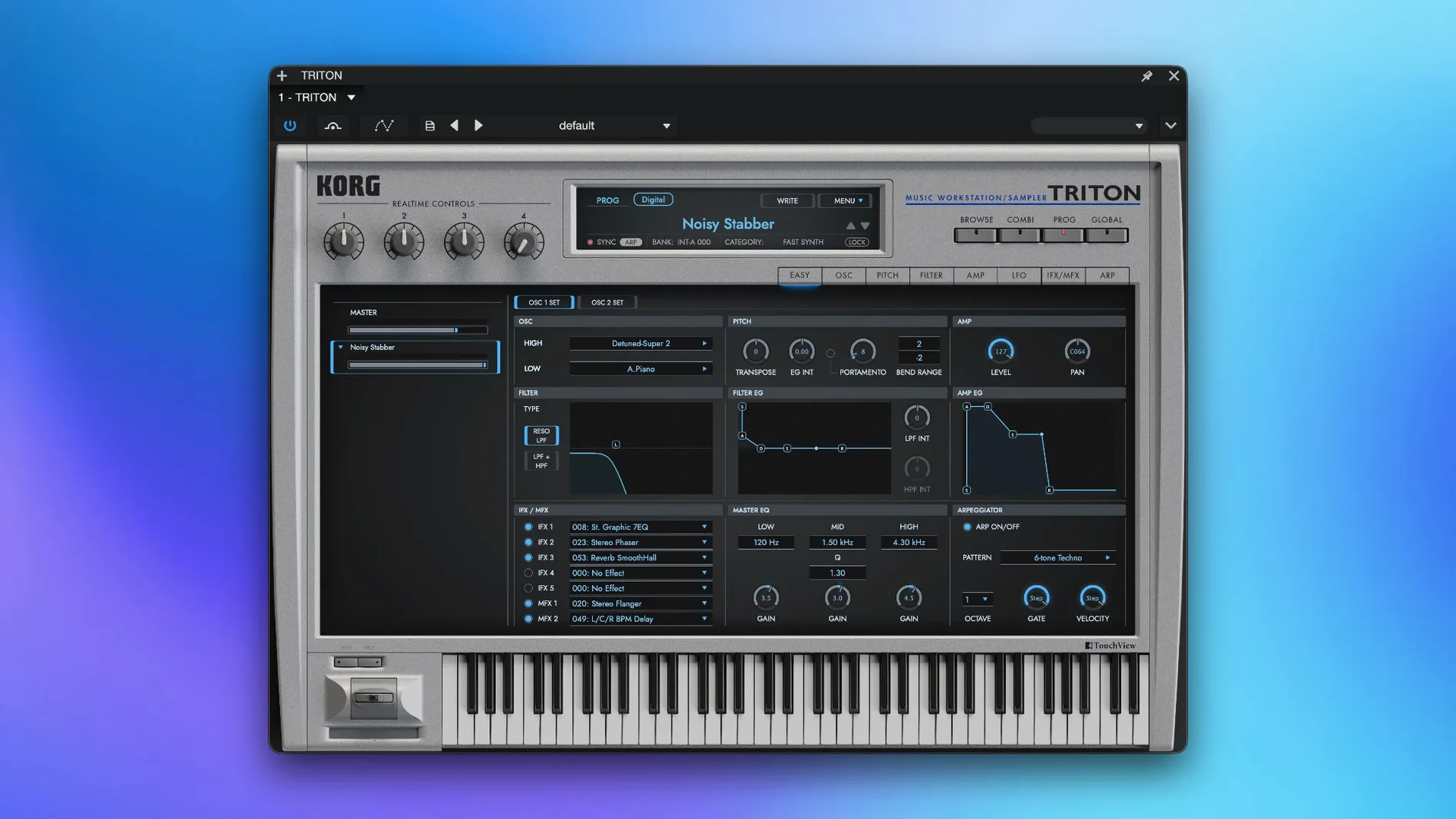
Each instance loads with 48 kHz PCM samples drawn from the original hardware, setting a fairly crisp baseline before you touch a parameter. In a session it tends to sit on instrument tracks handling polyphonic duties, though the multi-timbral combination mode makes it just as useful as a single source for several parts at once.
- Combination mode supplies up to eight parts in one instance, so a drum groove, a pad swell and a lead line can share a single plug-in slot without juggling separate tracks.
- Dual filters let you shape two sounds differently within the same patch — useful when a layer needs its own high-pass while the other stays open.
- Five insert effects per instance handle track-level processing before the signal reaches the channel strip, covering modulation, drive and time-based treatments.
- Two master effects plus a master EQ sit at the output stage, so a combined multi-timbral arrangement can be glued and tonally shaped without extra bus routing.
- Native Apple Silicon support keeps CPU load predictable on newer Macs, which matters when you run multiple instances across a project.
It works on instrument tracks for straightforward patch playback, but the combination architecture also suits busier cues where three or four musical ideas thrive inside a single window. Because the insert and master effects are baked into the plug-in, you often need fewer aux sends for basic sweetening, though you might still route out individual parts if the mix demands separate processing later.
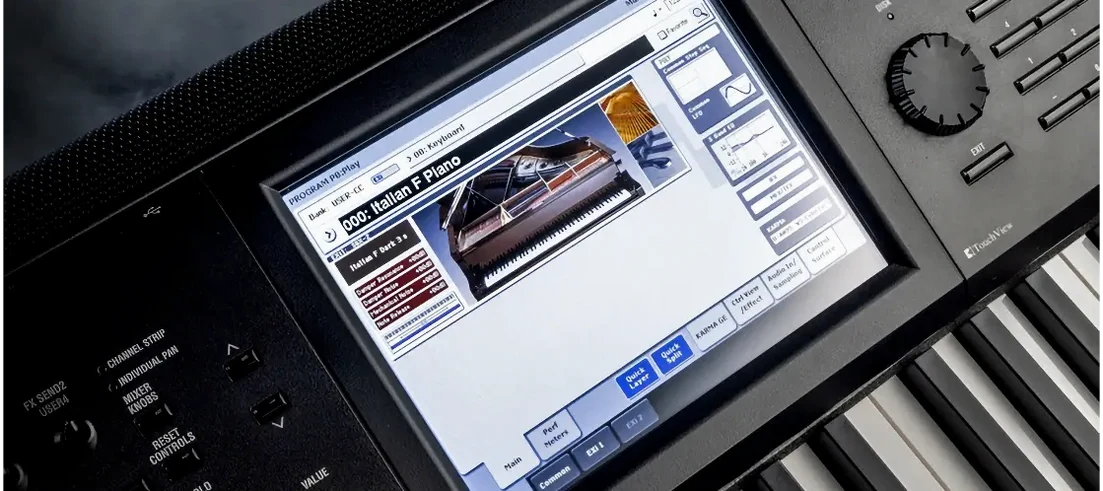
Muscle memory from the hardware transfers to the layout
Keyboard players who remember the hardware workstation tend to slip into the software version quickly — the layout follows the same logic, so muscle memory transfers without much friction. That group also appreciates having the sound set in a laptop rather than a flight case. Sound designers working on synth-heavy cues benefit from the dual-filter architecture, because carving two layers independently inside one patch speeds up patch-building. The combination mode suits producers who write dense arrangements: loading a drum kit, a bass, a pad and a lead into one instance keeps a verse idea in one window, which is handy when you are sketching rather than mixing.
Beginners who want a broad palette without collecting a dozen different instruments get value from the sheer number of presets — over four thousand patches cover a wide stretch of genres. The eight-part multi-timbral design also means someone learning synthesis can study how layered sounds interact without buying a hardware workstation. Conversely, users who already own several KORG Collection instruments may treat TRITON as a specific colour in a larger toolbox, reaching for it when a cue needs that early-2000s digital gloss rather than analogue-style drift.
Standalone patch browsing without launching your DAW
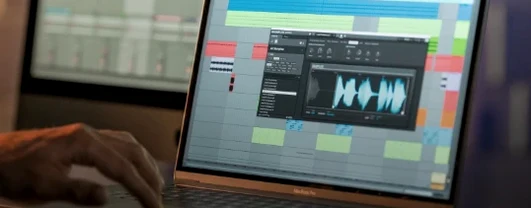
TRITON runs as a VST plug-in inside most DAWs on the Mac, and the standalone application means you can play it without launching a full session — useful for patch browsing or practicing a part while the DAW stays closed. Inside a project, dragging it onto an instrument track in Logic Pro, Ableton Live or Cubase works as expected. Combination mode patches clock in with up to eight parts, but the plug-in occupies a single mixer channel by default, so a producer who later wants individual stems for each part can load separate instances and thin out the combis.
On macOS 11 and later, MIDI routing behaves like any other AU- or VST-compatible instrument. You can feed it from an external keyboard via a standard MIDI track, and the native Apple Silicon support means it integrates with Macs running M-series chips without Rosetta overhead. If you use a multi-output setup — routing drum parts to one bus and pads to another — you will likely still need multiple instances, because the internal effects architecture processes the master output as a summed signal. That is not a shortcoming; it matches how the original TRITON handled its stereo output path.
The patch library sits on disk as a set of data files, so Time Machine backups capture your tweaked sounds alongside the rest of your session data. Because it does not rely on cloud activation after initial setup, a studio Mac kept offline for stability purposes keeps working without interruption.
M1 plug-in predates it with a smaller sound set
Three instruments sit in roughly the same conversation: the KORG M1 plug-in (also part of the KORG Collection), Roland's JV-1080 software recreation, and Arturia's Analog Lab as a broader preset player. The M1 predates the TRITON and carries a smaller PCM library with a grittier character; its combination mode tops out at eight parts as well, but the effects section is simpler and the sample resolution feels distinctly late-1980s. TRITON offers higher-fidelity PCM and a more capable insert chain, so producers leaning toward pop, R&B or cinematic work from the early 2000s often prefer it over the M1's lo-fi charm.
Roland's JV-1080 software shares the multi-timbral concept — it also handles multiple parts per instance — and its sound set covers a similar era of digital synthesis. The JV-1080's filter section and effects routing differ in flavour rather than capability; TRITON's dual filters per patch and five inserts give it a slight edge in sound-design flexibility inside one instance. Patch-for-patch, the JV-1080 leans toward Roland's house sound, while TRITON stays true to KORG's brighter, more present character. Someone who downloads a triton vst crack for a quick trial often discovers the KORG sound sits forward in a mix with less effort than Roland's smoother textures.
Arturia Analog Lab bundles thousands of presets from modelled analogue and digital synths, so its breadth is wider, but it functions primarily as a preset player with macro controls — you cannot build patches from scratch the way TRITON's HI synthesis engine allows. Users who want to tweak oscillator balance, filter routing and effect chains in detail will find Analog Lab limiting. A KORG TRITON Mac torrent might circulate among producers who want that editable architecture alongside the preset library, and the software version delivers exactly that: a full editing environment rather than a curated preset front-end.
Where TRITON differentiates itself is the specific character of its PCM playback. The samples were captured at 48 kHz from the original hardware, so the tone carries the same interpolation and playback behaviour that defined countless records. That is harder to replicate with a general-purpose rompler or a modelled synth. A KORG TRITON torrent often appeals to people chasing that exact sonic fingerprint, not just a large sound count.
Single combination patch splits drums and keys for a TV cue
Consider a music producer tasked with a 90-second TV cue that needs a bright, confident instrumental bed. She opens her DAW, loads a single TRITON instance, and pulls up a combination patch that splits the keyboard between a punchy drum kit, a finger bass and a layered pad with a bell attack. The drum part sits on the lower octaves, the bass occupies the middle range, and the pad-bell layer glides across the top two octaves — all from one plug-in window.
She tweaks the pad layer's filter cutoff slightly to keep it from masking the bass, then adds a touch of drive on one of the five insert slots to give the drums more snap. The two master effects handle a short reverb and a subtle stereo widener, gluing the eight parts into a cohesive stereo image. Twenty minutes later she has a full sketch playing back, with four distinct musical ideas sharing one instance and CPU meter barely nudging past idle. She exports a rough mix for the director, then saves the tweaked combination as a user patch for the next episode.