Aspecten
 Download (467 MB)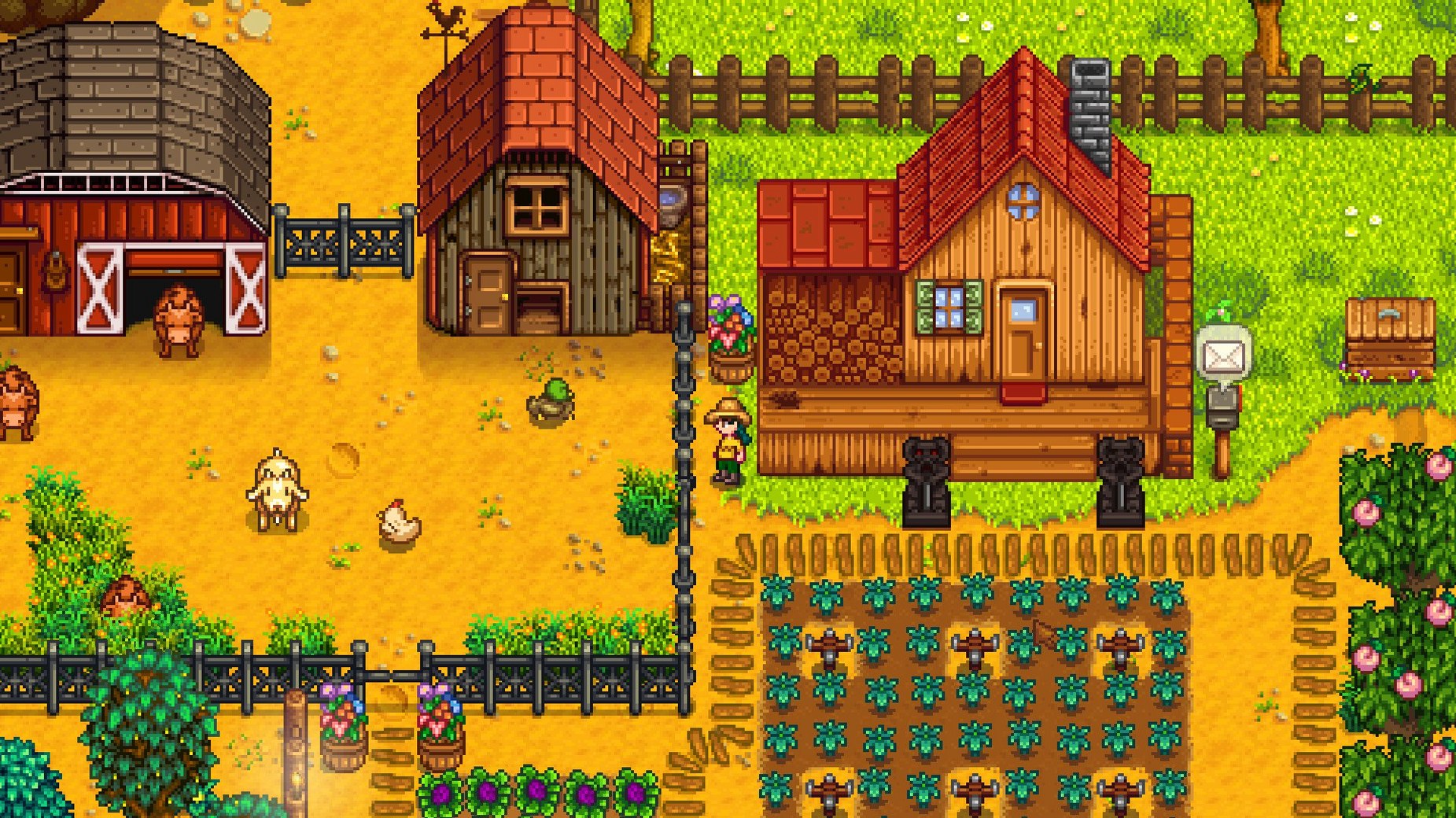
City life leaves little room for soil under your fingernails. Stardew Valley answers that quiet longing with a parcel of overgrown land and all the time you need to tend it. You arrive by bus, a letter from a grandfather you barely remember tucked in your pocket, and the game hands you a set of rusted tools. What follows is not a grand quest but a series of small, absorbing decisions that stack up into seasons.
What a day actually looks like
- Morning rounds. Water crops, check the coop for eggs, and refill the cat's bowl before the screen has properly brightened.
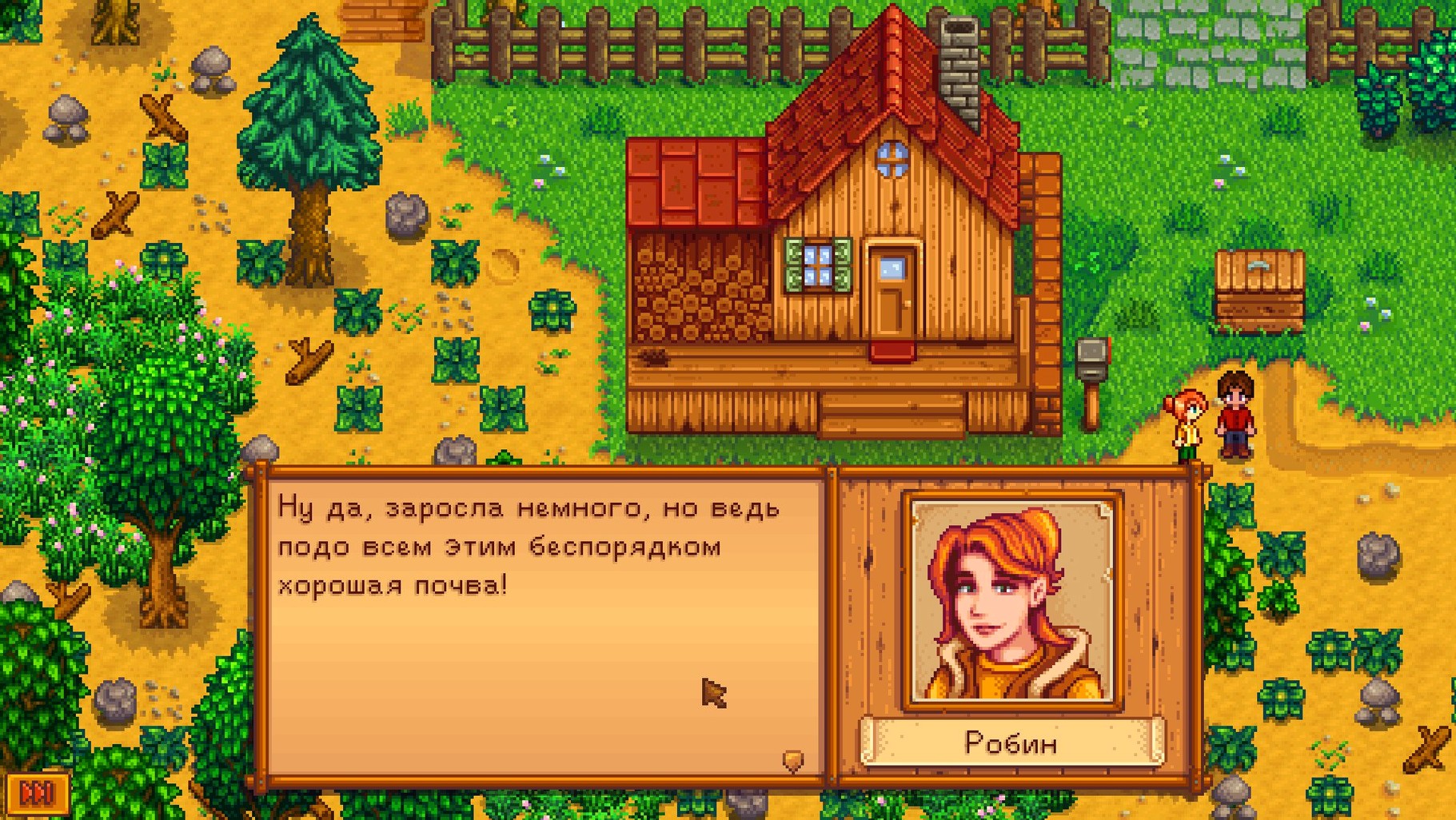
- Errands in town. Walk to Pierre's for seeds, stop by the blacksmith to crack open a geode, and hand a parsnip to Lewis because it is his birthday.
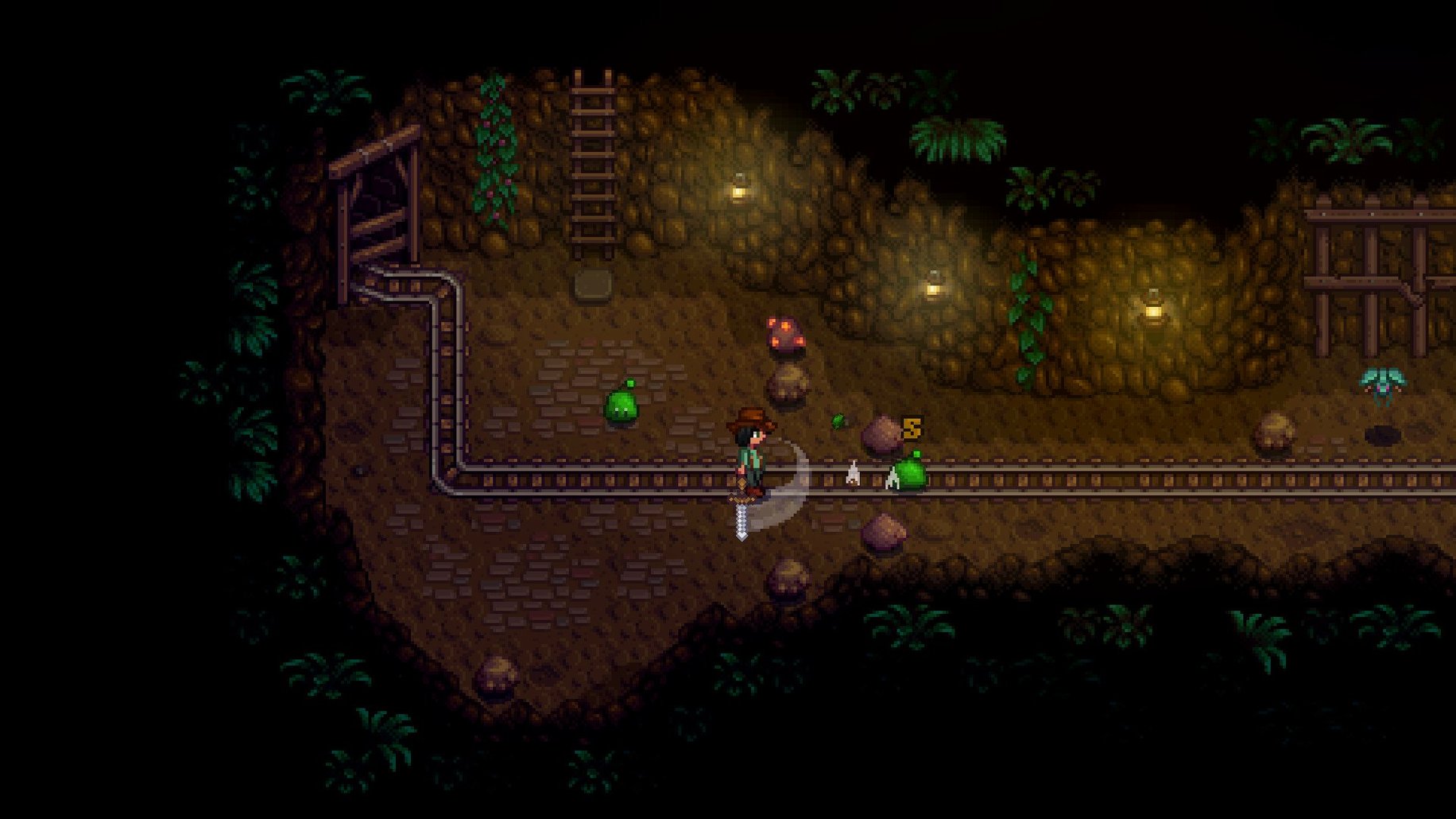
- Afternoon focus. Clear debris in the north woods, fish the mountain lake until your pack is full, or chip away at the lower mine levels while watching your energy bar.
- Evening wind-down. Drop items in the shipping bin, check the calendar for tomorrow's weather and luck, and turn in before midnight.
A valley with a pulse
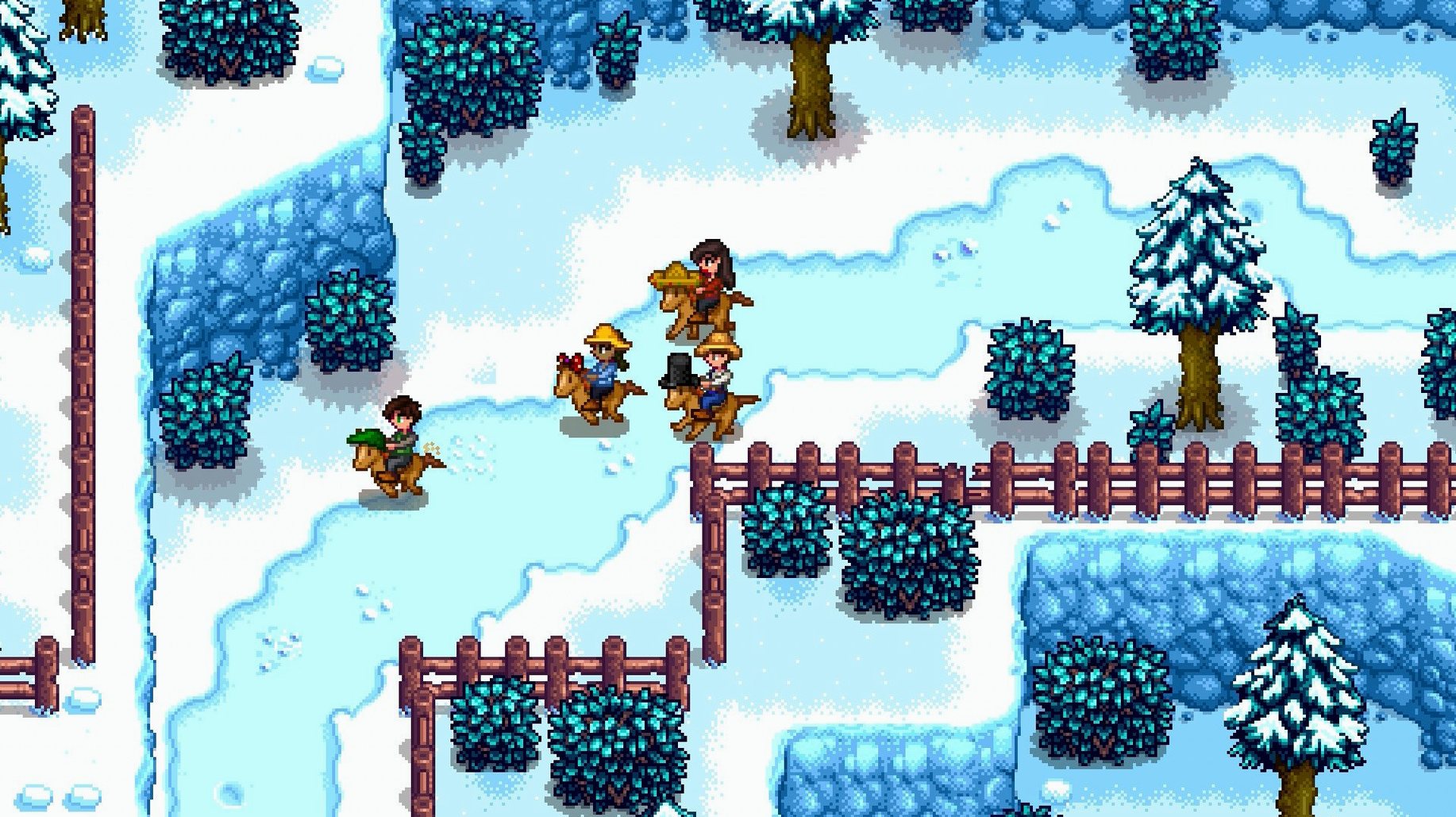
Beyond the farm, the calendar drives everything. The town has its own rhythms — festivals, shop hours, and characters who follow schedules that shift with the rain. A corporate Joja outlet sits on the edge of town, offering convenience at a cost, while the community centre stands empty, waiting for someone to piece it back together room by room. Each season brings a different crop table, a different forage palette, and a different reason to walk the same paths again.
Preventing energy crashes before the first festival
A new save file can feel disorienting. The game does not pause while you read tooltips, and the energy bar shrinks quickly when you clear weeds with an axe you have not yet upgraded. These habits help the first week settle into a rhythm.
- Plant parsnips on day one and water them immediately. The 15 seeds Lewis gives you are the fastest route to farming experience and a small cash return. Clear only the tiles you need, not the whole field — energy spent on debris you will not plant on is energy wasted.
- Make a chest before you make anything else. Fifty wood is all it takes. Without one, your inventory clogs after two foraging runs, and items dropped on the ground outside the cabin disappear overnight.
- Watch the television every morning. The weather report tells you whether tomorrow is a watering day or a free pass to spend energy in the mines. The fortune teller's luck reading affects geode drops and mine ladder spawns. The cooking channel unlocks a recipe.
- Walk south to the forest and collect spring onions daily. They respawn, cost no energy to pick, and solve the early problem of running out of food before noon. The patch sits just below Leah's cottage.
- Leave the scythe swinging until you actually need hay. Cutting grass without a silo gives you nothing. Build the silo first, then clear the tall grass on the farm.
Turn on a red placement tile before your first upgrade
The default configuration works, but a few adjustments make daily play noticeably smoother.
- Turn on "Always show tool hit location." A red outline marks the tile your hoe or watering can will affect. This removes guesswork, especially with upgraded tools that cover multiple tiles.
- Switch to "Auto-run" and leave it on. The walk speed is too slow for a map this size. The toggle sits in the options menu under controls.
- Zoom level. The default zoom feels tight on a MacBook screen. Pulling back to 90% or 85% lets you see more of the farm while working and makes the mines less claustrophobic.
- Bind a key to open the journal. The default F-key is awkward. Rebinding it to Tab or a thumb button on the mouse saves a trip to the menu.
- Disable "controller-style menus" if you use a mouse. The cursor snaps to slots in a way that fights against muscle memory. Turning this off restores free cursor movement for inventory management.
Wood and stone you sold in spring, then needed in summer
Stardew Valley does not punish missteps with a game-over screen, but some early decisions slow progress in ways that are not obvious until the second season.
- Selling everything every night. Wood, stone, fibre, sap, and slime read as junk. They are not. Save at least one stack of each in a chest. Fibre becomes grass starter, wood fuels charcoal kilns, and stone builds staircases for deep mine dives. Selling raw materials for a few coins early on costs hours of gathering later.
- Ignoring the community centre until year two. The bundles unlock the greenhouse, the minecart fast-travel network, and the quarry. Each one changes how you spend a day. Checking the bundle requirements early lets you stash items as you find them rather than scrambling the season after.
- Staying in the mines past midnight. If your character passes out from exhaustion at 2 AM, you lose items and cash. The penalty stings more than missing one more floor of copper nodes. Carry a farm totem or watch the clock.
- Gifting without checking tastes. Handing a villager something they dislike costs friendship points. The wiki or a few experiments with neutral items teach you who loves what. Most characters have at least one liked gift available in spring — daffodils, coffee, or forage.
- Upgrading the watering can on a sunny day without checking the forecast. Clint keeps the tool for two days. If rain or a festival is not due, those crops go unwatered. Time upgrades for the last day of a season or a day before rain.
Legendary fish ponds now drop roe at a faster daily rate
Version 1.6.15.24357.8705766150 brings a handful of adjustments that affect daily habits, especially for players who have been running the same farm across multiple real-world years.
- Legendary fish ponds now produce roe more often and at a higher average daily value. This shifts the math on which fish merit a pond slot. A pond that once paid out slowly may now rival a coop for passive income, particularly for farms built around artisan goods.
- Performance optimisations reduce stutter in busy areas. On older Mac hardware, the farm on a harvest day with many machines running — kegs, preserve jars, sprinklers — could hitch. The improvements smooth out those moments, making late-game saves more playable without dropping the zoom level further.
- A Junimo bundle button was added to fridge and mini-fridge interfaces. Checking what you still need for a bundle previously required a walk to the community centre or a trip through the pause menu. Now you can open the fridge, press one button, and see which ingredients are still missing. This small change saves real minutes over a play session.
- Several crashes, multiplayer issues, and localisation errors were fixed. The practical upshot is a game that exits cleanly instead of freezing during a festival cutscene or disconnecting a farmhand mid-session. For anyone who plays co-op with friends on different platforms, the stability improvements matter more than any feature addition.
The update does not add a new area or skill, but it polishes edges that wore thin over hundreds of hours. A pond that earns better, a frame rate that holds steady, a button that spares you a walk — these are changes you notice at hour eighty, not hour two.