Aspecten
 Download (345 MB)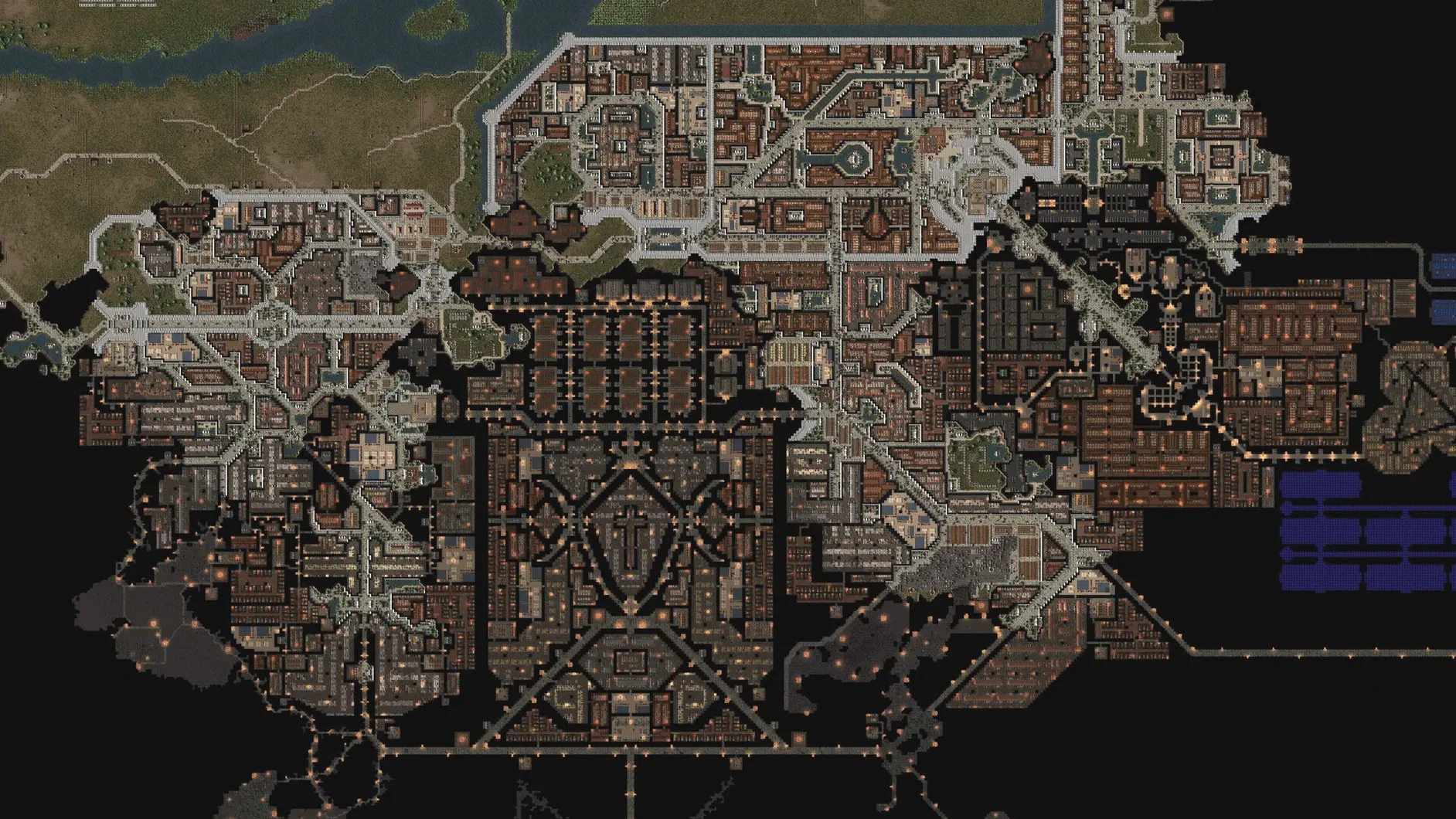
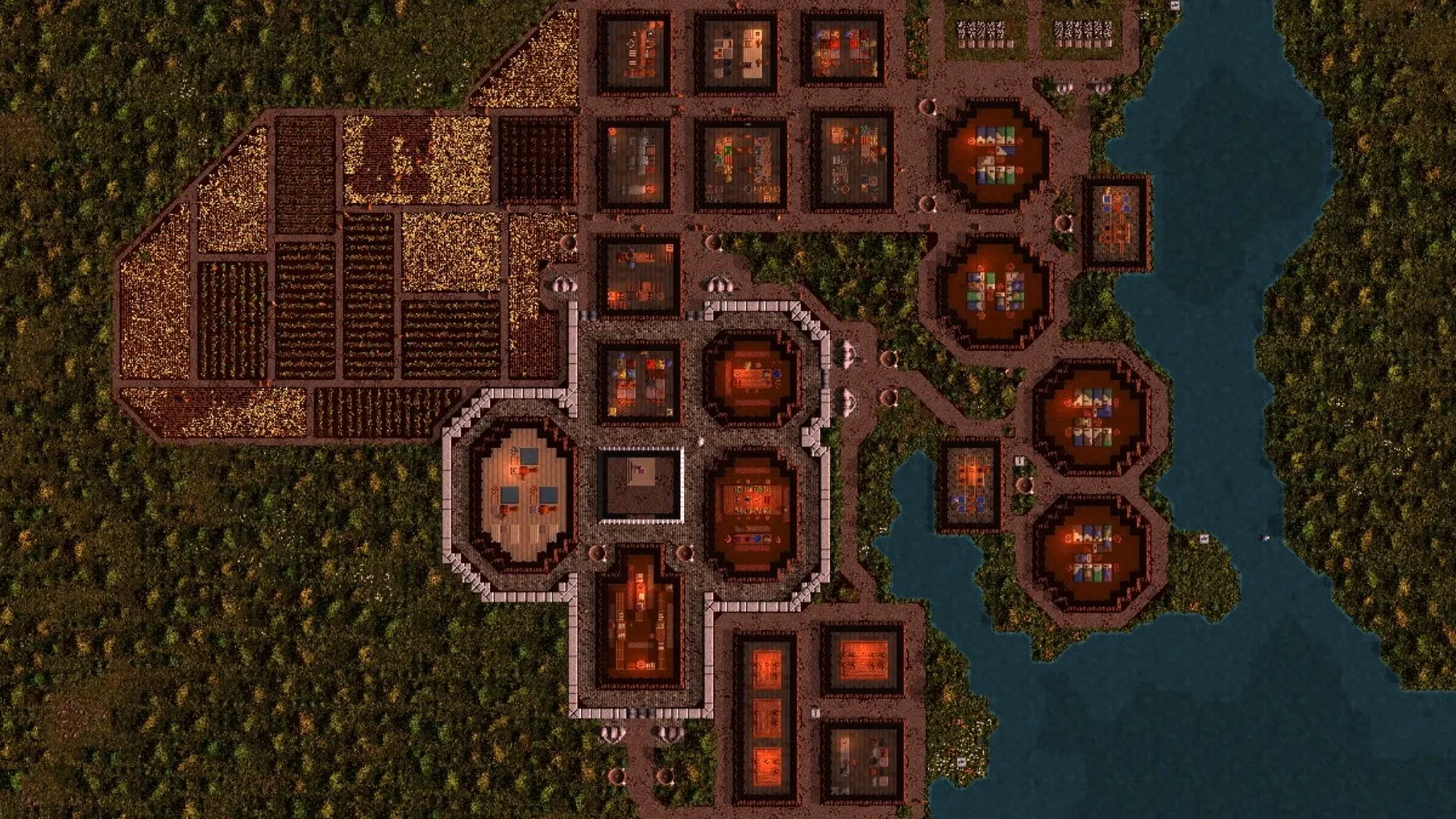
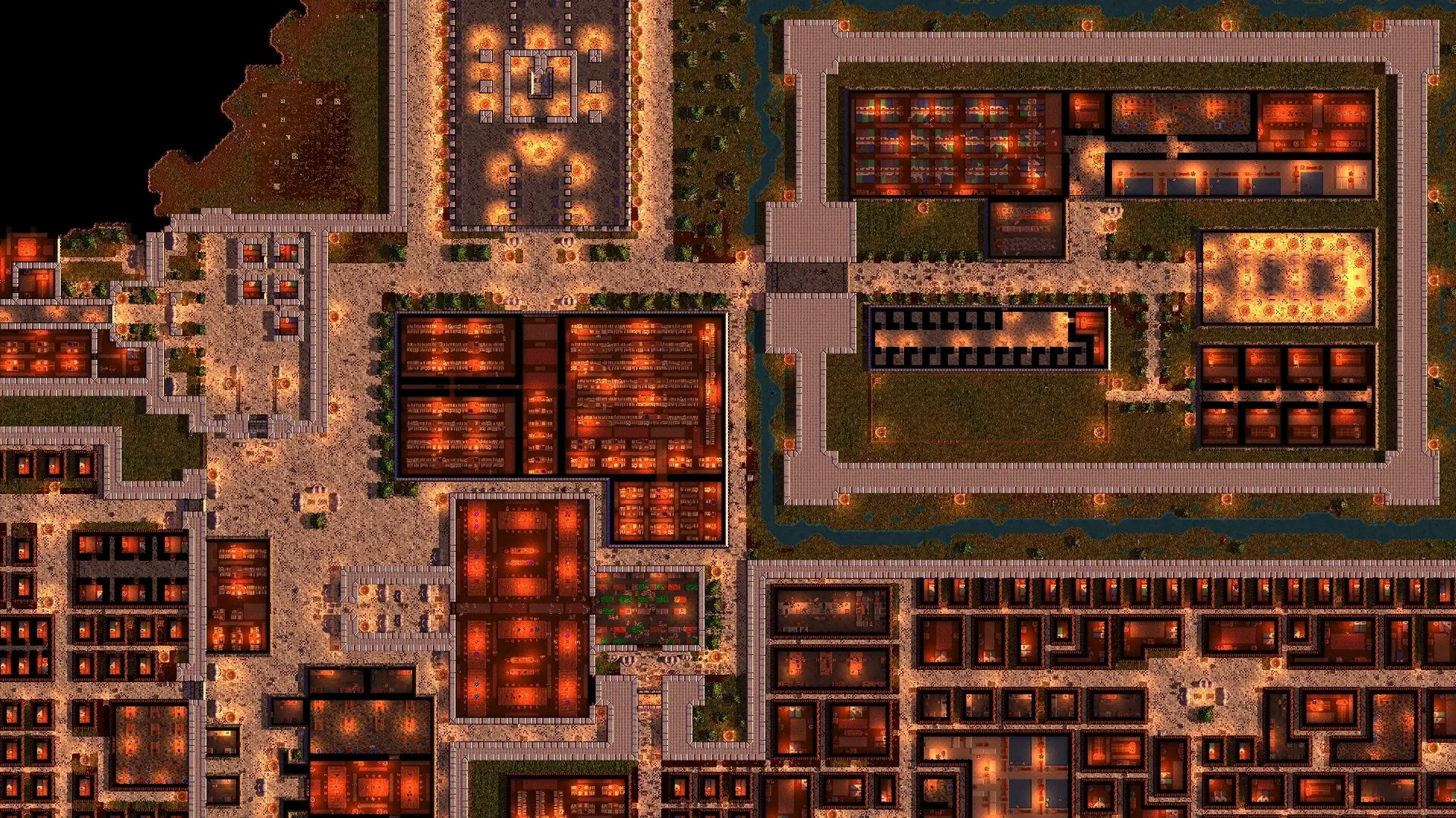
Version 0.71.52 offers 15 interface languages, from Russian and Simplified Chinese to French and Japanese. The simulation starts with a small colony on a map shared with animals, bandits and magical creatures, and it does not hold your hand. A minor supply shortfall can cascade into a larger failure if left unchecked.
From hamlet logistics to empire defense on the same map
- Players who enjoy colony sims that start small and scale toward empire management.
- Seeing a settlement react to supply chains, migration and outside threats.
- Environments where wildlife, raiders and fantasy creatures share the map.
- Running on older Intel Macs without Apple Silicon binaries.
A single overlooked event can cascade without warning
- The simulation does not cushion mistakes; a small event can trigger wider instability.
- The interface, while functional, reflects the early-access state of version 0.71.52.
- No native Apple Silicon support is included in the current build.
Why a stable colony suddenly starves or riots
A colony that looks stable can tip into crisis because of a single overlooked detail. The game does not pause to explain why, so tracing the cause is part of the work. Three problems surface more often than others in version 0.71.52.
Food spoilage and warehouse placement. Grain and fish rot if storage sits too far from kitchens or if hauling routes snake across the map. The stockpile screen shows a healthy reserve, but citizens still go hungry because the goods never reach a prepared meal. Placing small granaries near food producers and larger warehouses close to population centres shortens the trip and slows the spoilage clock. Check the spoilage tooltip on any stored item before building extra farms — more raw food does not help when half of it rots in transit.
Subject loyalty tipping after a prestige building. A new arena or temple lifts happiness, then loyalty dips a week later. The reason is usually an overlooked immigrant wave. New arrivals arrive with low expectations but also low loyalty, and the building’s effect spreads thinner across a larger headcount. Keeping a modest surplus of loyalty-generating structures — and building an extra dormitory before accepting a wave — prevents the sudden drop that invites rebellion.
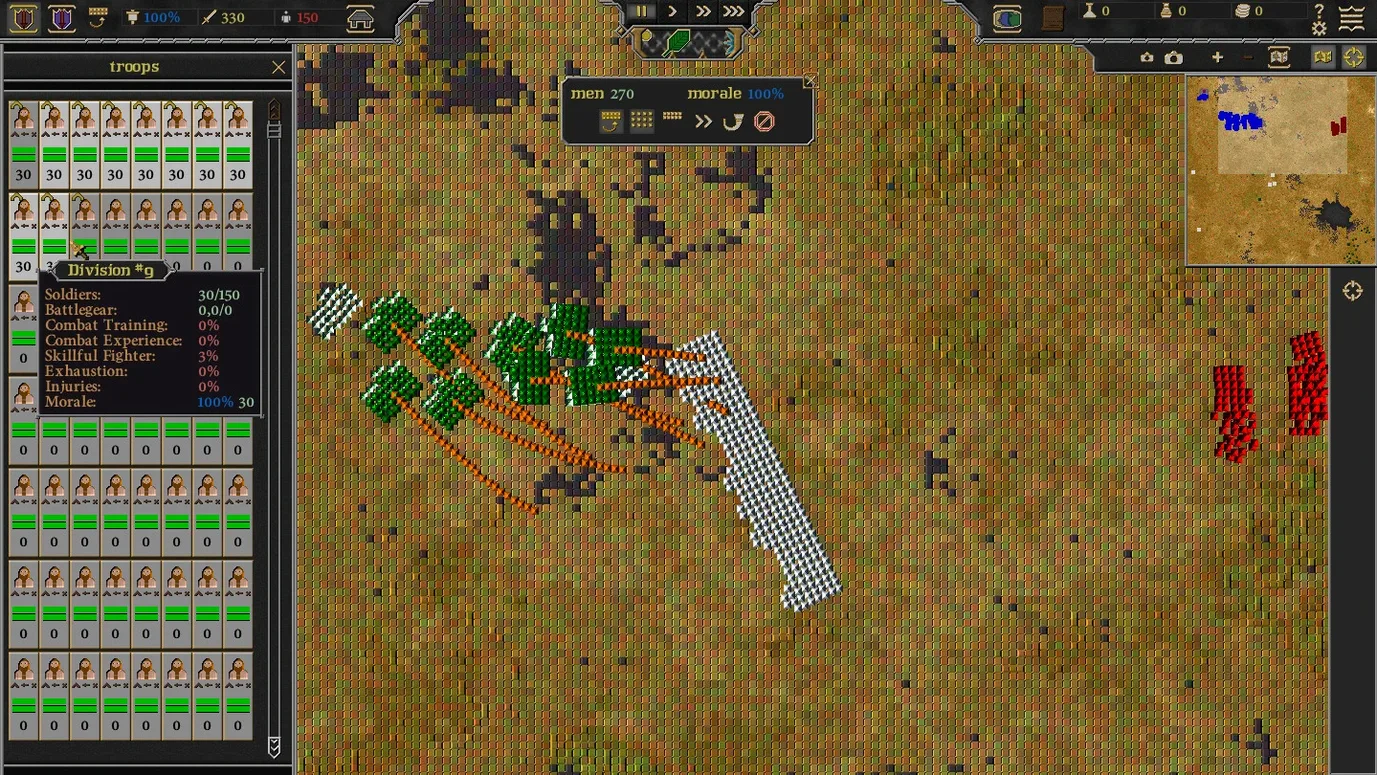
Military patrols that miss the fight. Bandit camps and magical creatures spawn at the map edge, but patrols set to a fixed route can loop the wrong direction while a workshop burns. Use the rally point system instead of relying on patrol waypoints alone. Assign one squad to a central barracks near your most valuable production district and keep it on standby. A squad in reserve responds faster than a patrol halfway across the map.
Pause on day one and survey the map edges first
The initial hours shape whether a colony reaches its third winter. A few deliberate choices early on prevent the kind of cascade the simulation is known for.
Pause on day one and survey the map edges. Before placing a single stockpile, scroll to the borders. Note where animals cluster, where bandit camps sit and whether any magical creature lairs appear within a half-day’s walk. The starting zone is never completely safe, and knowing which direction the first threat will come from determines where walls and barracks belong.
Build a second small warehouse immediately. The default storage fills faster than expected once immigration begins. A second warehouse near the farms, set to accept only raw food, keeps haulers from criss-crossing the colony and frees the main warehouse for finished goods. Assign one or two extra haulers on day two; the game starts with too few, and the bottleneck shows up as idle workshops next to full input stockpiles.
Delay the workshop district. It is tempting to set up a full production chain for furniture or weapons within the first season. Hold off until at least twelve citizens are settled and food supply runs a modest surplus for two consecutive weeks. A workshop built too early pulls workers from farming and hauling, and a single dry spell in the fields can collapse both food and production at once.
Check the language setting before investing time. The build ships with 15 languages, and switching later requires a restart. Set it from the main menu on first launch; the interface sticks to the choice and some translations are more complete for tooltips than others.
Players who treat unexplained failure as a puzzle
Three broad groups of players tend to click with Songs of Syx in ways that more structured city-builders never manage. The common thread is a tolerance for systems that do not explain themselves and a willingness to treat failure as part of the experiment.
Players who miss the older colony sim era. Anyone who spent time with early Dwarf Fortress, Pharaoh or the first decade of Stronghold titles will recognise the tempo here. The simulation does not steer the player toward a prescribed victory condition. It drops a handful of settlers onto a map and lets the interplay of hunger, morale and outside threats write the story. Mac users on Intel hardware — particularly those with a 2018–2020 machine that cannot run Apple Silicon titles natively — get a current, actively developed game that still runs comfortably on their architecture.
Tinkerers who enjoy reading a wiki alongside the game. The official wiki fills in details the interface leaves out, and players who naturally keep a reference open on a second screen or tablet find the learning curve shorter. Mechanics like subject loyalty thresholds, trade contract decay and magical creature behaviour are documented there, and checking a mechanic after a failure turns a frustrating wipe into a lesson for the next colony. This plays to the strengths of a Mac setup where Spaces makes switching between the game and a browser near-instant.
World-builders with patience. The scale from a handful of huts to a sprawling metropolis takes real hours, not a scripted campaign arc. Players who enjoy shaping a city over weeks of casual sessions, rather than finishing a scenario in an evening, find the most value here. The DRM-free build means the game sits in the Applications folder without a launcher or online check, which suits players who prefer to launch directly and play offline. The colony is waiting exactly as it was left, with no cloud sync required and no interruption.