 Aspecten
 Download (11.5 GB)
What you do, moment to moment
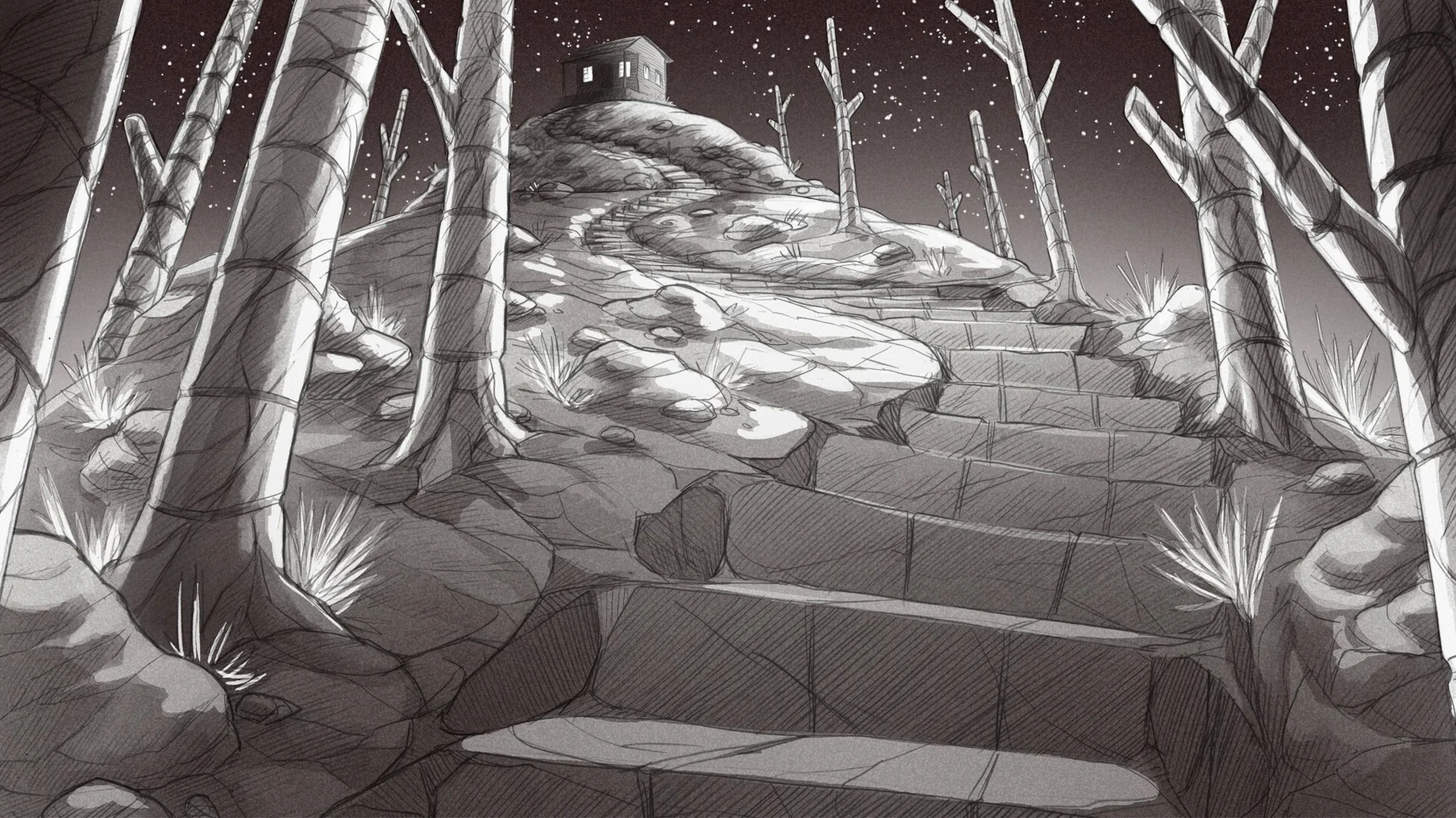
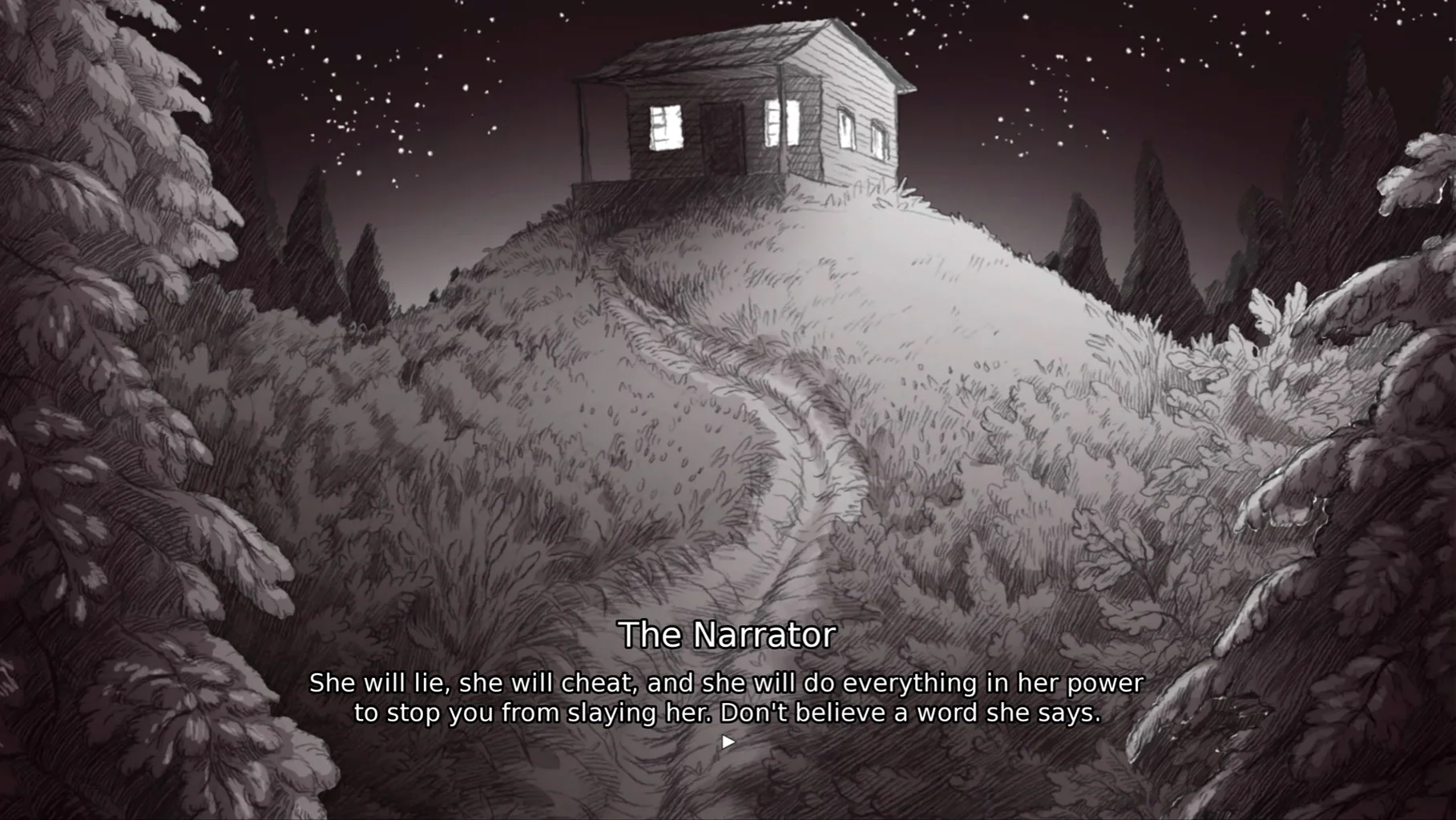
- Listen to the Narrator. You begin on a forest path. A voice explains your task: enter the cabin, descend to the basement, and slay the Princess. The voice is constant, describing what you see and gently steering your intentions.
- Choose dialogue or action. At each branching point you pick from a short list of responses. Some push the story forward; others question the premise itself. You decide whether to pick up the blade by the door.
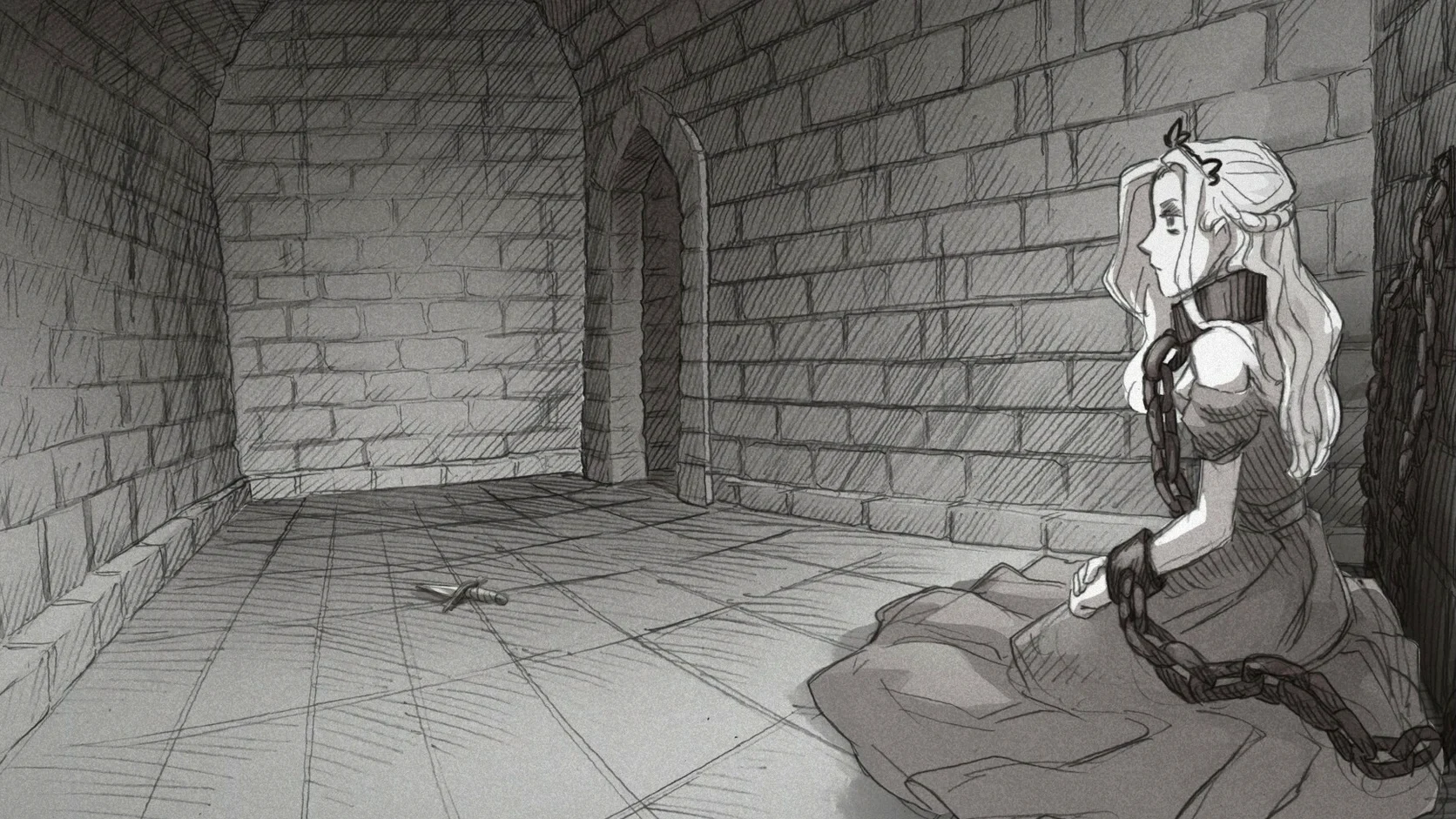
- Meet the Princess. She is locked downstairs. Her demeanour shifts based on your prior choices. A conversation that starts with pleasantries can tip into something else entirely within a handful of lines.
- Commit to a decision. The core loop tightens around a single binary: do you complete the task you were given, or do you defy it? The game watches every hesitation.
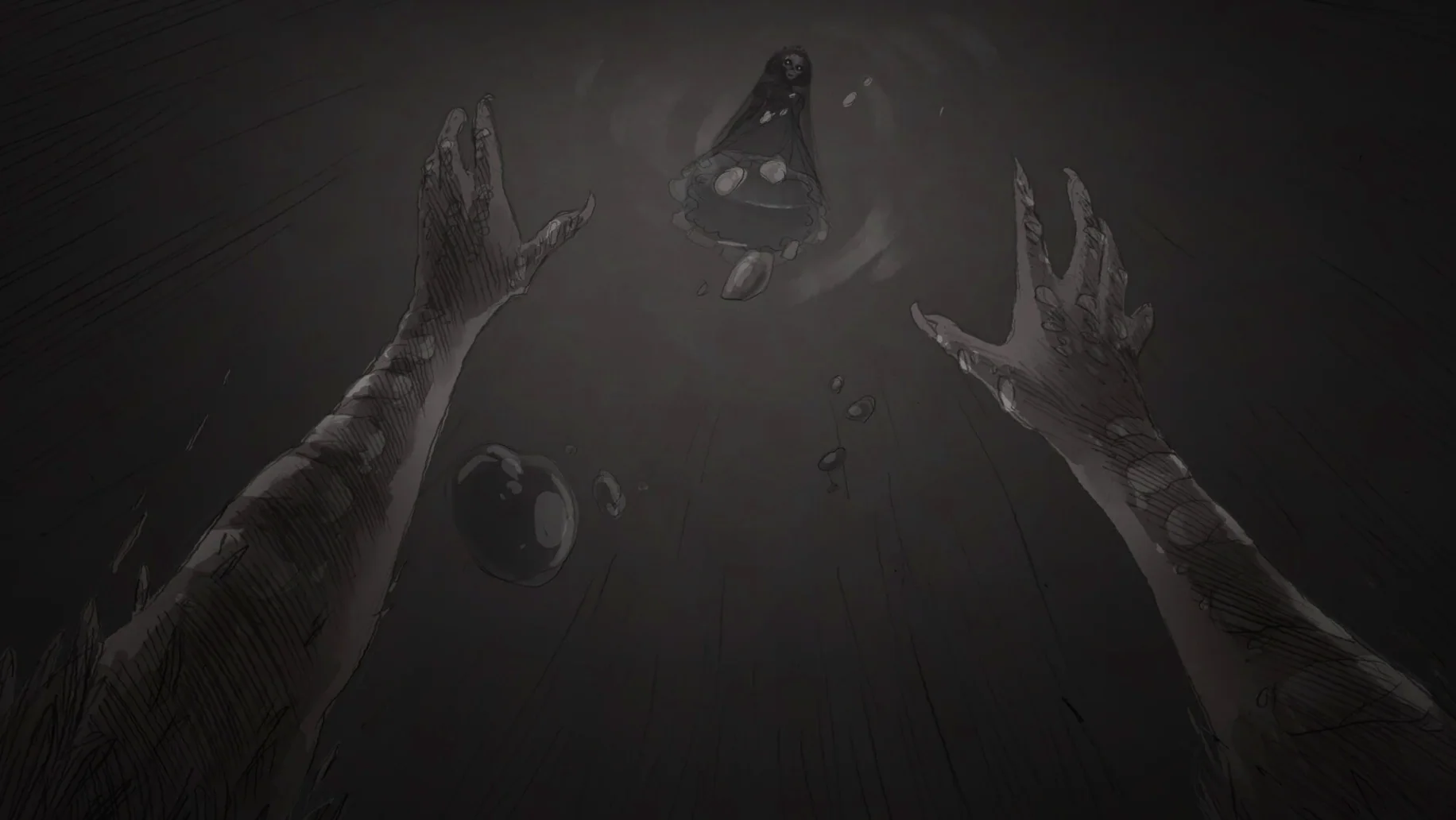
- Watch the world react. Hand-drawn frames change. Jonathan Sims and Nichole Goodnight deliver lines that bend from warm to chilling. The cabin and its surroundings shift in ways that reflect the path you are on.
- Begin again, differently. Each route ends, but the story continues from a new angle. One loop might play like a tense dating sim; another leans into outright psychological horror.
The Pristine Cut extends this loop with three extra chapters, a reworked ending, and over 1,200 new illustrations. A built-in gallery now tracks every path you uncover, so you can replay a particular thread without guessing. All the while, the English voice cast delivers more than 2,500 new lines, layering extra weight onto the choices the Narrator asks you to make.
A horror script wearing a dating sim’s skin
Is this a dating sim that happens to be creepy, or a horror game with dating elements? The latter. The framing device — a cabin, a Princess, a conversation — invites certain expectations, but the game is interested in what happens when you question the setup itself. Romantic-sounding exchanges exist, yet they rarely go where you think they will. The horror emerges from how the story remembers your choices across loops and from the way the voice acting swerves from reassurance to threat in a single line. Think of it as a visual novel that borrows dating-sim structure to get you close enough to the Princess that her reactions feel personal, then uses that closeness as fuel for the unsettling parts.
How much replaying does it actually ask of you? A fair amount, but not in a grinding sense. Each route is short — often under an hour — and the gallery added in The Pristine Cut marks the branches you have found and the ones still waiting. You are not expected to restart blindly. The story builds meaning across attempts, and the game knows when to nudge you toward unexplored options.
Does it rely on jump scares? No. The discomfort is conversational and situational. A line delivered slightly too calmly, a background that has changed between visits, a choice that felt minor suddenly being quoted back at you — those are the tools it leans on. The hand-drawn art can be grotesque when a scene calls for it, but the frights are slow and creeping rather than sudden.
Will it run on an older Intel Mac? The build supports both Apple Silicon and 64-bit Intel machines. If the app throws an error on first launch, running the Fix file from the mounted disk image resolves it for affected setups. The game folder itself installs simply by dragging it into Applications, and save data lands in a standard Ren'Py location under your user Library — convenient if you ever need to back up or move progress.
Three new chapters woven into the middle act
Version 1.0 bundled the original game with the expanded content of The Pristine Cut, so anyone picking it up now gets the fuller shape of the story from the start. The three new chapters slot into the middle of the narrative rather than bolting onto the end, which means early decisions can now lead to scenes that did not exist in the initial release. In practice, a route you might have thought you understood can surprise you with a stretch of unfamiliar cabin interior, a different version of the Princess, and dialogue you have not heard before.
The extra ending recontextualises what the game has been doing all along. Without spoiling anything, it shifts the emphasis from simply reaching a conclusion toward examining how you reached it, and what you carried with you. Players who had already seen the original endings will notice the change in tone immediately; newcomers simply experience a story that feels more complete on a first full run.
The gallery, meanwhile, turns out to be quietly useful rather than decorative. It lists scenes and routes by name, shows completion markers, and lets you jump back to a chapter to see a missed branch. Because the game thrives on the accumulation of knowledge across loops, having a map of where you have been makes the experimental second and third playthroughs feel less like guesswork. The 2,500 new voice lines are spread across all the added material, so the performances hit the same intimate, uneasy register as the rest of the script — the expansion does not sound like a separate recording session grafted on later.
Settings to adjust after your first loop
The game picks up your system language on first launch, but you can override it from the preferences menu. The voice track is English-only regardless, so switching text to a different language gives you subtitles in, say, German or Japanese while the spoken lines stay in their original performances — a decent setup if you prefer reading in your first language but value the delivery of Sims and Goodnight.
Text speed and auto-forward timing sit in the same menu. The default pace works for most people, but the game uses pauses and silences deliberately. Slowing the text advance by one notch gives certain exchanges more room to breathe, especially in scenes where the Princess hesitates or the Narrator chooses his words carefully. If you intend to take screenshots of the hand-drawn art, turn off the text box transparency setting: a solid background behind the dialogue keeps the pencil lines clean and unobstructed.
There is no need to tinker with save management early on, but know that the Ren'Py engine lets you keep dozens of save slots across different routes. Name a slot after a decision point you want to revisit — “refused the blade” or “asked her name” — and the gallery integration means you can later cross-reference whether that path led to a tracked scene you have not yet unlocked. The save location under /Users/your_user/Library/RenPy/SlaythePrincess-1651597024 also makes it straightforward to archive a completed set of routes before a fresh install.