Aspecten
 Download (8.9 GB)
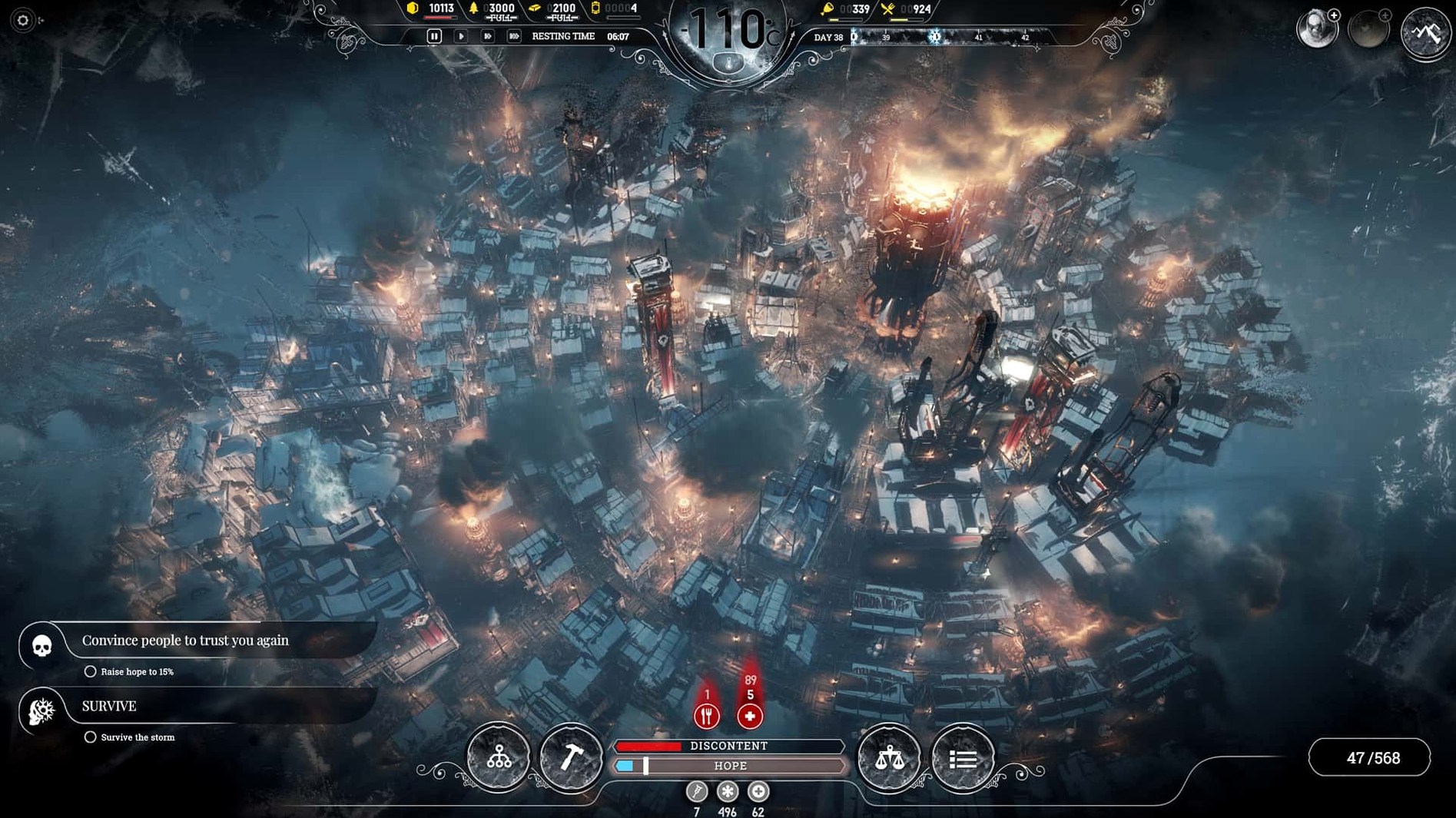
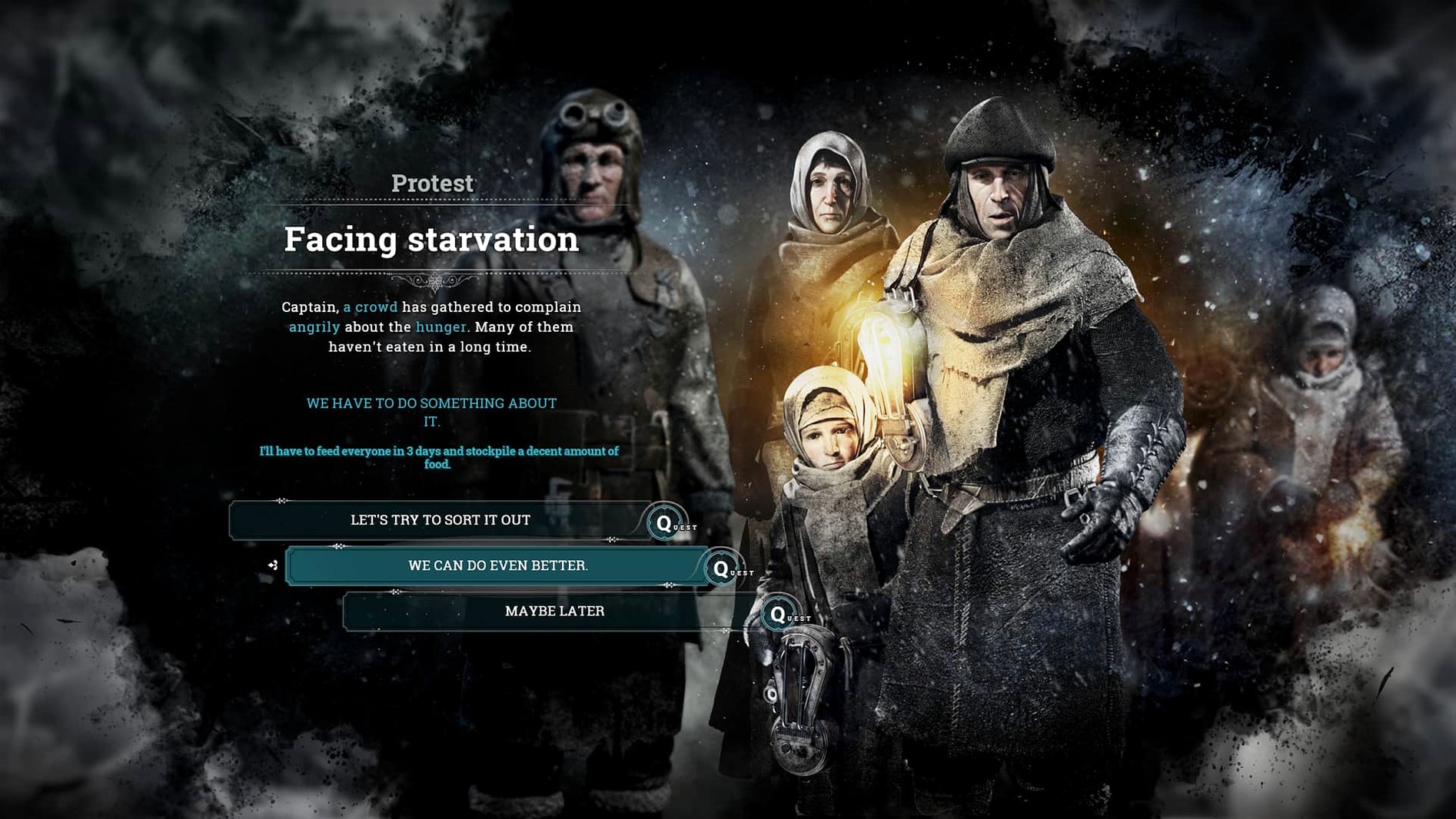
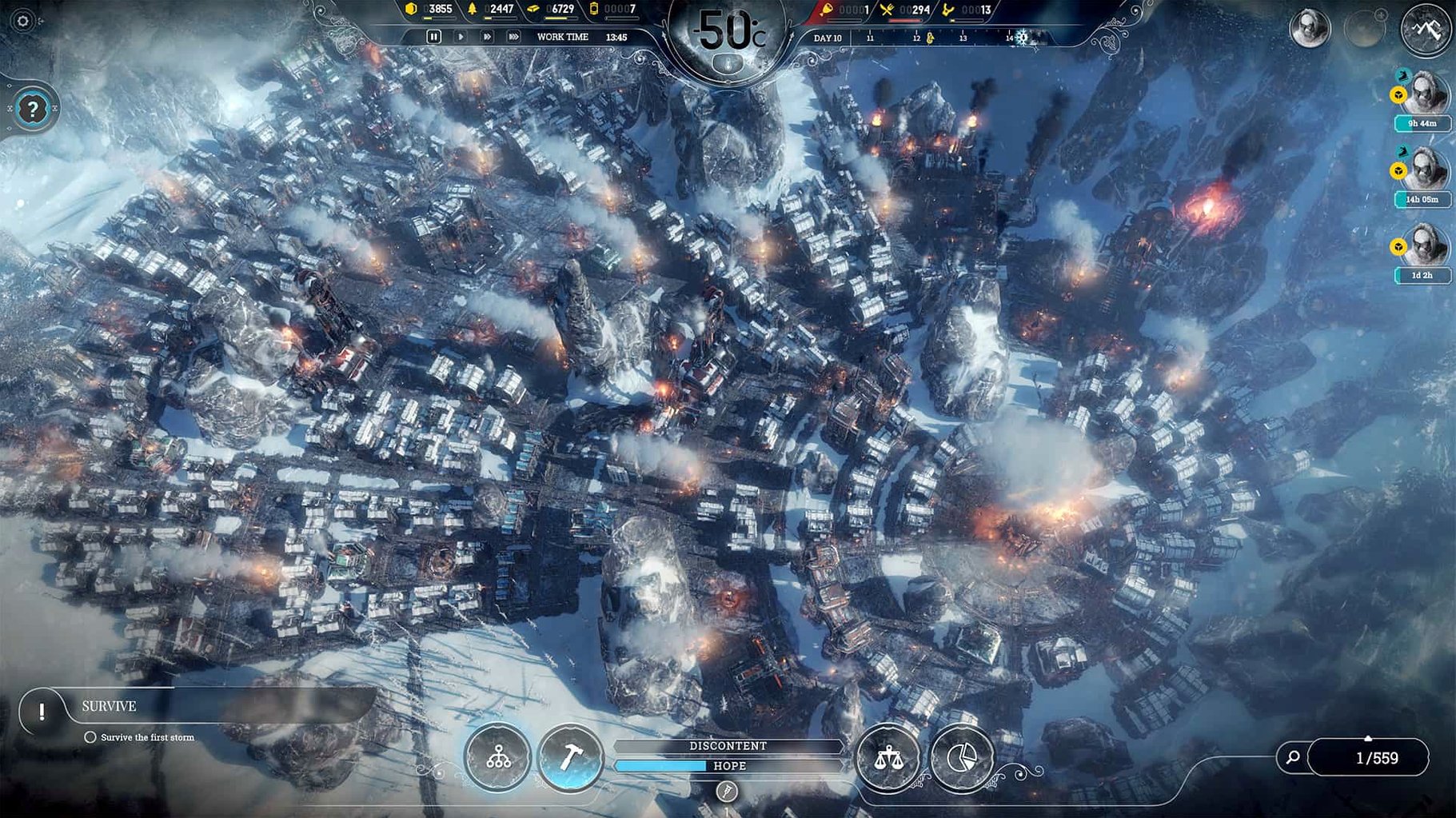
A city survival game that asks how far you are willing to go to keep the last city on Earth alive in an endless winter.
Assigning coal gatherers before the temperature drops
Each in-game day you assign workers to gather coal, wood, steel and food while monitoring the central generator that keeps the crater warm. You adjust working hours, respond to citizen requests, sign laws, and watch the temperature drop as the storm approaches.
How does exploring beyond the city work?
You send scouts across a frozen map to discover abandoned sites, rescue survivors, and bring back resources. These expeditions reveal more of the world and often present difficult choices about who or what to bring home.
What kind of choices shape the society?
Laws and events push you toward order or faith, compassion or iron rule. You can build a propaganda centre, allow child labour, or establish houses of healing — each decision shifts the mood and direction of your city.
Building tents too far from the generator circle
One early mistake is overextending the city too fast. Building tents and gathering posts far from the generator circle in the first few days spreads heat zones thin and burns coal at a rate the stockpile cannot sustain. Keep the initial ring tight, place buildings close to the generator, and research a steam hub before expanding outward. A single steam hub covers a cluster of workplaces without the full cost of another generator level.
Scout management trips up many new players. Sending your only scout team toward a promising marker while ignoring a distress call that arrives the same evening can cost you the extra workforce you needed. The game does not pause for these moments. Before committing scouts to a multi-day route, check the current population count, the sick list, and whether the scout return lines up with an approaching temperature drop — bringing back survivors into a city that cannot house or feed them creates a crisis, not a relief.
Medical posts fill silently and fast. During extended cold snaps, citizens working in chilly buildings accumulate illness throughout the day but only visit medical care after their shift. If the post has only five beds and six gravely ill workers queue up, one untreated citizen can tip hope below the threshold that triggers an ultimatum. Build a second medical post by day 7 if the temperature forecast shows a sustained drop, and consider the overcrowding law only if coal for extra heating is abundant — it doubles patient capacity but raises discontent per treatment.
The generator overdrive button sits right there on the main panel, tempting. Running it on a low coal reserve empties the stockpile in hours and stops the generator entirely. Deaths from a cold generator cascade within half a day. Set a mental coal floor — around 200 units in the early game — and do not touch overdrive below it unless a scripted storm event demands it.
People sometimes report stuttering on Mac systems that meet the minimum specs. Lowering the shadow quality and reducing the draw distance in the graphics menu without touching the resolution often stabilises the frame rate during the late game, when dozens of buildings and hundreds of citizens populate the crater. The Mac version runs through Rosetta on Apple Silicon, and the performance profile on an M1 Air at medium settings sits around 30 frames per second through most of the main scenario, dipping during blizzard effects.
Endless mode split into Endurance, Builders and Serenity across eight maps
Version 1927 (46330) brought the endless mode variants — Endurance, Builders and Serenity — into a single polished set of eight maps, each with distinct weather curves and landscape constraints. Before this, the endless mode was a single flatland scenario with a generic temperature pattern. Now you can pick a map with a massive central chasm that limits building space or one where resources cluster on one side, forcing careful placement of steam hubs and gathering posts from day one.
Builders mode shifts the tech tree by removing generator power upgrades at the start. You rely on gathering and crude structures for longer, which changes the research priority order substantially. In a standard scenario you might rush for a coal mine; in Builders you look at sawmill efficiency first because wood becomes the bridge to early heat. Serenity removes the survival pressure almost entirely — temperature drops are mild, resources are plentiful — and serves better as a city layout sandbox than a challenge. Endurance remains the brutal test, with scripted storms arriving earlier and lasting longer than in the original campaign scenarios.
The law book interface received a subtle rework in this version. Cooldown timers between consecutive laws now display more clearly, and the purpose tree no longer hides the locked branches — they show as greyed-out cards with the unlock condition stated. In practice this means you can plan a law path across several in-game days without memorising the prerequisites. A small change, but it reduces the urge to pause and cross-reference a wiki.
Expedition events also gained additional outcomes and branching paths in version 1927. A scout unit encountering the same wrecked automaton site twice may now face a different decision on the second visit, depending on what they salvaged the first time. This makes repeat runs through the same scenario feel less scripted, especially for players who enjoy setting up a frostpunk torrent for quick experimentation across several city attempts.
Notification centre popups versus the in-game alert system
The Mac build integrates with the system-wide notification centre for event popups, though most players keep the game in fullscreen and rely on the in-game alert system instead. You can play in a window and drag it to a second display, which suits a setup where the tech tree or city layout reference sits open in a browser on the primary screen. The game respects the system Do Not Disturb setting — when active, macOS notifications suppress, but in-game alerts continue as normal.
iCloud does not sync save files. The saves live locally in the application support folder, and moving them between Macs requires a manual copy. This matters if you switch between a desktop and a laptop for the same campaign. Locate the save directory at ~/Library/Application Support/Frostpunk and copy the whole folder to the same path on the other machine.
Discord's Rich Presence does not hook into the Mac version automatically, unlike the Windows build. If you want your current city population and day count to show in Discord, you need to enable the in-game option under settings, and even then the detection can be spotty on Apple Silicon. Some players running a Frostpunk 2 Mac torrent or the original through Steam report that launching via the Steam client rather than directly from the Applications folder improves Discord integration, though the behaviour is not consistent across all systems.
Voice chat apps like Discord or FaceTime work alongside the game without audio conflicts on most Macs, provided the game output is set to the system default device. On a MacBook Air, the internal microphone does not pick up game audio if you use push-to-talk rather than voice activation — a minor but useful configuration for those who stream or play while in a call.
Launching Endurance on the Flats map on a cold evening
You launch the game on a cold evening, the kind where the room temperature makes the opening screen feel just a little too appropriate. The main menu loads and you pick Endurance mode on the new Flats map — a wide open crater with few natural barriers but brutal wind chill multipliers. The first day always feels calm. You unpause, place the workshop, assign fifteen engineers, and set research to the beacon. Five workers go to a coal pile, ten to wood crates, the rest to steel.
By 18:00 in-game, the temperature ticks down to –20°C and the generator runs at level one. You sign the emergency shift law, apply it to the workshop, and watch the research bar jump. The discontent meter twitches upward but stays manageable. A popup appears: citizens request shelter. Eight tents go down in a ring around the generator, built before midnight. The sick list shows two people.
Day two begins at –30°C. The medical post finishes construction and the two sick workers walk inside. You send the scout team toward a supply cache visible on the edge of the revealed map. The beacon completes; you queue a second scout unit and the drawing boards tech. Coal dips below 100. You toggle the generator overdrive for two hours — just enough to finish the shift without frostbite cases — then turn it off and let the stockpile recover overnight.
By day five the city has seventy people, a working cookhouse, and a child shelter. A temperature drop to –50°C triggers a spike in illness. The medical post overflows. You sign overcrowding, slap down a second medical post, and realise the coal mine upgrade you planned needs to wait — wood for insulation takes priority. The scouts return with thirty survivors and a steam core. You pause, study the tech tree, and decide on the infirmary. The generator hums. The storm is still days away. You save, refill your drink, and let the shift continue.