Aspecten
 Download (20 GB)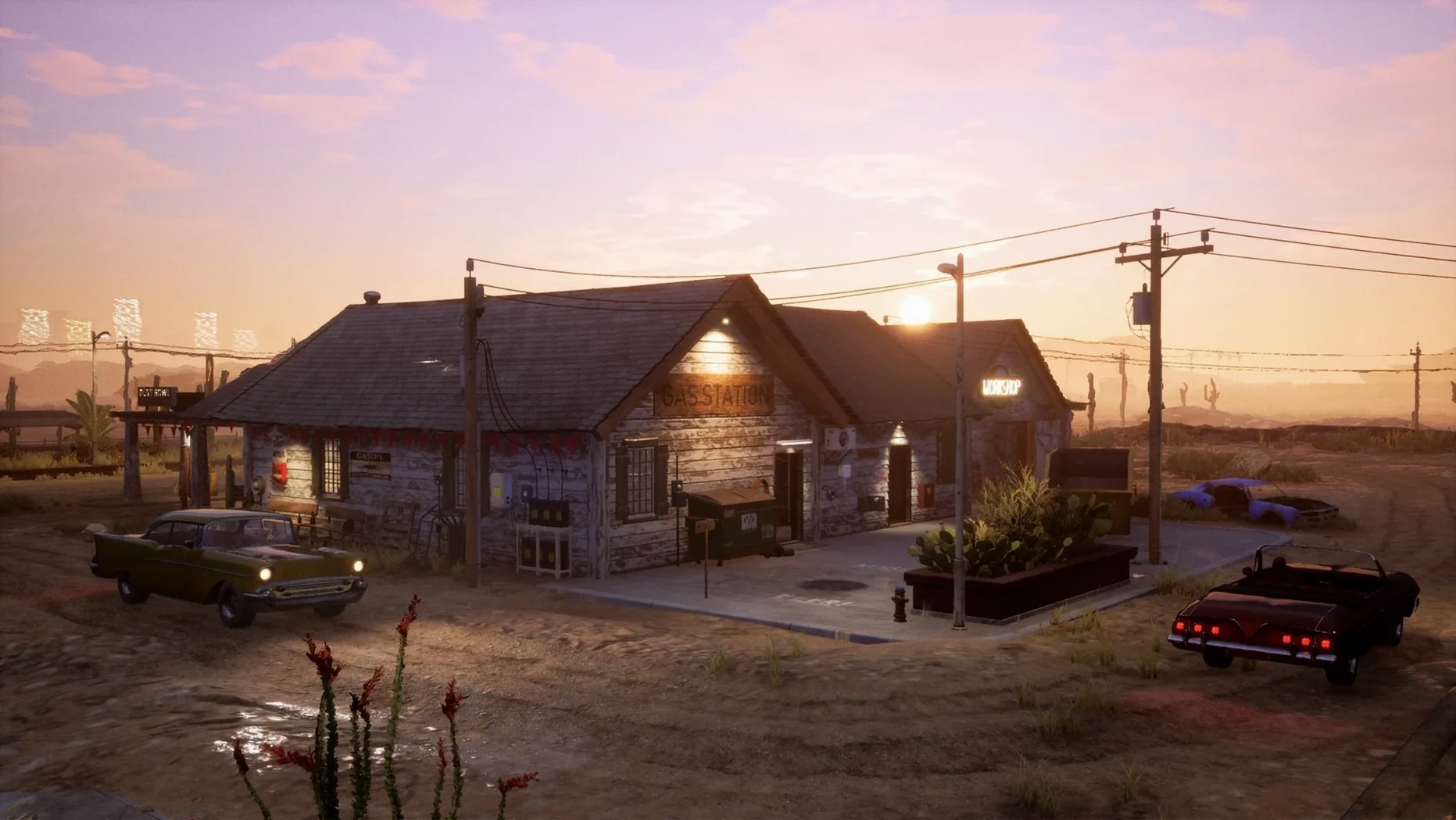
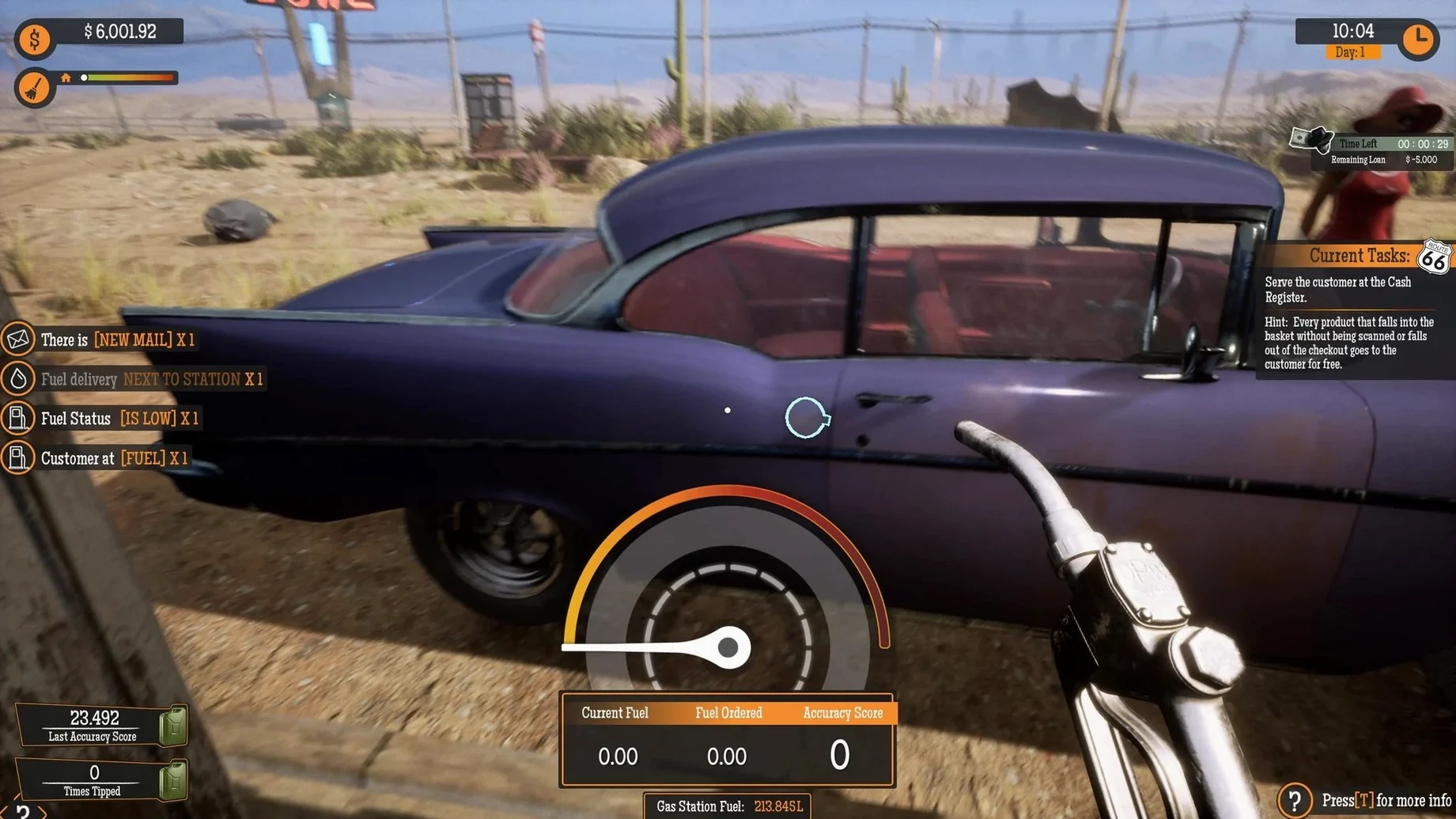
The car wash arrives later than you want it to. Early on, you are sweeping sand from the forecourt and scraping stickers off the windows, and suddenly three cars pull up at once because you forgot to set the fuel prices for the afternoon rush. That is the loop: every small improvement pulls in more customers, and more customers expose the next thing you have not fixed yet. The Mac release contains the same base game and DLCs as the PC version, with one exception — the Christmas Content Update was not available on macOS at launch.
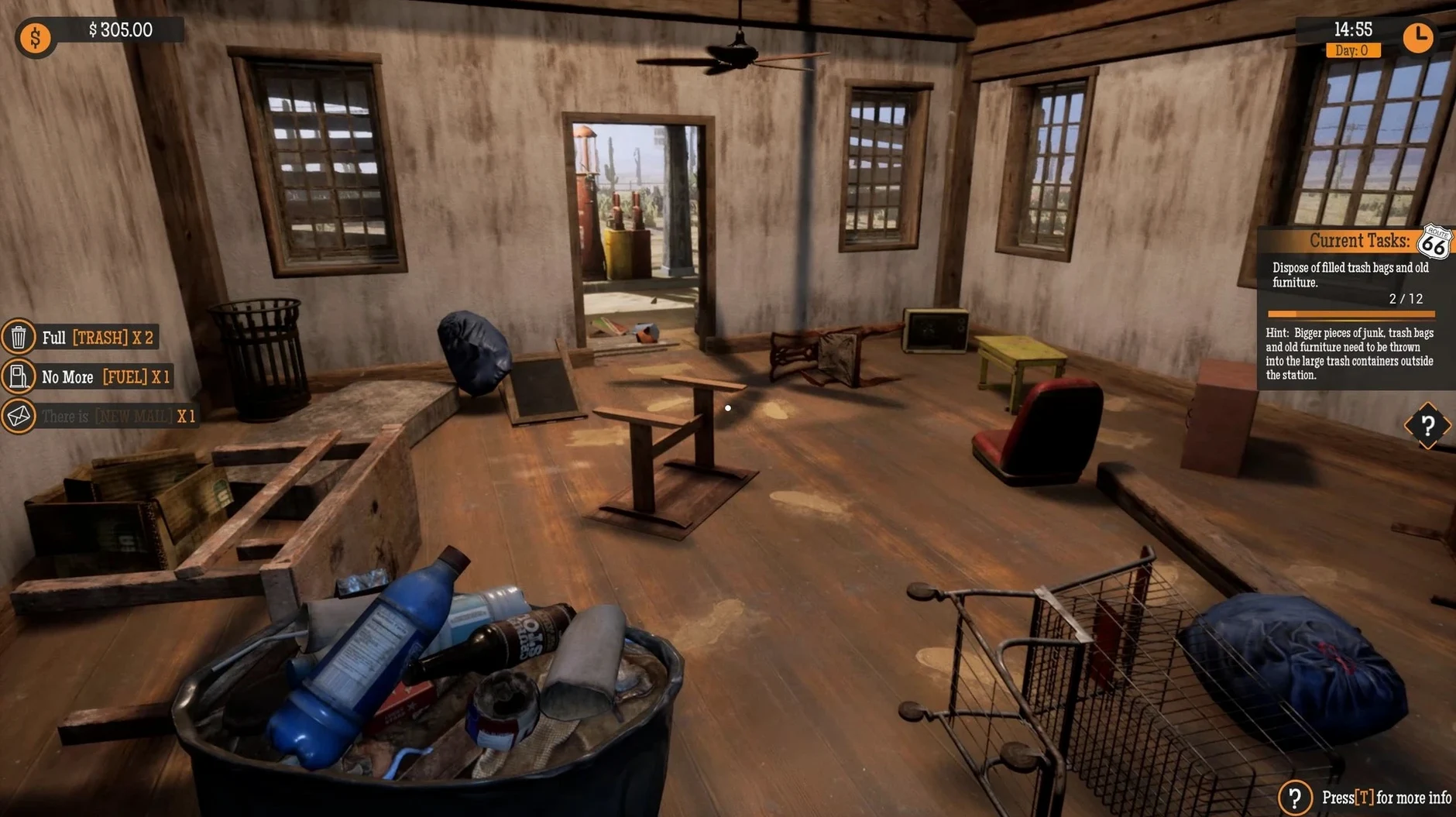
Renovating a wasteland station before the real work starts
Players who like restoration projects more than spreadsheets. You buy an abandoned station in the wasteland, remove trash and broken furniture, repair walls, paint, and decorate before the real work starts. After that, the game splits into two levels of attention. You can micromanage stock, prices, and employee tasks in detail, or you can step back and let the day run with a lighter approach. Employees gain skills and level up as they work, which gives even the quieter hours a sense of progress. Native Apple Silicon support means the game runs as a universal app on both Intel and ARM Macs, and the interface covers eighteen languages including Polish, Thai, and Czech — though voice lines are English only.
Who might not enjoy it
Anyone expecting a pure management sim will find a lot of physical labour in the early hours: dragging boxes, clearing debris, positioning shelves. The loop is generous but repetitive, and the desert setting means the visual palette stays warm and sandy for long stretches. If you want tight economic simulation with graphs and market pressure, Gas Station Simulator is closer to a hands-on renovation sandbox. The pace is whatever you make it, but the game never rushes you — for some players that is freedom, for others it feels aimless after the first few upgrades.
Holds a steady frame rate with six cars queuing on an M4 Mac mini
On an M4 Mac mini the game loads a save in under ten seconds and holds a steady frame rate even with a half-built warehouse and six cars queuing. Fans stay quiet. The universal binary means the app runs natively on Apple Silicon without Rosetta overhead, which shows in consistent performance during the busier afternoon rush when multiple customer vehicles, an employee or two, and the car wash all run at once. Memory use sits around 3–4 GB during a typical session. No crashes occurred across several hours of play, though minimising the window while the day cycle advances can cause a brief stutter when you return — a quirk rather than a stability problem.
One downside: autosave triggers at the start of each in-game day and causes a tiny hitch. On a mechanical drive you would notice the pause; on the M4’s internal storage it passes in a blink. The game does not hammer the GPU, so battery drain on a MacBook stays reasonable for a 3D title.
Turn off motion blur so sweeping doesn't feel smeared
Two adjustments make early hours more comfortable. First, turn off camera motion blur in the graphics settings — the default makes sweeping and shelf-stacking feel slightly smeared when you pan quickly. Second, in gameplay options, enable toggle sprint instead of hold-to-sprint. The station starts small, but once the workshop and car wash are built you cover a lot of ground, and holding a key while steering around fuel pumps grows tiresome.
On a Mac with a Retina display, check the resolution scaling slider. The game defaults to a conservative setting that keeps shadows and reflections crisp but leaves text on the cash register screen a little soft. Bumping scaling up one notch sharpens the UI without a noticeable frame-rate cost on M-series chips. Leave vertical sync on unless you see input lag; the desert heat haze effect already masks most tearing.
Outside in the dust and glare instead of under flat fluorescent light
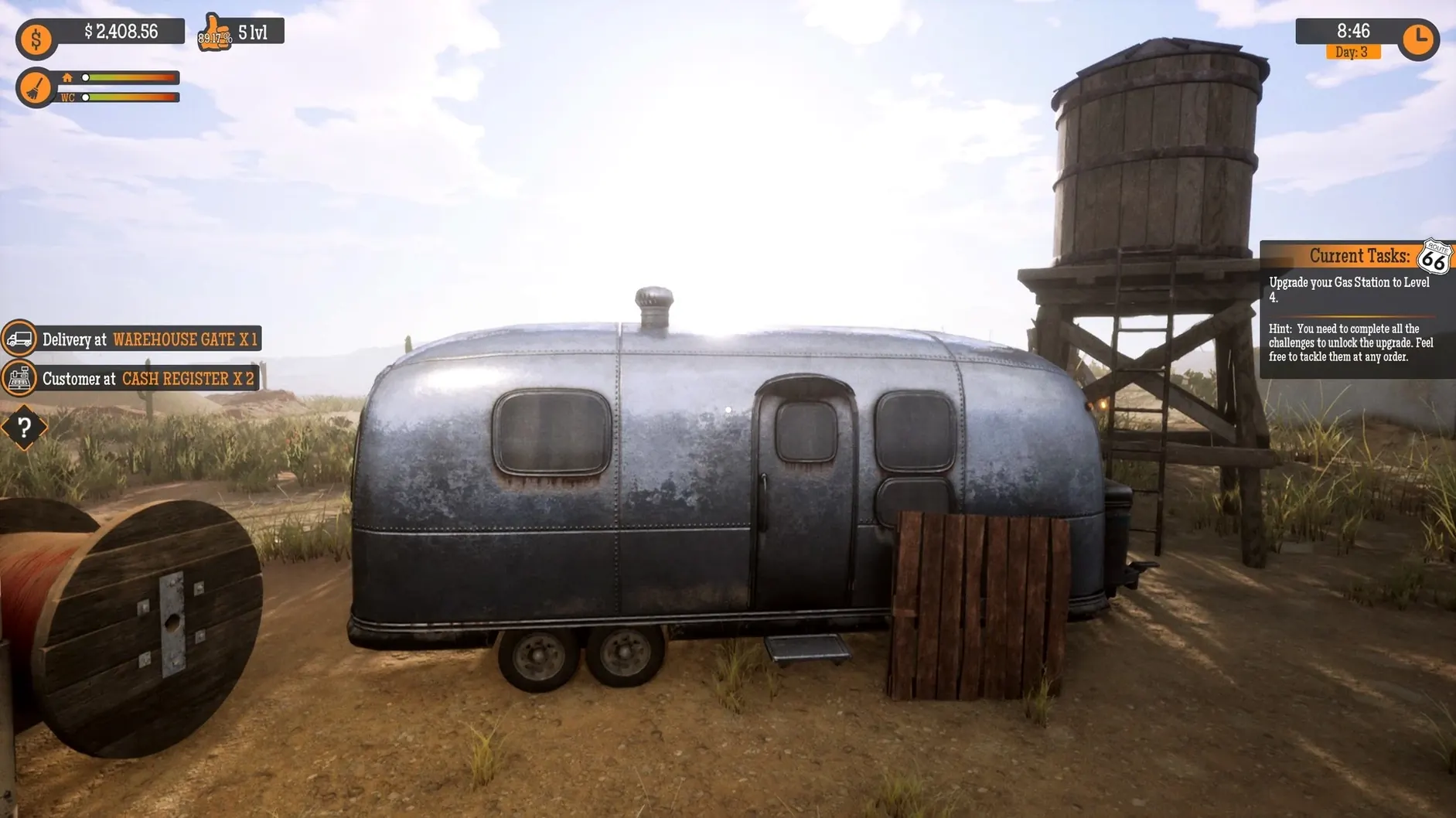
Supermarket Simulator shares the aisle-stocking rhythm and the slow expansion of a retail space, but it stays indoors under flat fluorescent light. Gas Station Simulator pushes you outside into the dust and glare, and the renovation phase — scrubbing walls, assembling shelves, painting — gives the early game a physicality that Supermarket Simulator skips straight past. The desert station also demands spatial thinking: fuel pumps, the shop, the workshop, and the car wash each occupy fixed outdoor plots, so you plan around geography, not just shelf rows.
Car Mechanic Simulator 2021 overlaps once you open the workshop. Both let you take apart engines and diagnose faults, but Car Mechanic Simulator goes far deeper on individual components and diagnostic tools. In Gas Station Simulator, the workshop is one service among several rather than the whole game. You might replace brake pads between fuel deliveries and a car wash rush, which keeps the mechanical work lightweight but varied. If you want a pure spanner-and-parts experience, Car Mechanic Simulator is the tighter choice. If you want that as a side activity while managing a whole roadside business, Gas Station Simulator fits better.
House Flipper matches the cleaning-and-renovation loop most closely. Both games start with a neglected property full of rubbish, peeling paint, and broken fixtures. The difference is what happens after the paint dries. House Flipper ends when you sell; Gas Station Simulator turns the renovation into an operating business you run day after day. The satisfaction shifts from flipping a property to sustaining something you built, with customers walking through the door you just installed. For players who tried House Flipper and wished they could stay and run the place, the gas station sim free download for Mac delivers that long-term attachment house flipping never quite provides.