Aspecten
 Download (28 GB)
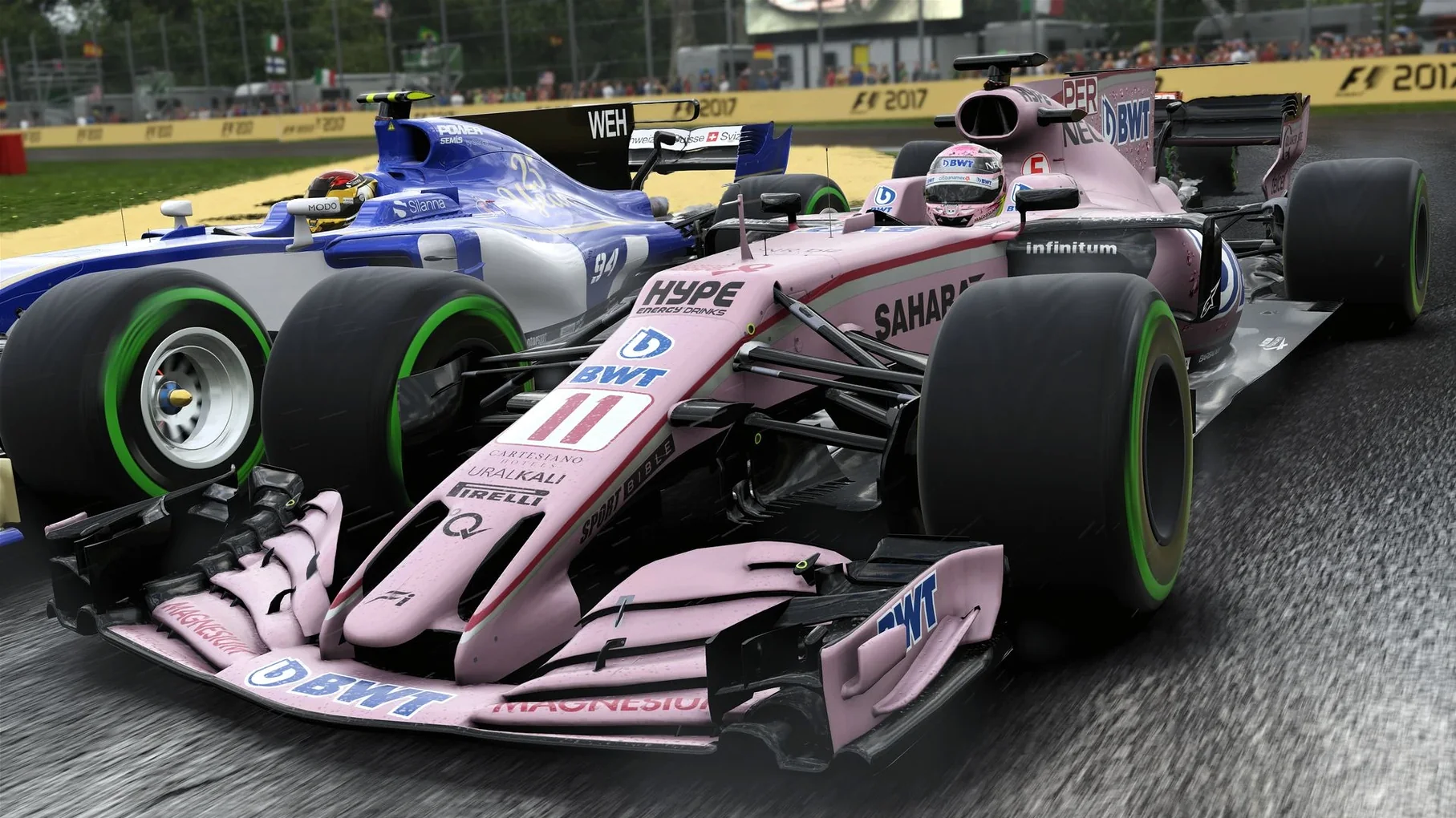
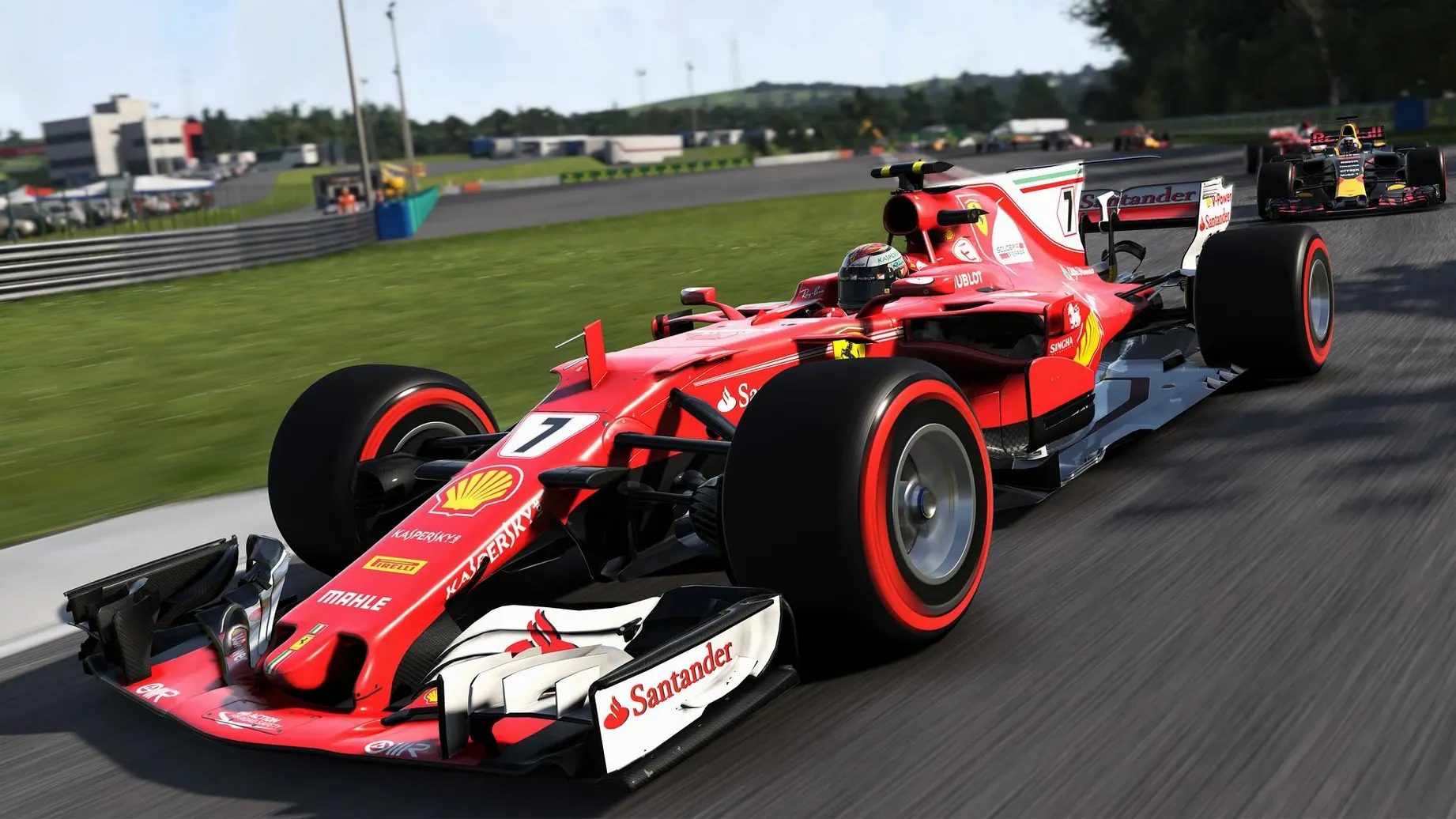
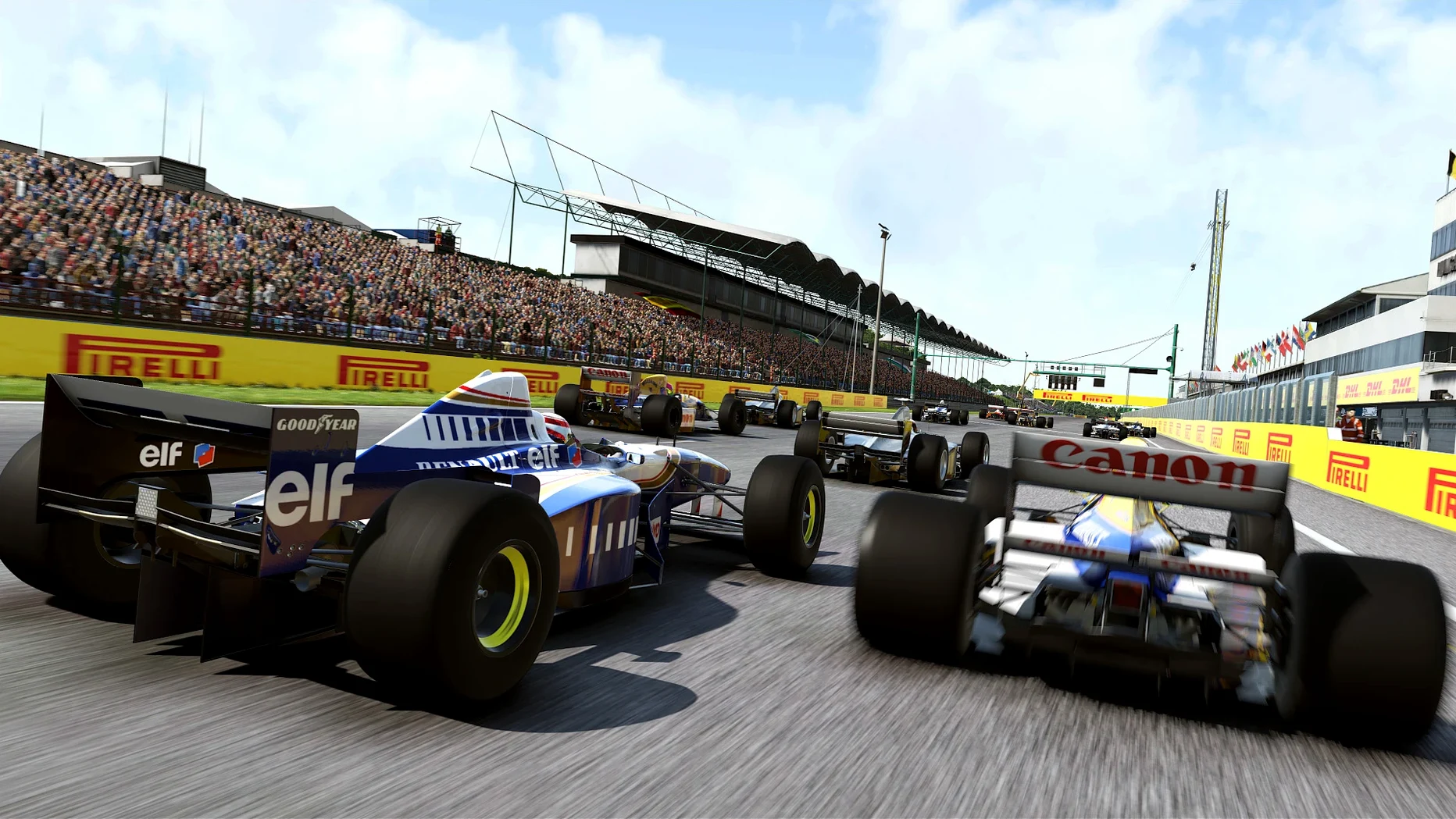
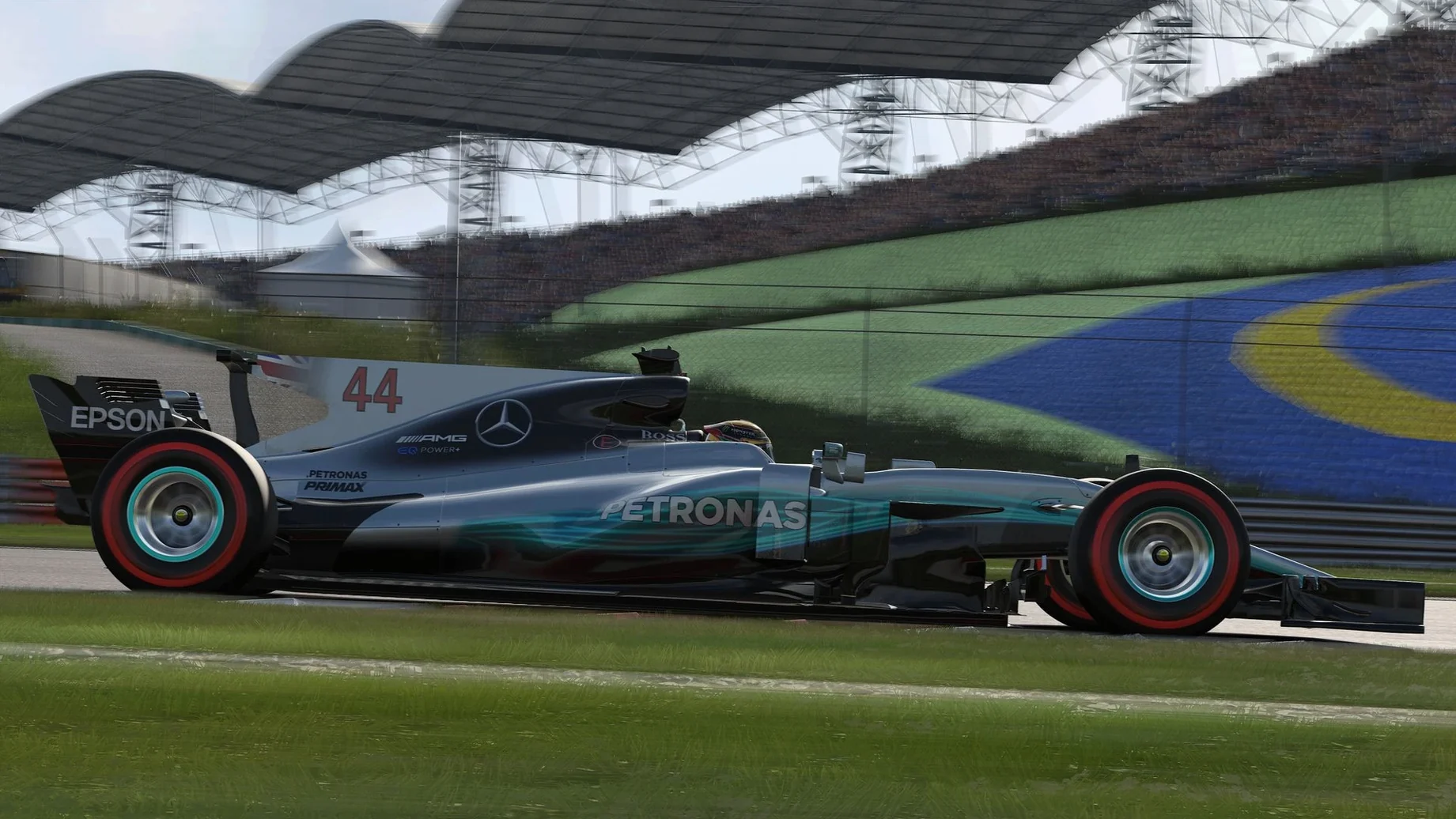
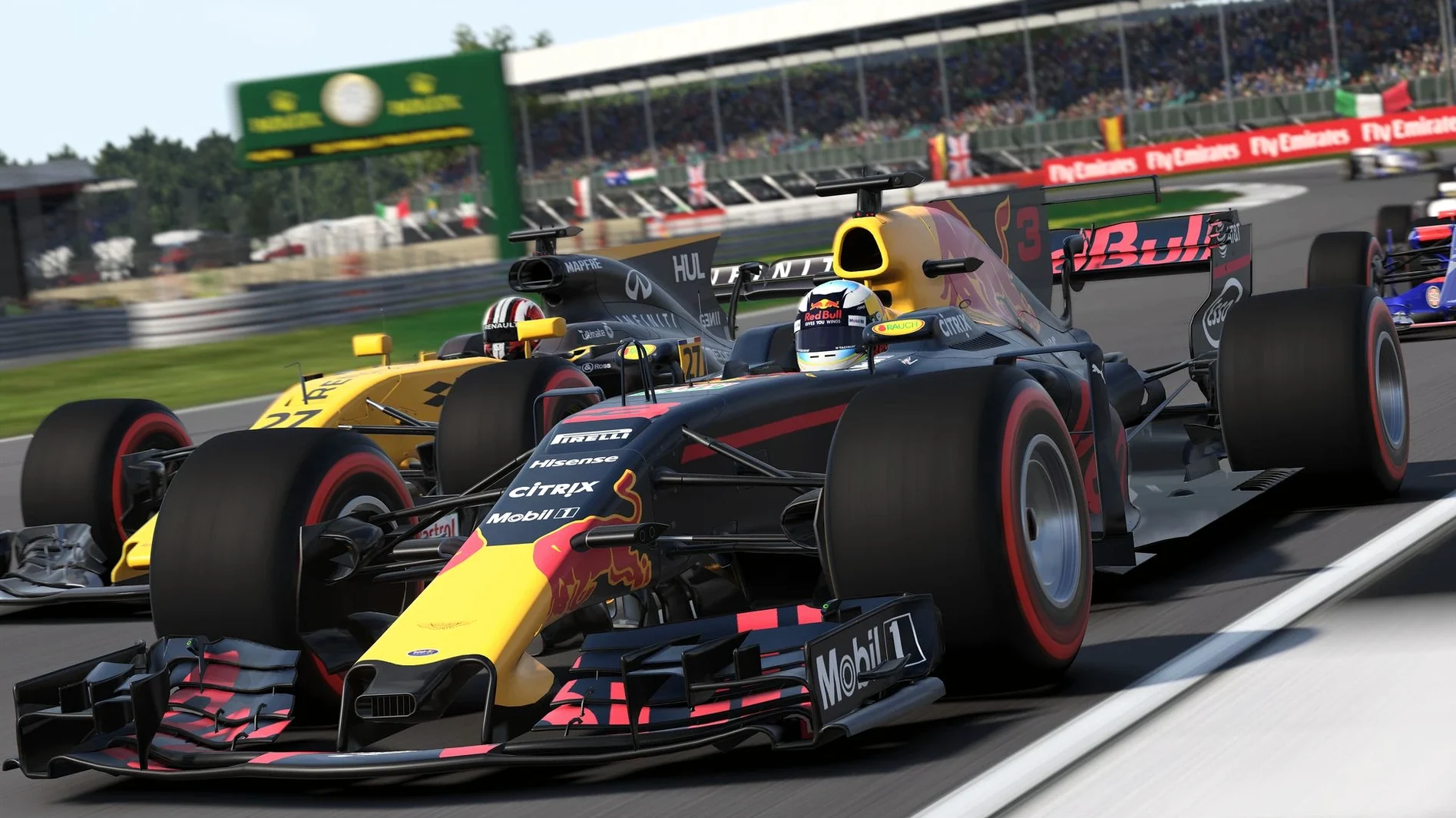
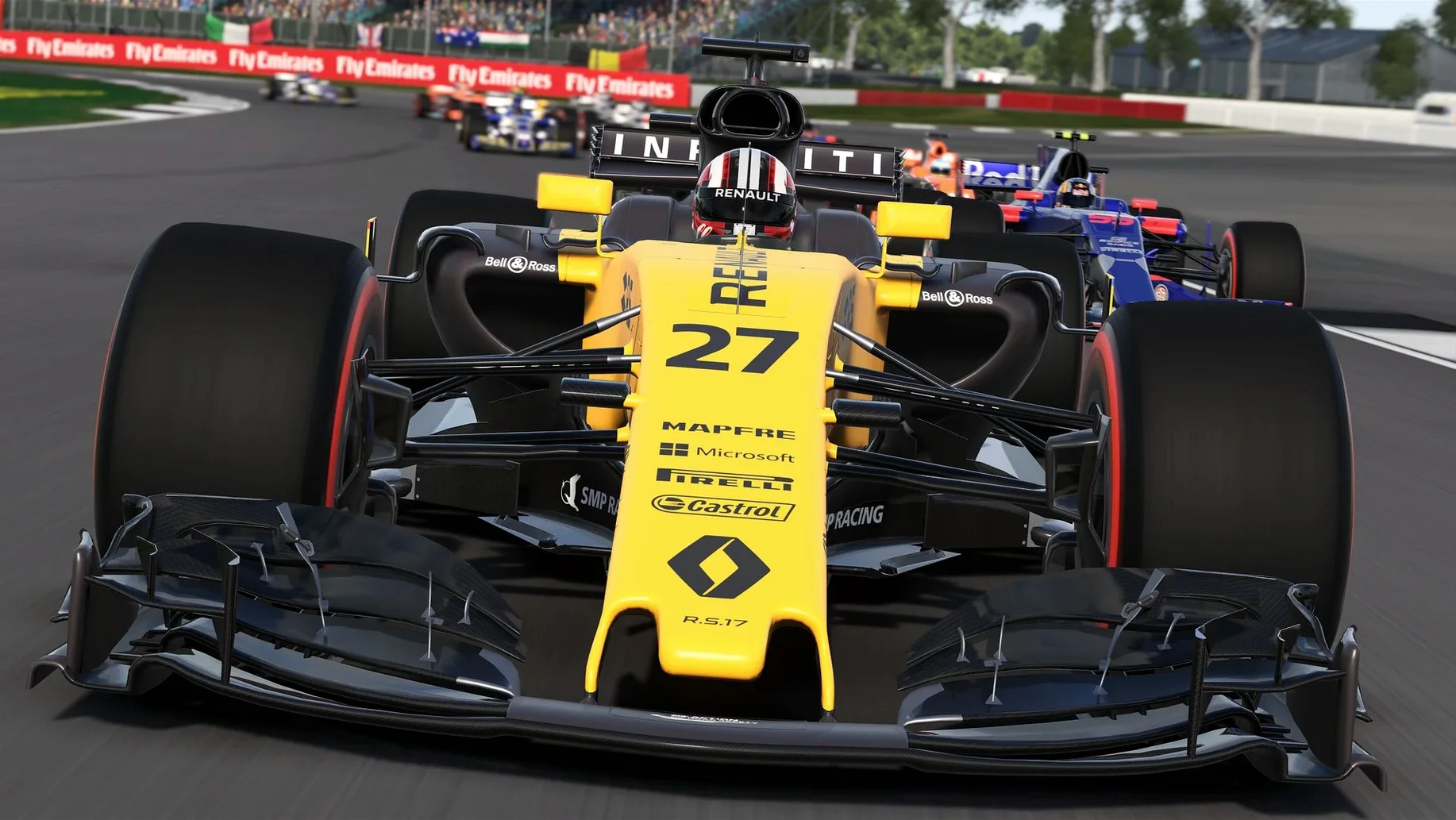
You slot into the cockpit of a McLaren at the Circuit de Barcelona-Catalunya. The formation lap gives you a moment to settle in before the revs rise and the lights go out. Minute to minute, you are managing tyre temperatures through long corners, adjusting fuel mix on the straights, and listening to your race engineer relay gap times to the car ahead. A sudden cloudburst can turn a dry race into a scramble for the pit lane, where you call for intermediate tyres before your rivals do.
A decade-long career climb from backmarker to contender
- A ten-year career mode that moves you from a backmarker team to a championship contender, with research and development choices affecting your car's performance season after season.
- Championship mode with multiple rule sets, letting you replicate the 2017 season or adjust race length and weather settings to your preference.
- Training programmes within the career that build your skills on specific circuits before you face qualifying.
- Online and single-player modes, covering quick races, time trials, and full multiplayer sessions.
Throttle control makes the difference between grip and spin
- Handling leans toward simulation rather than arcade physics; you cannot throw the car into a corner and expect it to stick without throttle control.
- The interface supports Russian, English, German, Spanish, Italian, Simplified Chinese, Polish, Portuguese, French, and Japanese.
- Requires a 2.0GHz Intel Core i5, 8GB of RAM, and 36GB of disk space. Supported Macs include the 13-inch MacBook Pro from late 2016 onward, the 15-inch MacBook Pro from late 2016, the 21.5-inch iMac from late 2015 with a 2.0GHz Core i5 or better, the 27-inch iMac from late 2014, and the Mac Pro from late 2013.
Consistent frame pacing across multi-race career sessions
On a Mac meeting the recommended Intel Core i5 specification, race sessions load within twenty to thirty seconds, and frame pacing stays consistent at medium to high settings. Long career sessions spanning multiple race weekends do not introduce noticeable slowdown, though saving a mid-session progress file pauses the action for a beat. The first launch is unusually slow, as the installation notes warn, because the game compiles shaders and verifies the full 36GB installation. Subsequent launches settle into a normal rhythm.
Memory use hovers around 6GB during a grand prix weekend, leaving little headroom on an 8GB system if background utilities are active. Closing a web browser and streaming apps before a long session avoids stutter when the game streams in new track-side assets. On integrated Intel Iris Pro 6200 graphics, you need to pull texture and shadow quality to low for a steady frame rate in wet conditions, where spray effects and reflections multiply the draw calls. Discrete AMD R9 M290 hardware handles rain and night races without the same compromise.
Stability is solid. Career mode autosaves after each session, and across a full season of races, practice programmes and R&D screens, crashes are rare. The one repeatable quirk involves alt-tabbing away during a loading screen on some Intel Macs; returning to the app can freeze the display for ten seconds before it recovers. Online multiplayer depends on the host’s connection quality, and a poor host manifests as cars warping on the straights rather than a dropped session.
A 2017 season that branches into your own alternate history
A frequent worry is whether a game built around the 2017 season still holds up for someone who follows the current championship. The career mode answers that by making the season a starting point for your own alternate history. Team changes, regulation shifts and your R&D priorities reshape the grid over multiple seasons, so the 2017 car models and driver line-up become raw material rather than a static snapshot.
Another question concerns the simulation handling and whether a gamepad is enough. A controller with analogue triggers gives you the modulation you need for trail braking and throttle application, and the game recognises most USB and Bluetooth pads without additional configuration. Force feedback wheels are supported, though the list of compatible Mac drivers is narrower than on Windows, so it is worth checking whether your specific wheel model maps correctly before committing to a wheel setup. The driving model penalises abrupt inputs, so even on a gamepad, short-shifting and smooth steering pay off.
People also ask about the size of the download and the first-launch delay. The 36GB footprint is fixed, and the initial shader compilation can take several minutes on a 2.0GHz i5. Leaving the Mac awake and idle during that first launch is the simplest way through it.
Circuit strategy and pit stops instead of gravel-stage micro-adjustments
Beside DiRT Rally, which focuses on point-to-point rally stages and loose-surface physics, F1 offers a circuit-racing structure with tyre compounds, pit strategy and team management. DiRT Rally demands constant micro-adjustments on gravel; F1 rewards consistency across twenty corners per lap and the ability to read a race developing over an hour. Both run on Intel Macs via Feral Interactive ports, so the performance profile and metal support feel familiar.
Against GRID Autosport, another Codemasters title on macOS, F1 narrows the scope to open-wheel cars but deepens the team simulation. GRID Autosport gives you touring cars, endurance racers and street circuits in a looser career structure, whereas F1 ties every session to a championship points tally and an engineering development tree that affects the next race. If you want variety in car classes, GRID Autosport stretches further; if you want to inhabit a single motorsport discipline across multiple seasons, F1 is the more absorbing choice.
When placed next to Assetto Corsa, the difference comes down to structure versus sandbox. Assetto Corsa emphasises car handling fidelity and hot-lapping across a wide car roster, but it has no career mode to speak of. F1 wraps its physics inside a ten-year narrative arc with press interviews, contract decisions and R&D milestones, so you trade some of the raw driving nuance for a sense of progression.