Aspecten
 Download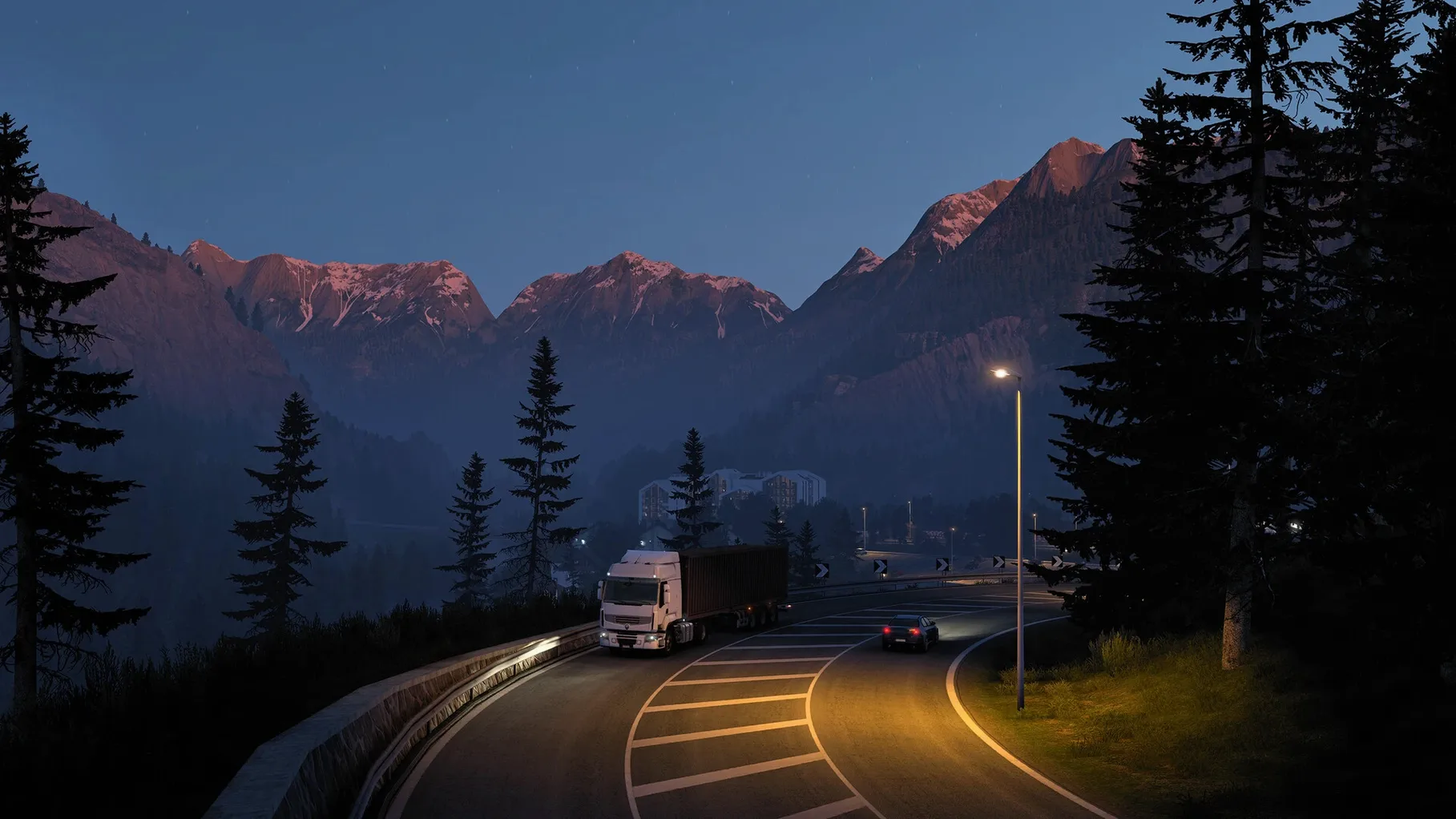
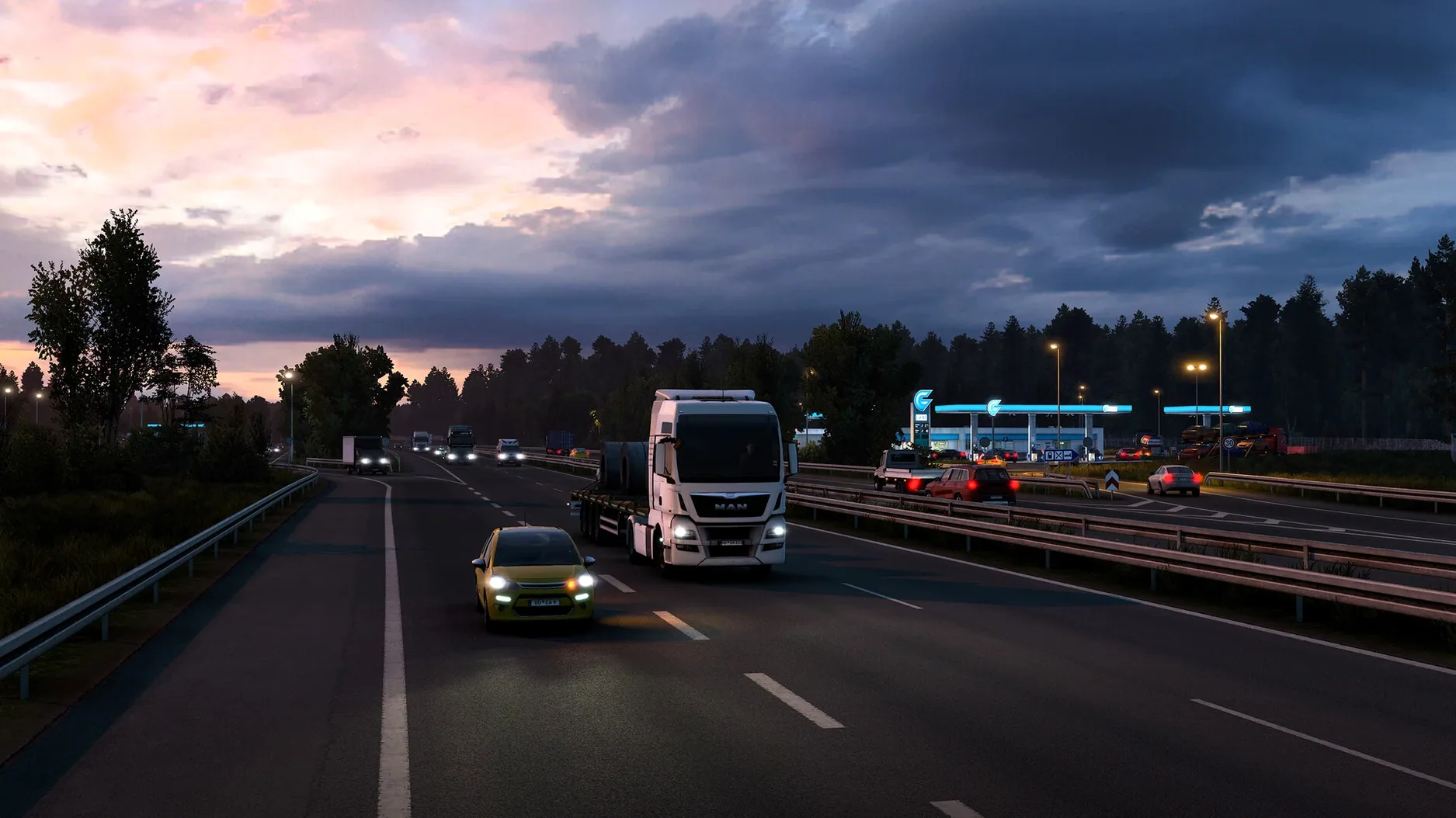
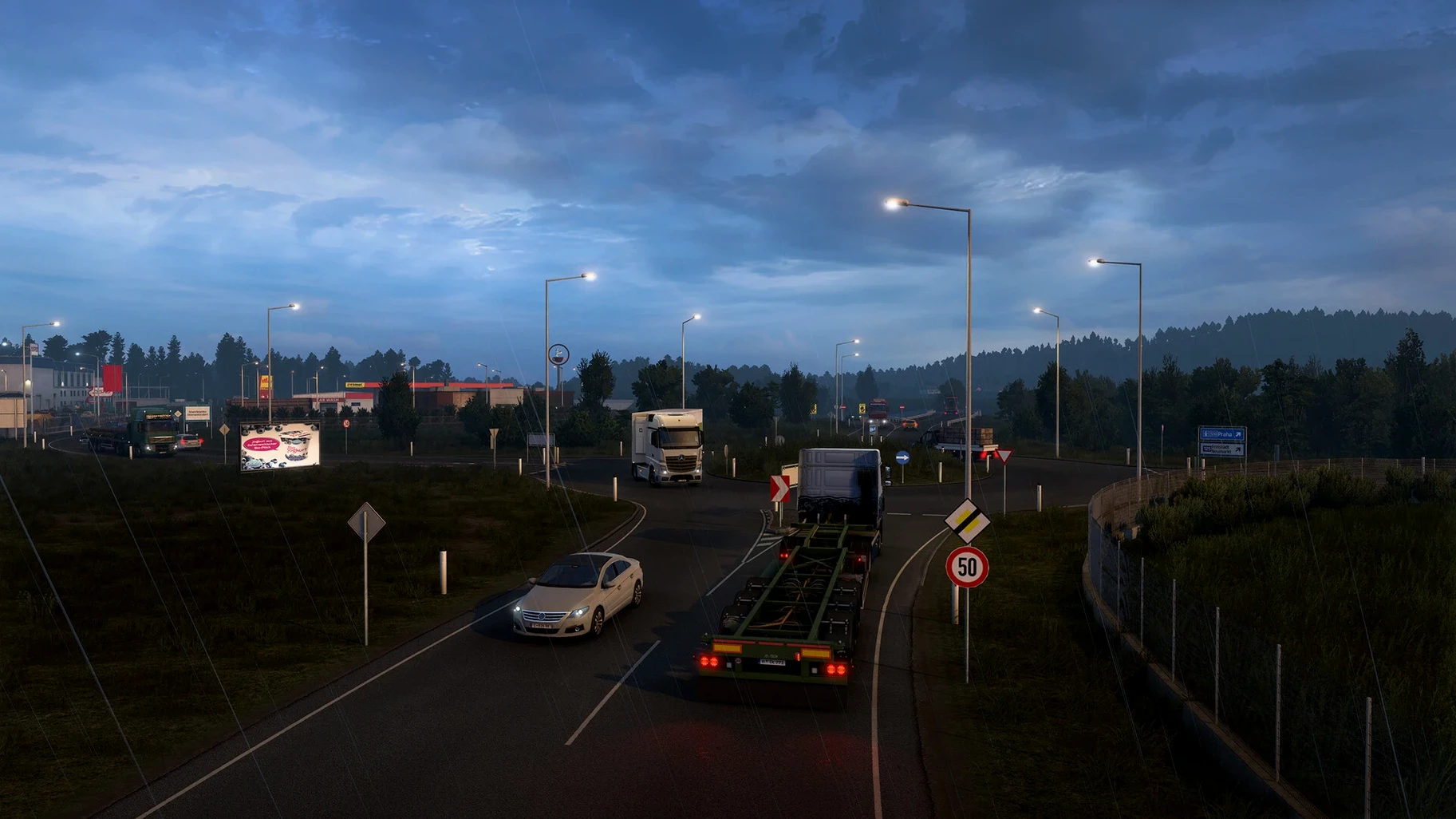
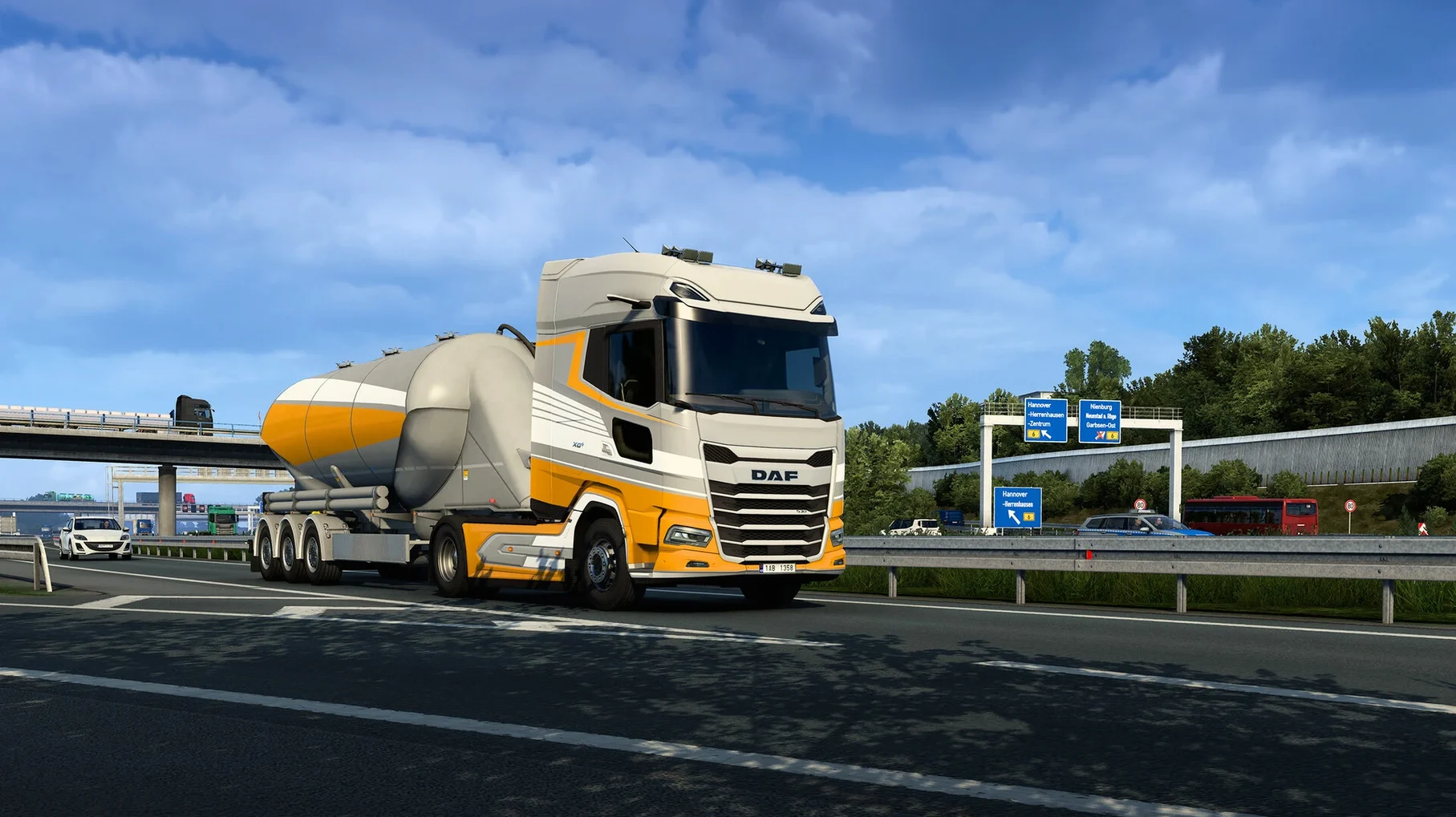
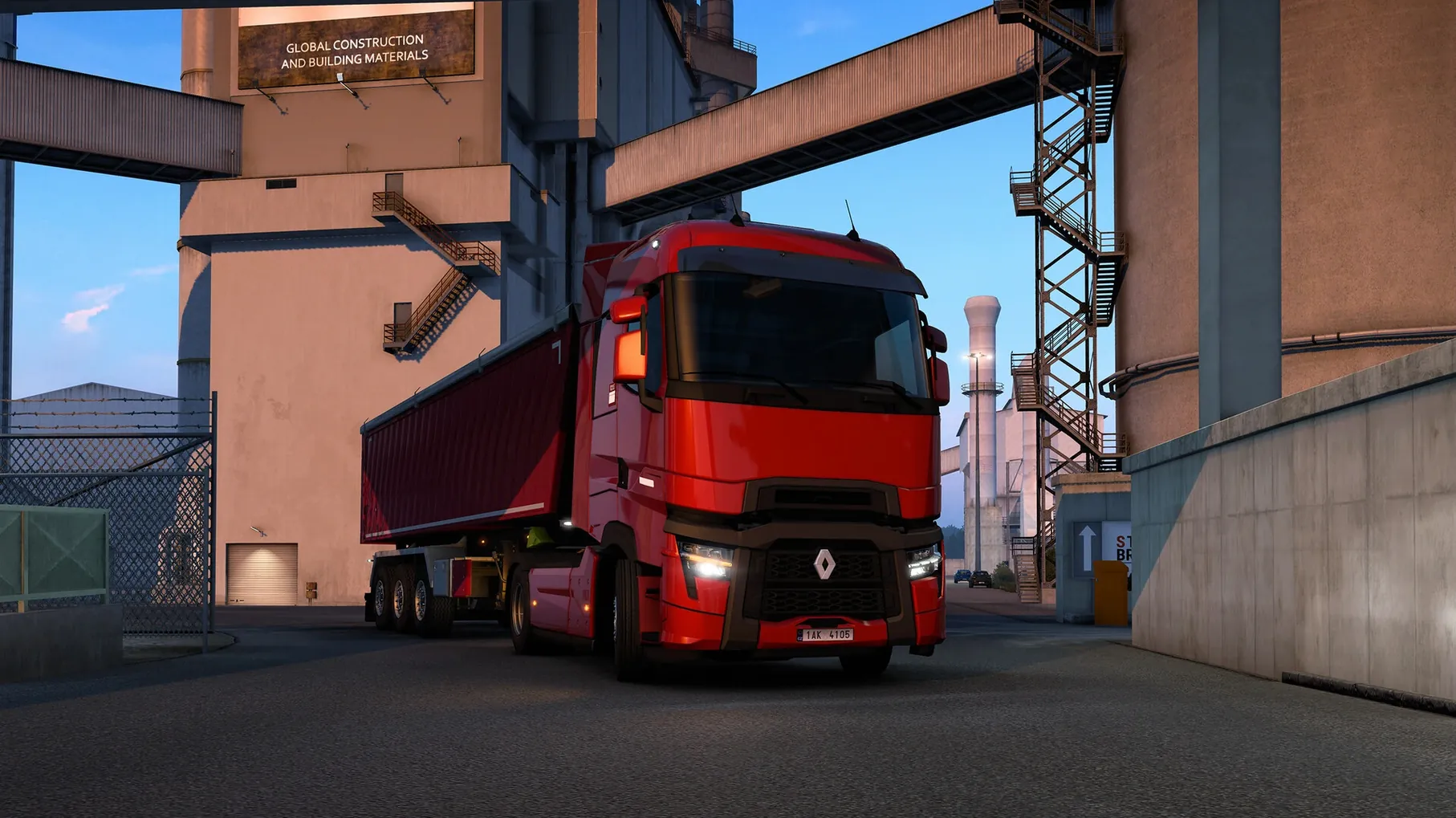
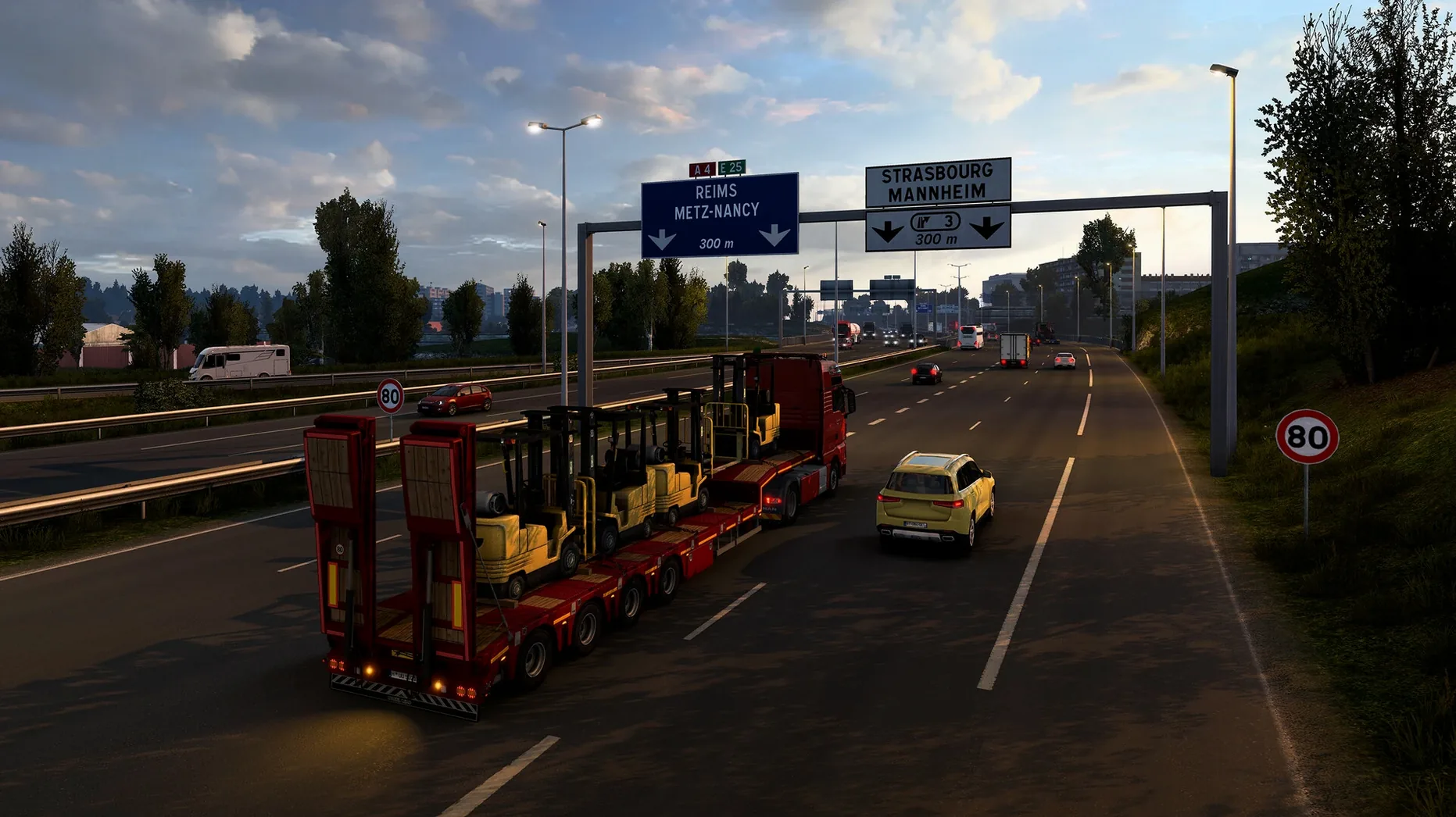
Someone who likes the idea of a long drive without the fuel bill. Euro Truck Simulator 2 attracts players who enjoy methodical, solitary jobs done well. You sit in a cab for an hour, listen to the engine, and watch the landscape change. The draw is the routine itself.
Plan a route
You open the job market, pick a cargo, and study the map. The game includes dozens of cities across Great Britain, Germany, Italy, the Netherlands, Poland and surrounding countries. You check the distance, the deadline and the payout before accepting the work.
Drive the delivery
This is the core of the hour. You steer along real road networks stretching for thousands of kilometers, manage your speed, fuel level and fatigue, and keep the trailer stable through tight turns. The cab vibrates gently and the music accompaniment fills the silence.
Run the business
Between trips you check the garage. You buy new trucks, hire drivers and watch their earnings trickle in. The business layer turns a single delivery into part of a growing fleet, giving the next job a sense of forward momentum.
Turning off the speed limiter on your first quick job
New drivers tend to treat the motorway like a racing circuit. The speed limiter is off by default on quick jobs, and the temptation to push 110 km/h through a French toll gate is real. What follows is usually a rollover on a gentle bend or a fine that wipes out half the delivery profit. Keeping the needle at 80–85 km/h feels slow, but the cargo arrives undamaged and the bank balance grows steadily.
Another common error is ignoring the rest stops. Fatigue simulation kicks in after roughly nine hours of driving, and a driver who pushes through the yawn will start nodding at the wheel. The screen darkens at the edges and steering inputs lag. Pulling into a marked rest area and sleeping for the minimum time costs only a few in-game hours and prevents a wrecked truck.
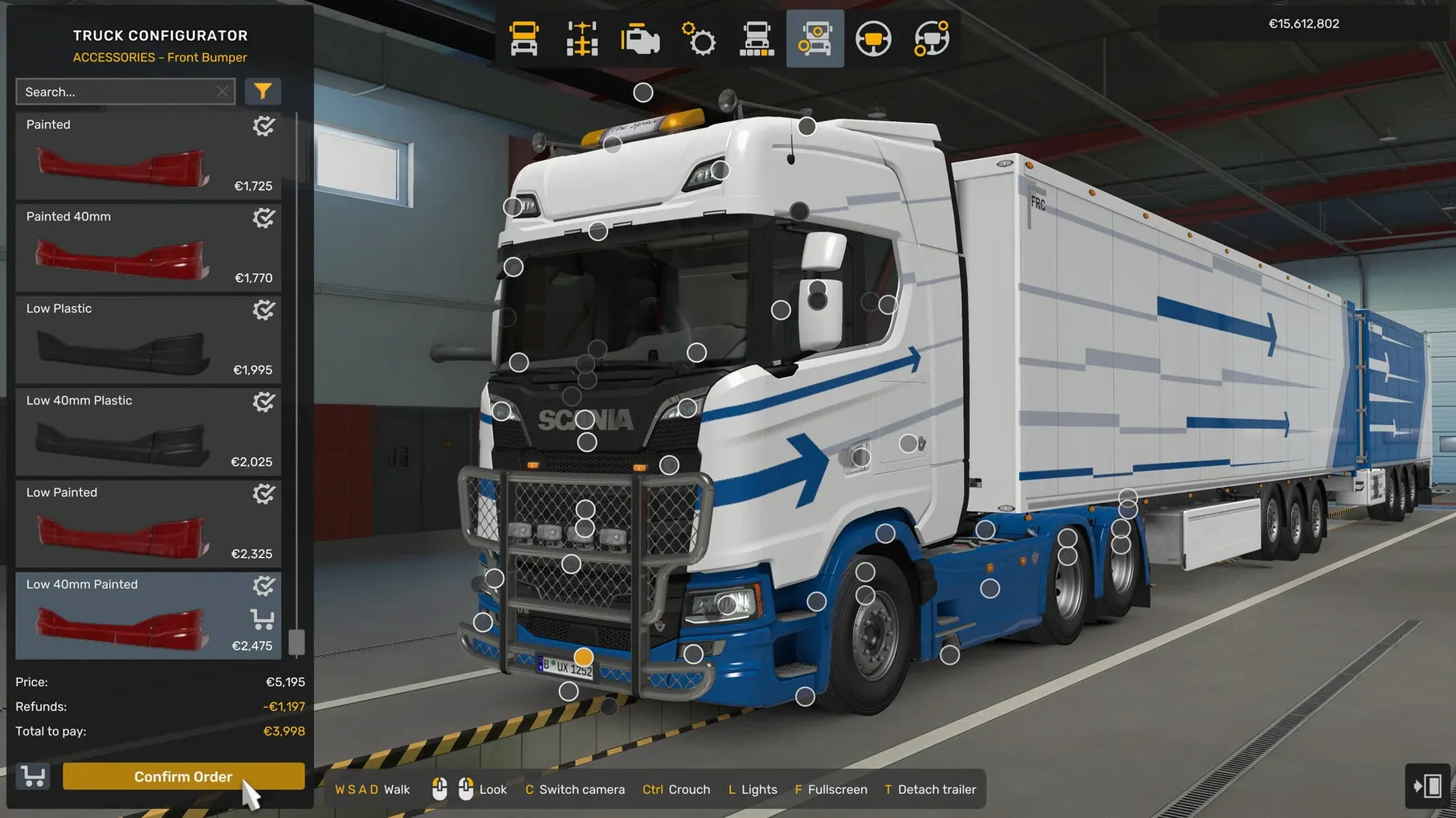
Loan management trips up many first-time owners. The bank offers up to €500,000 early on, and a shiny new Scania feels like the right move. Repayments then eat the profit margin for the next twenty jobs. A better path is to take one small loan for a basic garage upgrade, hire a single driver with a cheap truck, and let that income fund the next purchase. Patience builds a fleet faster than debt.
Finally, reversing with a trailer defeats beginners who never practised away from a deadline. The in-game parking selection offers a safe skip option, but learning to straighten the trailer using small opposite-lock movements saves time and unlocks the bonus XP for difficult drop-offs. A quiet industrial estate at midnight is the classroom.
Leaving the truck rolling during Command-Tab switches
The game runs as a standard Mac application and behaves politely alongside other software. Switching to the desktop with Command-Tab pauses the simulation only if the option is ticked in gameplay settings; otherwise the truck keeps rolling. Many players leave a podcast app or internet radio running in the background to replace the in-game music accompaniment. A separate browser window with a real-world map of European roads sits open on a second display for those who enjoy matching the route to actual geography.
Mission Control handles the game sensibly. Euro Truck Simulator 2 occupies its own Space without fighting for focus, and the cursor stays locked to the game window when driving. For those who record sessions, the built-in macOS screen recording tool captures gameplay at a steady framerate without needing third-party software.
Save files live in the user's Documents folder under Euro Truck Simulator 2, making manual backups straightforward. Time Machine picks up the folder automatically, and copying the entire directory to another Mac transfers a career intact. Mods placed in the mod subfolder load without an external manager, though the folder must be created first.
The game also works with Steam Input, but on macOS the keyboard and a USB wheel or gamepad tend to produce fewer configuration headaches. The operating system recognises a Logitech or Thrustmaster wheel as a standard HID device, and the game's controller wizard maps axes and buttons inside a minute.
Loading frozen food for Strasbourg from a Düsseldorf garage
Late evening, coffee on the desk. The game launches from Launchpad and the profile loads with the truck parked at a garage in Düsseldorf. The job list refreshes: a load of frozen food bound for Strasbourg, 390 kilometres, paying €12,400. The deadline gives plenty of room. The cargo is accepted and the trailer hooks itself to the fifth wheel with a soft clunk.
The engine turns over with a keypress. Lights check, mirrors adjusted with the mouse, then the truck pulls out of the yard and onto the autobahn heading south. The first twenty minutes are motorway cruise control at 80 km/h, left lane discipline observed, the occasional AI sedan cutting in too close. The radio is off; just the tyre hum and the turbo whistle.
Near Karlsruhe the route leaves the motorway for a secondary road through the Black Forest. The trailer leans on downhill switchbacks and the brakes warm up audibly. A fuel stop becomes necessary with a quarter tank left, so the truck pulls into a station, fills the 800-litre tank and rolls back onto the road. A rest area appears just before the French border and the driver sleeps for seven hours, resetting the fatigue meter.
The final stretch crosses into Strasbourg in early morning light. The satnav voice counts down the last few hundred metres. The drop-off point is a supermarket depot with a tight reverse bay. The trailer swings in on the third attempt, the engine cuts, and the delivery confirmation screen shows zero damage and an on-time bonus. The session closes with a quick check on the hired driver in Berlin, who has completed two short hauls during the trip. The game saves and quits.
Workflow for building a first garage
The goal is simple: own a garage with two hired drivers generating passive income. The starting bank balance is €2,000 and the player has a single truck on loan for quick jobs.
Step one — take high-value short hauls. Sort the job list by price per distance and pick chemical or medical cargo under 400 km. These pay well without eating too much fuel or time. Repeat until €20,000 sits in the account.
Step two — buy the cheapest garage. Luxembourg, Brussels or any small city with a €100,000 price tag works. The bank loan covers the full amount with a manageable daily repayment. Once purchased, the garage has space for three trucks.
Step three — acquire a second truck. A basic model from the used truck dealer costs around €25,000. Configuration is minimal: a 4x2 chassis, a mid-range engine and a plain paint job. No chrome, no custom lights. The truck is assigned to the new garage slot.
Step four — hire a driver. The driver agency lists candidates with a rating out of five. A 1.5-rated driver costs little and improves slowly. Assign the driver to the truck and the garage, then wait. Within two in-game days the driver begins taking jobs independently and depositing earnings into the company account.
Step five — expand gradually. Once the loan is half repaid, take a second small loan to buy a third truck and hire another driver. At this point the player can continue quick jobs for maximum profit or switch to free driving while the hired team builds equity. The entire process, from first haul to a working garage with two drivers, takes roughly six to eight hours of play.
Dropping to 40 fps in Paris on an Intel Mac
On an Intel Mac with a dedicated GPU, the game holds a steady 60 frames per second at medium settings and 1080p resolution. The frame rate dips to around 40 in dense city centres like Paris or Milan, particularly at dusk when street lights and traffic multiply. Lowering mirror draw distance and shadow quality recovers most of the lost frames without making the world look flat.
Loading times are modest. Jumping from the profile screen into the cab takes about fifteen seconds on a mechanical hard drive and under ten from an SSD. Fast travel between garages incurs a brief fade-to-black rather than a loading screen, and the world streams in without stutter while driving at motorway speeds.
Stability is a strong point. The game has not thrown a crash across a dozen sessions, including long hauls exceeding two hours. SCS Software's macOS build feels mature, with no graphics glitches, no audio dropouts and no sudden exits. The only quirk observed is a slight delay when opening the map overlay during heavy rain, where the screen can freeze for a fraction of a second before the map renders.
Memory usage sits around 2 GB during normal driving, climbing to 2.5 GB in busy areas. This leaves comfortable headroom on machines with 8 GB of RAM for a browser, music stream and file manager running alongside. The fan on a MacBook Pro spins audibly after thirty minutes but does not reach maximum speed. Battery drain on a laptop is significant — roughly 30% per hour — so a power adapter is advisable for anything beyond a short delivery.