Aspecten
 Download (38 MB)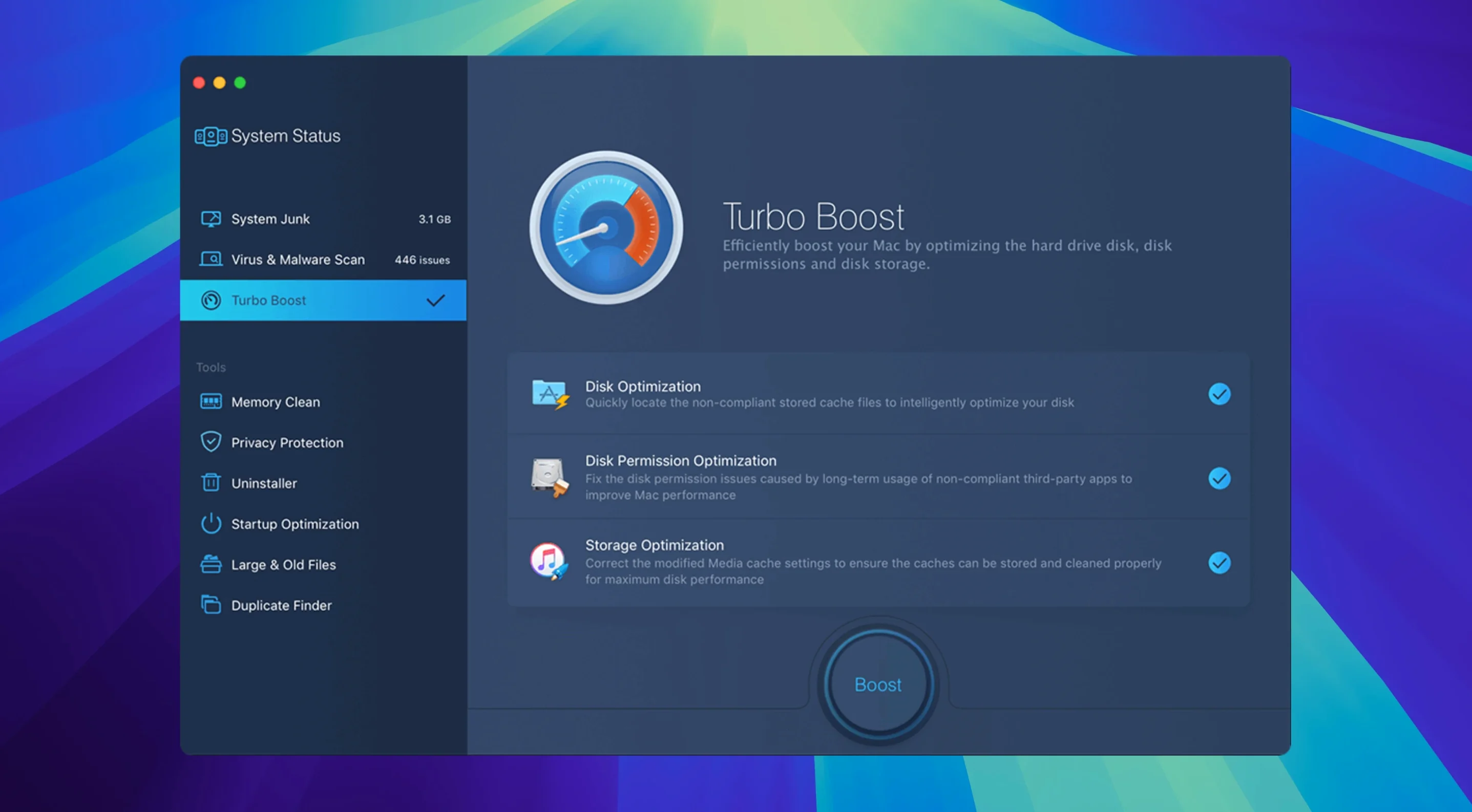
Seven tools sit inside one window, each aimed at a different maintenance task. Here is what they do, defined by the job they handle.
System Junk — scans for cache files, logs, language packs and other leftover data that macOS leaves behind. Removing them reclaims disk space without touching personal files.
Virus & Malware Scan — checks the Mac for malware and viruses. IObit designed this to catch threats that specifically target macOS, not just Windows leftovers sitting in email attachments.
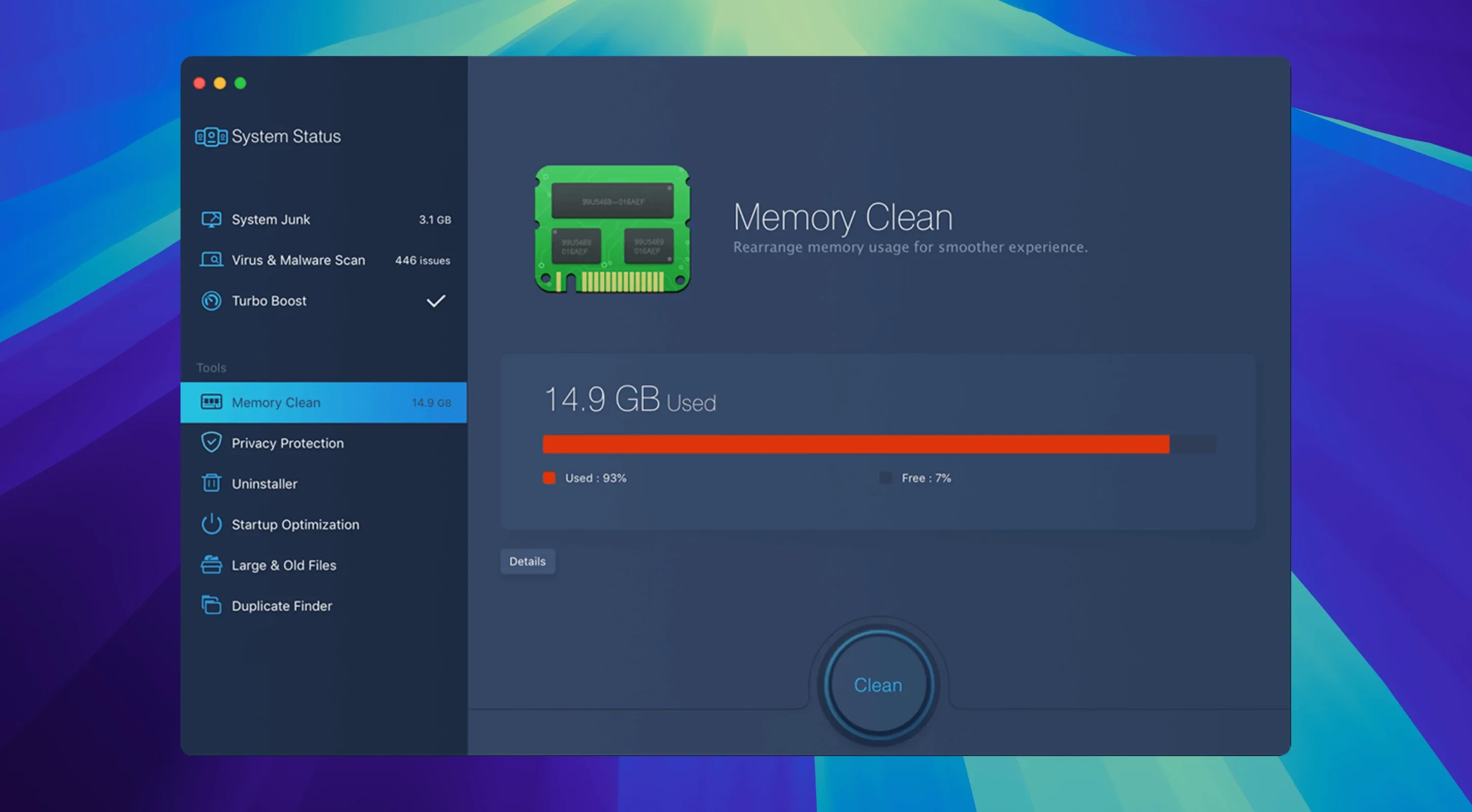
Memory Clean — frees RAM that background processes have reserved but are not actively using. Useful on machines with 8 GB or less, where swapping to the hard disk slows things down.
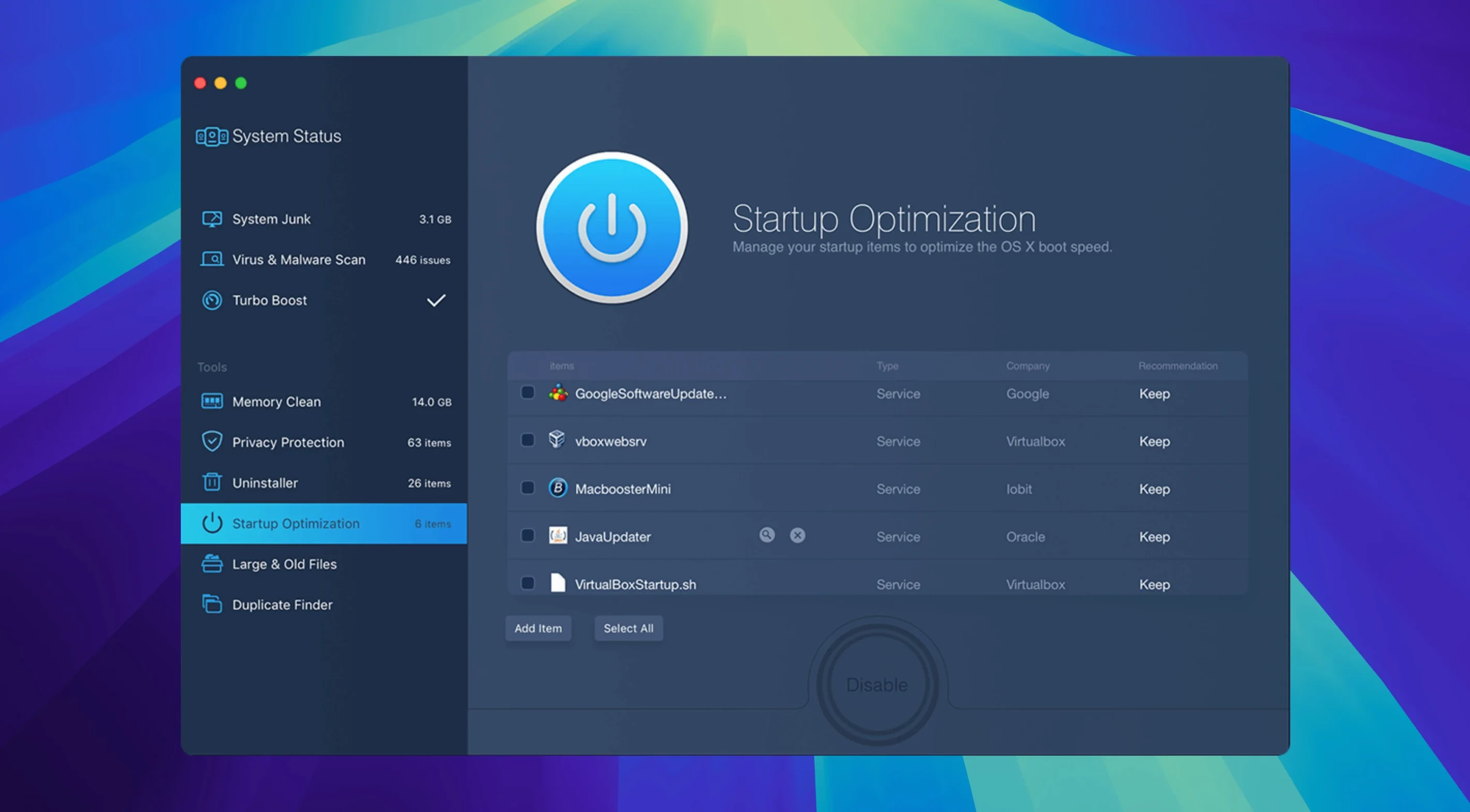
Startup Optimization — lists login items and launch agents, then lets you disable the ones you do not need. Fewer items loading at boot means a faster path to a responsive desktop.
Large & Old Files — locates files by size and age. It surfaces video projects, disk images and archives that have been sitting untouched for months, so you can decide what to archive or delete.
Duplicate Finder — identifies identical photos, documents and other files scattered across folders. The comparison is based on content, not just filename.
App Uninstaller — removes applications along with their support files in Library folders. A standard drag-to-Trash removal often leaves those behind.
Bypassing the Gatekeeper block during installation
A few friction points come up regularly enough to mention. The first is the Gatekeeper hurdle during installation. Because the disk image is not notarised, macOS will block it outright. The workaround is straightforward: mount the image, open a Terminal window, and follow the prompt that appears when you run the helper. Press Enter once, and Gatekeeper steps aside. After that, dragging the app to Applications works as expected.
Another snag involves the Virus & Malware Scan reporting threats that turn out to be adware bundled with free software the user installed deliberately. MacBooster flags browser hijackers and toolbar installers correctly, but it cannot distinguish between something a person wanted and something that piggybacked in. The scan result list shows file paths — checking those before clicking Fix avoids removing a browser extension you actually use.
On machines with very full drives, the System Junk scan can stall partway through. This tends to happen when free space drops below 2 or 3 GB and the system itself is struggling to write temporary files. Freeing even a few hundred megabytes through the Memory Clean tool first often lets the scan complete. If that is not enough, manually emptying the Trash and restarting before the scan usually sorts it.
The Duplicate Finder occasionally flags files that are not truly identical — for example, two versions of a raw photo where only the embedded metadata differs by a few bytes. The tool compares content hashes, so the match is genuine, but the practical difference between the files can matter to a photographer. Checking file modification dates in the results list before deleting is a habit worth forming early.
Resisting the urge to click Fix All right after a scan
The most frequent misstep is clicking Fix All on the dashboard immediately after the first scan, without reviewing what each tool found. The one-click approach is convenient, but the scan results are a list of suggestions, not a list of errors. Memory Clean might free RAM that an active render job was using; Startup Optimization might disable a helper that a cloud sync service needs; the App Uninstaller might list something still in active use. Spending two minutes looking at the categories before confirming saves backtracking later.
Another mistake is running every tool at once on a machine that is already sluggish from low resources. The Virus & Malware Scan reads large portions of the disk, while System Junk and Duplicate Finder also hit the drive heavily. Stacking them together on an older Mac with a spinning hard drive can bring the system to a crawl for half an hour. Running them one after the other, starting with Memory Clean, produces faster results overall.
Beginners also sometimes treat MacBooster as a real-time antivirus, which it is not. The malware scanner runs on demand, not in the background. It will catch threats when you launch a scan, but it does not block them at the moment they arrive. Anyone who downloads files from less-trusted sources should understand this distinction clearly.
Finally, some people delete every large file the Large & Old Files tool surfaces, assuming old equals unnecessary. A three-year-old tax record or a large Photos library archive may well be needed. Sorting the results by name or path, not just size, gives the context to make better decisions.
Disabling auto-launch unless you run daily scans
MacBooster keeps its preferences lean, but a few adjustments make daily use smoother. Under the general preferences, disabling the automatic launch-at-login option is sensible if you do not plan to run scans every day. The app adds a menu bar icon either way, so quick access remains without the startup delay.
The scan exclusions list, tucked into the System Junk tool settings, deserves attention early. Adding folders that hold active project files — video editing scratch disks, virtual machine images, development build directories — prevents the junk scanner from touching them. MacBooster respects the exclusion paths across future scans, not just the current one.
In the Duplicate Finder, switching the minimum file size filter from the default (which includes very small files) to something around 1 MB skips preference plists and tiny cache clones that are not worth the review time. The tool still catches duplicated photos, documents and media, but the results list becomes much shorter and more useful.
Notification settings are also worth a look. By default, MacBooster will alert you after every completed scan and every scheduled task. On a machine used for focused work, switching to summary-only notifications or disabling them entirely keeps the interruptions down.
System Junk scan finishing noticeably faster
Version 8.3.0 brought refinements rather than a ground-up rebuild. The most visible change is a faster scan engine across all seven tools — the System Junk scan in particular finishes noticeably quicker than in the 8.0 release, partly because the junk file definitions were trimmed to exclude categories that produced false positives in earlier builds.
The malware definition database now updates more frequently, drawing from a broader set of macOS-specific threat signatures. In practice, this means the Virus & Malware Scan picks up newer adware strains that appeared in the last year — the kind that hitch a ride inside fake Flash installers and pirated apps. The scan result pane now separates adware from more serious threats, which makes triaging the list faster than before.
Memory Clean received a quieter but practical change: the tool now shows which processes are holding the most RAM before you commit to freeing it. Earlier versions simply displayed a total and a Clean button. Seeing that a browser with fifty tabs open accounts for 4 GB of the reclaimable memory changes how you approach the fix — often the better move is closing tabs manually rather than forcing a system-wide purge.
For anyone searching terms like macbooster 8 pro or checking whether a macbooster 8 license key free offer is genuine, the 8.3.0 build is what current downloads deliver. The underlying architecture supports both Intel and Apple Silicon natively, so the app runs without Rosetta overhead on M-series Macs — a change that arrived in the 8.0 release and carried through to the current version. The responsiveness difference on an M1 or M2 machine is subtle but real, especially during the Duplicate Finder's content-comparison pass.