Aspecten
 Download (2.3 GB)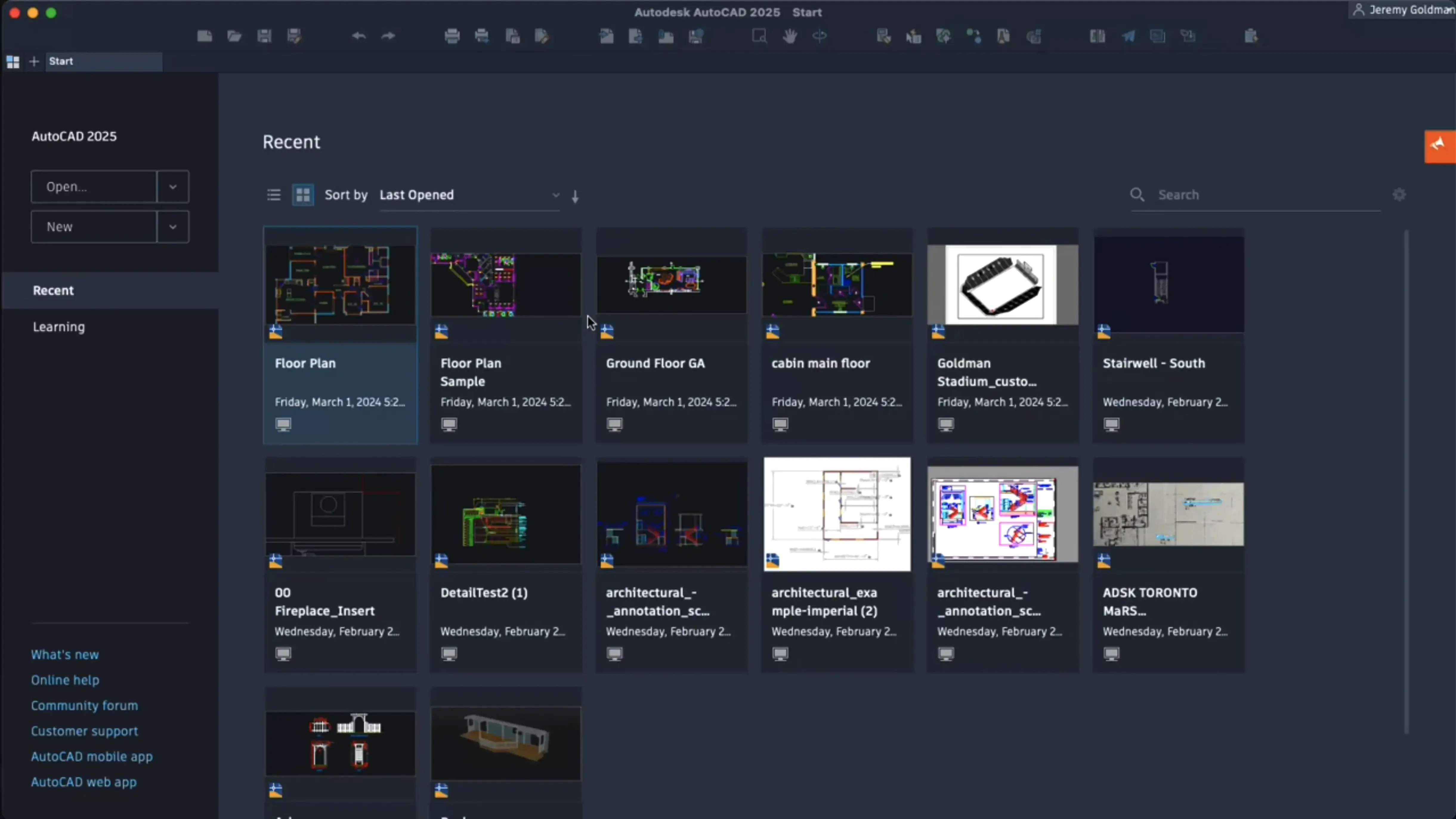
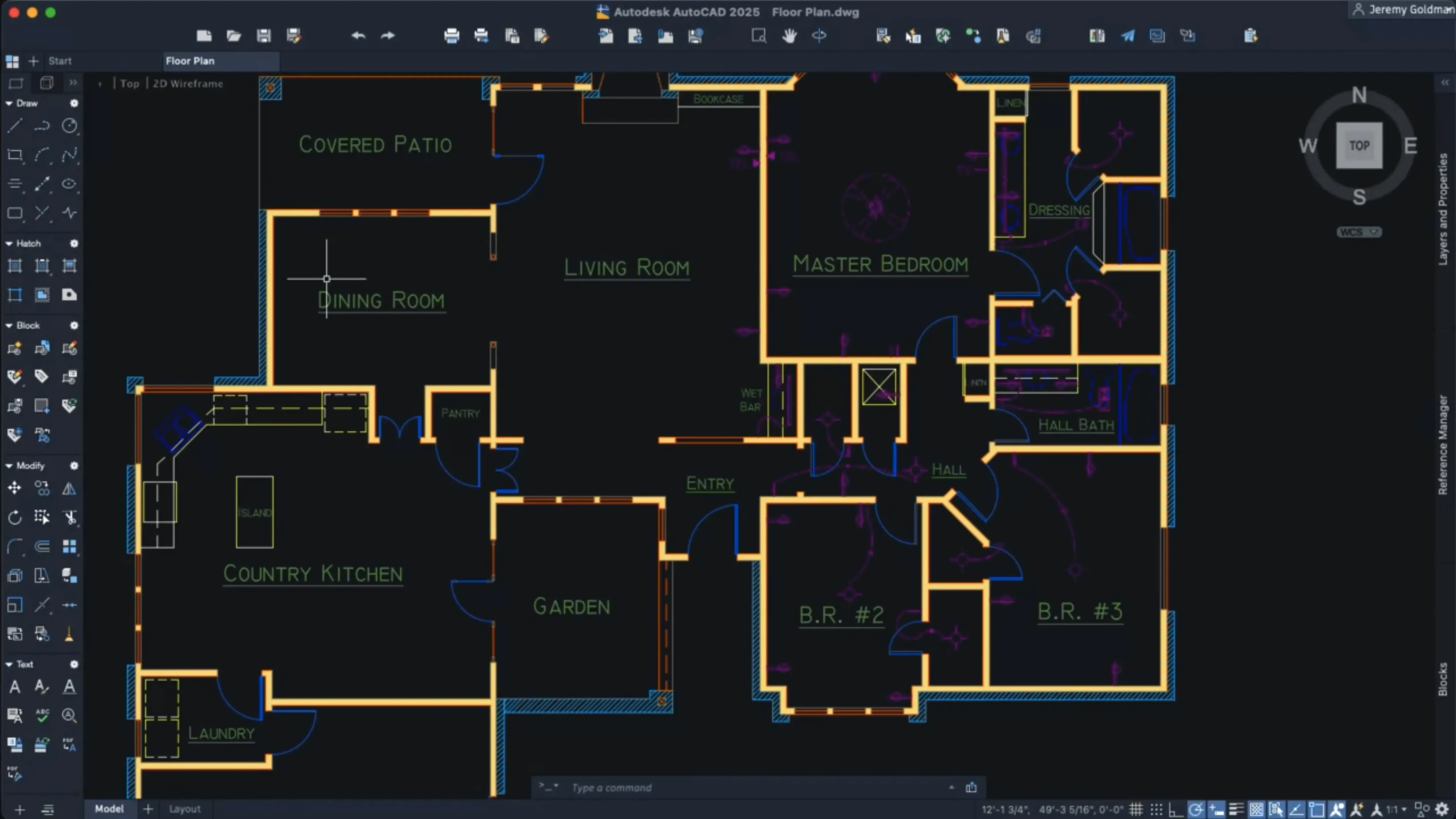
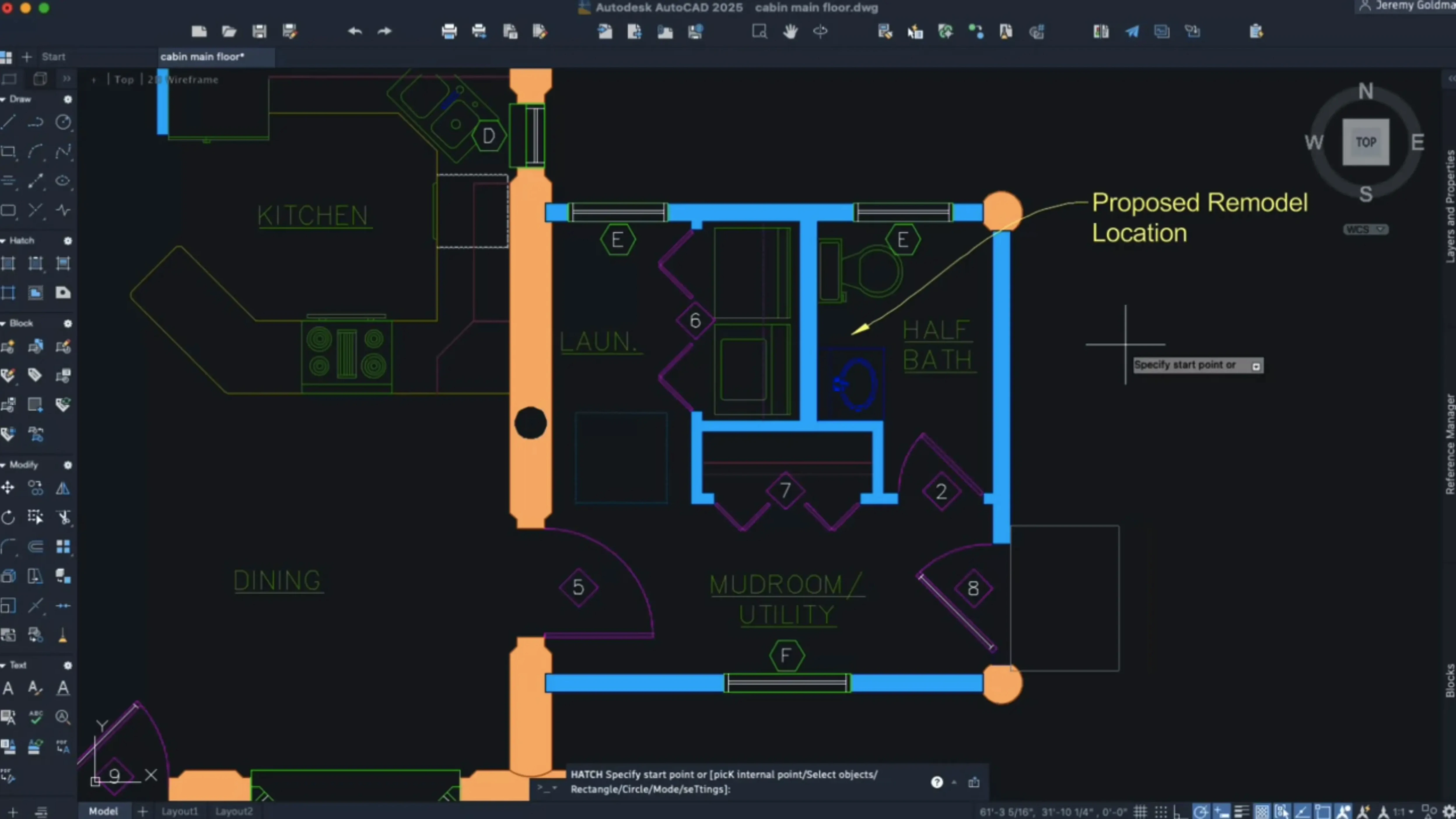
A DWG file passed between colleagues often carries the marks of its journey: a line that almost meets a corner, a tiny duplicated arc, a hatch boundary that isn't quite closed. These are the things that annoy an experienced drafter more than any missing feature. AutoCAD for Mac 2027, running natively on Apple Silicon and Intel, tackles that kind of precision work with a set of quieter, deeper tools.
Repair and reuse with purpose
Geometry Cleanup is new in this release. It scans a drawing and fixes common geometry errors — gaps, overlaps, and stray segments — without manually hunting through layers. It is a utility you run before a complex hatch or a 3D operation, when a command fails and the reason is invisible. Alongside it, Autodesk AI analyses a drawing for objects that can be converted into blocks. An array of individually placed chairs, for example, becomes a single block definition with scaling and rotation already accounted for in the block creation tools. This is not flashy automation; it is the kind of cleanup that saves revision time later.
Navigation and control
3D navigation performance is smoother in the 2027 version, with Metal now the sole graphics engine and OpenGL dropped. Orbit, pan and zoom in a heavy model feel more direct. For fine control, you can set the crosshair colour per layout, making it visible against dark or light sheet backgrounds. Shortcut menus are customisable, and dynamic grip menus now accept shortcut keys even in localised versions. Workspace transitions also carry palettes over by default, so a move from drafting to 3D modelling does not mean rebuilding your tool set. The Mac version shares the same DWG format as Windows, so files move between platforms without translation. The package notes SIP must be disabled before installation.
Ignoring the command line and treating it like a drawing app
New users often open AutoCAD for Mac and treat it like a drawing app. They click, drag, and expect objects to move in the same way they do in a vector illustration tool. The first mistake is ignoring the command line. It sits at the bottom of the interface, easy to overlook, but almost every precise action begins there. Beginners draw a line by eye and then wonder why trim or extend behaves oddly — the line was never snapped to an endpoint. The second common error is working without object snaps toggled on, or with too many running snaps active at once, which makes the cursor jump to unintended points. A clean set of three or four snaps avoids hours of micro-adjustments later.
Layer discipline is another stumbling block. A new drawing quickly becomes a single-layer canvas where everything lives on layer 0. When the time comes to assign line weights for printing or to isolate structural elements from annotations, the drawing resists. Beginners also tend to scale objects in model space to fit a sheet, instead of using a layout tab with a viewport set to a proper scale. That habit makes dimensioning unreliable and title blocks meaningless. Finally, many newcomers skip the step of disabling SIP before installation, as the package instructions state, and then find the application will not launch. The requirement is explicit and non-negotiable for this release.
Counting and adjusting hundreds of loose tree symbols from a survey DWG
An architect in a small practice receives a survey DWG from a contractor. The file contains several hundred tree symbols scattered across the site, each one a loose collection of circles and polylines. She needs to count them, adjust their positions, and use them in a planting schedule. In an earlier version she would have spent an afternoon grouping and copying. In AutoCAD for Mac 2027, she runs the Autodesk AI block scan. The software identifies each tree cluster as a repeatable object and proposes a block definition. She accepts it, assigns a rotation parameter from the block creation tools, and within twenty minutes has a manageable symbol library. Geometry Cleanup then scans the survey boundary, closes three tiny gaps in the polyline, and lets her hatch the site area without the command failing halfway through. The drawing is ready for the next stage before lunch.
Setting the crosshair colour per layout tab instead of globally
Several touches in the 2027 release sit just outside the main toolbars and go unnoticed until someone points them out. The crosshair colour can be set independently for model space and each layout tab. A pale grey crosshair on a white sheet background is almost invisible; a switch to deep orange or cyan via the preferences makes alignment work faster. Dynamic grip menus now respond to shortcut keys in localised versions, so a German or Japanese keyboard can trigger stretch, move or rotate without reaching for the ribbon. That small change removes a pause many bilingual drafters had learned to tolerate.
Layout tab switching is measurably quicker in this release. Flicking between three or four sheets in a project file feels less like waiting and more like turning a page. Palettes migrate by default when you switch workspaces — the Tool Sets palette from the drafting workspace appears in the 3D modelling workspace without manual reloading. For users who customise shortcut menus, the 2027 version saves those edits across sessions more reliably. A right-click menu tuned for a structural detailing workflow, with copy with base point and paste to original coordinates placed near the top, sticks. Large coordinate scene optimisation works behind the scenes, reducing CPU and GPU load in files where geometry sits far from the origin. You might never notice it, except that a drawing that used to stutter during orbit now moves fluidly.
Opening Windows DWG files directly, no conversion needed
One question comes up repeatedly: does the Mac version open Windows DWG files without conversion? It does. The DWG format is the same across platforms, and files move directly between AutoCAD for Mac and AutoCAD for Windows. No import or export step is needed. Another frequent concern is Apple Silicon support. The 2027 build runs natively on both ARM and Intel processors, and Metal acceleration means the graphics pipeline is not emulated. The improvement in 3D orbit responsiveness compared to the old OpenGL path is noticeable within minutes of opening a model.
Users also ask whether the online Help system requires a constant internet connection. It does not. Both online and offline Help documentation are included, so reference material is available when working from a site office with unreliable Wi‑Fi. A quieter question concerns whether the software can be installed alongside AutoCAD LT for Mac. The two share the same release notes set and can coexist on a single machine, though they are separate applications with distinct feature sets. Finally, people want to know if the SIP requirement is temporary. For this package it is a prerequisite, not an optional step, and the installation will not proceed until it is addressed.