Aspecten
 Download (254 MB)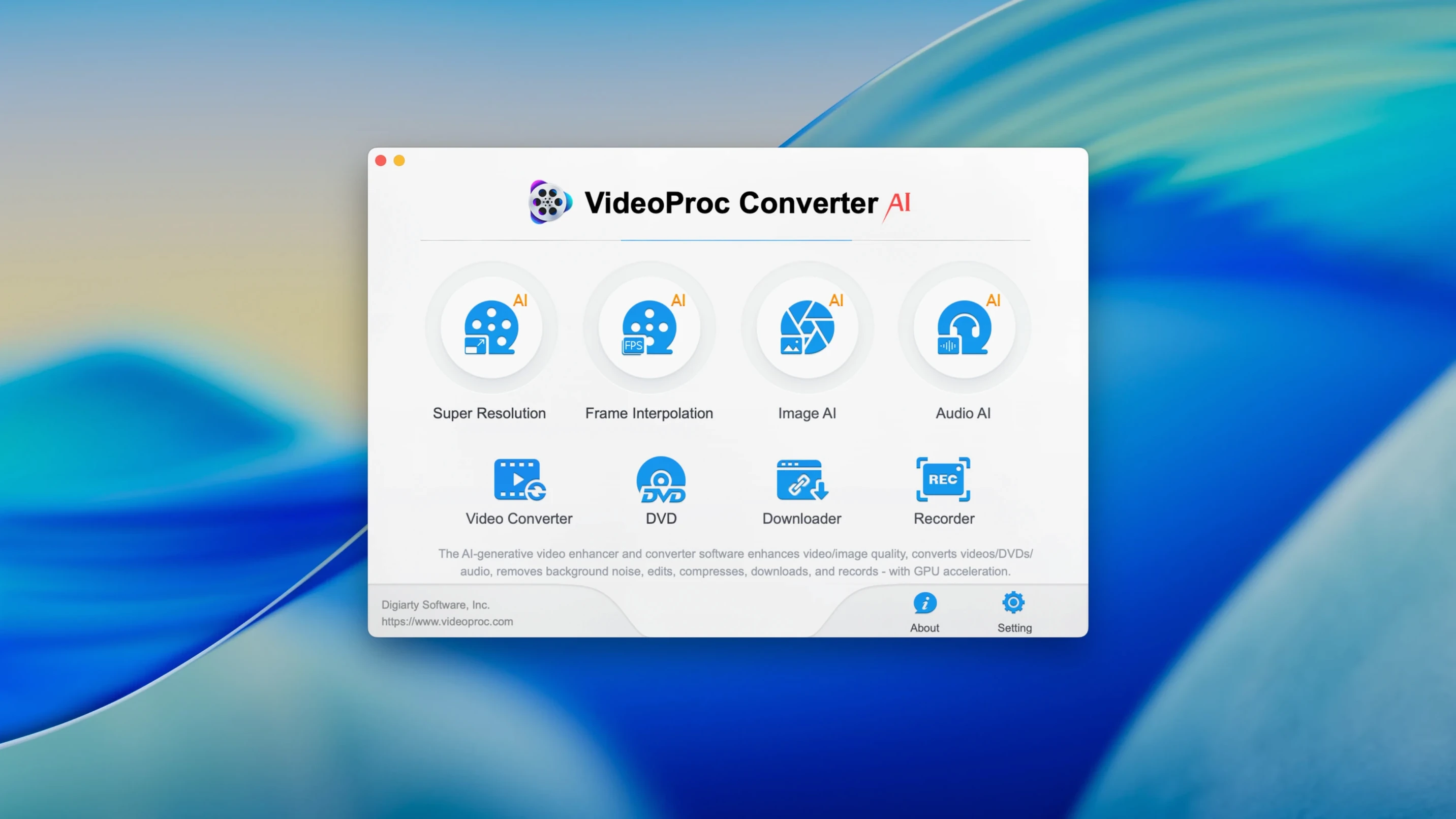
Compatibility: runs on macOS 10.15 and later, with native support for both Intel and Apple Silicon (M1/M2) Macs. That covers machines from the 2015 MacBook through to the newest Apple hardware.
VideoProc Converter AI 8.5 Full — a suite for converting, editing, and enhancing media with hardware-accelerated processing.
Rather than list features in the abstract, here is one realistic path through the app. The task: take a noisy, 4K video clip shot in low light, prepare it for Instagram, and extract the audio as an MP3.
Import — the file lands in the main window. The app reads it without complaint; a 4K H.264 source from a mirrorless camera. No transcoding on import.
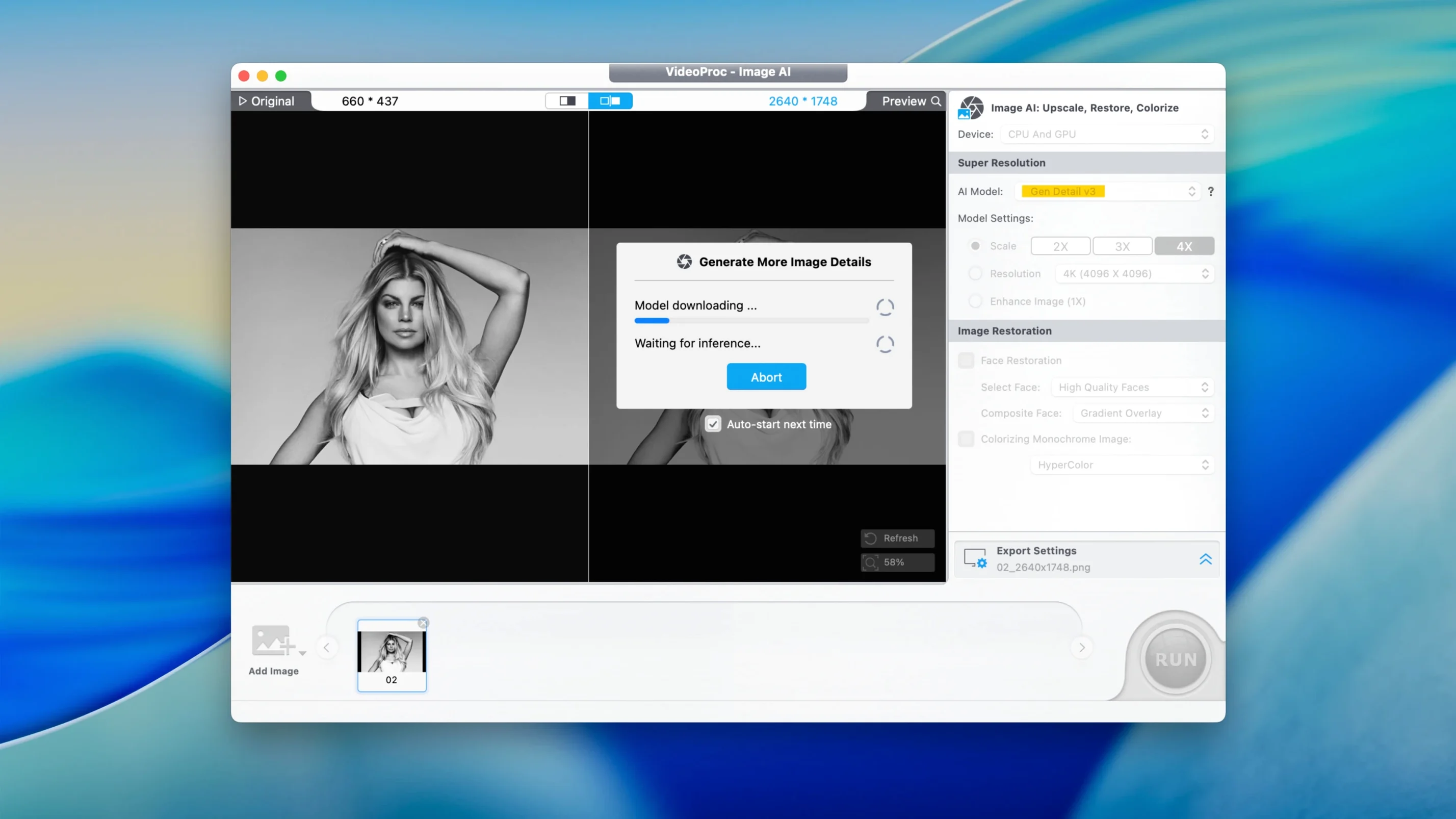
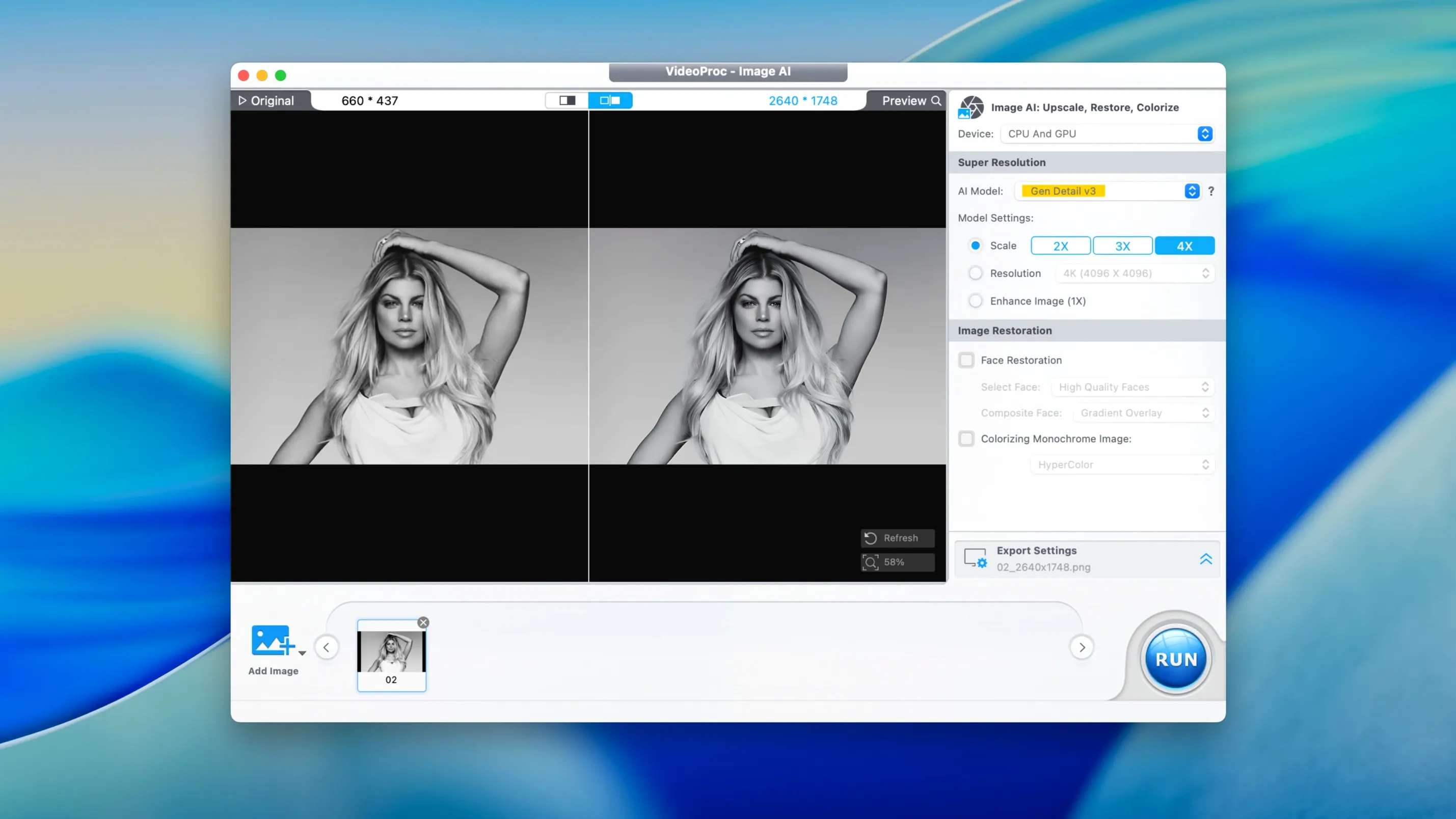
Denoising — the AI enhancement panel offers a denoising filter aimed at chroma noise and compression artifacts. Applying it adds a short processing wait. On an M1 Mac, the Metal hardware acceleration keeps the preview responsive. The result is a visibly cleaner image, shadows smoothed without turning faces to wax.
Trim and format — a short trim removes a shaky three seconds at the start. The output preset switches to the Instagram-optimised profile, which sets the resolution, aspect ratio and codec automatically. The speed controls (0.1x to 2x) sit nearby, though they stay untouched for this clip.
Audio extraction — a separate pass converts the original clip’s audio track to MP3. The dialogue box sets bitrate and sampling rate before the run. Output formats also include AAC and FLAC.
Export — the queue runs both jobs. Hardware acceleration engages; the export time is noticeably shorter than a software-only encode would be on the same machine. The final video is compressed, clean, and properly sized for the platform.
Strengths and limits: The hardware acceleration is a real time-saver, and the guided presets reduce the chance of wrong output settings. The AI denoising is effective on moderate noise. A limit is that heavy temporal noise reduction, the kind dedicated plug-ins handle frame by frame, is not what this tool attempts.
When hardware acceleration refuses to engage on Apple Silicon
A few stumbling blocks come up often enough to note. The first: hardware acceleration not engaging. When the export queue runs slowly despite an Apple Silicon Mac, the culprit is usually the source codec. H.265 10-bit files from certain drones and cameras can sometimes fall back to software encode. Switching the output to a different codec family — ProRes to H.264, for instance — often brings Metal acceleration back into play.
Another regular issue involves the built-in downloader. After updating to version 8.12 (build 2026091801), a handful of users find the downloader sits idle on a video link that worked the week before. The fix is nearly always the same: open the app’s preferences, clear the download cache, and paste the URL again. The improved Downloader performance in this build handles most sites reliably, but site-side changes occasionally trip it up until the internal list refreshes.
Subtitle handling can also confuse. VideoProc reads embedded subtitle tracks without fuss, but external .srt files need an exact filename match with the video file. If the subtitle track appears greyed out in the editing panel, check that the .srt file sits in the same folder and shares the same base name as the video. The app does not search subfolders.
For users investigating videoproc converter ai full capabilities, a less obvious point: the AI upscaling models perform best when fed a clean source first. Running denoising before upscaling, rather than upscaling and then denoising, produces noticeably crisper edges in the final 4K or 8K output.
Cleaning up interlaced MiniDV transfers with tape noise
Consider someone digitising a box of MiniDV tapes from the early 2000s. The tapes have already been captured to ProRes via FireWire, so what lands in VideoProc is a folder of large, interlaced files with visible tape noise. The archivist wants stabilised, deinterlaced H.264 copies for family sharing, plus MP3 extracts of a few clips where the original camera audio matters.
The workflow runs in batches. Each file goes through the stabilisation filter first — the analysis pass takes a minute or two on longer clips but handles handheld wobble well. Deinterlacing is a checkbox in the output settings, not a separate step. The archivist sets the output to H.264 at the original resolution, applies a mild denoise, and queues the lot. While the queue processes, the audio extraction jobs stack up in a separate queue. By the end of an afternoon, three tapes are fully converted and the MP3s sit in a dedicated folder, ready for a family archive.
Drag-and-drop reordering inside the merge tool
Several details stay hidden unless you go looking. The merge tool, for example, accepts drag-and-drop reordering in the file list — no need to delete and re-add clips to change the sequence. A small handle appears on hover at the left edge of each clip row.
When compressing for a specific platform, the preset dropdown also accepts typed input. Typing “yt” jumps straight to the YouTube preset, “ig” to Instagram, and “tt” to TikTok. This is faster than scrolling through the full list of devices and platforms.
The screen recorder supports voice commentary, but the setting is not in the main recording panel. Click the small gear icon next to the record button to select the microphone source and set the commentary volume. The same menu offers a toggle for mouse click visualisation, useful for tutorial recordings.
For those who found the app via a videoproc torrent or similar search, one undocumented behaviour worth knowing: the app remembers per-output-format settings independently. The bitrate you set for an MP4 export does not carry over to an MKV export. This prevents accidental mismatches but can catch you out if you assume settings are global.
Keyboard shortcuts are minimal, but the spacebar toggles preview playback in the trim window, and Command-Q with an active queue prompts a “stop all jobs” dialogue that gives a clear choice between cancelling current items or letting the running job finish first.