Aspecten
 Download (75 MB)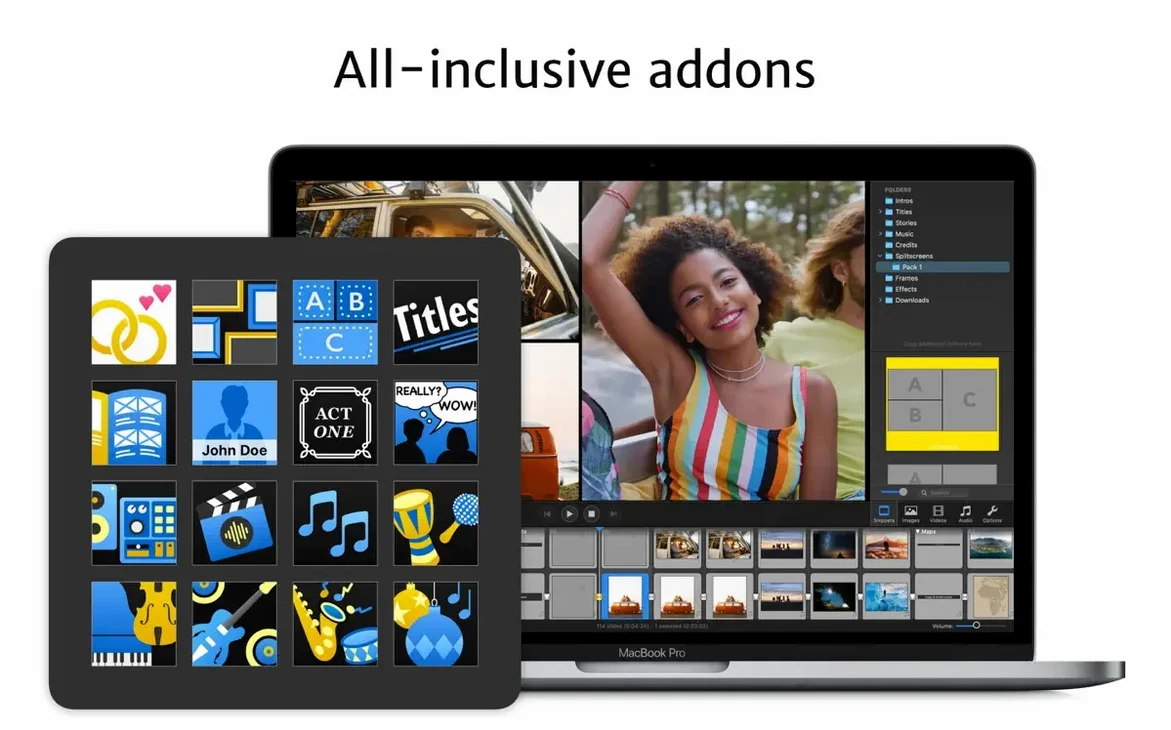
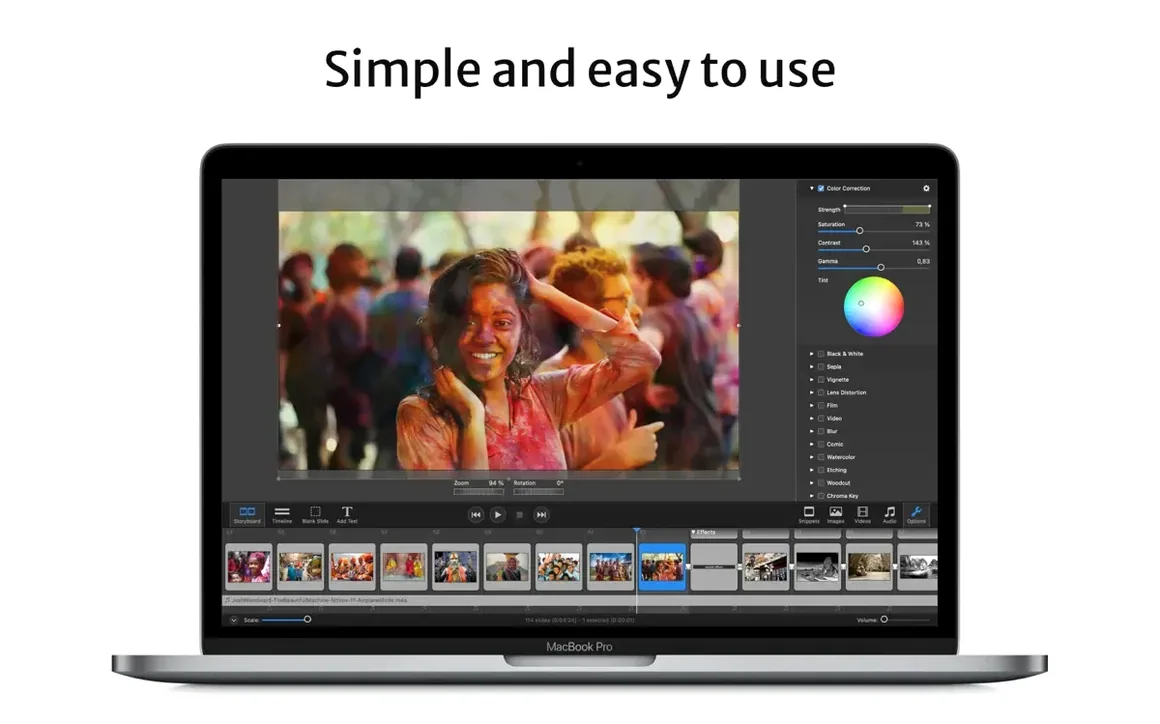
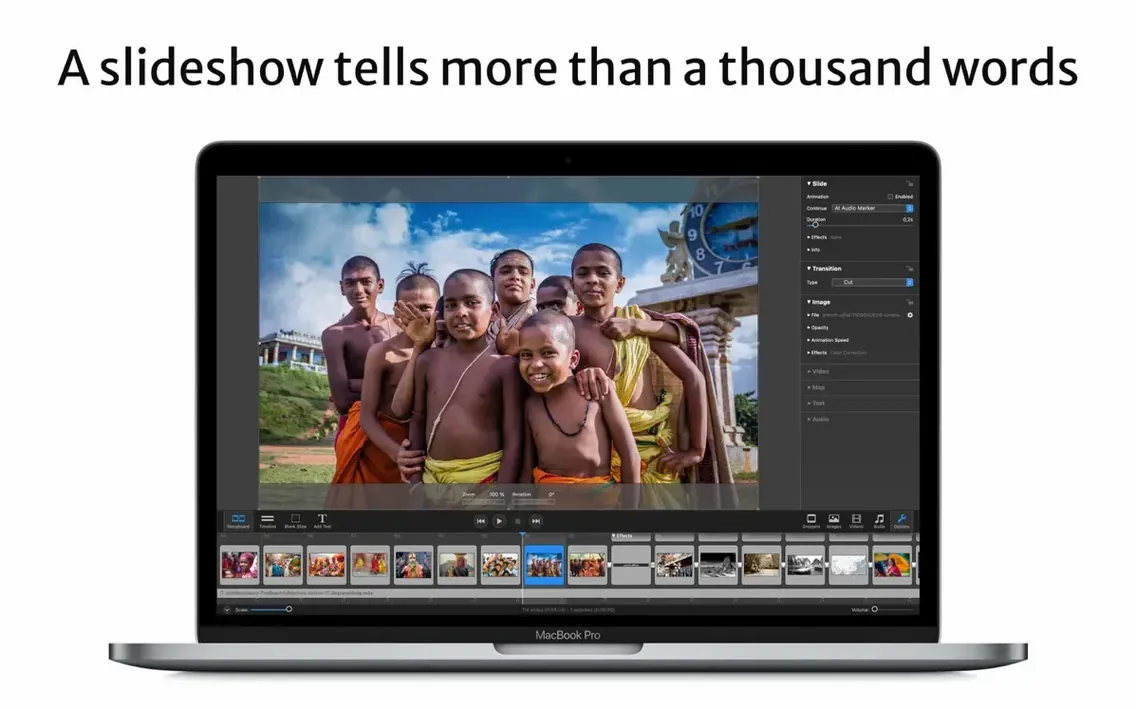
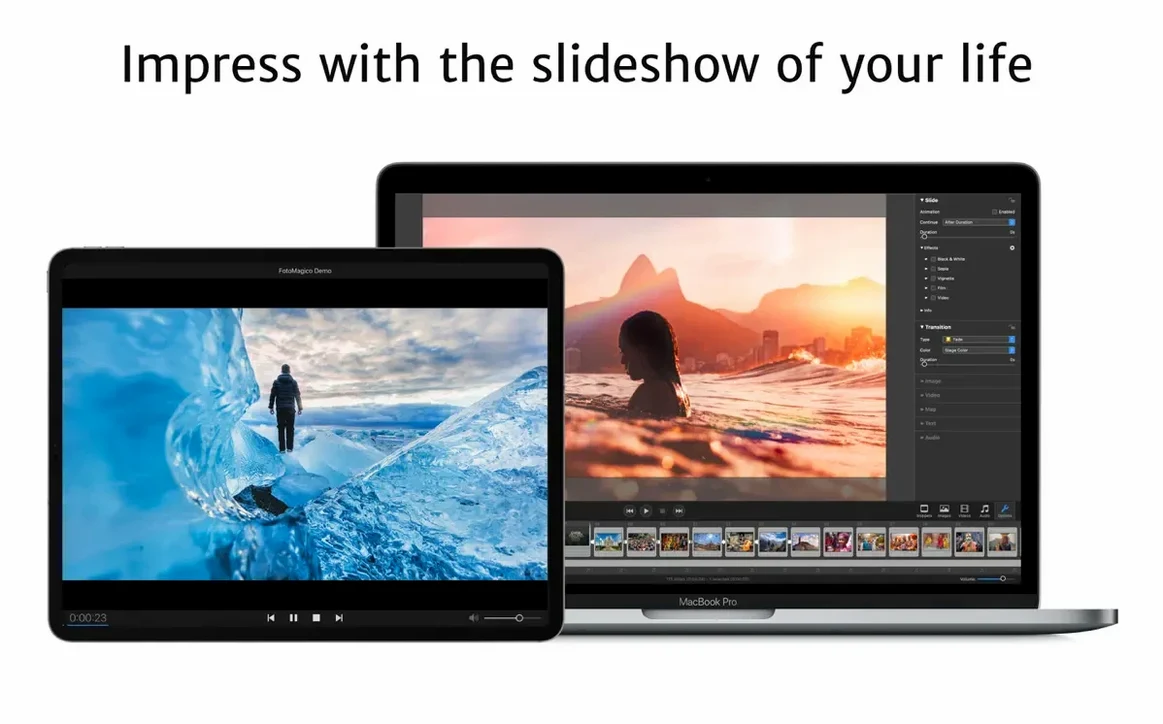
If you have used Keynote's transitions and builds to tell a story with photos, FotoMagico will feel like a familiar idea taken much further. It is a real-time slideshow editor built for Mac and iPad, with playback that happens at full resolution without waiting for a render. You press play and see the result immediately, using whatever resolution your hardware can drive.
Mixing stills, video and audio on a timeline
- Building a presentation that mixes stills, video and audio on a precise timeline
- Creating a standalone player file you can share with someone who does not own the app
- Adding a visible watermark across exported images
- Setting an expiry on a slideshow by number of views or a time window
Export and playback
Export options cover most practical needs. The app can save to any QuickTime-compatible format, burn a slideshow to DVD through iDVD or Roxio Toast, and produce files that run on Macs without FotoMagico installed. The real-time engine leans on Apple's Metal, Swift and Swift UI frameworks, which keeps playback smooth on Apple Silicon and 64-bit Intel hardware. Version 6.10 runs on macOS 14 Sonoma or newer, including macOS 27 Golden Gate, and no longer supports Catalina through Ventura.
Instant playback of high-res stills with a video layer
In practice, the real-time engine delivers what it promises. A slideshow with two dozen high-resolution stills and a 1080p video layer plays back the moment you hit the space bar. Exporting that same project to a standalone player file takes noticeably longer, but the progress bar stays responsive and the app never locks up during the process. On an Apple Silicon Mac in particular, the Metal-based rendering keeps the timeline scrolling smooth even when you scrub back and forth quickly.
Memory use sits around 400–600 MB for a typical project, climbing past 1 GB only when you layer many 4K video clips. CPU load during playback is modest; the real surprise is how little the fans spin up. The fotomagico 6 crack scene sometimes raises questions about performance on patched builds, and version 6.10.0 handles long editing sessions without a single beach ball on Sonoma or Golden Gate. The crash-on-quit bug that lingered in earlier 6.x releases has been fixed in this update.
One quirk worth knowing: when you switch rapidly between the Storyboard and the Stage view while a preview plays, the interface can stutter for a second. It recovers on its own and never loses work, but it is a small reminder that the real-time pipeline is doing real work behind the scenes.
Same-evening slideshow delivery for wedding photographers
Wedding photographers and event videographers are the natural fit. They need to deliver a polished slideshow to clients quickly, often the same evening of the shoot. The instant playback means they can review the whole thing with the client on location and make small timing adjustments before exporting. The watermark feature matters here too: a semi-transparent logo layered over every image during export is something a photographer doing fotomagico for mac work will use often before the final invoice is settled.
Teachers and lecturers who already own a Mac and an iPad benefit from the iCloud project sync. You can rough out a lecture slideshow on the iPad during a commute, then refine transitions and audio levels on the Mac later. The player file format is genuinely useful for this group: you hand students a self-contained file that runs without them installing anything, and you can set it to expire after the semester ends.
Less obviously, musicians performing live with projected visuals will appreciate how the app treats the external display. When you connect a projector or a large HDTV, FotoMagico uses the native resolution of that screen without forcing you to change the Mac's display settings. The Stage view shows exactly what the audience sees, while the editing interface stays on the laptop screen. A live performer can advance slides with a simple keystroke and never touch the mouse.
Option-drag a transition handle to snap to whole seconds
Several small touches sit just below the surface and reward anyone who digs into the menus:
- Hold Option while dragging a transition handle and the duration snaps to whole-second increments, which is faster than typing numbers into the inspector for rough timing passes.
- Double-clicking the Stage background opens the snippet browser, and from there you can drag an image directly onto a slide without going through the media library first.
- When a slideshow contains vertical images for Instagram Stories, the Snippets assistant now matches the stage aspect ratio more reliably in version 6.10.0 – a subtle fix that prevents black borders on unusual stage sizes.
- The Map Assistant has localised controls now, which matters if you use the animated route feature and work in German or French.
- Pressing Shift-Space plays only the currently selected slide and the next one, a quick way to check a transition without running the whole timeline.
The standalone player hides its own set of controls that many users overlook. Right-clicking the player window reveals options to limit the number of views or set an expiration date. These settings travel with the file, so you can send a FotoMagico crack Mac user a player file and still have some control over how long it remains accessible. The player also respects the Mac's colour profile, which means exported slideshows look consistent across different machines.
Turn off the default crossfade between every slide
A few defaults in FotoMagico are sensible but not ideal for everyone. After installing, consider these adjustments:
- Turn off "Add crossfade to new slides." The default crossfade between every image feels heavy on a slideshow with more than thirty photos. Setting the default transition to a simple dissolve of 0.8 seconds makes the pacing breathe better, and you can still add longer crossfades manually where the story calls for them.
- Change the default image duration. Out of the box, each still gets four seconds on screen. For a photo-heavy wedding slideshow, three seconds usually reads better. Go to the preferences pane and set it once rather than adjusting every slide individually.
- Enable "Use precise colour matching." It is off by default to save processing time during editing. Turn it on before final playback or export if colour accuracy matters – the difference on a calibrated display is visible, especially in skin tones.
- Set the watermark position globally. The watermark tool works per export, but you can save a watermark preset with position, opacity and scale so every export batch uses the same settings without reconfiguring.
One final tip that is not a setting exactly but a workflow habit worth forming: name your snippets. The snippet browser quickly becomes a mess of unnamed thumbnails if you drag images in without labelling them. A five-second naming pass early in a project saves considerable hunting later, particularly on an iPad where screen space is tighter.