Aspecten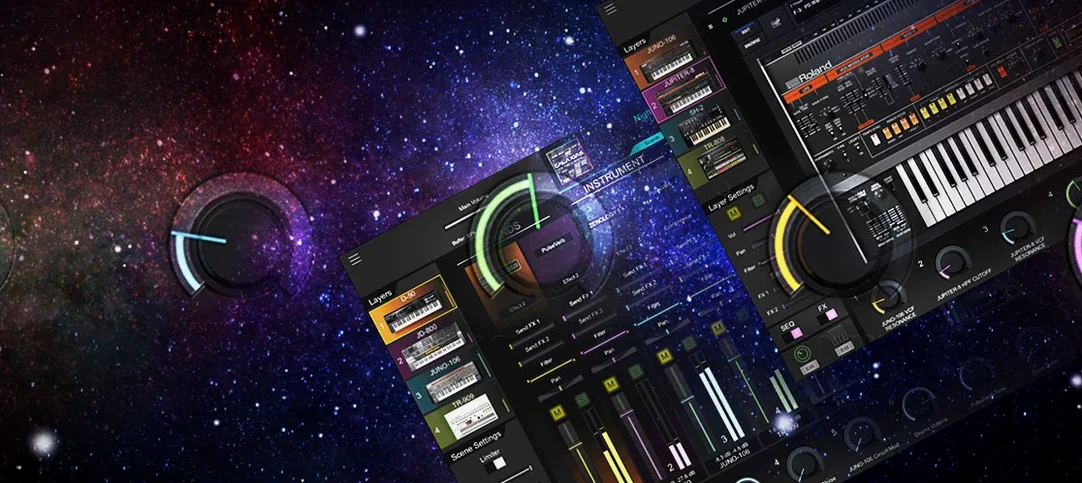
 Download (1.3 GB)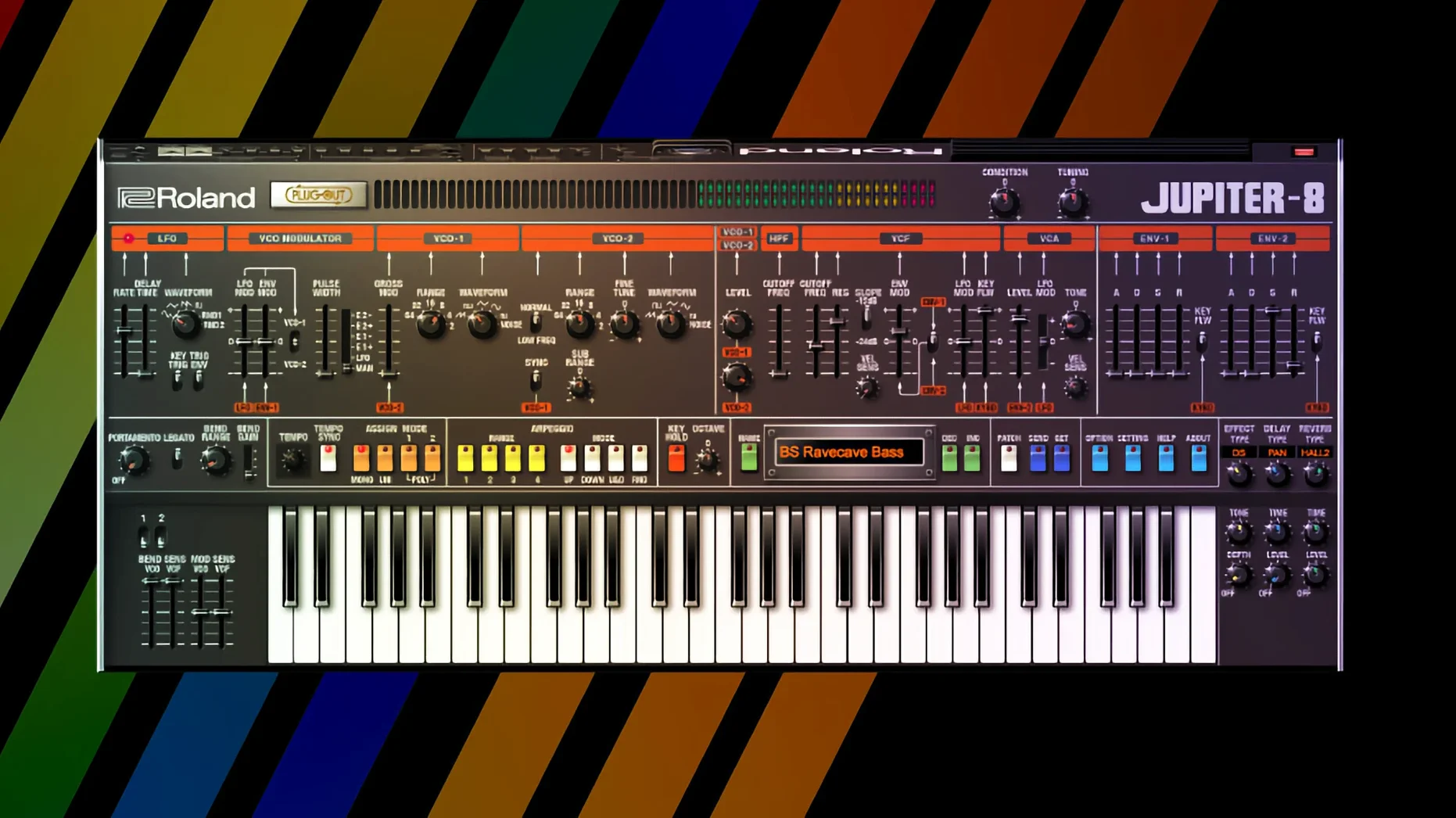
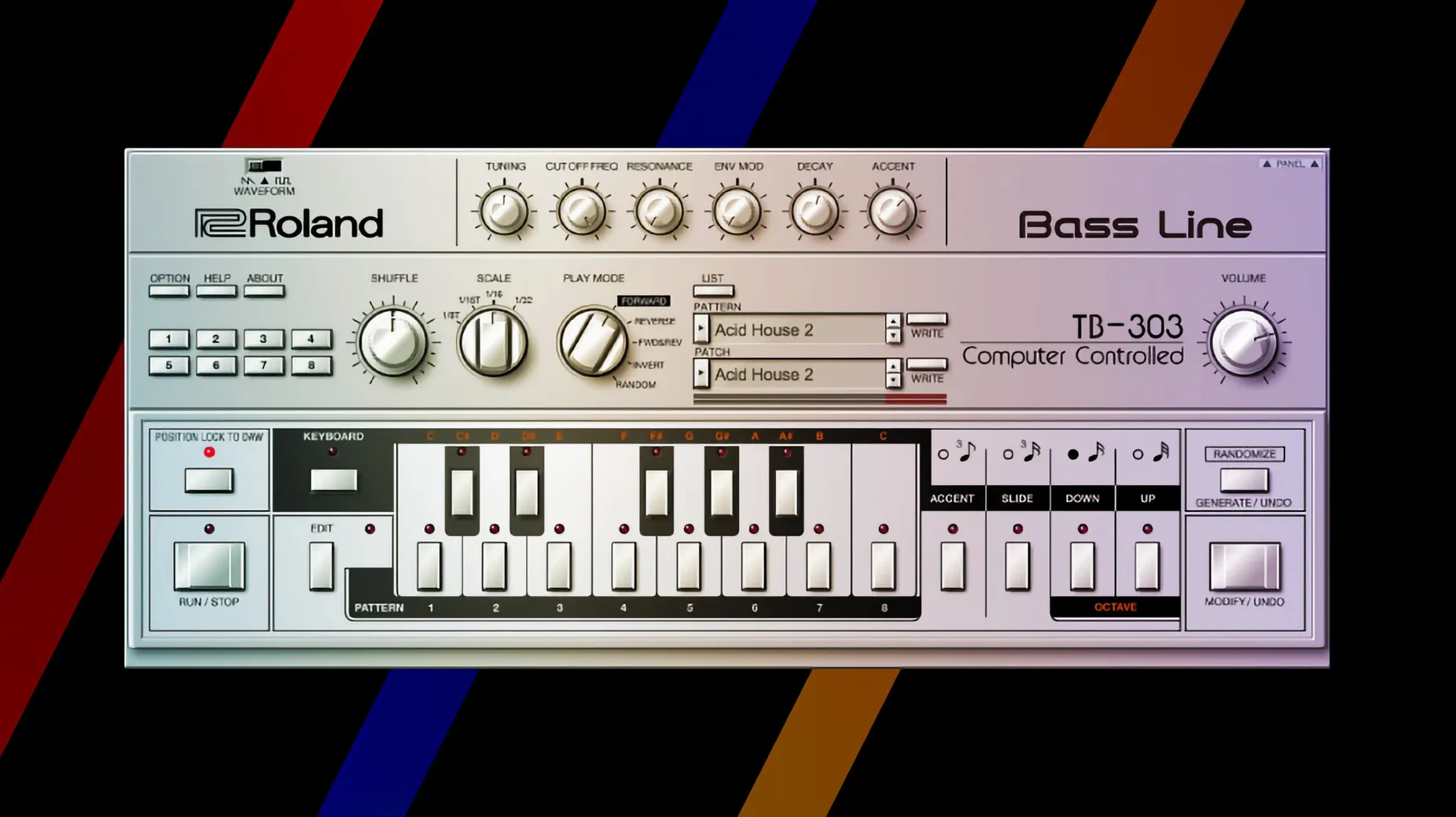
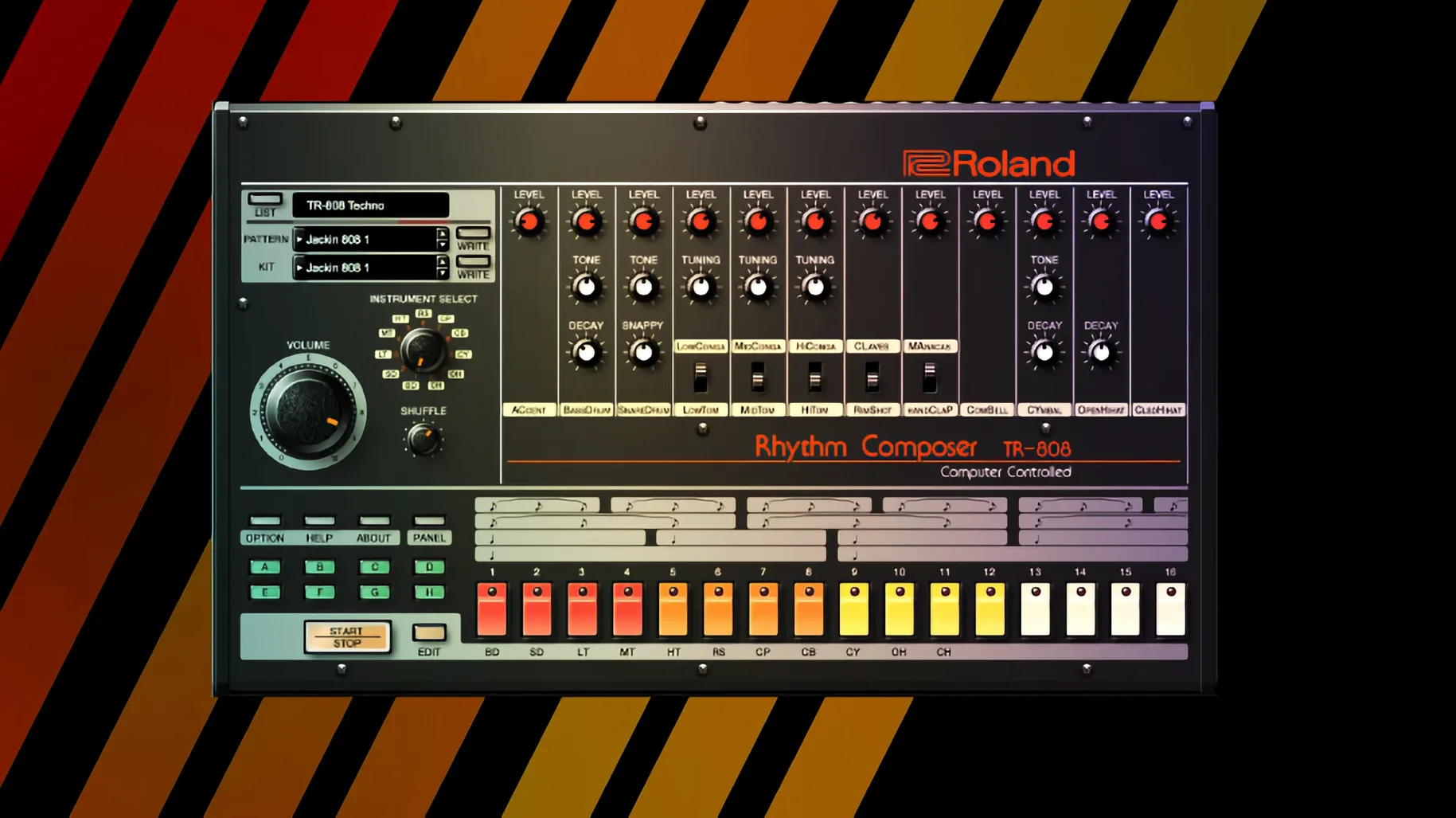
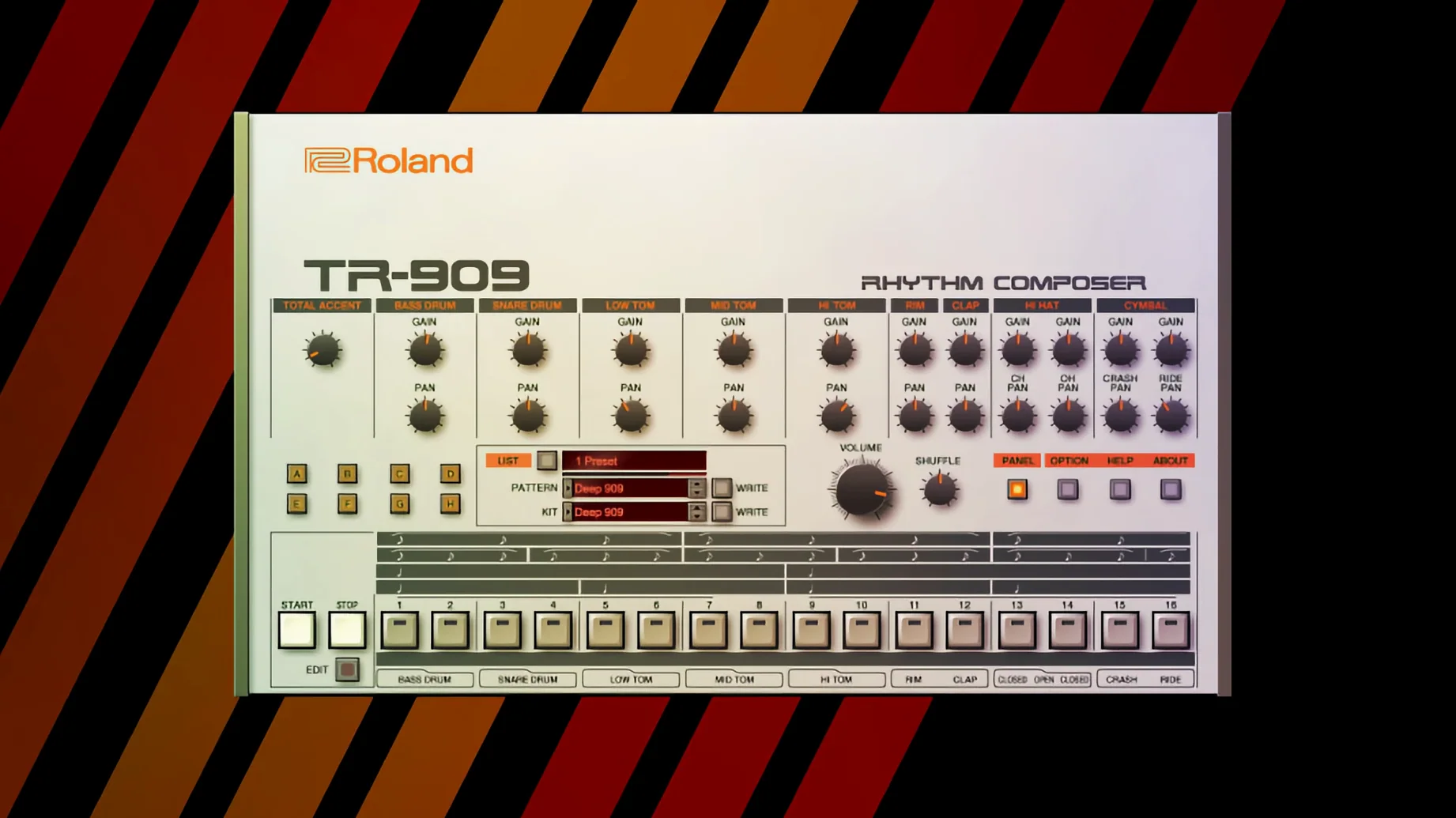
The Roland Cloud Legendary Series is a plugin collection that recreates classic Roland synthesizers and drum machines inside a DAW. The instruments cover the roles you would expect from the original hardware, from bass and lead parts to pads and rhythmic elements.
Bass, pads, and drum parts with analog character
- Bass lines and lead parts that need a familiar analog character.
- Pads built from older digital and analog sound sources.
- Drum machine parts where a specific Roland pattern or tone is part of the arrangement.
- Sessions on modern displays, since newer instruments use a high-resolution interface.
- Layering with modern effects without leaving the plugin environment.
English-only interface on macOS 11 or newer
- The interface language is English only.
- Requires macOS 11 or later.
- Works on Apple Silicon and Intel Macs.
- The listed version is 2025.06.29.
CPU load from Analog Circuit Behavior modeling
After a few weeks of regular use across several projects, the Legendary instruments settle into a predictable pattern. The Analog Circuit Behavior modelling is not light on the CPU, but it is not wasteful either. A single instance of the JUPITER-8 v2 with six voices and the built-in effects active sits around 8–12% on an Apple Silicon core in Logic Pro. That figure climbs when you stack three or four instruments, but the spread across performance and efficiency cores on newer Macs keeps the system responsive during playback.
Stability has been uneventful, which is what you want from a plugin suite. No AU validation failures after installing the 2025.06.29 build, no sudden quits when switching presets quickly, and no crackles during tempo changes. The one caution is patch loading on the JUNO-106 v2: switching between a handful of complex patches in quick succession can cause a brief pause, around half a second, before the new sound settles. It is a small thing, and not present on the D-50 or TR-909.
RAM use is modest. Each instrument allocates between 120 and 200 MB depending on the model and the effects chain. A project with eight Legendary instances, a convolution reverb and two delays consumed just under 1.5 GB of RAM beyond the DAW baseline, which leaves plenty of room for audio tracks and other plugins. Disk streaming is not part of the picture; these are modelled instruments, not sample libraries, so storage speed is irrelevant once the plugin loads.
For anyone weighing a Roland torrent or a Roland Cloud Mac torrent against the legitimate bundle, it is worth knowing that the signed VST3 and AU components have coexisted cleanly with Arturia, u-he, and FabFilter plugins in the same session. No conflicts, no plugin blacklisting in Logic or Ableton Live.
Building a synthwave bass and drum foundation
Here is one way the Legendary instruments fit a specific task. The goal is a tight bass line and a crisp drum pattern for a two-minute synthwave cue, starting from a blank DAW session.
Step 1: set the tempo and key
Set the project to 105 bpm in E minor. Create a four-bar region for the bass and an eight-bar region for the drums, looped for now.
Step 2: dial in the bass with the JUNO-60
Load the JUNO-60 plugin on an instrument track. Call up an initialised patch. Set the DCO range to 16′ and add a square wave with the sub-oscillator at half level. Pull the cutoff down to around 400 Hz, no resonance, and shape the VCA envelope so the decay sits at roughly 200 ms. Add a touch of the built-in chorus in mode I, wet/dry around 30%. Play a simple eighth-note pattern following the root and fifth. The result is a round, unhurried bass that leaves space for the kick.
Step 3: build the drum pattern with the TR-808 and TR-909
Load the TR-808 on a new track for the kick, snare, clap and rimshot. Programme a four-on-the-floor kick with a short decay, a snare on beats two and four, and a clap layered slightly behind the snare for width. On a second track, load the TR-909 and use it only for the open and closed hi-hats, which cut through better than the 808 hats in this context. Tune the 909 kick drum down and mute it; it will not be used. The 808 kick provides the weight, the 909 hats provide the air.
Step 4: shape the drums with internal effects
Inside the TR-808 plugin, add a small amount of compressor from the effects section to tighten the attack of the kick and snare together. On the TR-909 track, use the built-in overdrive at around 15% to give the hats a slight edge. No external plugins yet.
Step 5: add a pad for the chorus with the D-50
Load the D-50 and browse to the Pizzagogo preset. Limit the polyphony to four voices, soften the attack slightly with the TVA, and roll off the high end with the onboard EQ to around 8 kHz. Play sustained chords on the off-beats, two inversions of E minor and C major, letting them ring across bar lines. The D-50 sits behind the bass and drums, filling the midrange without clutter.
Step 6: balance and print
Set rough levels: D-50 at −14 dB, JUNO-60 at −10 dB, TR-808 at −6 dB, TR-909 at −12 dB. Add a gentle bus compressor on the stereo out. The whole setup uses four Legendary plugins and the DAW's own compressor. The result is a solid rhythm section with a clear Roland character, ready for lead lines and arrangement work.
Plugin scanning and instrument slot behavior across DAWs
The Legendary instruments work as expected inside Logic Pro, Ableton Live, Cubase and Studio One via AU and VST3. Plugin scanning after installation took under ten seconds in each DAW tested. The instruments appear in the instrument slot, not as effects, so routing is straightforward.
AUv3 is not supported, which means the plugins do not load in GarageBand for iPad or in hosts that rely on that format. On macOS, that is rarely a limitation in practice, but it is worth knowing if you move projects between a Mac and an iPad.
macOS Audio Unit hosting works well with the system-wide MIDI configuration. An Arturia KeyLab connected via USB is picked up immediately, and MIDI mapping for the JUPITER-8 v2's filter cutoff and resonance was done in seconds using Logic's Smart Controls. The plugins also respond to MIDI program change messages for patch switching, which makes them usable in a live set hosted inside MainStage.
Interaction with other Roland Cloud instruments is smooth. A session with the TR-808, TR-909 and the JUNO-106 v2 alongside the SRX Orchestra plugin showed no timing drift and no unexpected processor spikes. The mix of modelled analogue, modelled digital and sample-based instruments from the same ecosystem feels coherent in the mixer.
For users who have arrived at the suite after searching for a Roland Cloud bundle crack or a Roland Cloud Mac crack, the file structure is worth understanding. The plugins install as standard components in /Library/Audio/Plug-Ins/Components and /Library/Audio/Plug-Ins/VST3. Nothing is hidden in user-specific directories, and no background daemons are added to LaunchAgents or LaunchDaemons. The instruments do not require an always-on internet connection to function once installed and authorised. This keeps project loading times short and avoids the stop-start interruptions that some cloud-dependent instruments suffer.
Drag-and-drop MIDI from the TR-808 and TR-909 pattern sequencers into the DAW works as it should. A pattern created inside the plugin can be dragged directly to an instrument or audio track, where it appears as a MIDI region. This is useful for building variations: programme a basic pattern inside the plugin, drag it out, and then edit the MIDI in the DAW to create fills and variations without touching the plugin interface.
Group instruments in a dedicated plugin folder
After installing the 2025.06.29 build, a few habits will save time and frustration.
Create a dedicated folder in the DAW's plugin manager called "Roland Legendary" and move all the instruments there. The default organisation places them alphabetically among everything else, and scrolling past "JUNO-106 v2" to find "TR-909" gets old fast. Grouping them by category, or simply by the Roland name, makes patch browsing faster.
Spend an hour with the JUPITER-8 v2 preset library on the first afternoon. The presets are well organised by type (bass, lead, pad, FX) and they demonstrate the range of the modelling engine better than tweaking an initialised patch from cold. Pick five presets you like, save them as user favourites, and use those as starting points for your own sounds during the first week. This builds familiarity with the layout without the blank-slate paralysis that a big preset library can cause.
Test one drum machine and one synth in a throwaway project with a heavy CPU load already present. Load a convolution reverb, a few linear-phase EQs and a couple of other virtual instruments first, then add the TR-808 and the JUNO-60. Watch the CPU meter. This gives you a realistic ceiling for how many Legendary instances your particular Mac can handle before you commit to them in a serious session. Knowing this number early prevents awkward freeze-and-bounce decisions later.
Assign the mod wheel to the filter cutoff for any synth you use for leads. Roland's default mappings often leave the mod wheel assigned to vibrato depth, which is less useful in a mix than filter control. The mapping takes ten seconds per plugin and makes real-time recording more expressive.
If you arrived at the suite via a Roland torrent or a Roland Cloud torrent, check that all instruments load without a red "unauthorised" notice before starting a real project. Nothing derails a late-night session faster than discovering the JUNO-106 v2 will not output sound because of an authorisation glitch. A quick smoke test of every instrument in a blank session is time well spent.
Velocity sensitivity defaults on Jupiter-8 and Juno-106
A handful of default settings benefit from immediate adjustment. These are not faults, just preferences that suit a broader working style.
JUPITER-8 v2 and JUNO-106 v2: velocity sensitivity. Both instruments default to a fixed velocity curve that ignores how hard you play. Open the settings panel and enable velocity control for the VCA and VCF. Set the VCF velocity depth to around 30% to start. This makes pads and leads respond to key pressure without becoming harsh.
TR-808 and TR-909: individual output routing. By default, all drum sounds route to the stereo master output inside the plugin. In a mix, you almost always want the kick on its own channel for sidechain compression and the snare on another for reverb sends. Open the plugin mixer, assign the kick to output 3–4, snare to 5–6, hats to 7–8, and the rest to the main stereo pair. Then in the DAW, create the corresponding auxiliary tracks. It takes two minutes and transforms the drum machines from preset boxes into proper mix tools.
D-50: disable the onboard reverb for dry recording. The D-50's reverb is part of its charm, but it commits you to a space early. Turn it off and use a send to a DAW reverb instead. You can always add the same type of hall later, but you cannot remove it once printed. The same principle applies to the JUNO-60 chorus: record with it on if the sound depends on it, but keep a dry duplicate on a muted track for safety.
All instruments: reduce the GUI animation quality. In the settings menu of each v2 instrument, there is an option for interface rendering quality. Dropping it from high to medium reduces GPU load noticeably on older Intel Macs without making the controls harder to read. The difference in CPU temperature during extended sessions is tangible, and the knobs still animate smoothly enough for parameter adjustments.
Master tuning to 432 Hz. A small thing, but if you work with acoustic instruments or sample libraries tuned to 432 Hz, change the master tuning in each synth from the default 440 Hz. The setting is in the system menu of each plugin and applies globally to that instance. Having it right from the start avoids pitch discrepancies when layering with orchestral libraries or world instruments.