Aspecten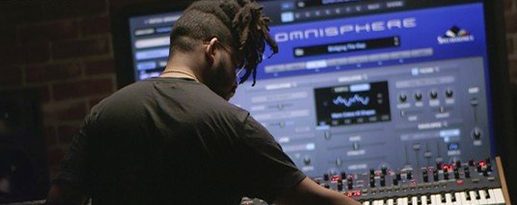
 Download (205 MB)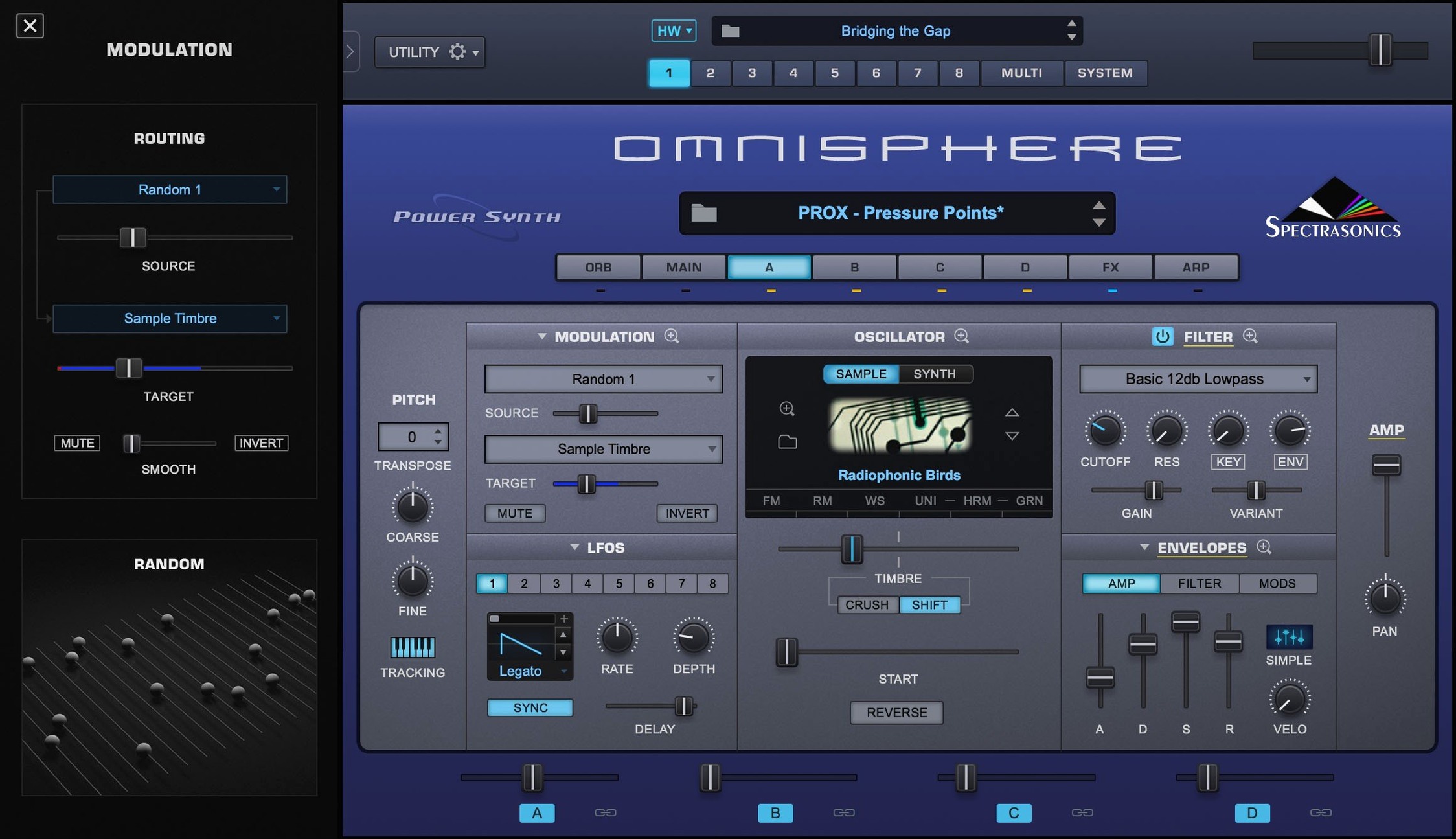
Omnisphere 3.0.2c runs on any Mac that meets the macOS 11 baseline, on both Intel and Apple Silicon processors. It arrives as a standalone application and as a set of plug-in formats — VST, AU and AAX — which makes it accessible inside all major DAWs and hosts. The installation is straightforward from a standard disk image, and the interface is presented in English. Beyond the basics of loading it up, the instrument extends its reach through Hardware Synth Integration, letting it recognise and map parameters from a wide range of synthesizers and MIDI controllers.
- Standalone operation alongside VST, AU and AAX plug-in formats.
- Native support for Apple Silicon and Intel architectures under macOS 11 and later.
- Hardware Synth Integration connects directly with major synthesizer brands and controllers.
- The factory sound library requires a separate STEAM folder, noted as the Omnisphere 2.8 library in documentation.
- A single English-language interface across all plug-in formats and the standalone app.
Compatibility is only the frame. Inside, Omnisphere functions as a deep software synthesizer that draws from a large factory library while leaving room for custom sound design. The plug-in loads cleanly into a session and the standalone app gives a focused environment for patch browsing and editing without a DAW. The requirement for a separately stored STEAM folder means you need to manage disk space deliberately, but it also keeps the core application lean.
Point the STEAM folder to an external SSD before browsing
After the disk image finishes mounting and the standard installation completes, the first thing to do is locate the STEAM folder and place it where you want it to live. The library is large, so an external SSD with a fast connection works better than tucking it onto a system drive that is already half full. Once the folder is in position, launch the standalone application and point it to the library path when asked. The plug-in formats will pick up the same location automatically the next time you open a DAW.
Start with a basic scan through the patch browser. Do not try to audition every sound in one sitting — the factory library is too deep for that. Instead, pick a category that matches your usual style and spend twenty minutes loading patches, playing octaves, and noting which ones respond well to velocity. This gives you a quick personal shortlist before you ever open a DAW session.
Connect a MIDI controller early, even a simple keyboard. Omnisphere responds to mod wheel and pitch bend in ways that reveal the character of a patch faster than clicking the on-screen controls. If you own a supported hardware synthesizer, connect it via USB and toggle the Hardware Synth Integration profile in the settings. The mapping often snaps into place without manual assignment, letting you use physical knobs for filter cutoff and envelope shaping from the first moment.
Resist the urge to layer too many parts in the first few sessions. A single instance of Omnisphere can fill a mix quickly. Spend time with one patch inside your DAW, adjusting the main volume envelope and the effects sends, before stacking additional instances. This habit pays off later when you need to fit sounds into a dense arrangement.
Smoother patch browsing on Apple Silicon
Moving from the earlier 3.0.0d build to 3.0.2c brought refinements rather than a rewrite, but a few changes touch daily work directly. Patch loading feels steadier under Apple Silicon, with fewer momentary freezes when browsing large banks. The update also tightened the behaviour of Hardware Synth Integration profiles for several controller brands — parameters that previously needed manual MIDI learn now map themselves on connection.
Under the hood, Spectrasonics improved how the engine handles voice allocation when multiple instances run in a session. On Intel machines running macOS 11, the difference is subtle; on newer Apple Silicon Macs with plenty of RAM, complex projects with six or seven Omnisphere tracks hold together with fewer dropouts. The update did not alter the factory library structure, so users coming from a 2.8 STEAM folder keep full access to all existing patches and multis.
One practical shift is that the 3.0.2c installer recognises the STEAM folder path more reliably during a fresh installation. Earlier 3.0 builds sometimes required a manual browse to the library location even when the folder sat in the default directory. That small friction is gone, which shaves a few minutes off the setup routine.
The interface itself stayed consistent — no relocated menus, no renamed tabs. Anyone who learned the layout in 3.0.0d will find the same controls in the same places. This matters for muscle memory during sound design sessions where you reach for the modulation matrix or the effects rack without thinking.
Adjust streaming and memory to stop first-note glitches
A handful of preferences make a noticeable difference in daily use. Open the standalone app and go to the settings panel before loading a single patch.
First, check the Streaming options. By default, Omnisphere streams samples from disk to keep memory usage low. On a fast SSD, you can lower the pre-load buffer size slightly without risking glitches. If you work mostly with synthesis-based patches rather than sample-heavy sounds, this setting barely matters; if you lean on the granular and sample-based engines, a smaller buffer can tighten note response.
Second, set the MIDI channel behaviour to match your controller setup. Omnisphere defaults to omni mode, which works fine for a single keyboard. If you use multiple controllers or a hardware synth with split zones, switch to a specific channel assignment. This avoids accidental triggering from other devices on the same MIDI bus.
Third, enable High Resolution MIDI if your controller and DAW support it. The difference is not dramatic, but pitch bend and modulation sweeps gain a little extra smoothness, which matters for evolving pads and lead sounds.
Fourth, check the Audio Engine sample rate. It should match your project rate. Mismatched rates force real-time conversion, which adds a light CPU load on every instance. Set it once and leave it.
Finally, disable the Check for Updates notification if you manage versions manually. The prompt appears at launch and can interrupt a quick idea capture. The setting is a simple checkbox, easy to find.
Synthesis types you can layer without leaving the interface
Sound designers and electronic music producers draw the deepest value from the instrument. The combination of wavetable, granular, sample-based and virtual-analogue synthesis in a single interface means you can build a patch from scratch without reaching for another plug-in. The modulation matrix is deep enough to keep a designer busy for years, and the effects rack holds its own against dedicated processing chains.
Keyboard players who perform live also benefit, especially those who use Hardware Synth Integration. A hardware synth with physical controls turns Omnisphere into an instrument that feels tactile rather than screen-bound. The standalone application loads without a DAW, which keeps the stage setup light. Patch changes happen fast enough for setlist use, provided you organise sounds into a user bank ahead of time.
Film and media composers gravitate toward the factory library. The sheer range of organic textures, hybrid orchestral pads and evolving atmospheres suits scoring work where deadlines leave little room for sound design from scratch. A composer can load a multi, tweak the effects, and have a cue foundation in minutes.
Hobbyists and beginners can use Omnisphere too, but the full depth becomes more rewarding once you understand the basics of subtractive synthesis and envelope routing. A newcomer who simply browses presets will still find usable material, though the interface density might feel heavy at first. The learning curve is real, but the payoff scales with time invested.
Running natively on M1 and M2 Macs without Rosetta
Does it work on an M1 or M2 Mac without Rosetta?
Yes. The current build runs natively on Apple Silicon. There is no need for Rosetta, and performance under native ARM code is solid. Both the standalone app and all plug-in formats recognise the architecture automatically.
How much disk space does the library need?
The factory STEAM folder is large enough that you should plan for it in advance. An external drive is practical, and the application lets you specify any folder location during setup. You do not need to keep the library on the same drive as the application.
Will it work in my DAW?
It loads as VST, AU and AAX, which covers virtually every major recording environment on macOS. If your DAW supports one of those formats, Omnisphere appears in the instrument list after installation. No extra bridging or wrapping is necessary.
Can I use my hardware synth as a controller?
If your synth is among the supported brands, Hardware Synth Integration maps its controls to Omnisphere parameters automatically. Even without a supported profile, any MIDI keyboard with standard CC assignments will play and control basic parameters. The deeper integration simply adds hands-on access to the synthesis engine.
Is the interface difficult to learn?
It is dense but logically arranged. The main pages — layer controls, modulation matrix, effects rack — sit behind clearly labelled tabs. A new user can browse presets immediately and gradually explore deeper editing. The reference guide covers every parameter, and the tooltips in the interface help during sound design.
Some users search for an omnisphere torrent or omnisphere 3 free download before committing to the installation. Others look specifically for an omnisphere 3 mac torrent or an omnisphere 3 torrent that matches the latest version. The installation procedure described here works with the standard disk image and STEAM folder, and the steps remain the same regardless of where the files originate.