Aspecten
 Download (340 MB)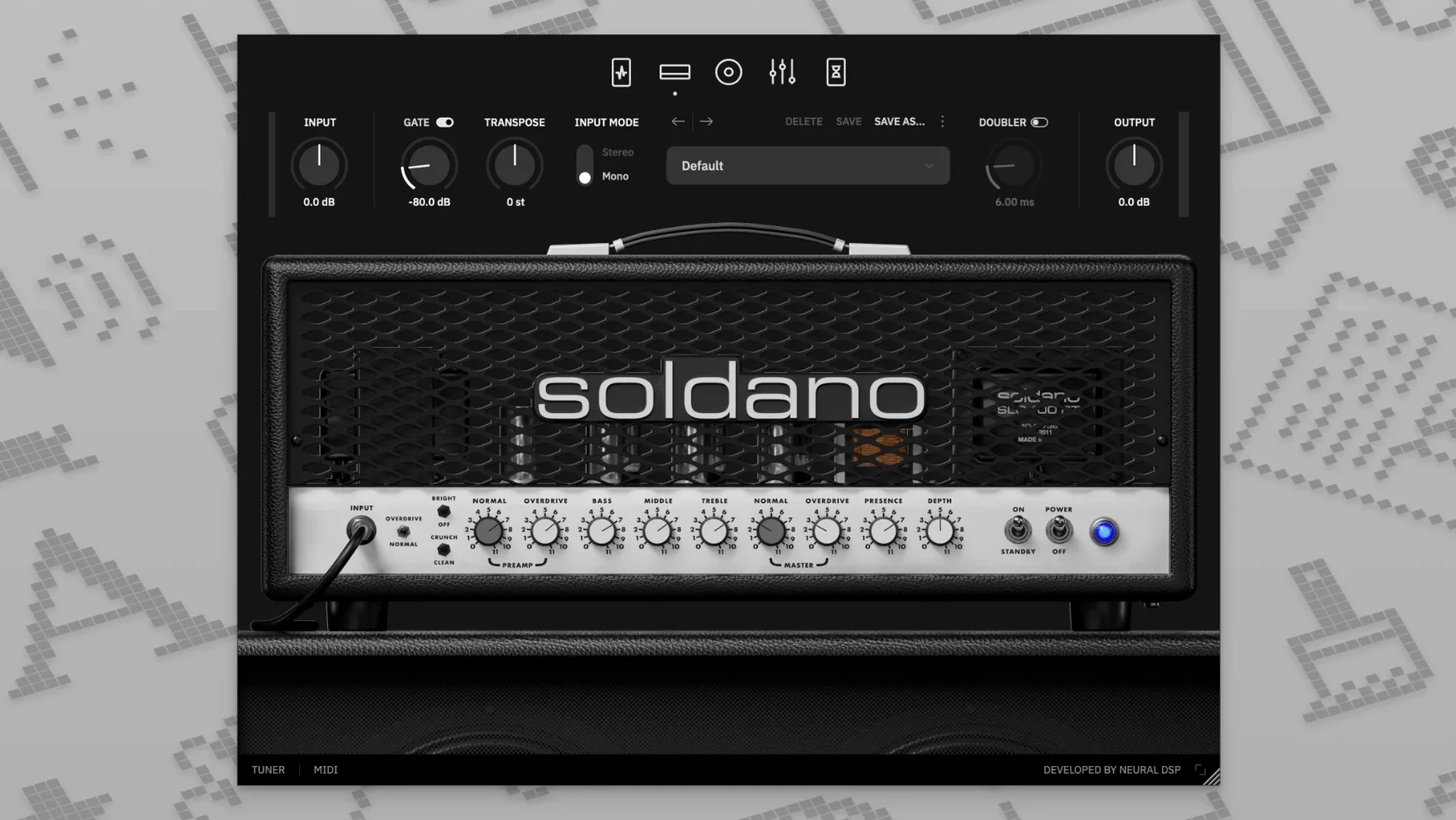
The Doubler control sits after the amplifier and cabinet, adding a stereo spread that can push a rhythm part from dead-centre to the edges of a mix without making it sound chorused. It is one of those additions that makes sense on a piece of software rather than the physical amp it models.
The plugin is a component-modelled take on the Soldano SLO-100, the American high-gain amplifier that defined a particular tight, articulate distortion. Neural DSP first released a version in 2021. This X revision brings updated modelling technology across the whole circuit.
The signal path is laid out in logical blocks. Before the amplifier section you have a compressor, a boost, an overdrive and a vintage chorus. The amplifier itself offers four modes — Clean, Bright, Crunch, and Overdrive — each shifting the gain structure and tonal emphasis in a way that reflects the original amp's character. After the speaker cabinet simulation sit a delay, a reverb and the Doubler.
Articulate palm mutes and a post-cabinet Doubler for spread
- High-gain rhythm parts that stay articulate under fast palm-muting
- Dialling in a lead tone with the built-in boost and overdrive shaping the front end
- Stereo widening via the Doubler, applied post-cabinet for a clean spread
Chorus hits the preamp so it saturates differently
- The plugin requires 64-bit host software to run
- The chorus sits pre-amplifier, which colours the effect differently than a post-amp modulation
Tight low-end cuts through dense metal mixes without flub
Guitarists recording modern metal and hard rock will find the SLO-100 X immediately at home. The amp's tight low-end response and articulate midrange cut through dense arrangements without the flub that plague some high-gain simulations. Palm-muted riffs stay defined, and lead lines have enough presence to sit forward in a mix without extra EQ sculpting. Anyone tracking double-tracked rhythm parts will appreciate the Doubler as a quick alternative when session time is tight.
Mix engineers who receive dry DI tracks rather than amped signals get a self-contained tone-shaping chain. The pre-effects, amplifier modes, nine-band EQ, cabinet section and post-effects all live in one window. Switching from a crunchy verse tone to a saturated chorus tone means changing the amp mode and adjusting the cabinet blend, not loading three separate plugins. Music students and home-recordists working through Neural DSP's preset library benefit too: the factory presets cover clean arpeggios, bluesy breakup, hard-rock crunch and full-on lead sustain, which makes the amp's range clearer than a blank-knob starting point.
Producers building layered guitar textures often need one amp that can shift character quickly. The Clean mode on the SLO-100 X stays glassy and full, not sterile, while the Overdrive mode gets into singing saturation without the noise floor climbing out of control. Those two modes alone can carry a verse-to-chorus transition without swapping plugins.
Broader palette than the Fortin Nameless single-amp assault
Neural DSP's own Fortin Nameless Suite covers a tighter, more modern high-gain territory. The Nameless is built around a single brutal amplifier design with fewer tonal options outside its core distortion sound. The SLO-100 X offers a broader palette: the Clean and Bright modes give it a dynamic range the Nameless deliberately omits. Someone tracking ambient cleans and saturated leads in one session will stay inside the SLO-100 X longer before reaching for another plugin.
STL Tones' Amphub bundles multiple amplifier models and an IR loader into a single interface. Amphub's flexibility lies in combining different amp heads and cabinets from separate brands. The SLO-100 X takes the opposite approach: it models one amplifier in depth, with every switch position and gain stage accounted for. Users who want to learn a single amp's behaviour thoroughly — how the Bright mode compresses differently from Crunch, how the preamp boost interacts with the Overdrive channel — will prefer Neural DSP's approach. Amphub rewards experimentation across amp types; the SLO-100 X rewards commitment to one voice.
Audio Assault's Hellbeast models a high-gain amp with fewer pre-effects and a simpler post section. The SLO-100 X's nine-band EQ and its high-pass and low-pass filters give more surgical control before the signal hits a DAW channel strip. Hellbeast sounds immediate and aggressive but expects you to shape the tone elsewhere. The SLO-100 X aims to deliver a mix-ready sound from its own output.
Browsing hundreds of impulse response combos on a dry DI
A producer opens a session with a dry DI guitar track already recorded. The SLO-100 X loads on an insert slot in Logic Pro. The first step is browsing the cabinet section: hundreds of impulse response combinations are available, and scrolling through a dozen or so quickly shows which speaker and microphone pairing suits the raw guitar. A 4x12 with a dynamic mic close to the cone edge tightens the low end; a ribbon mic blended in at lower volume adds body.
With the cabinet set, the amplifier mode goes to Crunch. Gain sits at noon, master volume pushed just enough to hear the power amp compression kick in when the player digs in. The built-in overdrive pedal engages with the drive control low and the level high — the classic way to slam the front of a high-gain amp without losing note definition. The nine-band EQ gets a small cut at 250 Hz to clean up mud and a slight boost at 3 kHz for pick attack.
Doubled rhythm parts are needed for the chorus. Instead of tracking a second performance, the Doubler activates with a moderate spread. The effect sits post-cabinet, so the stereo widening does not alter the gain structure or EQ set earlier. A short stereo delay with the mix kept low adds depth without pulling the guitar out of the centre image entirely. The reverb stays on a room setting, barely audible in isolation but noticeable when bypassed.
For the bridge, the amp mode switches to Clean. The gain drops, the compressor in the preamp section engages to even out fingerpicked dynamics, and the vintage chorus adds a slow modulation that sounds warmer before the amp than a post-amp chorus would. The whole section takes under two minutes to dial in, and the CPU meter inside Logic barely moves.
Instant mode switching on Apple Silicon with no audio gap
The SLO-100 X loads quickly on Apple Silicon Macs. Opening the plugin in Logic or in standalone mode takes only a moment, and switching between the four amplifier modes happens without audio dropouts or processing gaps. On an M-series Mac, a single instance at a 128-sample buffer sits comfortably under 10% CPU load, and stacking four or five instances across a full session remains practical without freezing tracks. The older Intel build performs similarly on recent x86 machines, though older Intel Macs from the 2015–2017 era may need a larger buffer for dense projects.
Stability across long sessions holds up well. The plugin has run through three-hour tracking and mixing stretches without crashing the host or leaking memory. Preset changes are nearly instant, and the Doubler toggles on and off with no latency spike. One quirk worth noting: loading user cabinet IR files from a network drive can introduce a brief pause, but files stored locally load without delay.
Memory use stays modest. A single instance occupies roughly 200 MB of RAM, which means even a ten-guitar project adds only a couple of gigabytes to the session total. The standalone application uses about the same footprint and responds to MIDI program changes reliably for live use. The plugin qualifies for any workflow where a neural dsp torrent mac search might surface it, and its performance justifies keeping it in the plugin folder long after the initial download.