Aspecten
 Download (635 MB)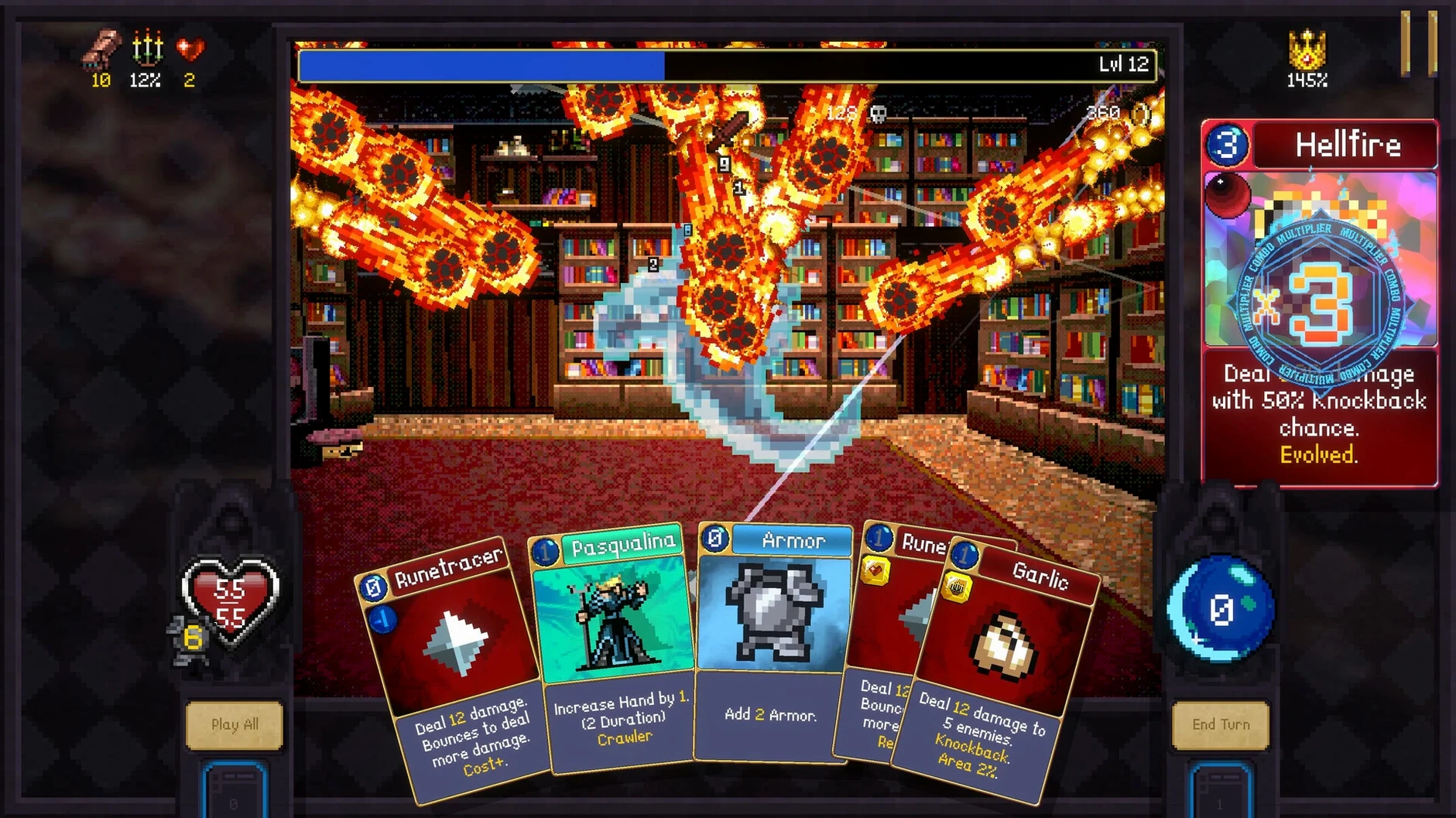
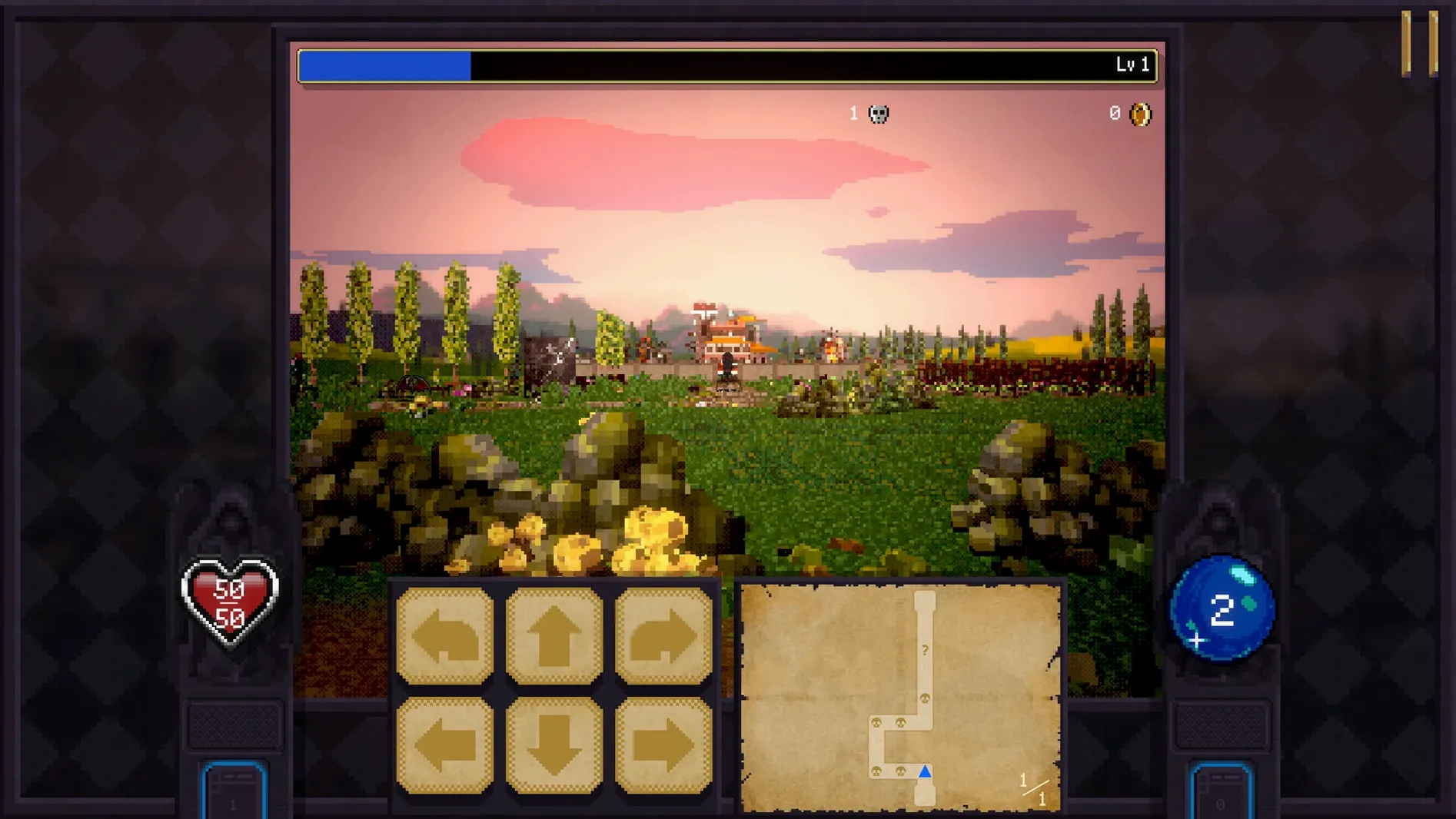

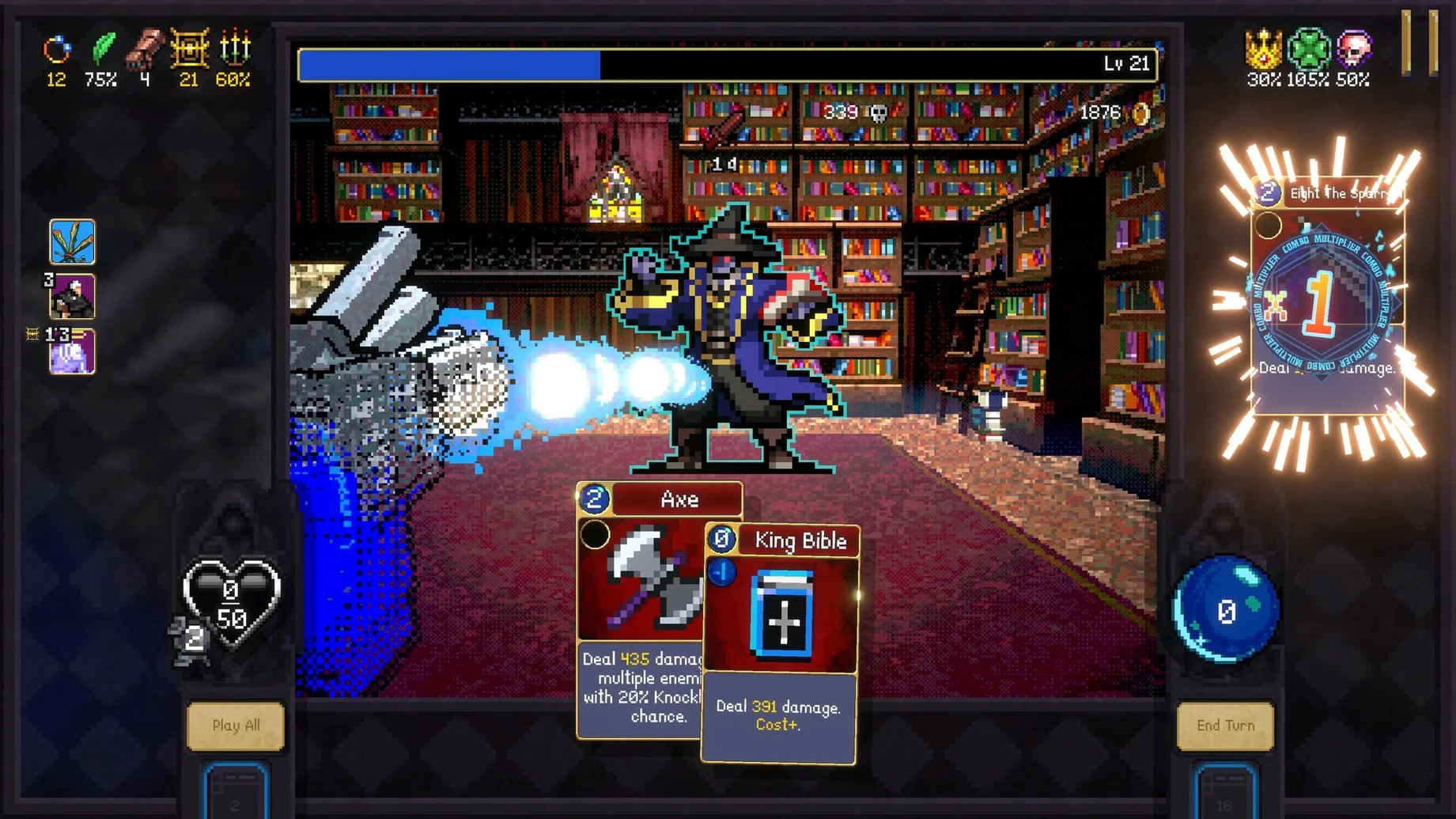
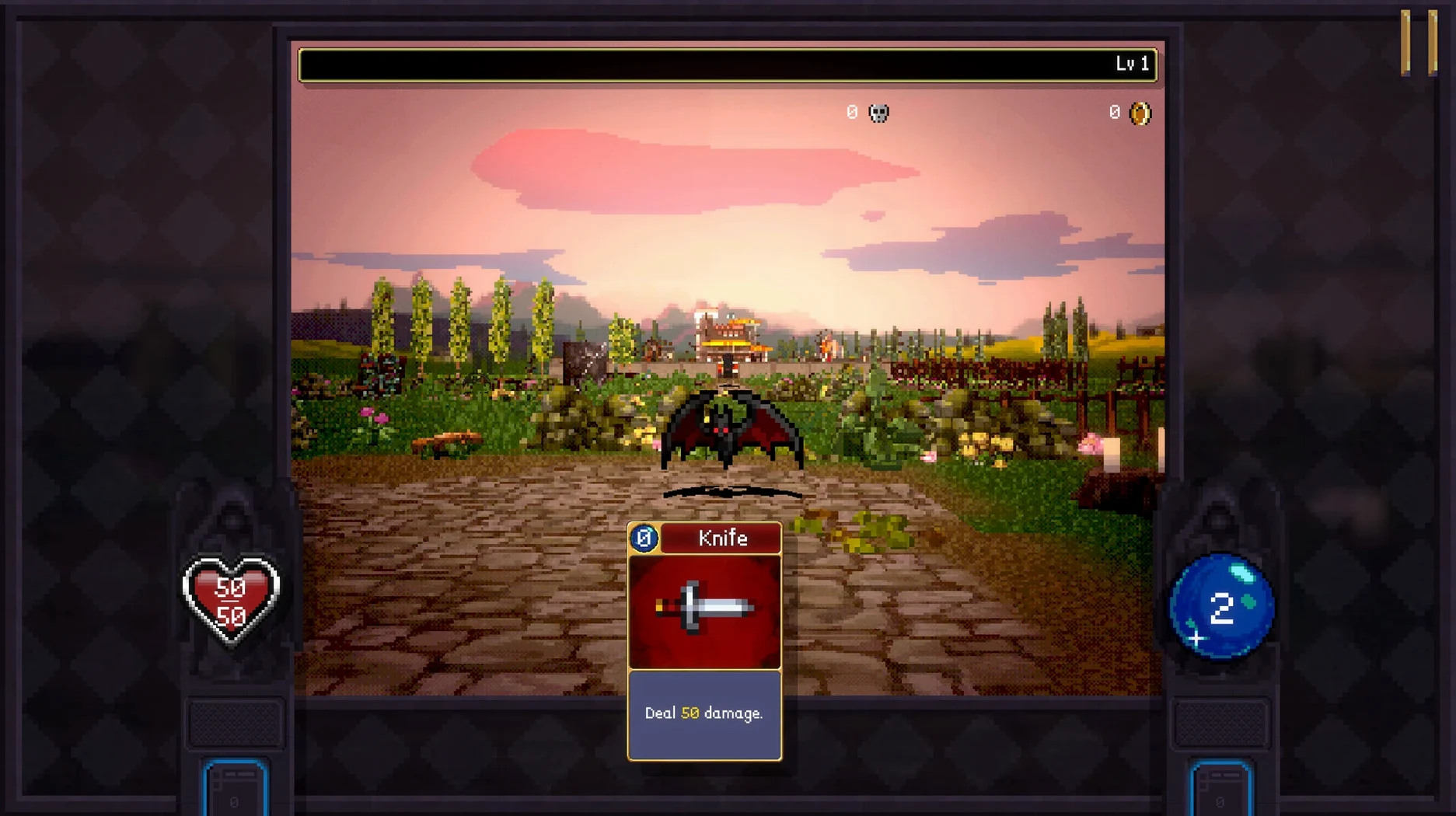
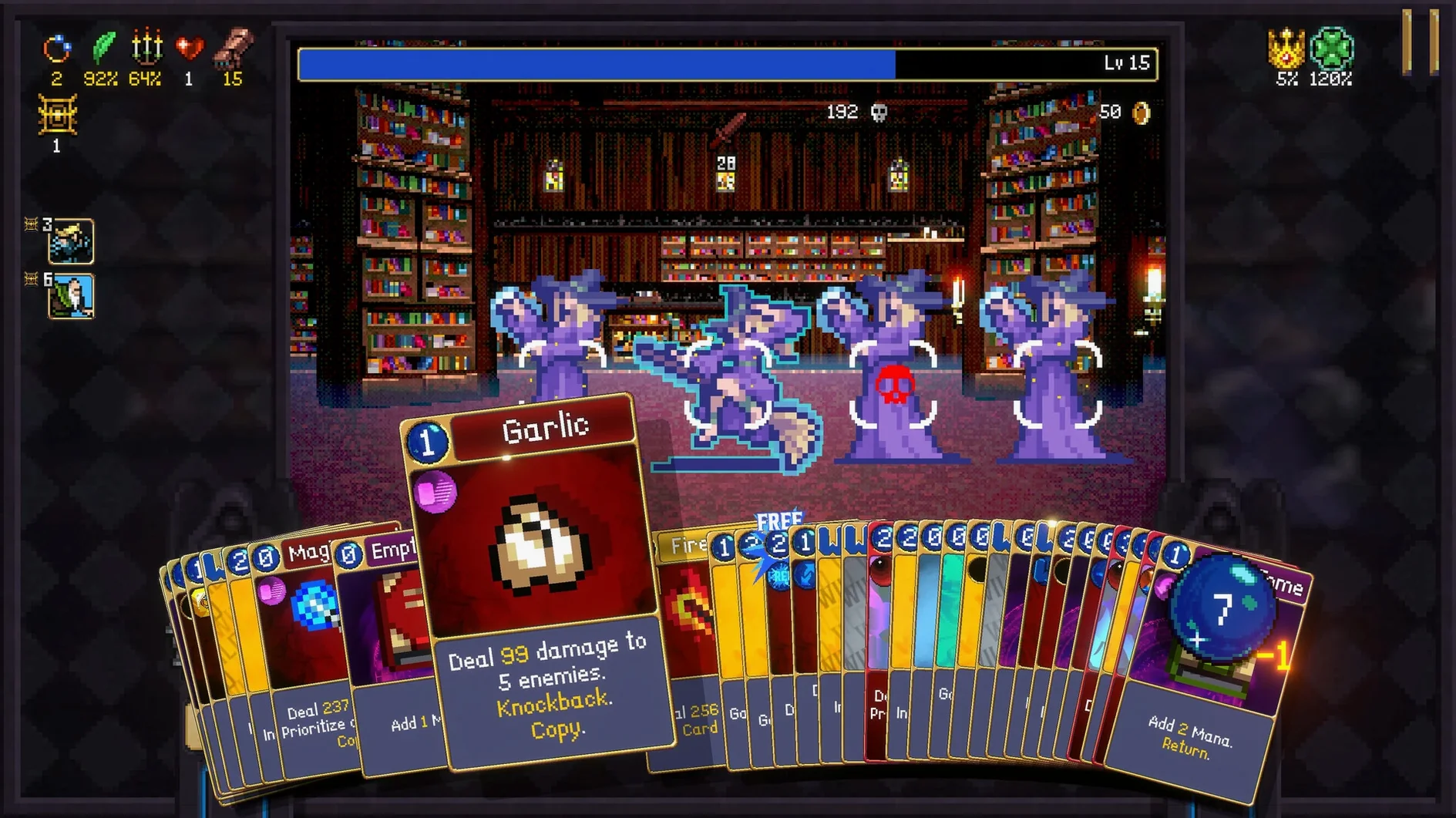
The game launched on 21 April 2026, bringing the Vampire Survivors world into a turn-based deckbuilder format. It borrows the same chaotic bestiary and visual language, but the rhythm is slower and more deliberate here. You explore dungeon rooms, break chests for gems and power-ups, and play cards in ascending mana cost to trigger combo chains. Each successive card multiplies the effect, so a poorly arranged hand can leave you stranded, while a nicely stacked sequence clears the screen.
Who fits this deck
- You enjoy casual roguelites where a single run fits into a short session.
- You like deckbuilders that reward sequencing over raw card power — the mana-cost ladder gives each turn a small puzzle to solve.
- You found Vampire Survivors satisfying but wished for a turn-based variant, or you simply like chaining abilities with the summoned familiar heroes.
Turn-based patience over real-time urgency
If you want real-time urgency or deep deck construction between runs, the game's loop may feel light. The turn-based pace and focus on combo ordering reward patience, not speed. The shovel that digs to the next level keeps exploration brisk, but the roguelite progression sits closer to a snackable arcade loop than a long-form deckbuilder campaign.
Lowest-to-highest mana cost ladder
A new player often treats the deck like a standard card battler, saving high-cost cards for later and leading with cheap ones. That instinct breaks the combo system. The mana-cost ladder expects you to sequence cards from lowest to highest, so hoarding a 7-cost finisher while playing a 2-cost opener wastes two or three slots where a 3, 4 and 5 could have multiplied the chain. The board clears faster when you build the staircase, even if the individual cards look modest.
Breaking chests is another early blind spot. Beginners sometimes rush past wall-mounted chests in favour of reaching the next room. Every chest drops gems that fund card upgrades, and skipping three or four chests on a floor leaves the deck under-levelled by the mid-game. A shovel swing takes a second — it is almost never worth bypassing a chest to save that time.
The joker card mechanic also trips players up. A joker extends a combo beyond the natural limit of your hand, and new players tend to drop it early as a wildcard filler. Held until a sequence already reaches five or six cards, the joker can push the multiplier into double digits. Using it on turn two burns a tool that could have turned a routine clear into a screen-wipe.
Shorter dungeon floors versus three-act deck building
Next to Slay the Spire, the structural difference is immediate. Slay the Spire builds its tension around long-term deck construction, relic stacking and branching path choices across three acts. Vampire Crawlers compresses that into shorter dungeon floors and replaces careful card curation with the combo ladder. Where Slay the Spire asks you to craft a coherent engine over an hour, this game asks you to solve a fresh sequencing puzzle every few minutes.
Monster Train shares the combo-chaining impulse — its floor-based lane defence rewards stacking unit abilities — but it layers on clan synergies and a more complex upgrade tree. Vampire Crawlers strips that back. No clans, no unit placement. The familiar hero summons echo Monster Train's creature play, but they trigger as chained effects rather than persistent board presence. The spin-off feels breezier, less spreadsheet-like in its decision space.
Dicey Dungeons sits closer in tone: both are playful roguelites that treat a single mechanic as a toy box rather than a stately campaign. Dicey Dungeons builds turns around dice allocation; Vampire Crawlers builds them around mana-cost ordering. The difference is in the fail state. Dicey Dungeons can punish a bad roll with an outright loss on an early floor. Vampire Crawlers gives you the shovel and the chests — a weak hand often still scrapes through if you have kept up with upgrades.
Manually sort your hand by cost each turn
- Sort your hand by cost before every turn. The interface does not auto-sort, and eyeballing a seven-card hand leads to missed sequences. A quick manual reorder — lowest left to highest right — makes the ladder obvious and cuts decision time in half.
- Dig on the first turn of a new floor. The shovel action ends your turn, so using it immediately after drawing a fresh hand wastes no cards. If the hole appears under a wall, you have the rest of the turn to reposition before descending.
- Prioritise gem chests over weapon chests in the first two floors. Weapon upgrades are flashy, but an under-levelled deck stalls around floor three no matter how good the sword is. Gems give you card upgrades that compound across the whole run.
- Treat the summoned heroes as combo extenders, not as panic buttons. A familiar placed after three cards in sequence multiplies its effect; dropped as a turn-one opener, it does baseline damage and adds nothing to the chain. Hold them until the ladder is underway.