 Aspecten

 Download (1.7 GB)
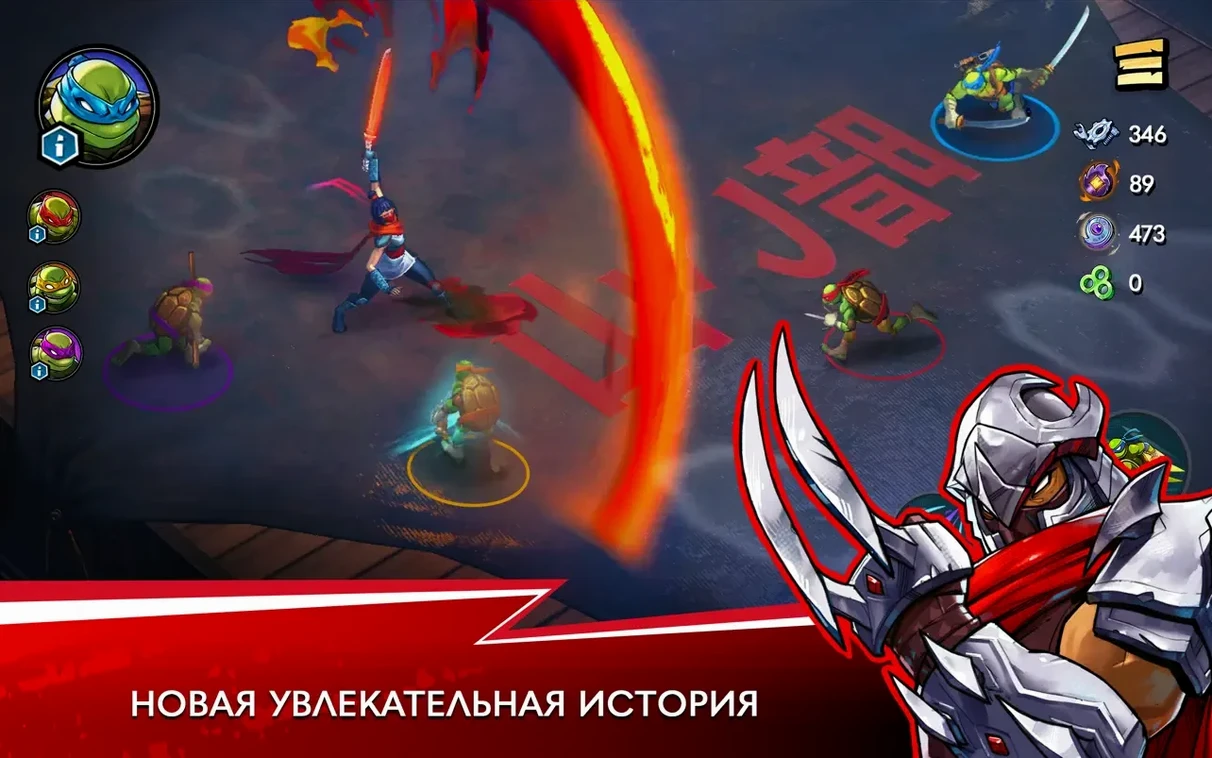
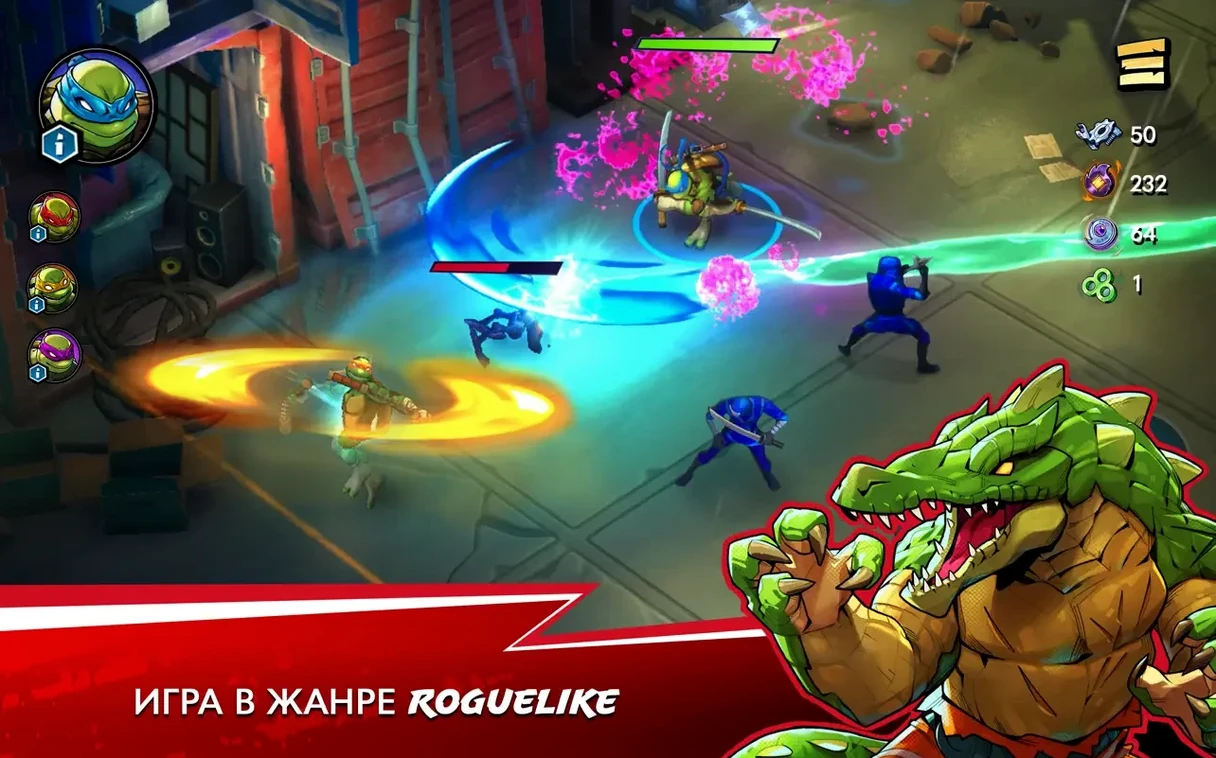
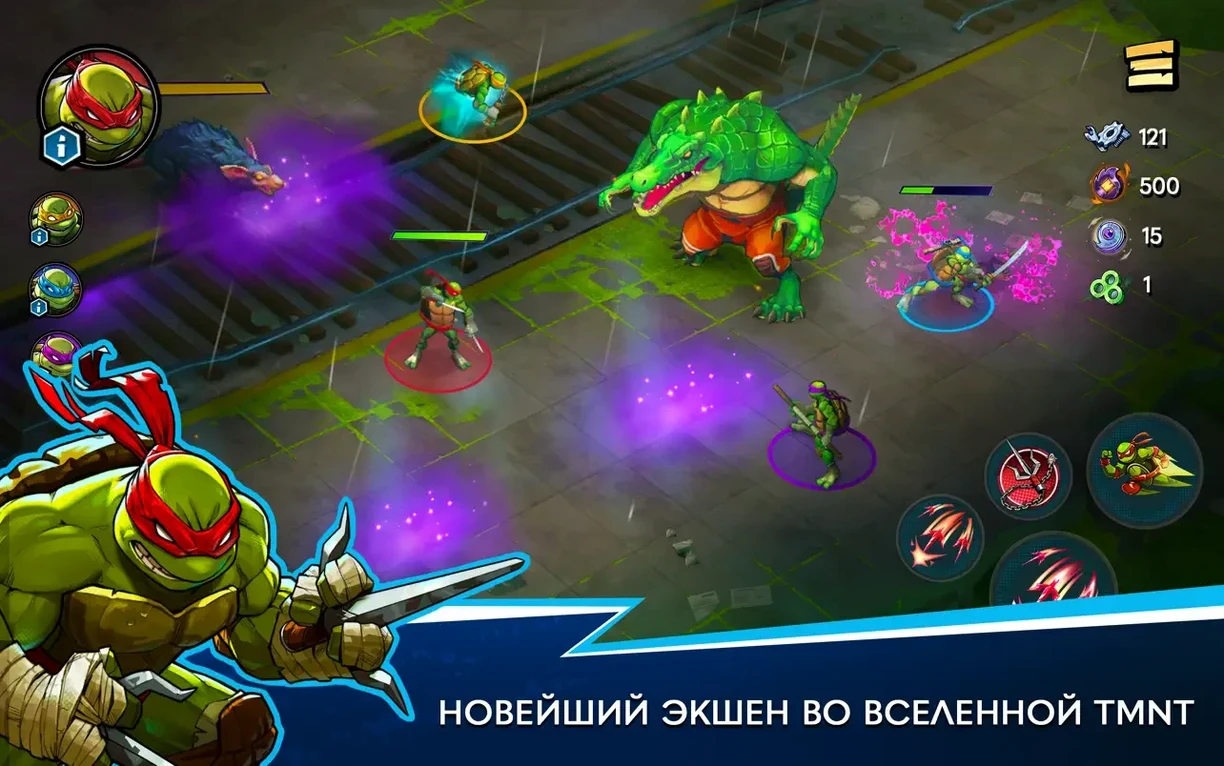
Dragon’s Touch, for example, turns Leonardo’s dash into a fire trail that melts pursuing Foot Clan ninjas. You pick it from a randomised set of three power-ups after clearing a room, and it immediately changes how you move through the next encounter. The moment-to-moment loop is simple: enter a chamber, clear the enemies, take a boon, pick a door. The doors tell you what reward waits on the other side, so every choice is a small tactical bet.
What a run actually feels like
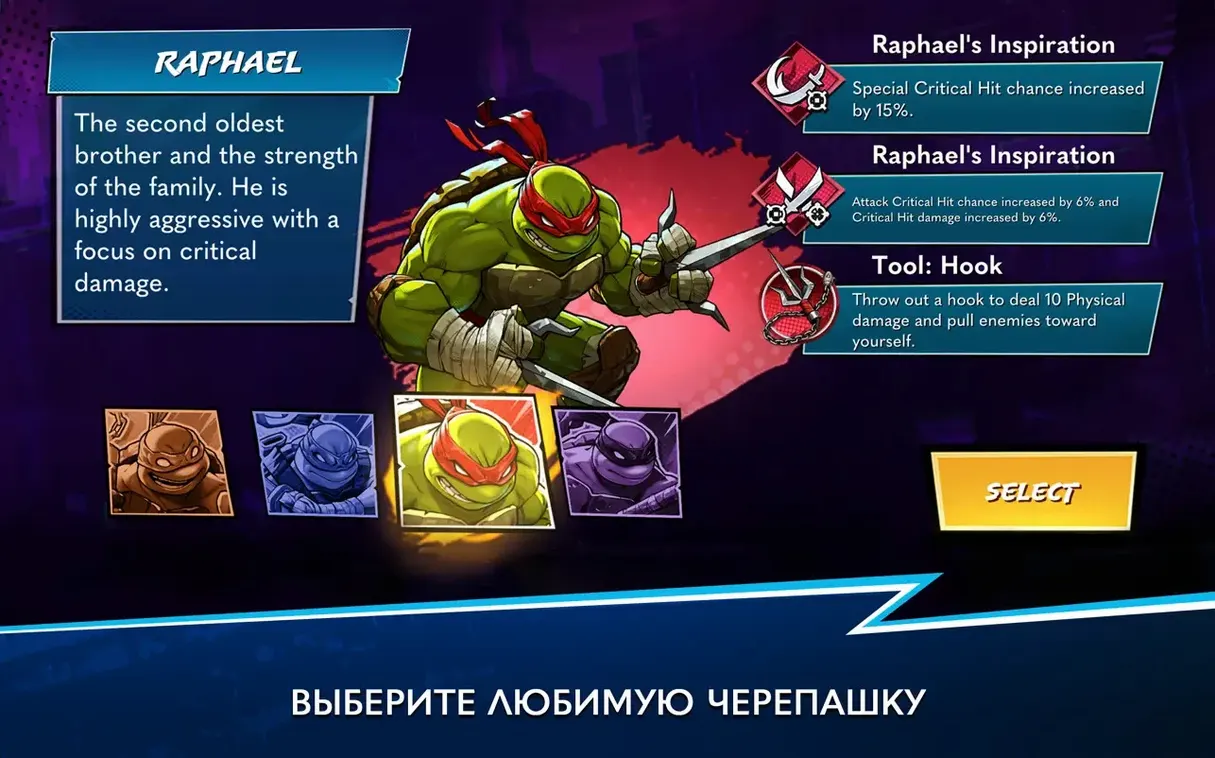
- Each turtle plays as a separate fighter with a distinct weapon range, dash speed and special move. Michelangelo’s nunchucks sweep wide; Donatello’s bo staff keeps enemies at a safer distance.
- Level layouts are scrambled every run. One attempt sends you through the sewers; the next might start on the rooftops, with enemy compositions shifting to match the faction holding that district.
- Between chambers you grab temporary power-ups that stack into broken combos by the end of a run, or fizzle out because you took a risk that did not pay off.
- Up to four players can join locally, each controlling a different turtle. Chaos scales fast with four people dashing through the same small arena.
What anchors the chaos
The roguelike structure is held together by classic New York locations and familiar enemy factions. Foot Soldiers swarm in groups, Mousers skitter in from the edges, and larger bosses demand you learn a dodge rhythm rather than button-mashing. The audio is listed as musical accompaniment, and it pushes the pace without getting in the way. If you fall, you lose the temporary power-ups from that run and start over, keeping only the meta-currency that buys permanent stat improvements back at the lair.
Runs reset on death, not a story campaign
One of the first things people check is whether this is a proper roguelike or a story-driven action game with light randomisation. It sits squarely in the roguelike camp. Runs are self-contained, death resets your temporary build, and meta-progression is tied to currency you earn during each attempt. The story about rescuing Splinter from Shredder provides a frame, but the loop of fighting, looting and restarting is what keeps you coming back.
Another common question concerns offline play. The game does not require an internet connection once it is installed, though a known quirk means freezing during the loading screen can sometimes be avoided simply by disconnecting from the network. That workaround exists in version 1.14.0 and is worth keeping in mind if you plan to play on a laptop while travelling.
People also ask whether the co-op mode works with a single keyboard or demands controllers. Local multiplayer expects each player to have their own input method: a mix of controllers works best, and four-player sessions are noticeably smoother when everyone uses a gamepad rather than sharing a keyboard. There is no online matchmaking, so the cooperative experience is strictly a couch affair.
A run from April’s perspective
Imagine a player who grew up with the TMNT arcade cabinets and has since moved on to roguelikes like Hades. They load up Donatello and land on a rooftop level at dusk. The first few rooms go smoothly; a pizza box power-up heals chip damage from some Mousers, and a bo staff range upgrade lets them poke Foot Soldiers before the ninjas close in. Then a boss chamber appears behind a door marked with a skull icon. The modifier randomiser has given Rocksteady a ground-pound shockwave that lingers longer than usual, and one misjudged dodge costs half a health bar. They scrape through with a sliver of life, grab a temporary damage buff, and weigh whether to chase a second boss door for a better artefact or head straight to the portal. April’s voice crackles over the comms as Metalhead finishes analysing the recovered fragment, and the player realises they have been holding their breath for the last thirty seconds. The artefact pays off later when it triggers a chain-lightning effect that clears a sewer ambush in seconds. By the time Splinter’s cell comes into view, the build feels overpowered in the best way, and the run ends not with relief but with the immediate urge to try Raphael next.
Built for improvised builds over repeated runs
This is not a game for someone who wants a single playthrough and a credit roll. The roguelike structure rewards repetition, and the randomised power-ups demand you improvise rather than master a fixed moveset. Players who enjoy Dead Cells or Curse of the Dead Gods will recognise the rhythm immediately and feel at home with the room-by-room decision-making.
Long-time TMNT fans get an extra layer of satisfaction from seeing deep-cut enemies and hearing the familiar banter between the turtles, even if the audio stays instrumental during combat. The four distinct fighting styles give the game genuine replay value: switching from Leonardo’s balanced dash to Michelangelo’s wider arcs changes how you approach the same level layout.
Co-op groups who share a screen benefit most. The randomised boss modifiers keep encounters unpredictable even when you know the enemy roster, and the friendly chaos of four turtles dashing through a cramped sewer room is where the combat engine really shines. Solo players still get a tight, responsive action roguelike, but the social energy of a four-turtle brawl is hard to beat on a single Mac.