Aspecten
 Download (40 GB)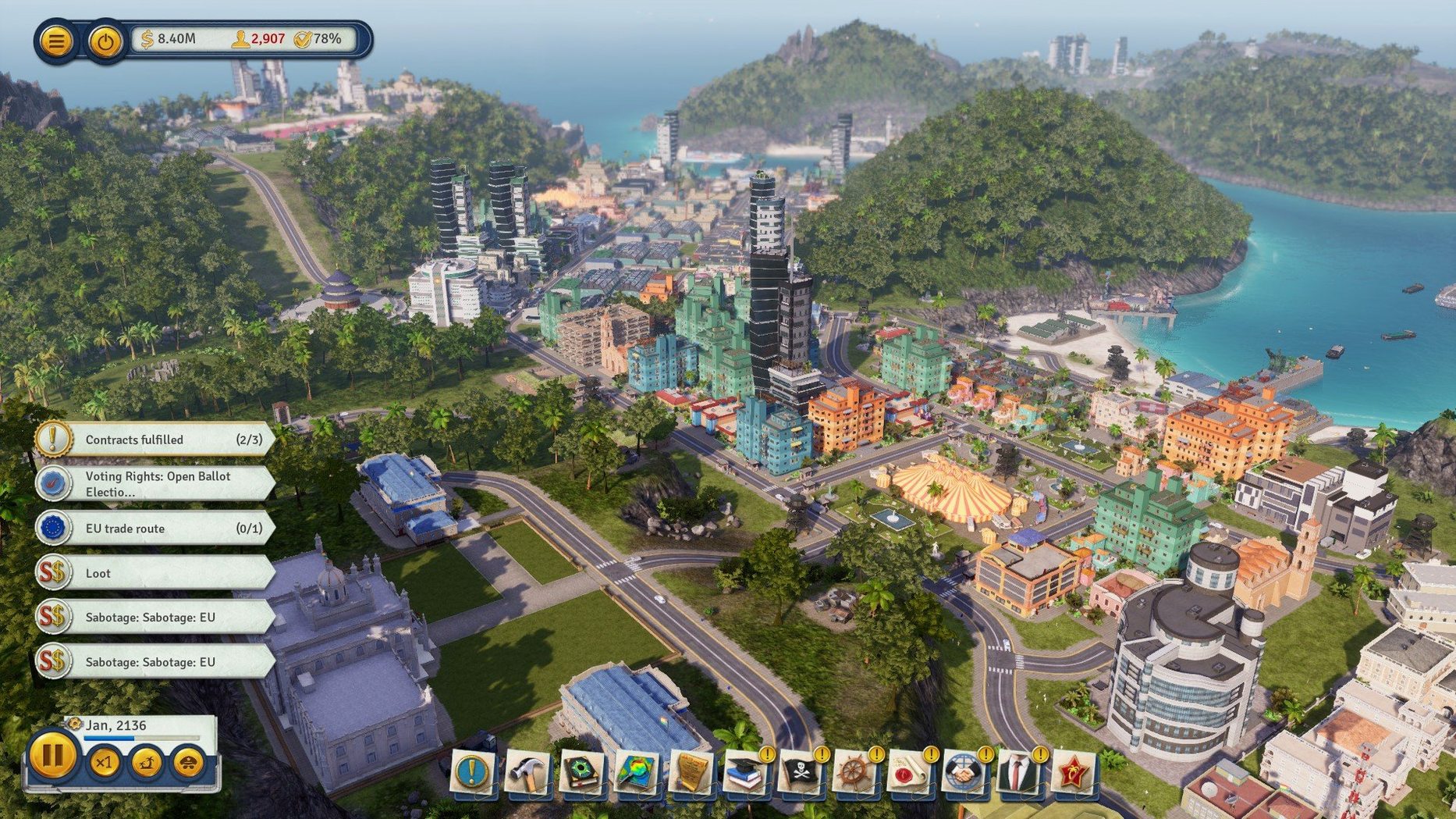
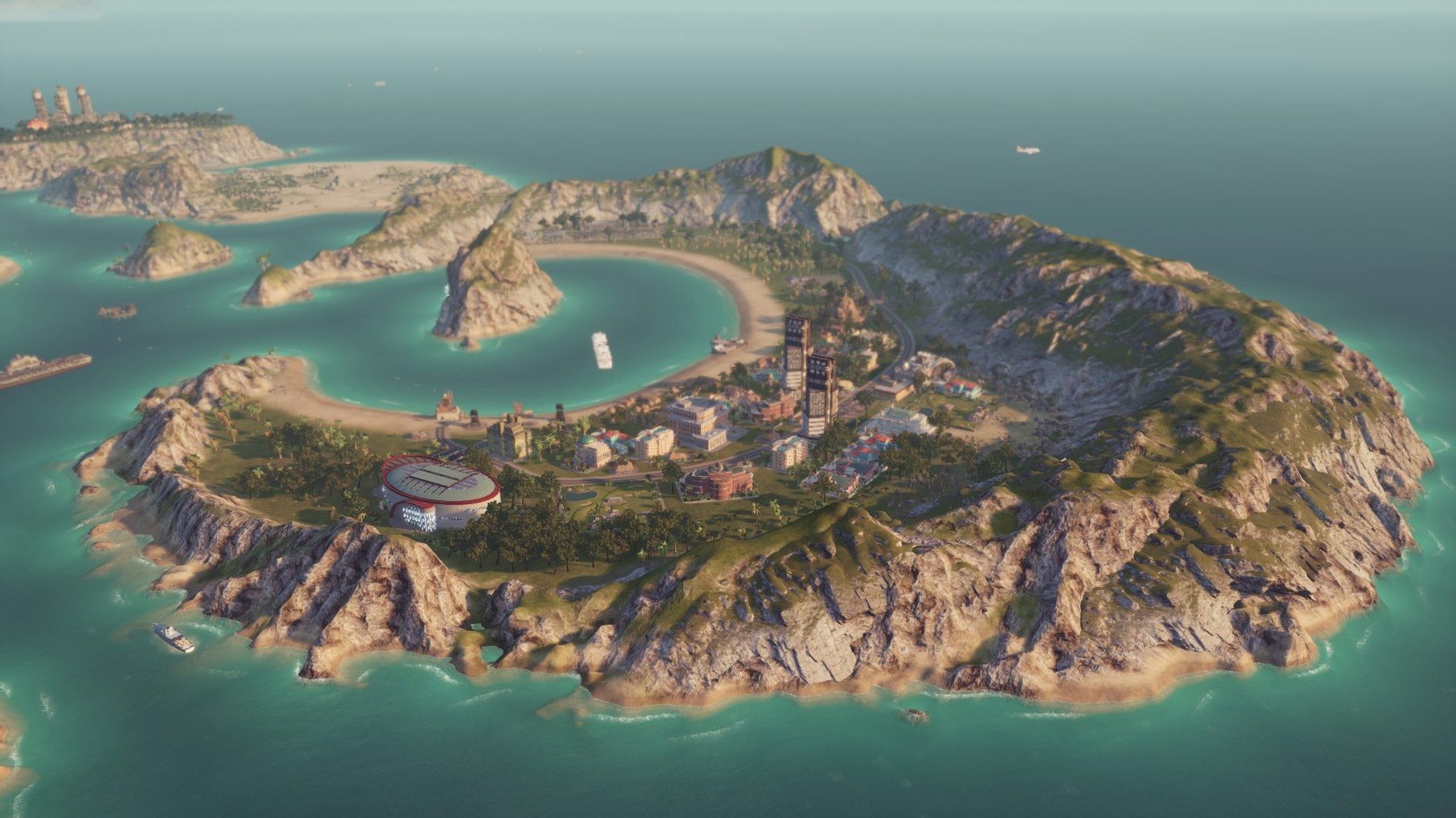
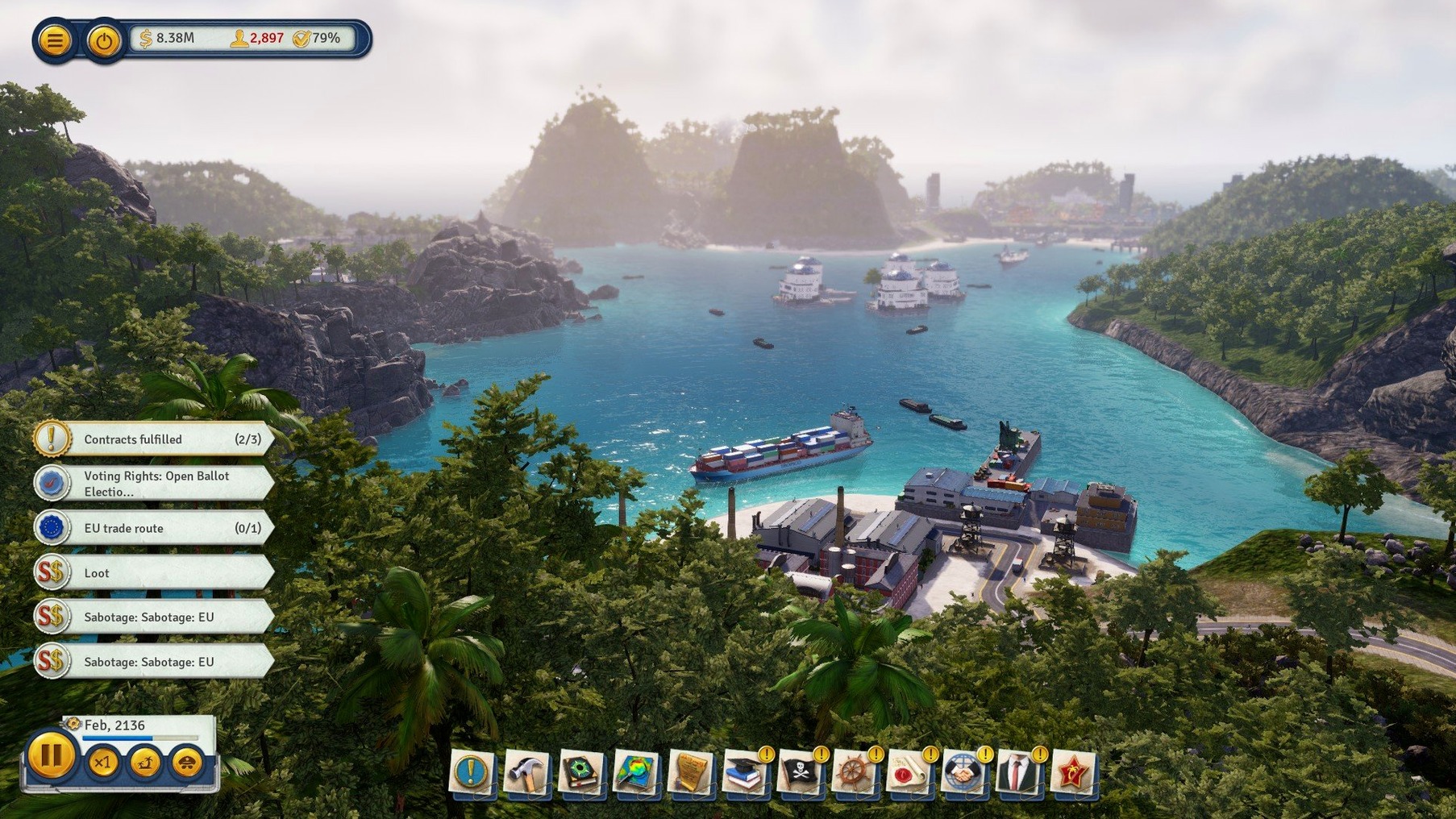
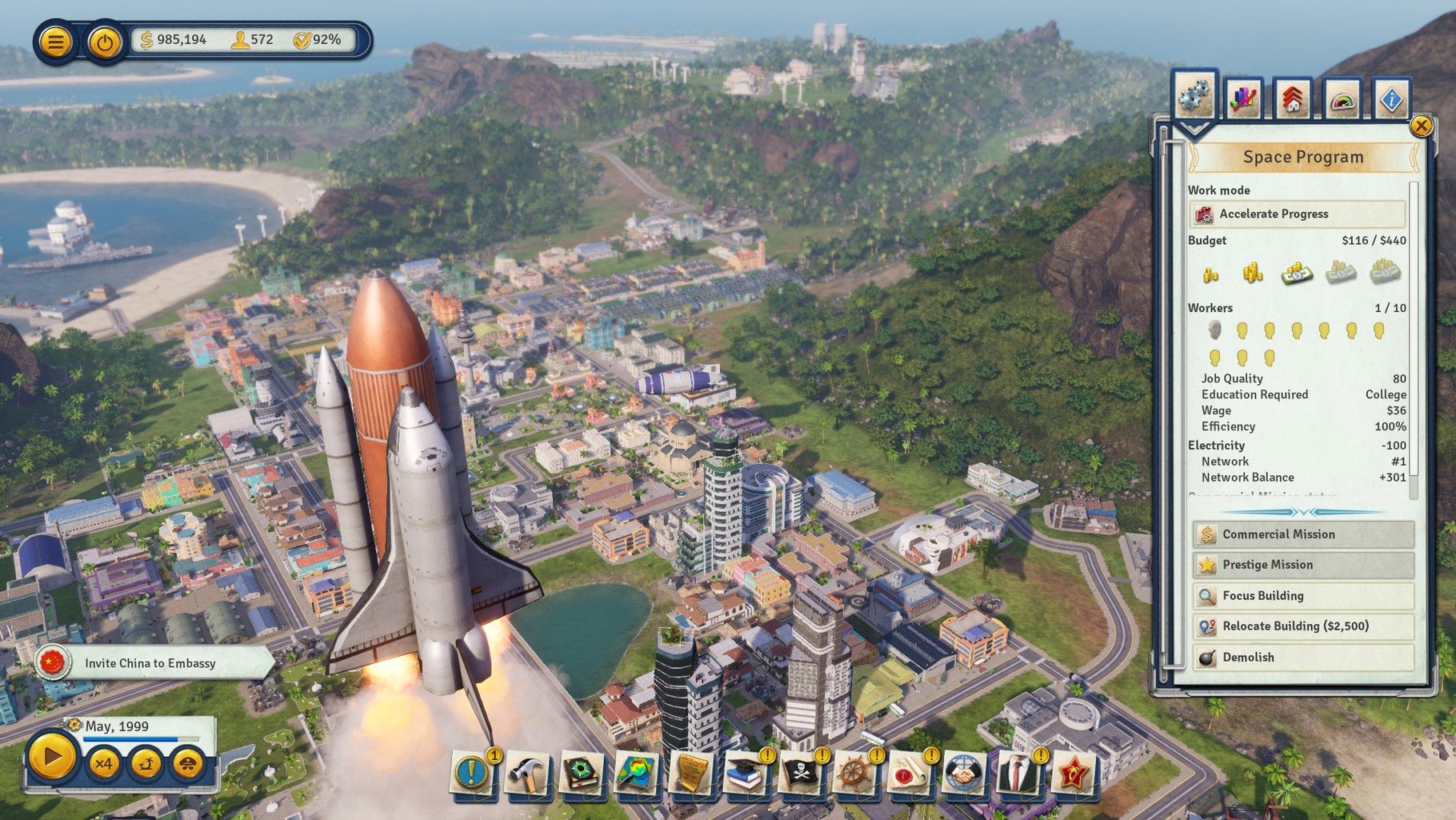
The archipelago spans several islands, connected by bridges you plan and pave. Tropico 6 sets its economic strategy layer across separate landmasses, which changes how transport and defence work from the start. A Tropico 6 Mac torrent delivers the x86 64-bit build, so you need an Intel Mac with a Metal-capable GPU and a quad-core i5 or i7 to keep the simulation steady.
What does the Intel-only build mean for Mac players?
The game runs as a 64-bit Intel process, with no native Apple Silicon binary. On an M-series Mac it relies on Rosetta 2, which works but pushes the CPU and GPU harder than a native port would. A Metal-compatible graphics card with 2 GB VRAM is mandatory either way.
How do transport systems shape a session?
You manage taxis, cable cars and bridges to move people and goods between islands. The logistics layer feeds directly into the economic simulation, so a badly timed bridge placement can stall production chains across the whole map.
What drives the strategic loop beyond building?
Strengthening defences matters because the state you develop attracts external pressure. You balance infrastructure spending against military needs while the economic model reacts to trade routes and citizen happiness across each island.
Who notices the multi-island structure most
Players who enjoy logistics-heavy city-builders get more from Tropico 6 than those who prefer compact, single-map layouts. The archipelago setup rewards people comfortable with staggered planning — you lay down a production chain on one island, housing on another, and then spend half an hour tuning the bus route between them. It also suits anyone who found earlier Tropico entries a touch too flat. Having separate landmasses makes defence placement less of an afterthought, because a naval approach can hit an under-guarded island before your army reacts.
Mac users with older Intel hardware and a dedicated GPU tend to have the smoothest time, since the x86 build runs without translation. Players on Apple Silicon can still get a solid session, but they should expect the fans to wake up during late-game saves when the simulation thread spikes. The DRM-free package helps on machines with strict background process limits or offline setups — no launcher dials home, and the game starts without phoning a licence server.
Load times from fresh sandbox to late-era island chains
A fresh sandbox map loads in about twenty seconds on a quad-core i7 with an SSD. Late-era saves with six islands and two thousand citizens take closer to forty seconds, and the autosave pause becomes a noticeable hitch once freight routes multiply. The frame rate stays above 30 fps on recommended hardware at 1080p with medium shadows, though zooming quickly across the map causes a half-second stutter while the engine streams new island assets.
Memory use sits around 3.5 to 4 GB during the first hour, climbing to roughly 6 GB after several hours with a large population. The process never leaked beyond 7 GB in testing, but Rosetta 2 adds a constant overhead that pushes total system memory pressure higher on M-series Macs. Stability is unremarkable in the best sense — the build did not produce a single kernel panic or force-quit during a full campaign run on macOS Sequoia. The one repeatable quirk involves the cable car UI: placing a station too close to a cliff edge sometimes locks the confirmation button until you nudge the blueprint a few metres inland.
What recent revisions changed in everyday use
The t6 1290 fix build tightened several simulation threads that previously caused late-game slowdowns on quad-core machines. Pathfinding for dock workers and teamsters received the most visible adjustments — freight no longer pools at a single pier when a closer dock sits idle. Bridge construction logic also changed: the game now rejects placements that would trap ship traffic, where earlier builds let you seal a bay and wonder why your export income collapsed.
A less obvious fix addressed the tourism economy. Hotels now fill based on a weighted draw that accounts for nearby entertainment buildings and pollution levels, rather than using a simple first-come-first-served queue. This makes the difference between a beachfront resort strip and a hotel plonked next to a factory more pronounced, which nudges you to zone carefully. Voiceover and text languages are selectable independently, so a player can run the German voices with English interface text without editing configuration files.
Rosetta 2 translation drags on large-population saves
Does it run on Apple Silicon without problems? It runs, but through Rosetta 2 translation. The simulation chugs during large population saves, and the GPU load sits higher than it would on an equivalent Intel Mac. Temperatures stay within safe limits, though the chassis gets warm enough that lap play becomes uncomfortable after forty minutes.
Can I play offline once the package is installed? Yes. The build is DRM-free. No sign-in, no periodic online check, no launcher that demands a connection. If you grabbed a Tropico torrent or a Tropico 3 torrent in the past and remember the activation dance, this package skips all of that.
How much drive space does it really need? The installer asks for 16 GB. After installation the game folder occupies just under 14 GB. Save files are small — a few megabytes each — but autosaves accumulate quickly if you do not trim the folder every few campaigns.
What if I played Tropico 3 on Mac years ago? The jump from a tropico 3 mac build to this version is steep. You get multi-island logistics, a proper transport layer with bus routes and cable cars, and an economic model that punishes sloppy zoning far more than the older game did. The core loop still feels familiar — you are still a ruler balancing factions — but the physical separation of islands changes how you react to a dockside strike or a tourism slump.