Aspecten
 Download (1.1 GB)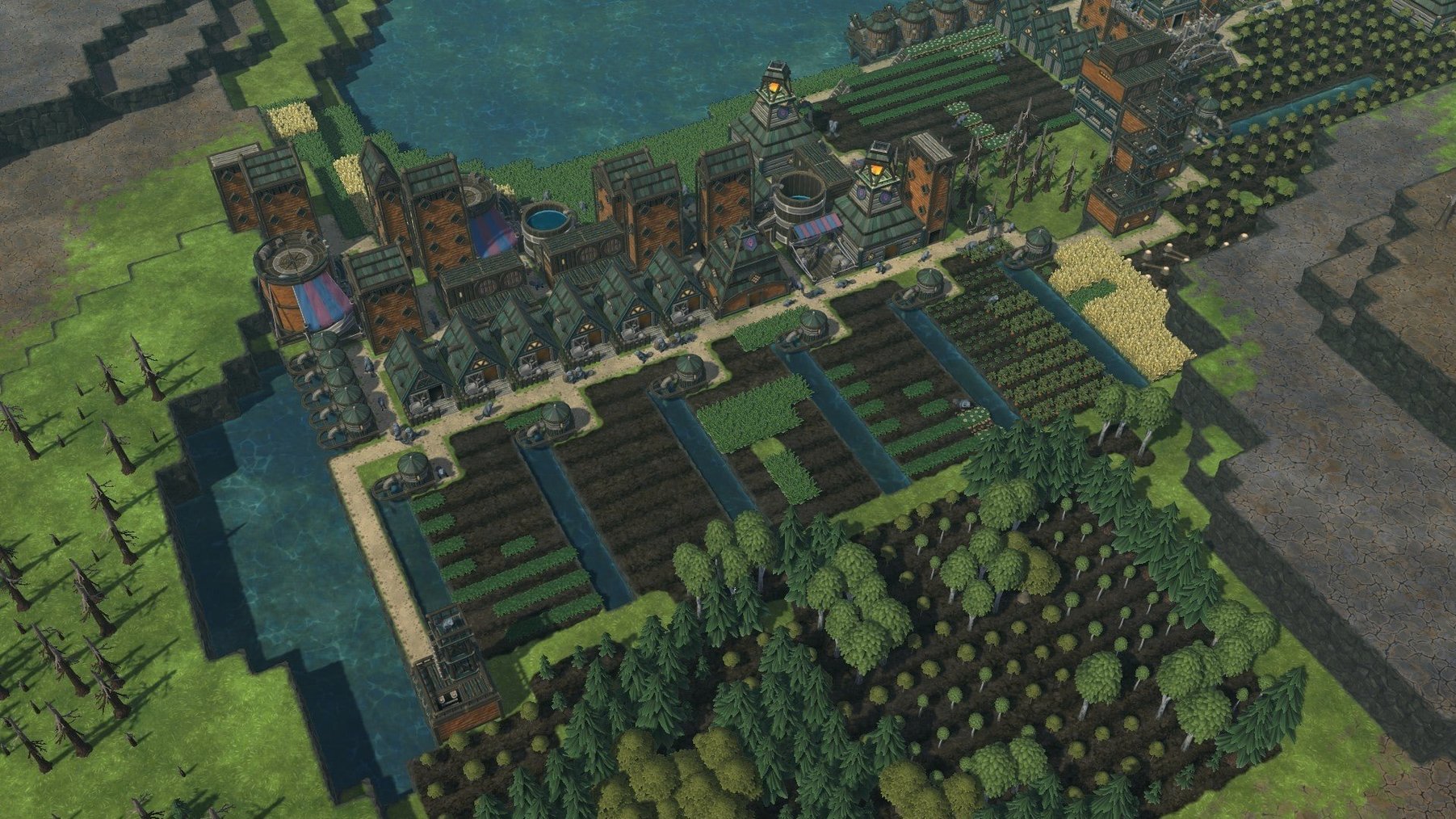
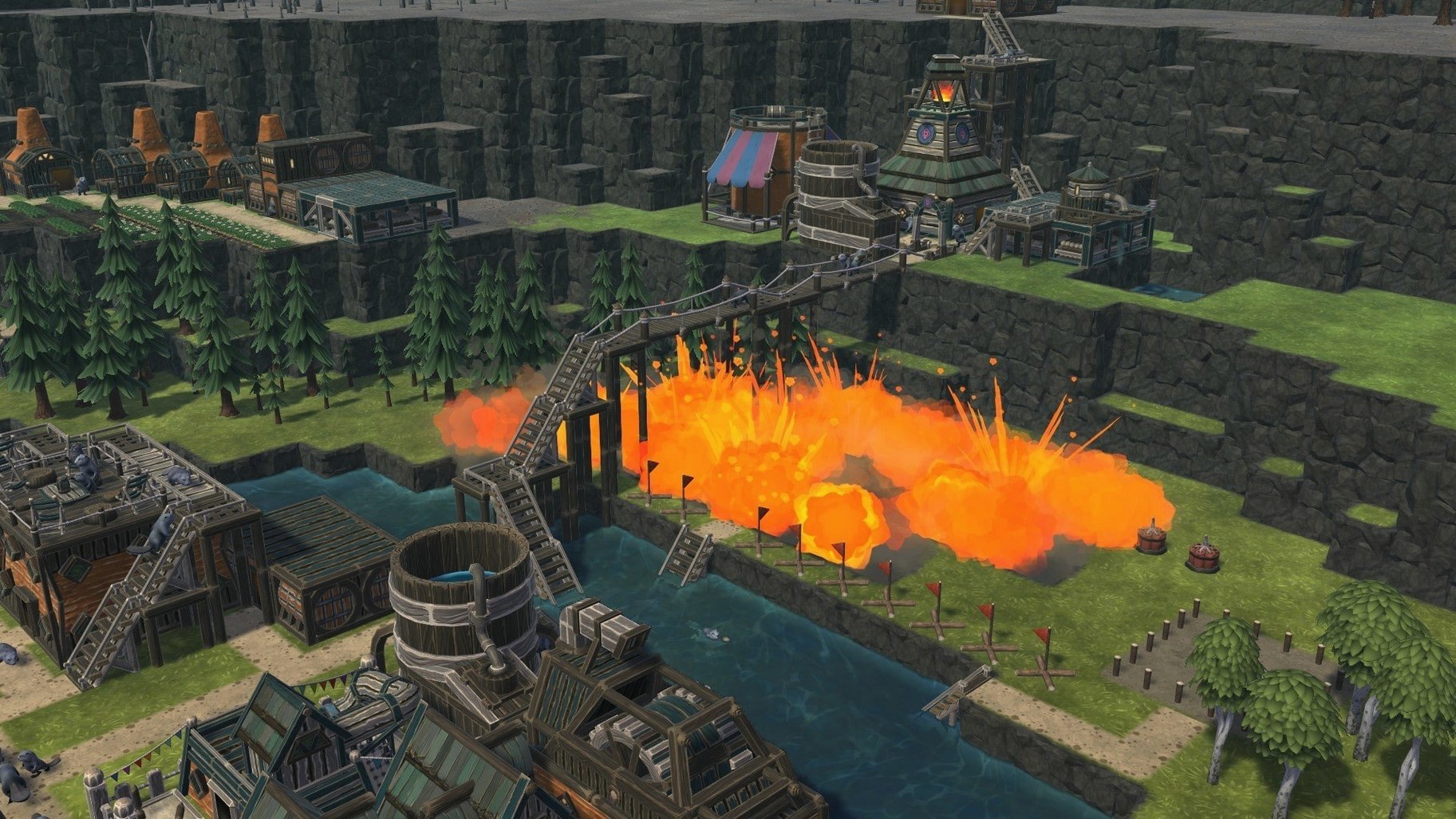
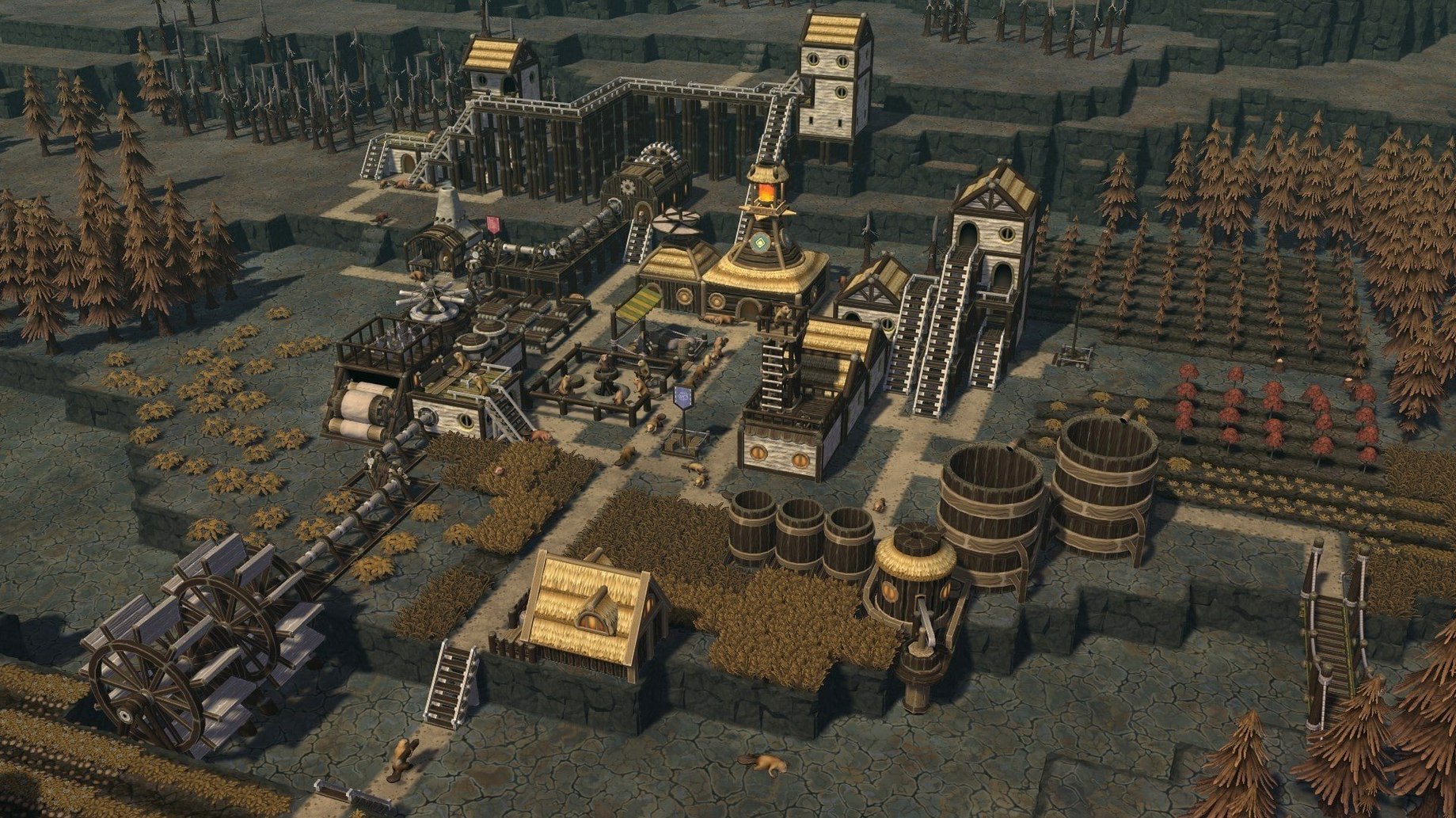
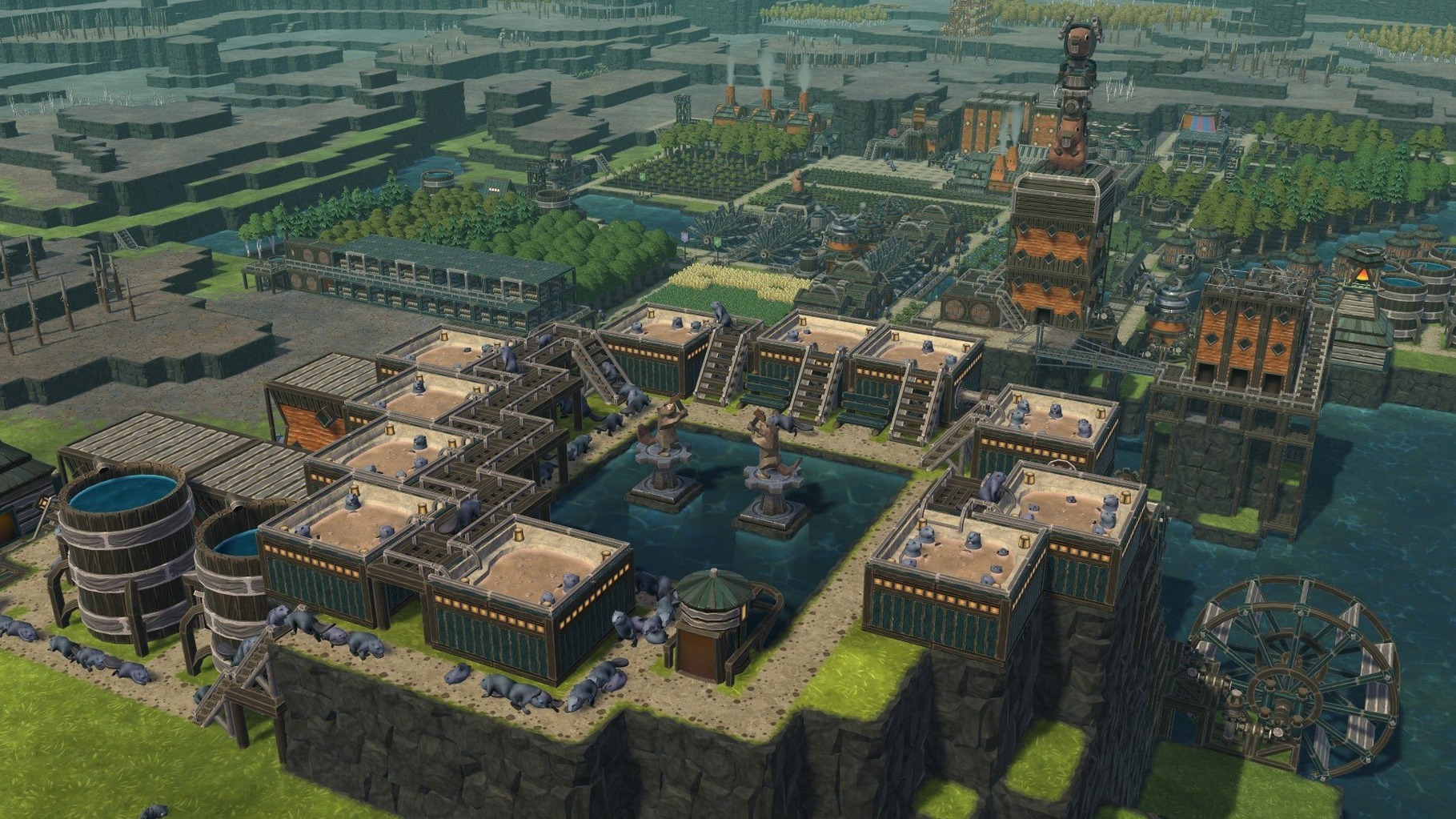
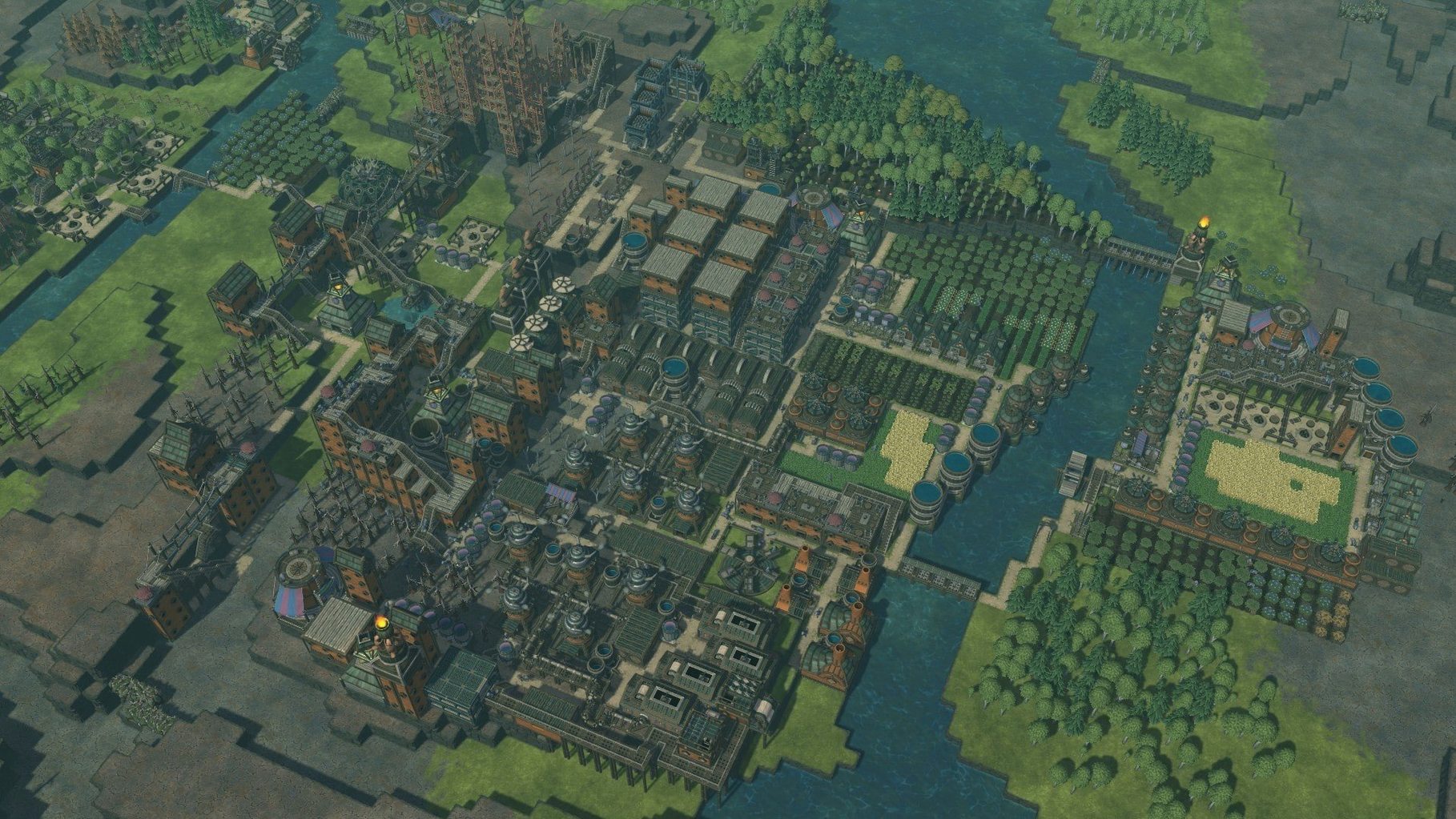
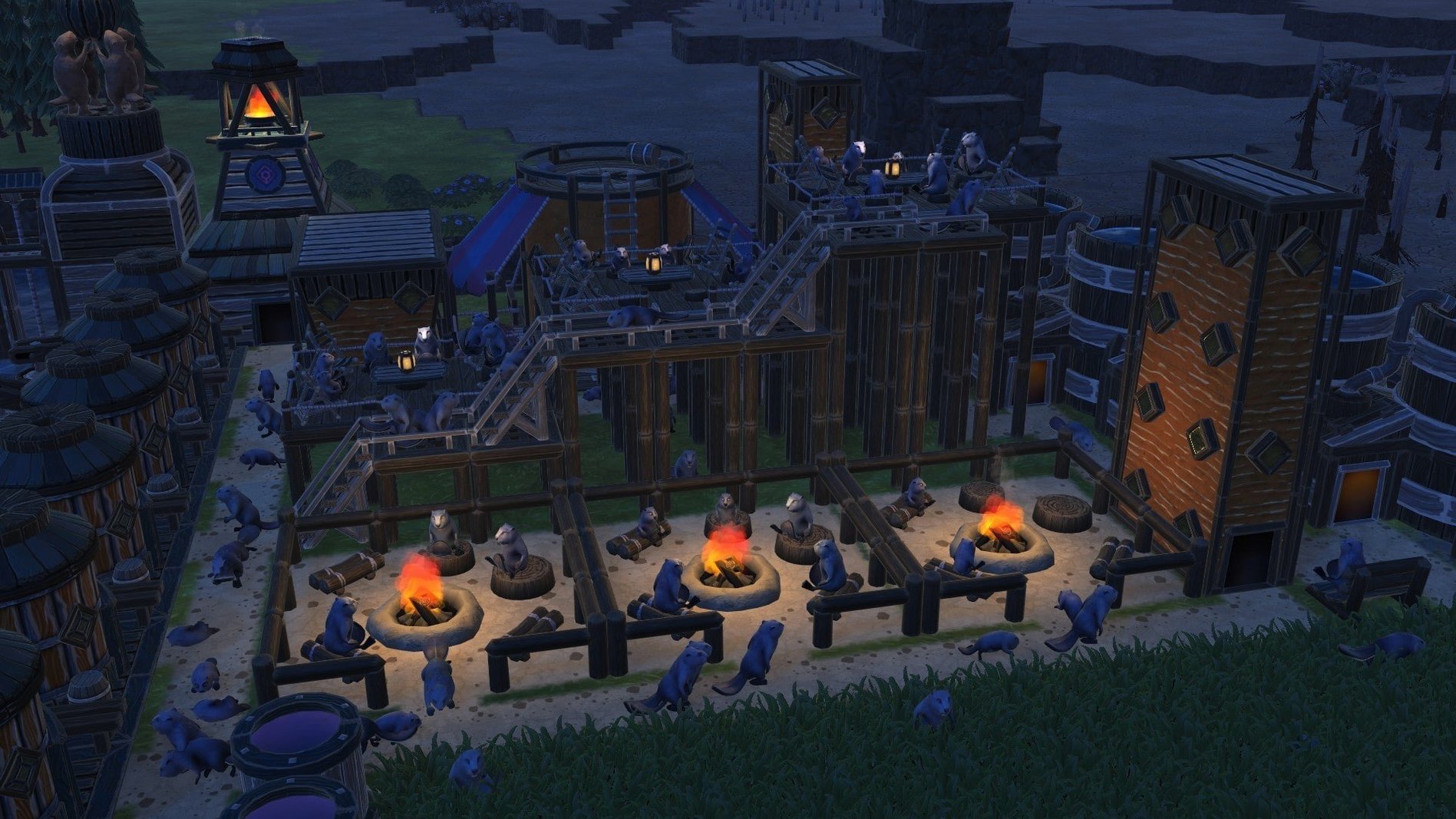
Vertical power shafts. You spot them in the late game, a lattice of wooden axles climbing the side of a gear workshop, drawing mechanical energy from a waterwheel three storeys below. That one detail tells you what kind of builder Timberborn is. It cares about elevation, flow and the physical logic of a settlement. You are not just placing zones; you are routing torque uphill so a lumber mill keeps running while the river level drops outside.
Who will take to it
- People who enjoy engineering constraints. Water behaves like a fluid — it pools, evaporates and finds the lowest ground. A dam placed one block higher changes the entire map. If that sounds satisfying, the game will hold you.
- Planners who like layered systems. Districts, vertical architecture and stacked platforms mean a colony grows upward and outward. Managing separate Folktails or Iron Teeth settlements, each with its own resource chains, rewards the sort of player who makes spreadsheets for fun.
- Anyone tired of combat-driven city builders. Threats come from drought cycles and poor irrigation, not raiders. The tension is environmental.
Patience wears thin without narrative hand-holding
Timberborn asks for patience. Early access shaped its pace — systems unfold slowly, and the tutorial leaves gaps you fill by experimentation. Players who prefer tight narrative guidance or fast reward loops may find the dry-season scramble more punishing than playful. It is also a single-minded logistics game. If you need characters with personality or a story arc to stay invested, a colony of silent, industrious beavers may feel thin after a dozen hours.
Edge scrolling off by default frustrates the camera
A handful of defaults can make the early game harder than it needs to be. The camera options sit under Settings > Game, and two changes matter immediately. Edge scrolling is off by default on some Mac installs, which forces you to use WASD or the middle mouse button to pan. Turn it on unless you prefer keyboard-only camera control. The zoom speed slider sits low; bumping it to around 70% makes zooming in and out feel snappier without overshooting when you want a close look at a dam face.
Under Interface, the workday overlay deserves a toggle you can reach quickly. By default you see beaver schedules only when you open the district centre panel. Binding the overlay to a key — unassigned at first — lets you check at a glance which beavers are idle, working or sleeping. It is a small thing, but during a drought you want to spot idle labour instantly. Also switch the resource panel from its compact form to the expanded view. The compact bar hides secondary resources, and early on you need to know whether you have ten berries or two.
Hold Shift to queue construction without unpausing
Timberborn packs several shortcuts that the tutorial never mentions. Holding Shift while placing a building or platform queues it for construction without unpausing the game — useful when you are laying out a dam during a wet season and do not want beavers rushing into a half-finished channel. Holding Ctrl while clicking a building places a copy with the same settings, which speeds up housing blocks and staircases enormously.
The priority system has a hidden layer. You can set a building to low, normal or high priority, but you can also click the priority button a fourth time to mark it as paused. This stops beavers from working there without demolishing anything. During a food crisis, pausing the research building frees up labour without losing progress.
Water measurement is another quiet tool. The depth gauge — a late addition to the toolbar — shows water height at a tile. Dragging it across a riverbed reveals exactly where flow slows and where a levee would raise the surface. On maps with uneven terrain, it saves you from guessing whether a floodgate needs to be 0.5 or 0.7 blocks high.
New canyon and floodplain maps reshape the terrain
The 1.1 release brought two quiet but practical additions. New maps arrived alongside the update, and the map pool now includes layouts built around tighter canyons and wider floodplains than the original set. If you last played on the older Terraces or Plains maps, the new ones shift the rhythm: narrower waterways mean faster currents and more dramatic dry-season drops, while broad basins suit the slower, reservoir-heavy style that Folktails favour.
The statistics panel grew more useful. You can now track production and consumption per district over time instead of seeing only the current totals. Open it during a drought recovery and you can check whether your water storage is refilling faster than it did during the last cycle, or whether that extra pump actually changed the curve. It turns a reactive scramble into something you can plan against.
Missing path on one side blocks cross-gap building
Beavers refuse to build across a gap. This usually happens because a path exists on one side but not the other. Timberborn treats districts as isolated networks; a district gate or a path tile must touch the construction site from both ends. Place a single path tile on the far bank first, then lay the bridge or platform, and the job will assign correctly.
The waterwheel stopped spinning. A wheel placed downstream of a dam often works fine during the wet season, then stalls when the flow drops. Check whether the water level behind the dam is lower than the wheel’s intake. If it is, either lower the dam by one block or move the wheel to a stretch of river that narrows — constricted channels keep velocity up even when the overall volume falls.
Stairs refuse to connect to a platform. Vertical placement checks the full height of the stair unit against the target platform. If the platform is two blocks up but there is a one-block obstruction one tile behind it, the stair will not snap. Clear the tile behind the intended landing spot or build a one-block-deep scaffolding ledge first, then attach the stairs to that.
Performance drops in late-game colonies. On Mac systems, pathfinding load climbs as districts grow and water recalculates across a large map. Two things help: keep each district under roughly 80 beavers — splitting earlier rather than later — and reduce the number of single-block water openings. A single three-block floodgate costs less to simulate than three separate one-block gaps, because the engine recalculates fewer edge flows.