Aspecten
 Download (28 GB)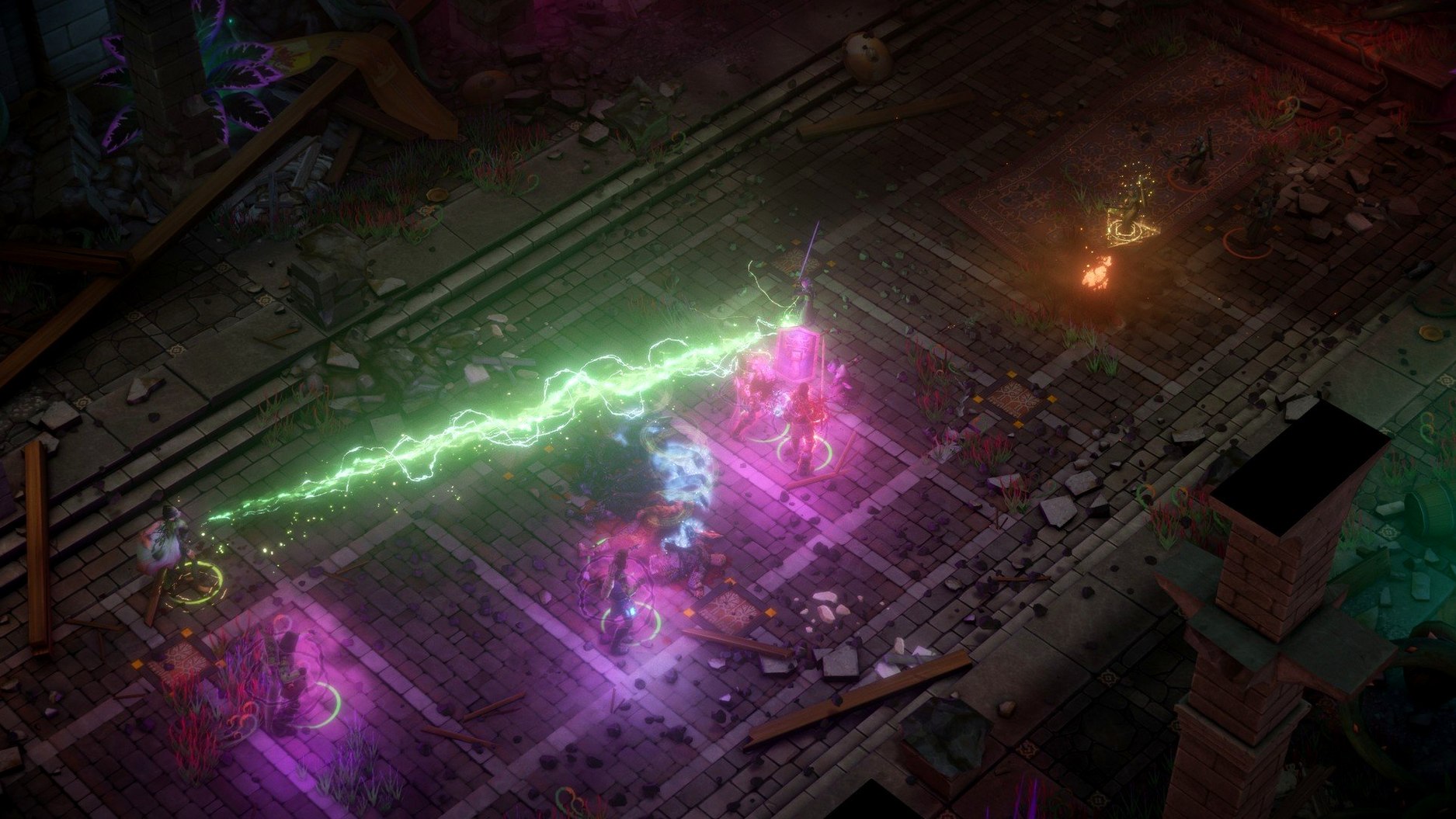
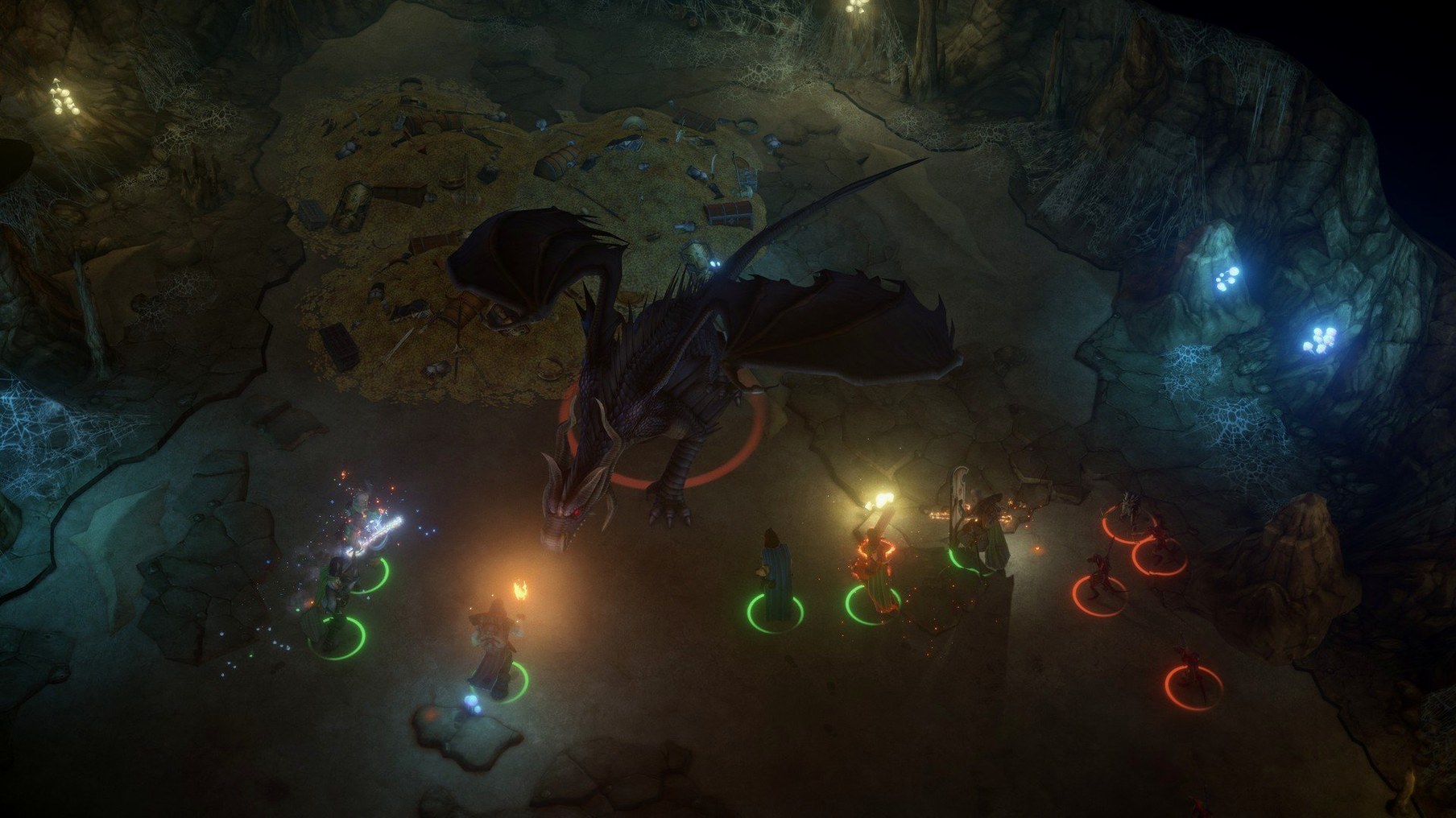
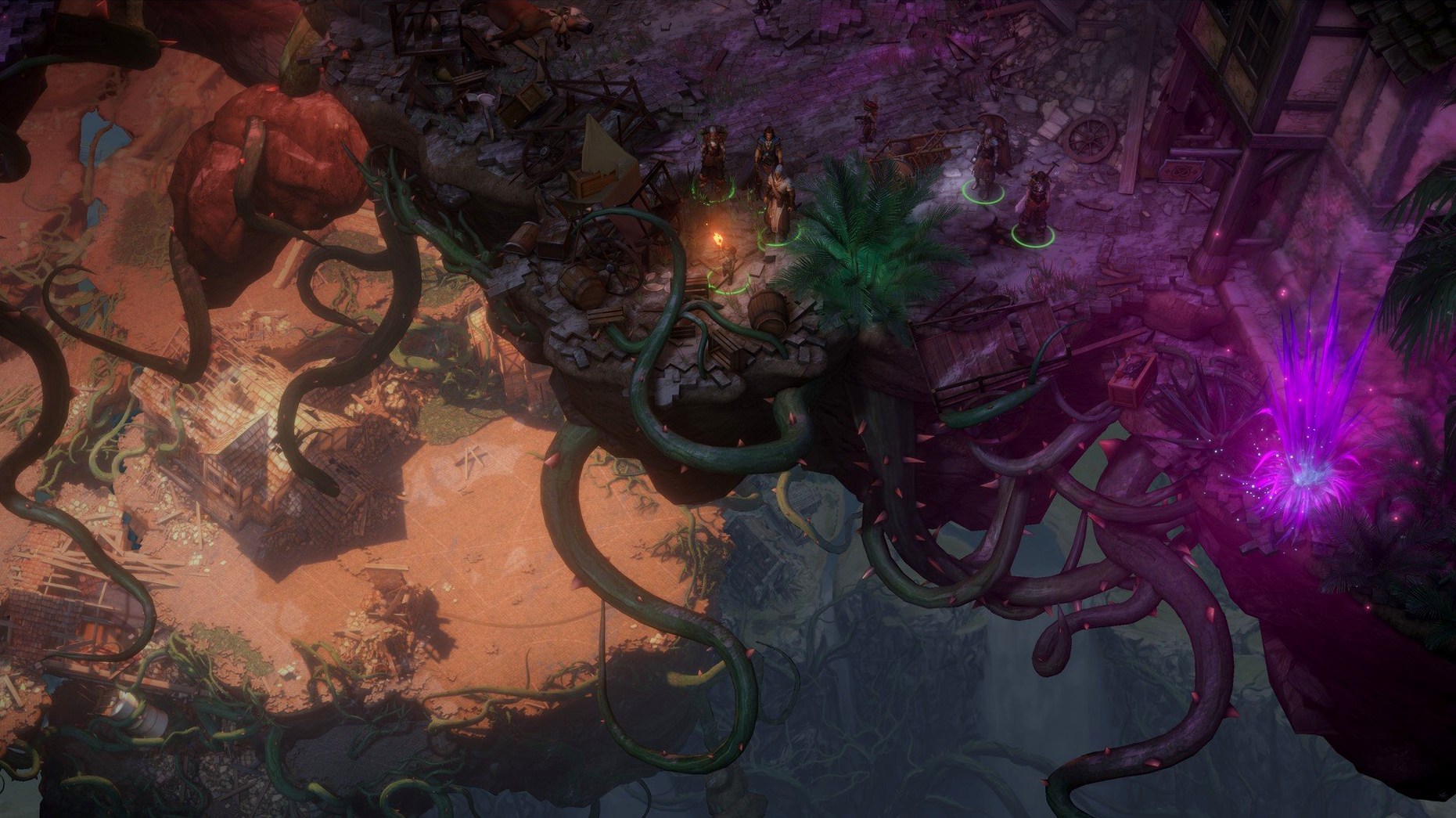
Pathfinder: Kingmaker runs on Intel-based Macs with a 64-bit processor. Testing was done on macOS Tahoe and a Mac mini 2024 with an M4 chip, so Apple Silicon machines handle it through Rosetta 2 without issue.
A typical session starts at the world map, where you steer your party toward a marker — a quest location, a rumoured ruin, or a patch of unexplored forest. Movement is real-time until you hit an encounter, at which point the game pauses and you issue orders in a turn-based rhythm. Positioning matters. You drag a fighter to block a chokepoint, move a wizard out of melee range, and queue a healing spell before the next round resolves. Between fights, you manage inventory, rest to recover spells, and handle camp duties like setting watch order and cooking rations for temporary stat buffs.
Exploration splits between overland travel and hand-crafted local maps. Some areas are compact — a bandit camp, a river crossing — while others stretch into multi-level underground dungeons with traps, secret doors, and loot tucked behind perception checks. A journal tracks active quests, and dialogue choices shift alignment, companion approval, and occasionally the outcome of entire story chapters. Kingdom management runs in parallel: you appoint advisors, resolve events that arrive by card on a ticking calendar, and weigh construction projects against the treasury balance.
Minute to minute, the loop is travel, fight, loot, decide. The interface leans heavily on right-click inspection — enemy stat blocks, spell descriptions, condition effects — and the combat log scrolls with every attack roll and saving throw. It is a dense, slow-burn experience built around incremental party progression and the accumulating weight of choices made over dozens of hours.
Skipping rest piles on fatigue penalties
A common early mistake is treating the game as a pure combat chain. New players often rush from one fight to the next, ignoring camp supplies, rations, and the fatigue system. A party that never rests accumulates stacking penalties to Strength and Dexterity, which turns manageable encounters into party wipes. Resting costs time on the kingdom calendar, so the trick is learning when to push on and when to set camp.
Another misstep is neglecting the skill spread at character creation. Perception is not a luxury — it governs trap detection and secret door discovery, and a party without at least one high-Perception character will miss loot caches and walk into ambushes repeatedly. Similarly, someone in the party needs Trickery for lockpicking and disarm traps. The pre-generated companions cover many roles, but checking their skill values before heading into a dungeon saves frustration.
Kingdom management catches beginners off guard too. It is easy to treat advisor events as optional flavour text and skip them for hours of exploration. Missed events escalate. A problem card left unresolved can spiral into stat penalties, lost resources, or a game-over screen from collapsing stability. Assigning advisors to tasks promptly and visiting the throne room between expeditions is not optional busywork — it is load-bearing structure.
A baron's first season
Imagine a player who has just claimed the Stolen Lands and received the barony. The first few hours of rule arrive as a flood: the treasurer wants a decision on tax rates, the general reports bandit activity along the eastern road, and a visiting envoy from a neighbouring realm expects an audience within the week. Meanwhile, the main quest points toward a troll-infested fort two days' march north.
The player checks the map and realises the fort route passes through a forest tile marked with a rumour of a trapped trapper. Diverting there costs half a day of travel, but the party is fresh and the wizard still has crowd-control spells memorised. The detour yields a reasonably useful wand and a scrap of lore, but then camp supplies run low and a forced rest in the wilderness triggers a random encounter — wolves, manageable but draining. By the time the party reaches the fort entrance, two characters are fatigued and the cleric has exhausted most healing channels. The player checks the kingdom panel and sees an unresolved tax event has already ticked into a penalty. This tension between expedition pacing and administrative upkeep is where Pathfinder: Kingmaker finds its shape.
Set auto-pause on trap spotted and low health
Several defaults benefit from immediate adjustment. Under game settings, auto-pause options are sparse by default. Enabling auto-pause on combat start, on spotting a trap, and when a party member drops below 25% health gives you reaction time the real-time-with-pause system expects but does not enforce. Without these, an ambush can deal lethal damage before you finish reaching for the spacebar.
The difficulty sliders deserve a look even if you intend to play on Normal. Enemy stat adjustments, critical hit behaviour, and death's door rules are all independent toggles. Reducing enemy critical hits to normal while keeping other combat parameters at default smooths the early levels, where a single unlucky roll can kill a frontline character outright. The game also defaults to party members rising after combat — turning this off and requiring resurrection spells or scrolls changes the resource pressure dramatically, but knowing the toggle exists helps when a fight feels cheap rather than challenging.
Finally, switch on highlight interactable objects by holding a key (Tab by default). The setting is active out of the box, but new players often overlook the keybind. Tapping it whenever you enter a new room marks every loot container, lever, and hidden cache in a soft outline. It saves the tedium of pixel-hunting and makes perception checks do their real work on genuinely concealed doors rather than on crates you simply did not mouse over.