Aspecten
 Download (4 GB)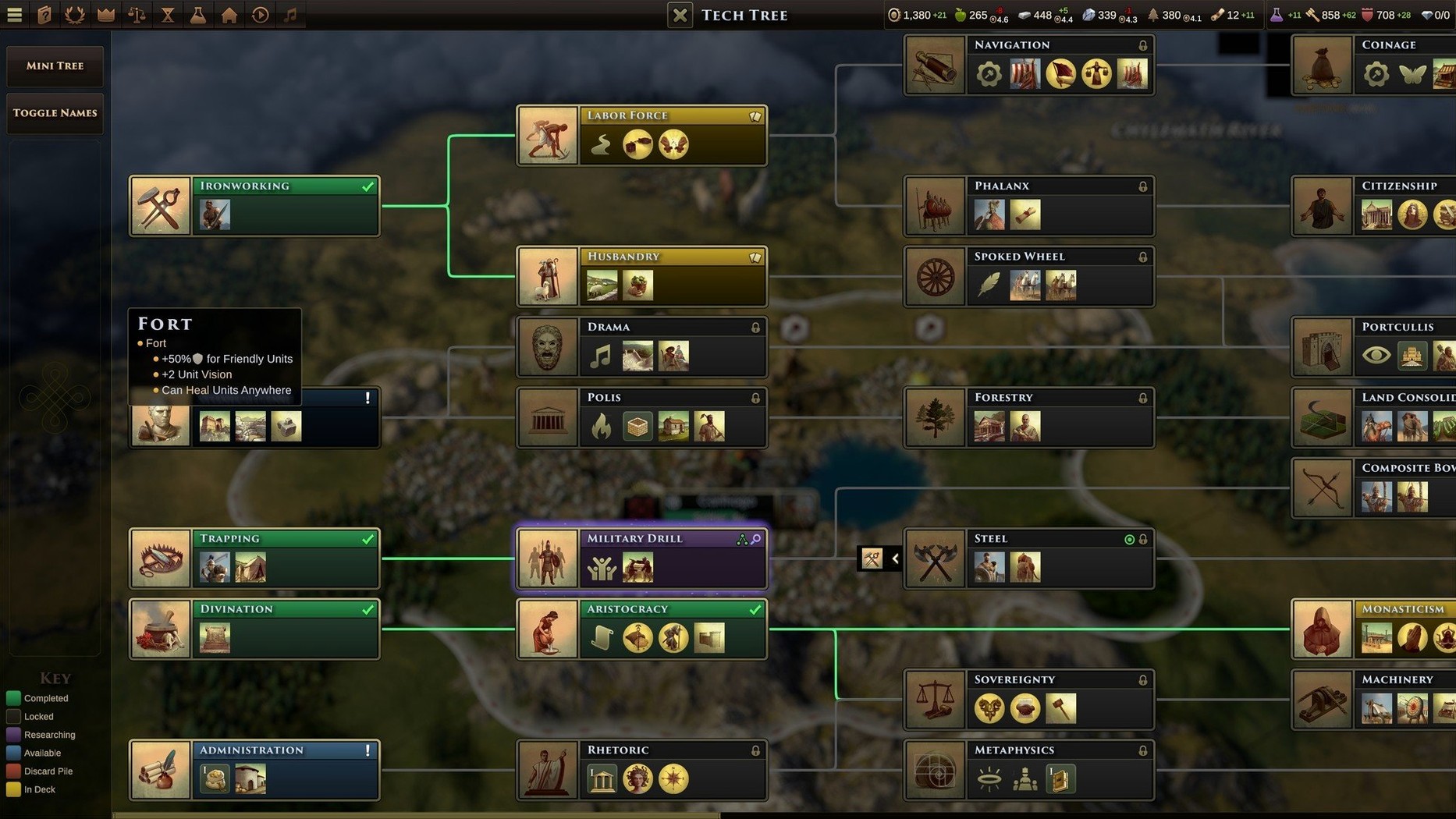
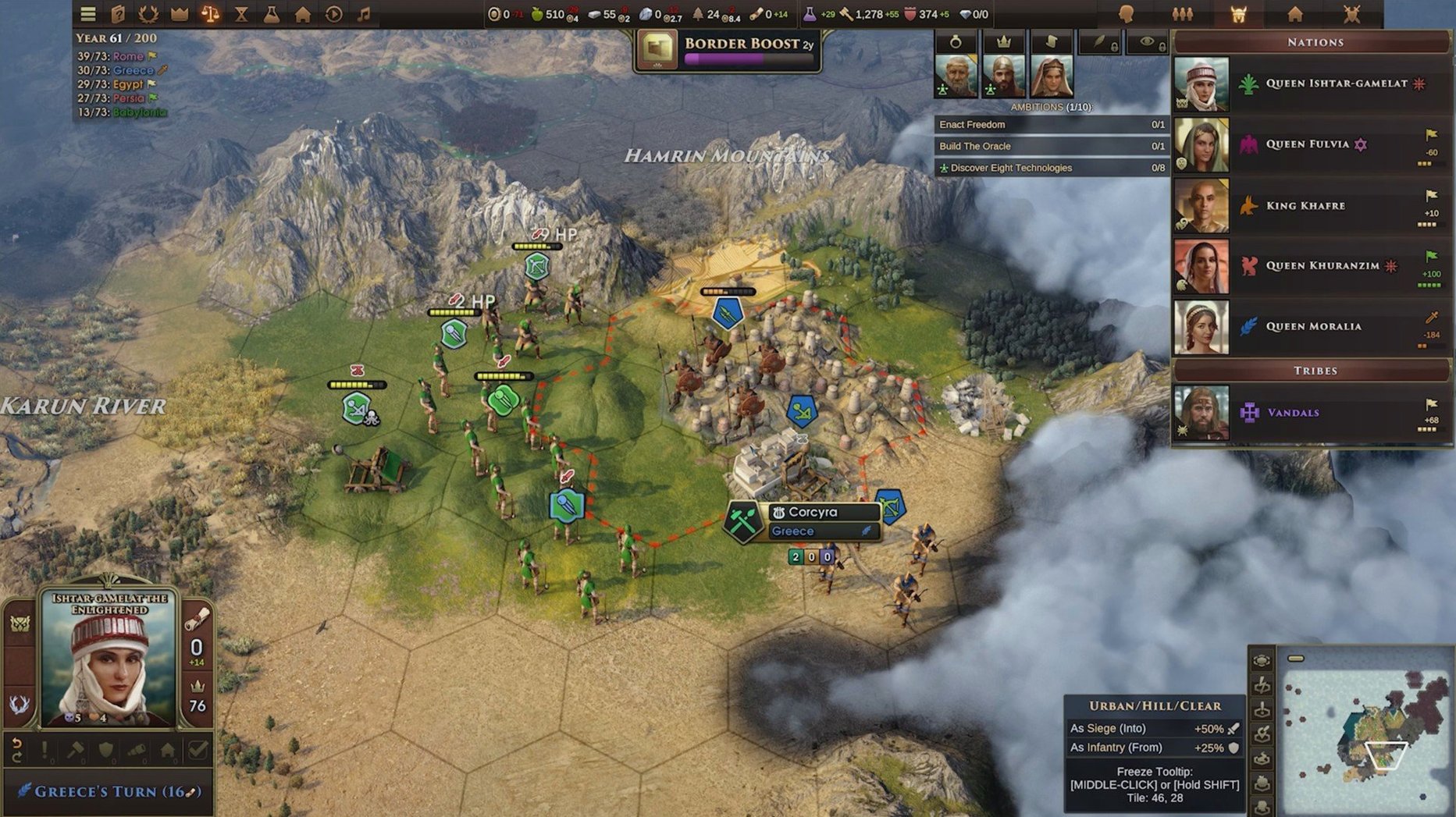
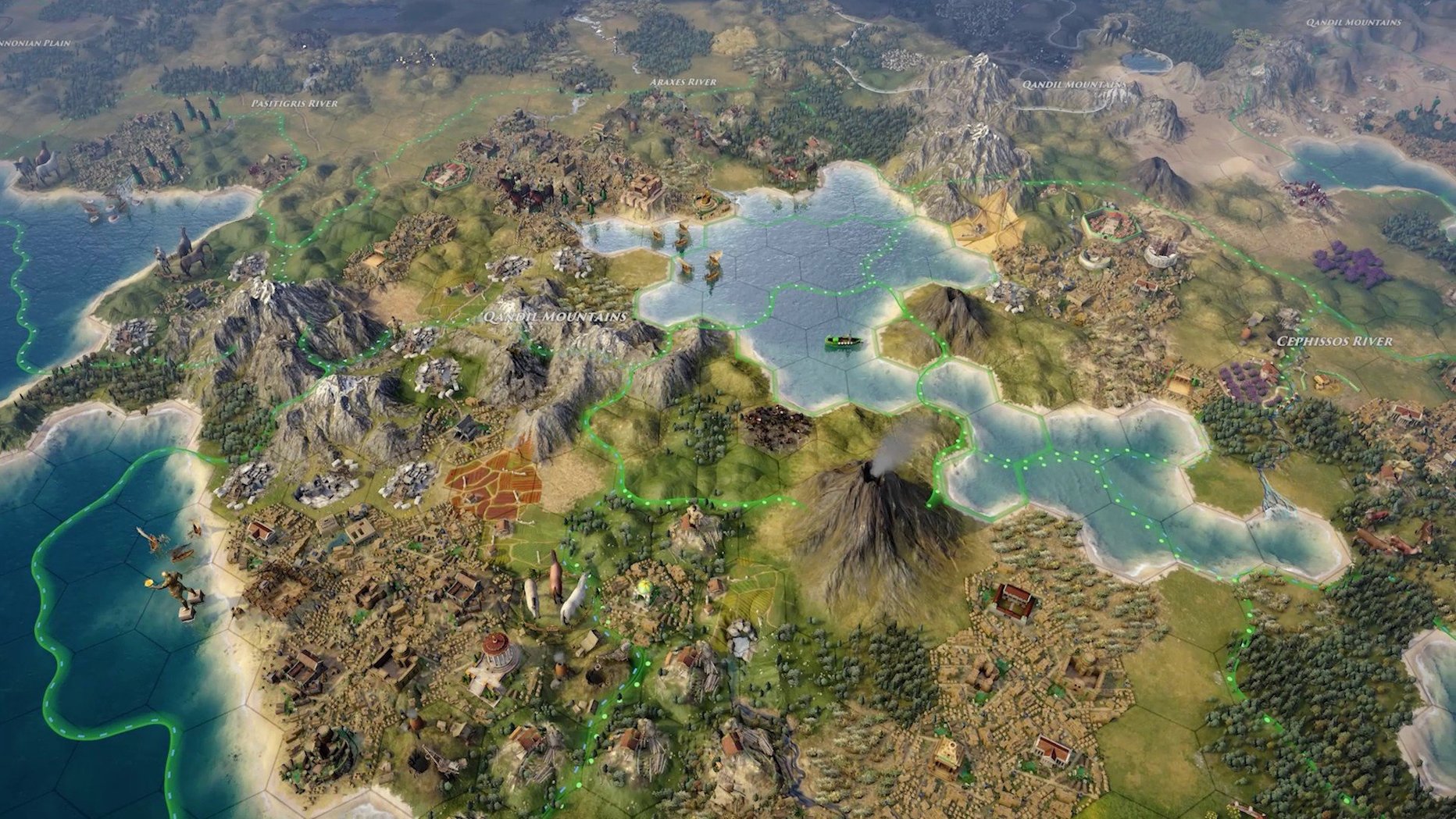
Build 84658 added some Mac-specific crash debugging, which is welcome. It also changed the Polybolos unit to hit harder and stopped Forts from being placed next to one another. The AI now fields fewer obsolete units, which should make mid-game opposition slightly less predictable.
| Detail | Note |
|---|---|
| Architecture | Apple Silicon & Intel 64-bit |
| Interface languages | English, German, French, Spanish, Russian, Japanese, Simplified Chinese, Traditional Chinese |
| Mod support | Yes |
Old World runs natively on both Apple Silicon and Intel Macs. On a recent M-series chip, turns process quickly and the map scrolls without stutter, even late in a campaign with dozens of cities and units on screen. The interface is built for mouse and keyboard; there is no native touch or gamepad support, so you will want a pointing device. Right-click drills into character screens, tech trees and city details, and the nested tooltips take a little practice but reward patience. Performance expectations are reasonable: an M1 with 8 GB of RAM handles standard map sizes without complaint, though very large maps with many AI opponents can lengthen turn times slightly. The game draws on the same historical 4X framework on Mac as it does elsewhere, with the added benefit that the recent crash fixes make long sessions more stable than they were a few builds ago.
Picking Rome and meeting your first royal couple
You start by picking a kingdom — say, Rome — on a randomly generated map with four AI opponents. The opening turn presents a small city, a scout unit, and a husband-and-wife ruling pair. The first few minutes are spent assigning your leader to a city project, sending the scout into fog, and reading the initial event that pops up. An event might ask whether your wife should publicly support a temple project; saying yes costs gold but strengthens her standing with a noble family. You place a few Orders into scouting and tile improvements, then end the turn.
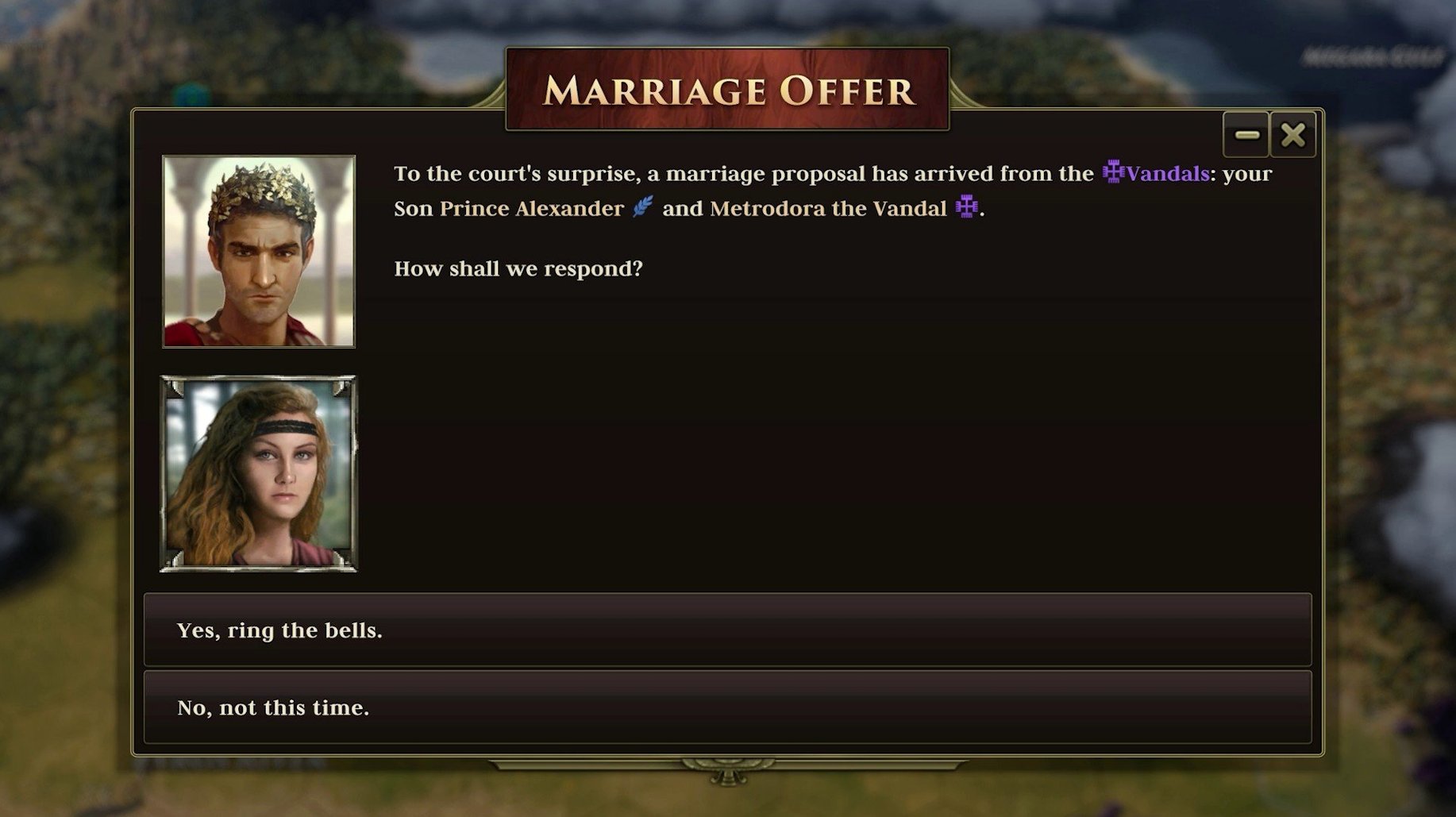
By turn twenty you have met Carthage to the south. The diplomacy screen shows their ruler's traits — ambitious, jealous — and a list of historical grievances that have not yet formed. You spend a few turns trading luxuries to buy goodwill while your scout keeps mapping the coast. A family head dies of old age on turn forty-one, and the game pauses to let you appoint a successor. You pick a young general with high Wisdom, knowing his stat will influence the research rate for the next twenty years. The rhythm settles into a loop: check event queue, spend Orders, move units, check diplomacy, end turn. Every dozen turns or so a marriage proposal lands, and you weigh the stat inheritance against the political favour it buys with a family you have neglected.
Keeping a text file open for governorship notes
Old World sits comfortably alongside note-taking and planning tools. Some players keep a simple text file open in CotEditor or Notes for tracking which families need a governorship or what technology to beeline next turn. Because the game runs in borderless windowed mode by default, swiping between desktops on a trackpad works without forcing a full-screen transition. Notification Centre alerts are suppressed while the game is in focus, though a calendar reminder will still chime if you have to stop playing for a real-world appointment.
Voice chat apps like Discord or FaceTime work without issue, which matters for the asynchronous multiplayer mode — you can leave the game running, take a call, and return to find your opponent's turns processed. The mod support means you can drop extracted mod folders into ~/Documents/Old World/Mods/ and enable them from the main menu. Mods that tweak map scripts or add new character events load cleanly because the game reads JSON and XML files directly from that folder, no special editor required. Cloud saves sync through the platform you launched from, but the local save folder is standard and easy to back up with Time Machine or a manual copy to an external drive.
Clearing the shader cache after a crash
Crash on launch after a build update. The game sometimes leaves a stale shader cache. Removing ~/Library/Application Support/Old World/ShaderCache/ and restarting forces a rebuild and clears the crash. The developer's recent Mac debugging work has reduced this, but it still surfaces occasionally.
Orders not responding to clicks. If an Order refuses to queue on a unit, check whether the unit has already spent its movement allowance. The Orders system ties action points directly to movement; a unit that marched three tiles has no Orders left for an attack or a tile improvement. Right-click the unit and look at the pale blue pips next to its portrait.
Family opinion dropping without an obvious cause. Families lose opinion when you assign a governor from a rival family to their home city, or when you execute a character they are allied with. Open the family screen, hover over the opinion bar, and the tooltip lists every positive and negative modifier with its exact value. A quick fix is to gift a luxury resource or hold games, but the underlying friction can usually be traced to a single event from ten turns earlier.
Mods not appearing in the menu. The mod folder name must match the .modinfo file identifier exactly. If the mod is called map_pack_4 but the folder is map-pack-4, the game ignores it silently. Rename the folder to match the identifier and restart.
Late-game turn times growing long. On very large maps the AI evaluates many possible builds. Reducing the number of active AI opponents by conquering a few cities helps more than lowering graphics settings. The map size slider on game creation is the single biggest lever; standard size keeps turns under ten seconds on Apple Silicon well into the late game.
One real-world scenario
A university lecturer in ancient history uses Old World as a sandbox for a class module on Hellenistic succession politics. She sets up a small map with three kingdoms, picks Macedon, and plays roughly thirty turns a week, taking notes on the family tree and the event text. The character system generates rivalries, marriages, and assassinations that mirror the dynastic friction the students are reading about in primary sources. She does not play to win — she plays until a succession crisis erupts, then saves the timeline and shares the character ledger screenshots. The class discusses whether the AI's behaviour aligns with what they know of Antigonid court politics. The mod folder lets her swap in a community-made event pack that adds more mythological flavour, which she uses for a separate session on the role of oracles in strategic decision-making. The game never becomes the syllabus; it becomes a three-hour lab that runs on her MacBook Air without a fan spin.