Aspecten
 Download (31 GB)


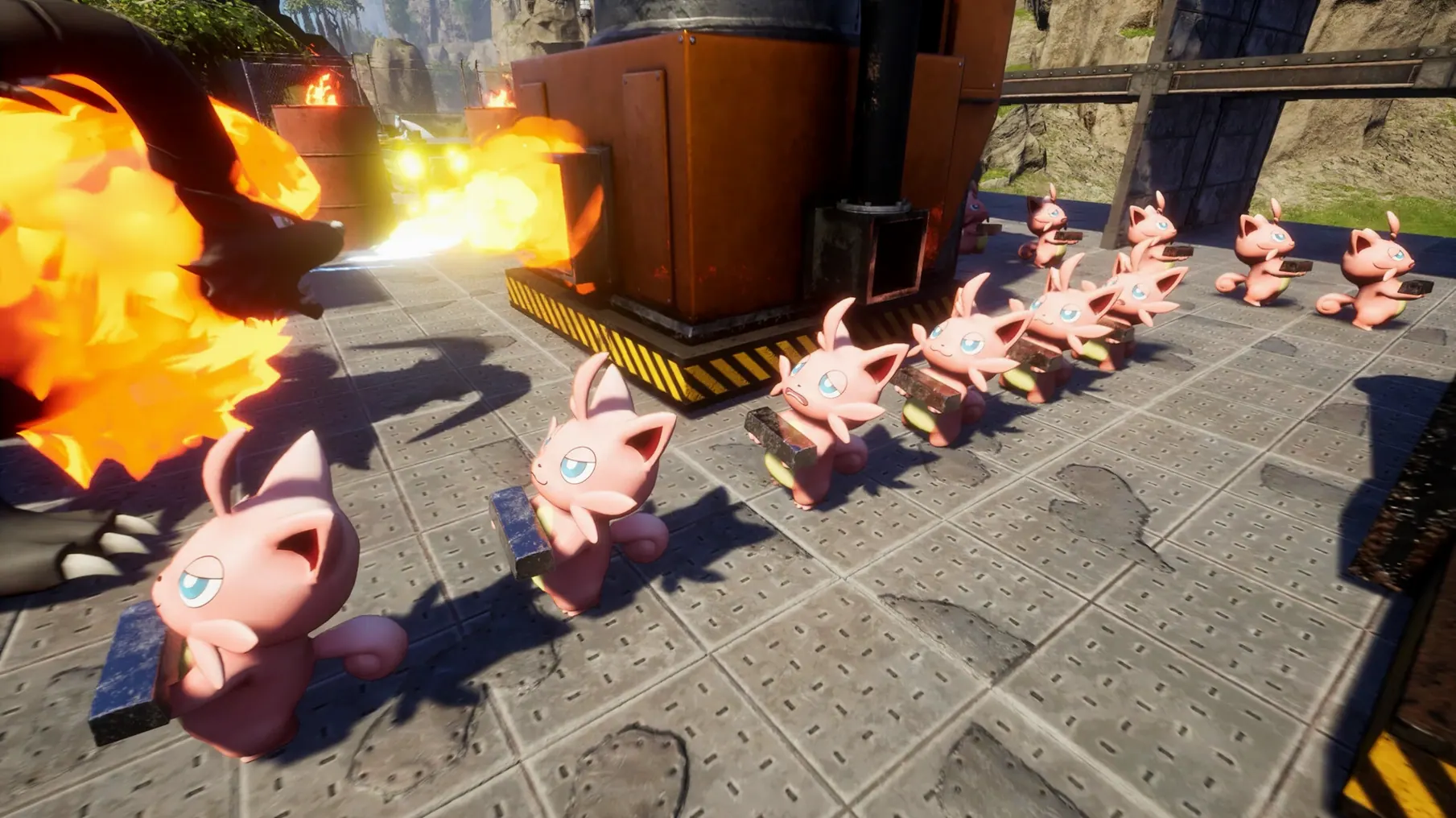



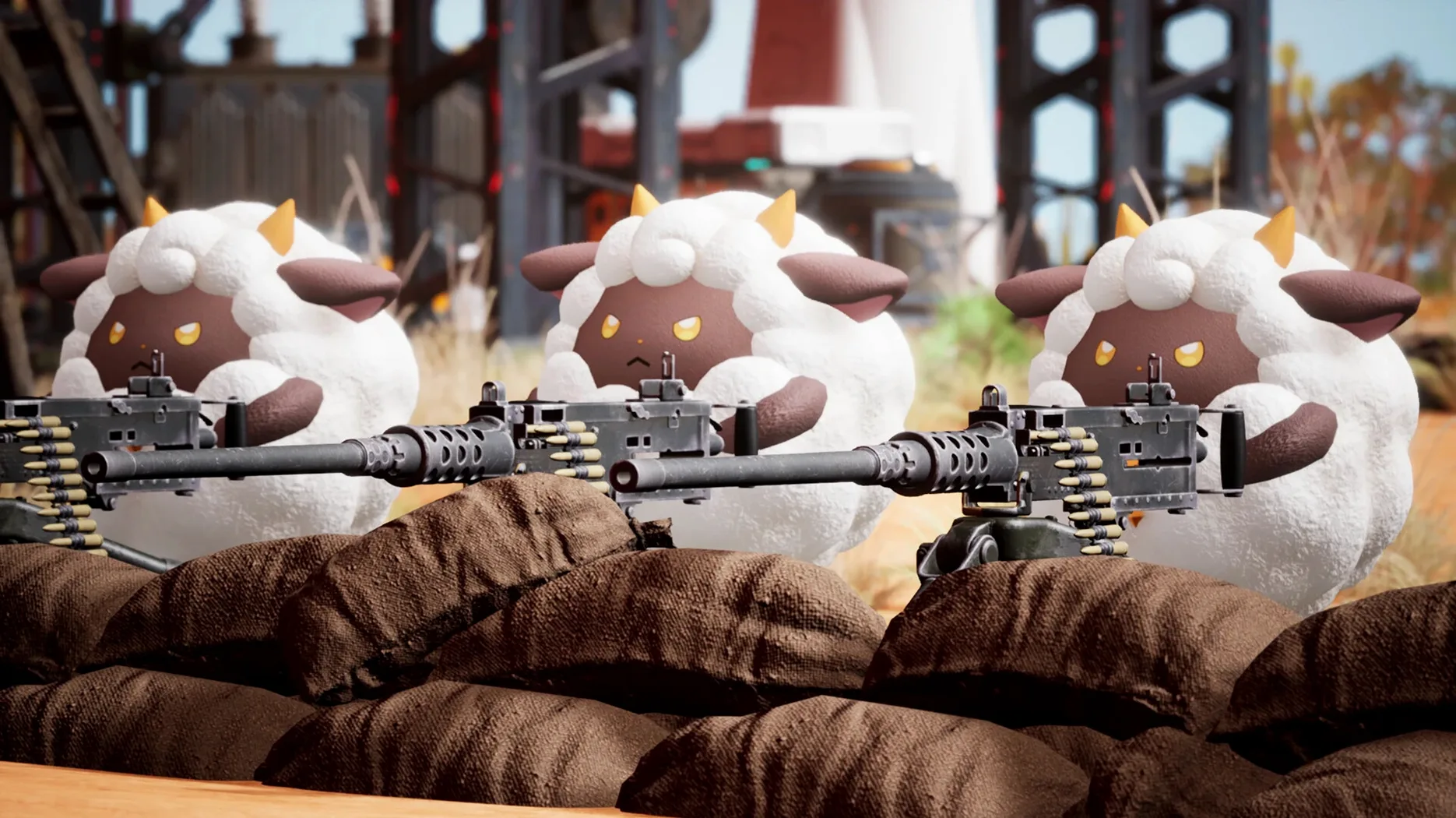
For anyone who has sunk hours into a creature-collecting game and wished the creatures pulled their weight around the base, Palworld answers with a deadpan nod. It takes the capture-and-battle loop you already know and bolts on survival mechanics and industrial automation, letting your Pals run plantations and factories while you explore dungeons or fight off hostile wildlife.
Who it works for
A player who enjoys managing systems will settle in quickly. Assigning Pals to sowing, watering and harvesting tasks turns a food shortage problem into a logistics puzzle. Setting up assembly lines with the right Pals for each job scratches an efficiency itch. The building system gives you room to construct a base that feels functional rather than decorative, and the multiplayer support means you can share the workload with others.
Where it rubs
Someone looking for a tight narrative or a polished solo adventure may drift off. The survival elements—hunger, a hostile environment—create friction that a creature collector may not want. The voice language being music only strips out spoken character, which leaves the world feeling mute outside of its systems. Dungeon exploration exists, but it serves the loop rather than leading it.
Swapping stressed miners into the hot spring
You start by loading your save and checking the base terminal. Two Pals assigned to mining are stressed, so you swap in a fresh Cattiva and shift the overworked ones to the hot spring. A quick look at the food box shows berry stocks running low, which means the plantation needs attention. You catch a Lifmunk and station it at the planter box before heading out.
The morning cycle gives you a window to scout the hills north of camp. You bring a spear, a shield, and four combat-ready Pals in spheres on your belt. Temperature drops as you climb, so you light a campfire near an ore node and set a Tombat to work extracting metal while you fend off a pair of hungry Direhowls. One gets too close and you send out a Foxparks, whose flamethrower ability clears both in seconds. You collect the ore, heal the Foxparks with a roasted berry, and recall your mining Pal.
Back at base by afternoon, you process the ore into ingots and queue up a new production bench. The Lifmunk has planted wheat; you assign a Tanzee to watering duty so the cycle runs unattended while you craft ammunition. A raid warning sounds. You grab your crossbow, position two tanky Pals at the gate, and let the defensive line hold. The attackers drop supplies you scoop up for later crafting. Evening falls and you cook dinner—grilled Lamball, no guilt—then log out with the base humming and the storage boxes full.
Build a self-running base across dozens of hours
Mac users who treat a game as a long-term project find their groove here. The loop of capture, assign, and optimise rewards patience over reflexes, making it a strong fit for someone who enjoys building a self-running system across dozens of hours rather than chasing a campaign endpoint.
Co-op groups working on the same world benefit from dividing labour naturally—one player handles breeding and farming while another scouts for rare Pals and dungeons. The multiplayer structure supports drop-in sessions, so a friend can join for an evening of resource grinding without derailing anyone's solo progress. Players who like factory-builders such as Satisfactory but want creature interaction mixed in will recognise the assembly-line logic beneath the cartoon exterior.
Solo players who prefer self-directed goals over scripted missions also settle in well. The game does not push you toward a quest marker; it leaves you to decide whether today is for dungeon clearing, base expansion, or capturing a specific breeding pair to pass down a desirable trait. That open-ended rhythm suits someone who wants a game to live in rather than conquer.
Breeding a combat-ready Pal pair: a step-by-step workflow
Breeding for battle traits takes planning and patience. Here is a workflow that produces a pair of Pals with inherited combat bonuses, useful for dungeon runs and raid defence.
- Scout parents with one strong trait each. Capture a male Pal with the Musclehead trait (+30% attack) and a female with Ferocious (+20% attack). Species does not need to match, but both must share an egg group. Keep them in your Palbox.
- Build a breeding farm and assign both parents. The farm structure unlocks early in the technology tree. Place it inside your base perimeter with enough clear space around it. Drag the male and female from the Palbox into the farm assignment slots.
- Provide cake to start breeding. Place a cake in the breeding farm's storage box. Cakes require flour, eggs, milk and honey—your plantation and ranch Pals should produce these passively if you set them up earlier. Without cake, no egg appears.
- Wait for the egg and incubate it. The parents produce an egg after a short timer. Move the egg to an incubator and keep it at the right temperature; adding a campfire or cooler nearby adjusts this. The egg hatches into a child that may inherit one or both parent traits.
- Check the offspring's traits. Open the Pal's status screen. If it has both Musclehead and Ferocious, it becomes a keeper. If not, swap one parent for a different candidate and repeat the cycle. Trait inheritance is probabilistic, so several breeding rounds may be needed.
- Raise and deploy the dual-trait Pal. Level the offspring through combat or base work, then pair it with a second Pal bred the same way. The resulting duo handles dungeon bosses efficiently and shortens raid encounters at your base gates.
Real-world scenario: a base-builder's evening
A player who spends weeknights unwinding with construction games loads Palworld after dinner. They are not chasing high-level combat tonight. The goal is moving their primary base from the starter plateau to a cliffside spot near an ore-rich mountain they scouted over the weekend.
The session opens with demolition. They deconstruct storage containers, workbenches and the old wooden hut, packing materials into a chest near the fast-travel statue. Five Pals get recalled into spheres so none wander off during the teardown. The player fast-travels to the new location and drops a Palbox to claim the area, then lays foundation tiles across the flattest stretch of ground. A few stone walls go up first—just enough to enclose the beds and the breeding farm—before the real work of positioning assembly lines begins.
They assign a Digtoise to the nearby ore nodes and a pair of Foxparks to the furnace benches. Conveyor logic dictates that smelting sits close to storage, so the new layout places furnaces between the mining zone and the main warehouse. By the time the sky dims in-game, the base has a functioning production spine and the old chests have been ferried over and unpacked. Nothing looks finished, but the smelters are running, the Pals are sleeping under a roof, and tomorrow's session can start with crafting rather than logistics.
The satisfaction does not come from a completed build. It comes from stepping back and seeing a system you laid out working while you watch, a handful of Pals moving between stations exactly as routed.