Aspecten
 Download (187 MB)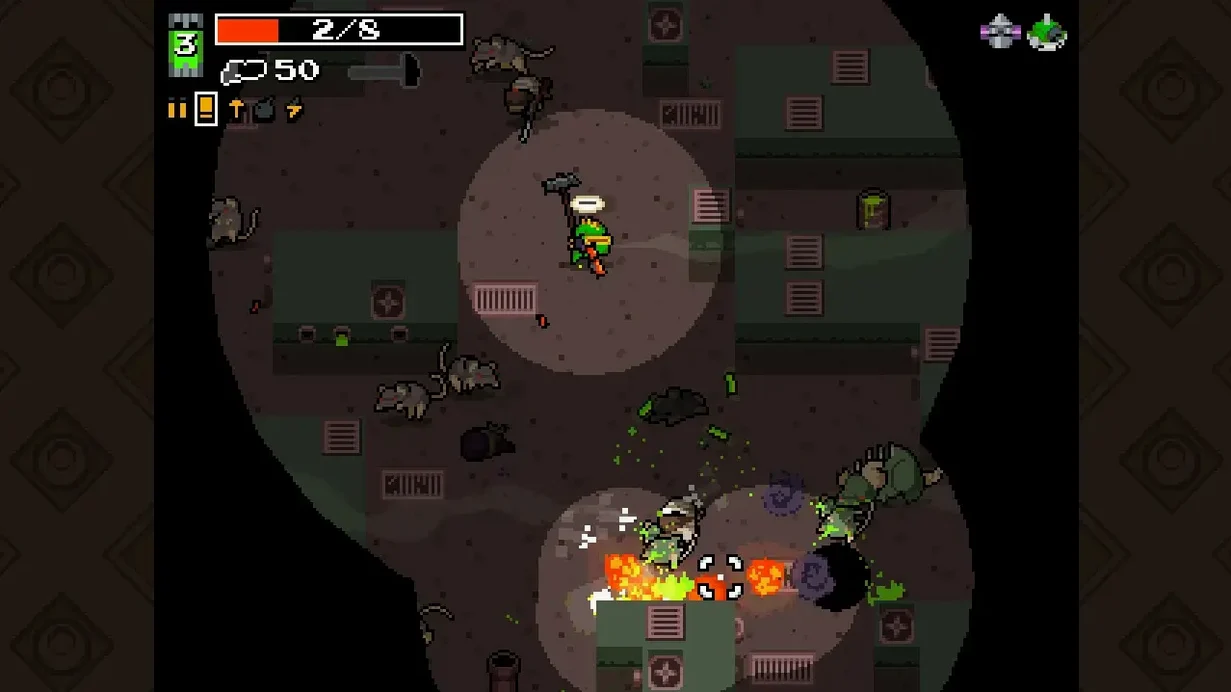
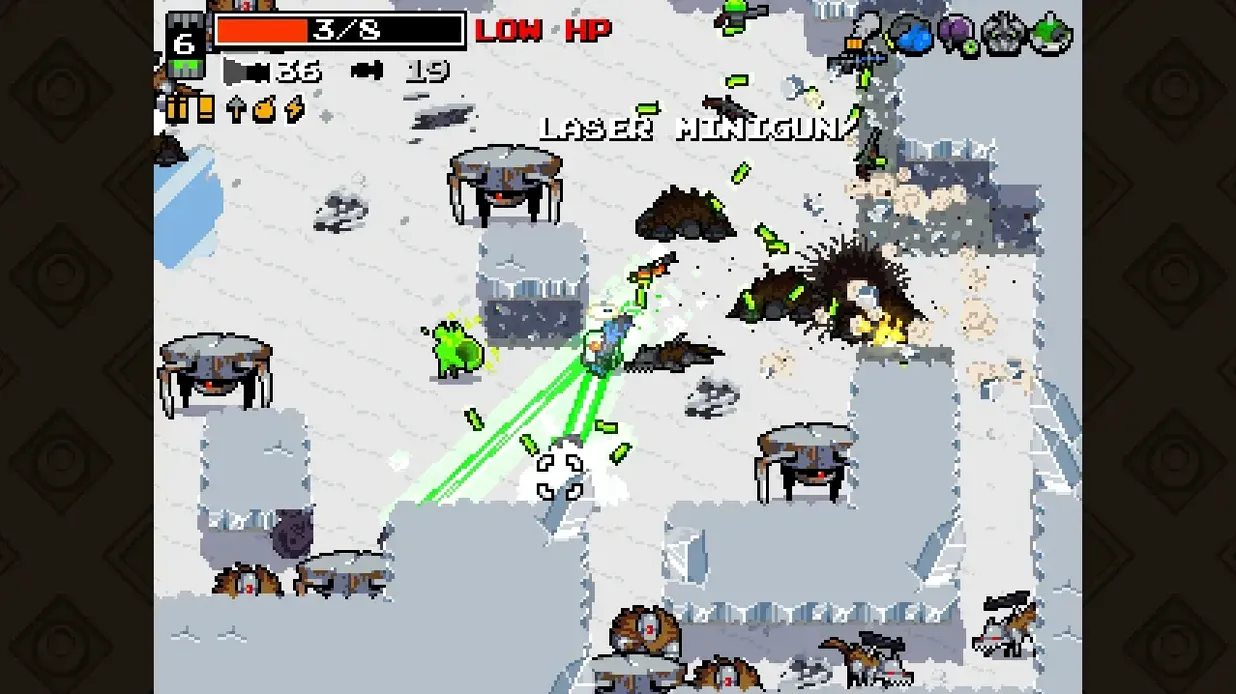
A post-apocalyptic roguelike top-down shooter where every room is a fight for survival.
Run rhythm — You pick a mutant, drop into a procedurally generated level and clear rooms of bandits and monsters. Ammo is tight, so shot placement and weapon switching are constant. When you die, the run ends and you start over from the first world.
Radiation as XP — Killed enemies drop glowing green rads. Collect enough and a mutation choice appears: stronger shots, an extra limb, a blood shield. These stack across a run and define your build.
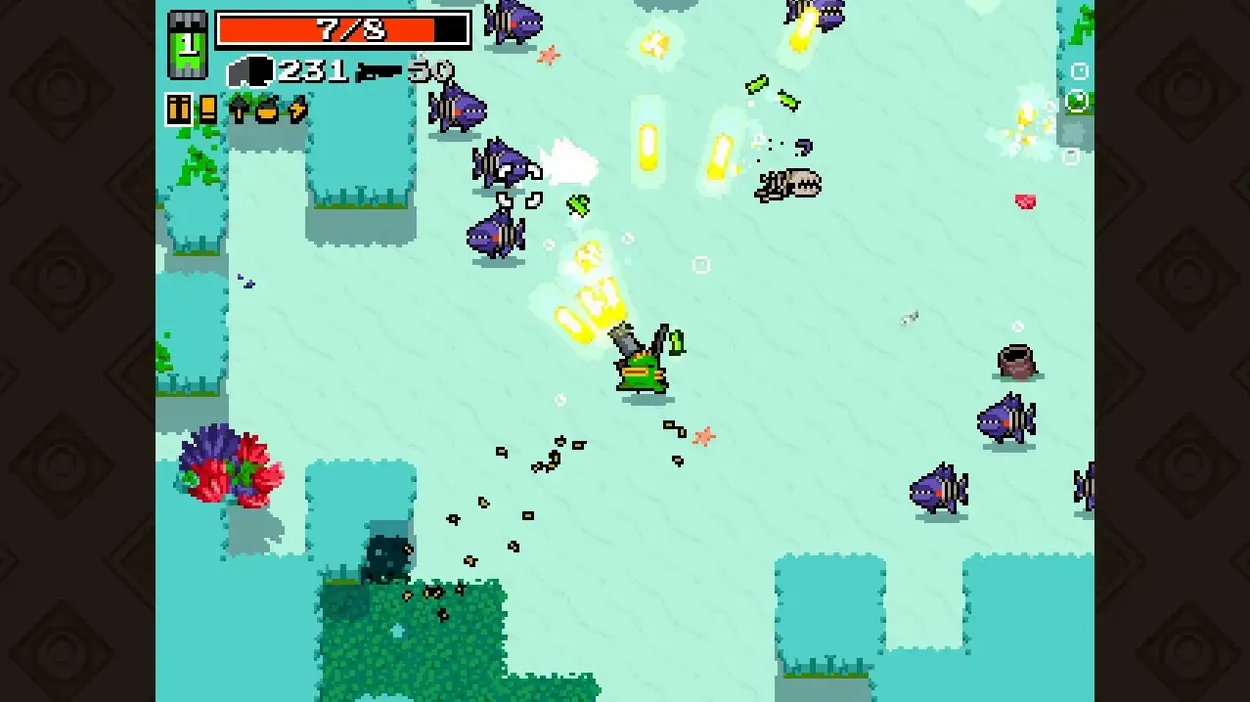
Seven worlds, one direction — The path runs from the desert through the sewers and scrapyard to the palace. Each world introduces new hazards: icy floors, toxic gas, shielded enemies. There is no backtracking.
Co-op on the same network — A second player can join via local network co-op. Friendly fire is on, which changes positioning decisions.
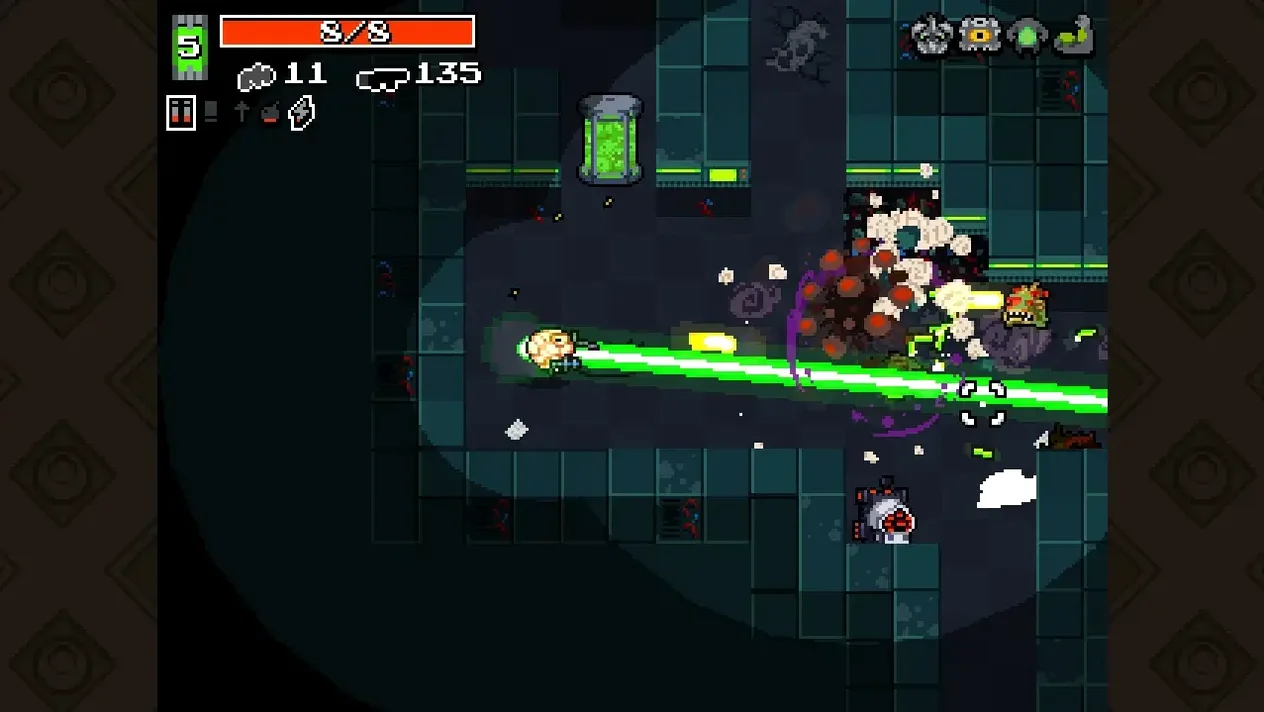
Character and weapon width — Twelve mutants are playable, each with an active and passive ability. Over a hundred weapons appear — crossbows, laser pistols, grenade launchers — and they handle differently enough that a run with a slugger feels unlike a run with a pop rifle.
Fresh desert start every run, no saves
The game saves nothing between runs. Unlocking characters and golden weapons is permanent, but each run starts fresh in the desert with a revolver. Some players ask whether that feels punishing — it does at first, then it becomes the point. The loop is short enough that a full clear from desert to palace takes under twenty minutes once you know the layouts.
Controller support comes up often. The Mac build works with most USB and Bluetooth controllers recognised by macOS, though the game was designed around keyboard and mouse. A few weapon types — the seeker shotgun, for instance — benefit from the snap aim of a mouse.
People also ask about difficulty scaling in co-op. It does not scale. Enemy counts and health values stay the same whether you play alone or with a partner. The trade-off is friendly fire and shared ammo drops, which can turn a comfortable solo loop into a chaotic two-person negotiation over who grabs the bolt pack first.
Who fits the throne
Players who enjoy the pressure of a single mistake ending a strong run will settle in quickly. The game rewards system knowledge — knowing which mutation combos break the late game, which weapons pair well with a character's active — and that knowledge accumulates only through repetition.
Local co-op groups get more out of the game than solo-only players might expect. A second mutant changes how you approach corridor fights and boss patterns, and the friendly-fire rule means you learn each other's movement habits or you both die. It works best with someone sitting next to you, sharing a screen and the same ammo pool.
Mac users with older or lower-powered machines also benefit. The pixel-art style and small room-based maps keep the frame rate steady even during the busiest loops, and the download footprint is tiny. A nuclear throne mac download fits comfortably on machines with limited storage, and the game runs without an internet connection after the initial install.
Shorter runs and tighter mutations than Gungeon
Enter the Gungeon shares the top-down bullet-hell DNA but leans harder into dodge-rolling and room-clearing variety. Where Nuclear Throne keeps runs short and mutation paths narrow, Gungeon stretches runs with more floors, more NPC interactions and a slower build-up. Throne feels rawer — fewer systems between you and the next fight.
The Binding of Isaac has a wider item pool and more run-breaking synergies, but its twin-stick shooting is looser. Nuclear Throne demands tighter aim and quicker target switching. Isaac rewards patience and tear-modifier knowledge; Throne rewards snap decisions and positioning in tight corridors.
Hotline Miami is not a roguelike, but its top-down, one-hit-death combat shares a rhythm with Throne's faster rooms. Hotline Miami resets you at the same floor; Nuclear Throne resets you at the start. Both make you plan a room before you enter it, then improvise the moment it goes wrong.