Aspecten
 Download (374 MB)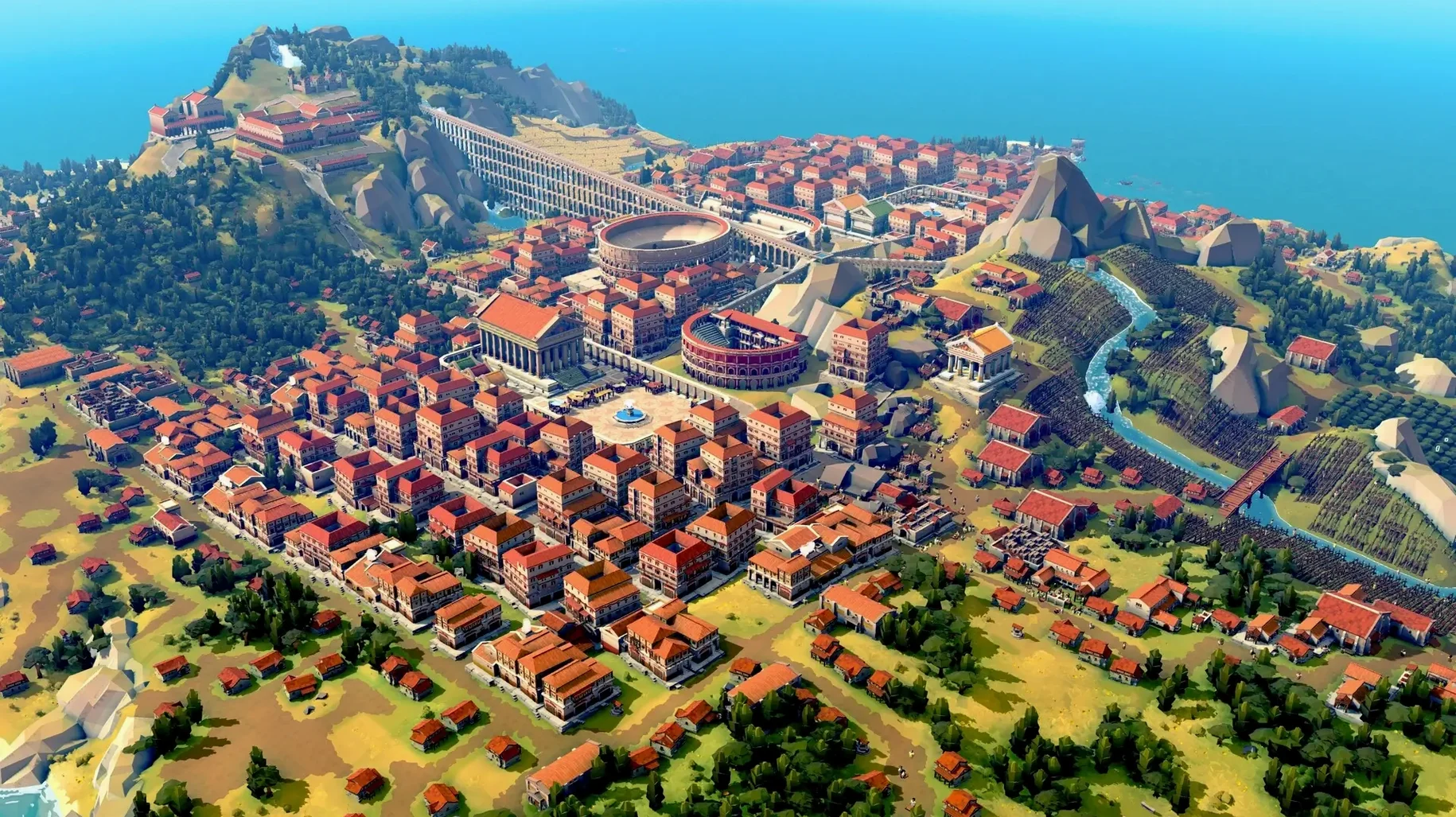
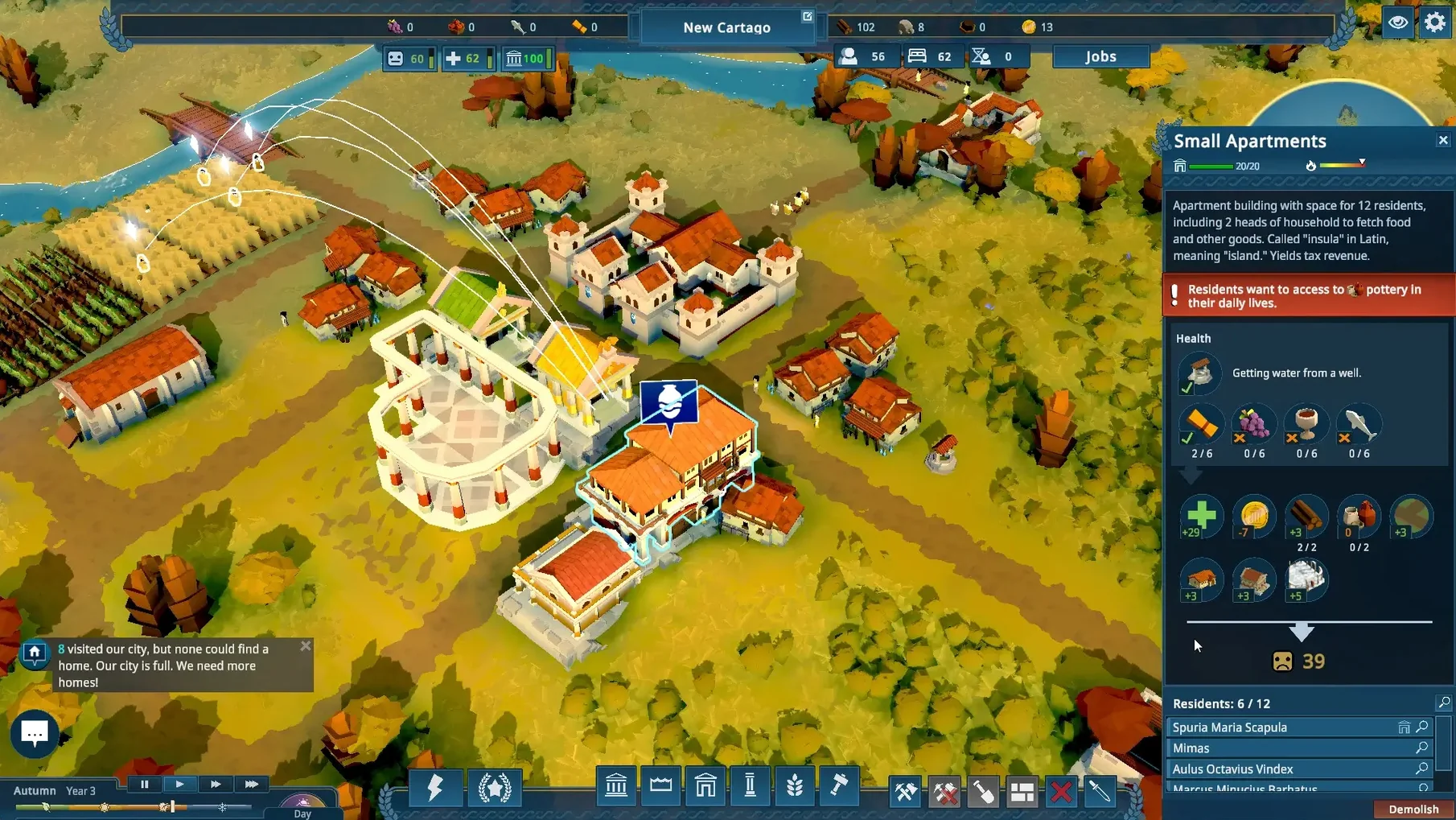
You lay out the first insulae on a rise overlooking the river. The ground here slopes gently toward the floodplain, and the water simulation already shows where spring melt will pool. A dozen families wait for housing, but your granary is half-empty and the nearest clay deposit lies across the stream. A small bridge goes down before the next harvest rots in the fields.
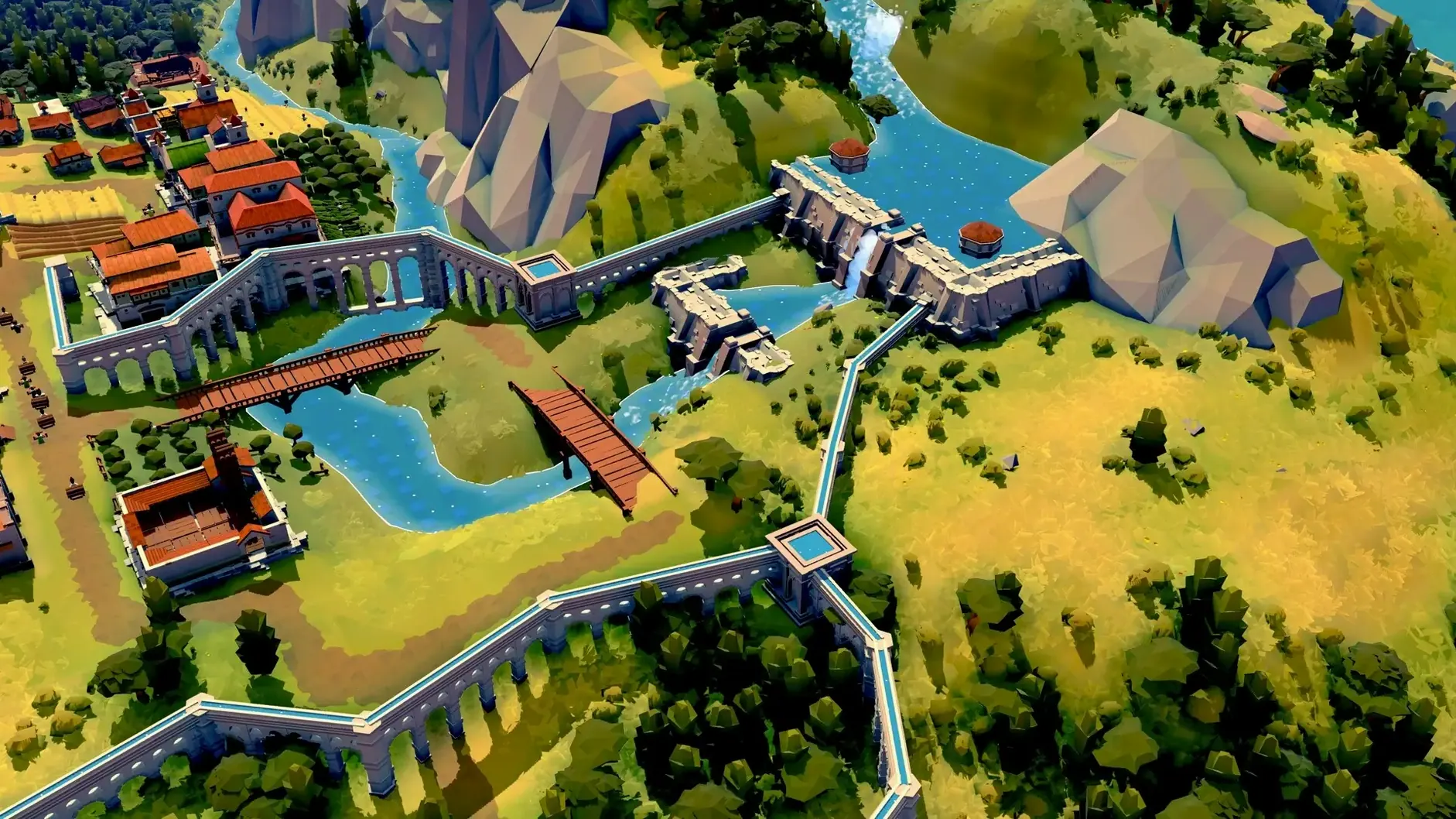
The simulation tracks terrain, hydrodynamics, and weather, so dam placement and aqueduct routing are practical puzzles rather than cosmetic choices. Irrigation channels raise farm yields, but they draw from the same water that feeds your bathhouses and fountains. Getting that balance right occupies the middle hours of a settlement: expand too fast and the supply chains for pottery, timber, and bread start to buckle under their own length.
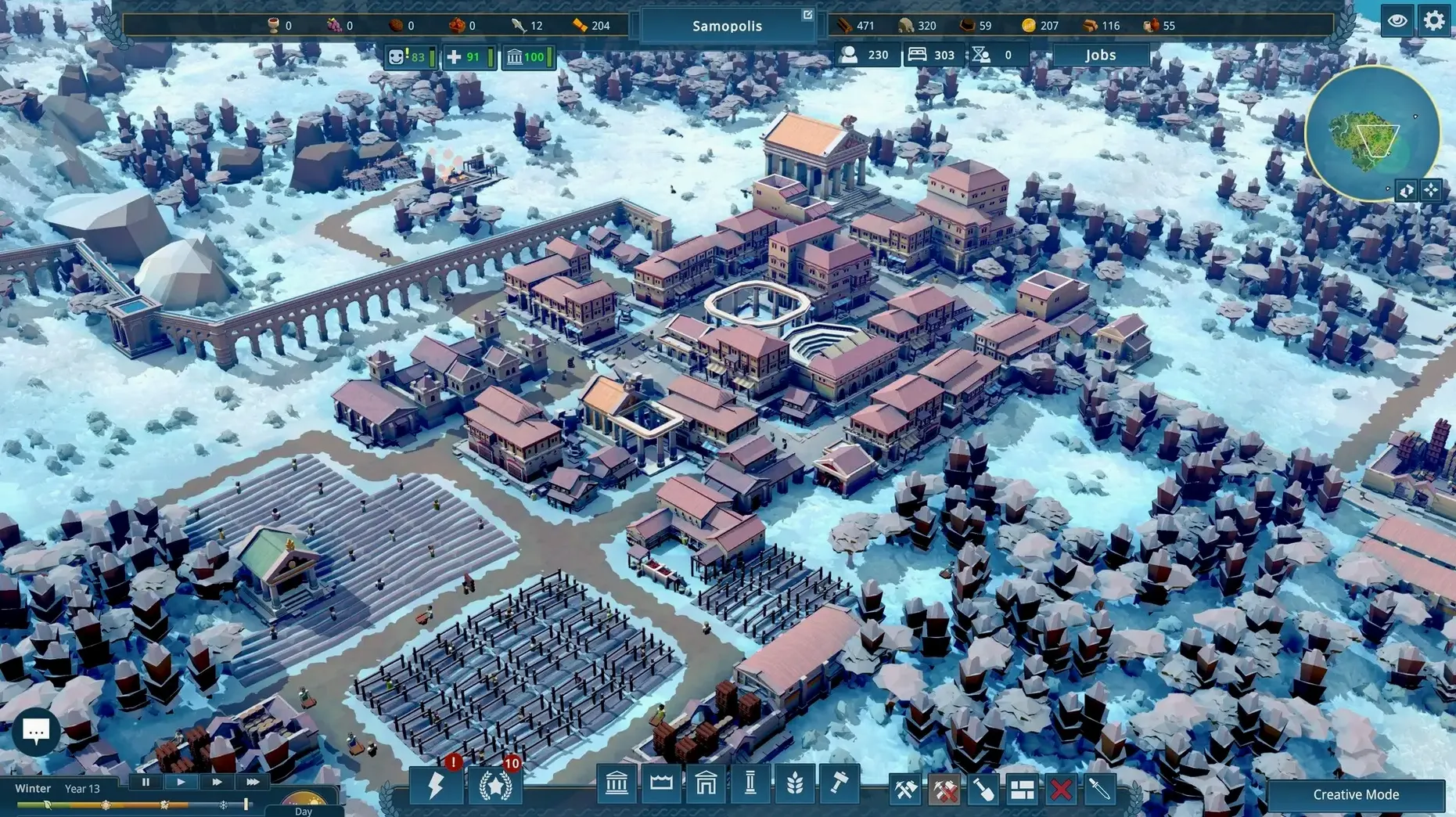
Alongside the physical infrastructure sits a layer of civic management. You can enact laws that shift citizen behaviour — curfews, rationing, labour rules — and each carries a cost in public sentiment or divine standing. The gods are not decorative; neglect a temple for too many seasons and you will see the effects in crop failure or unrest. Keeping them appeased while pushing growth toward aqueduct-grade engineering is where the tension lives.
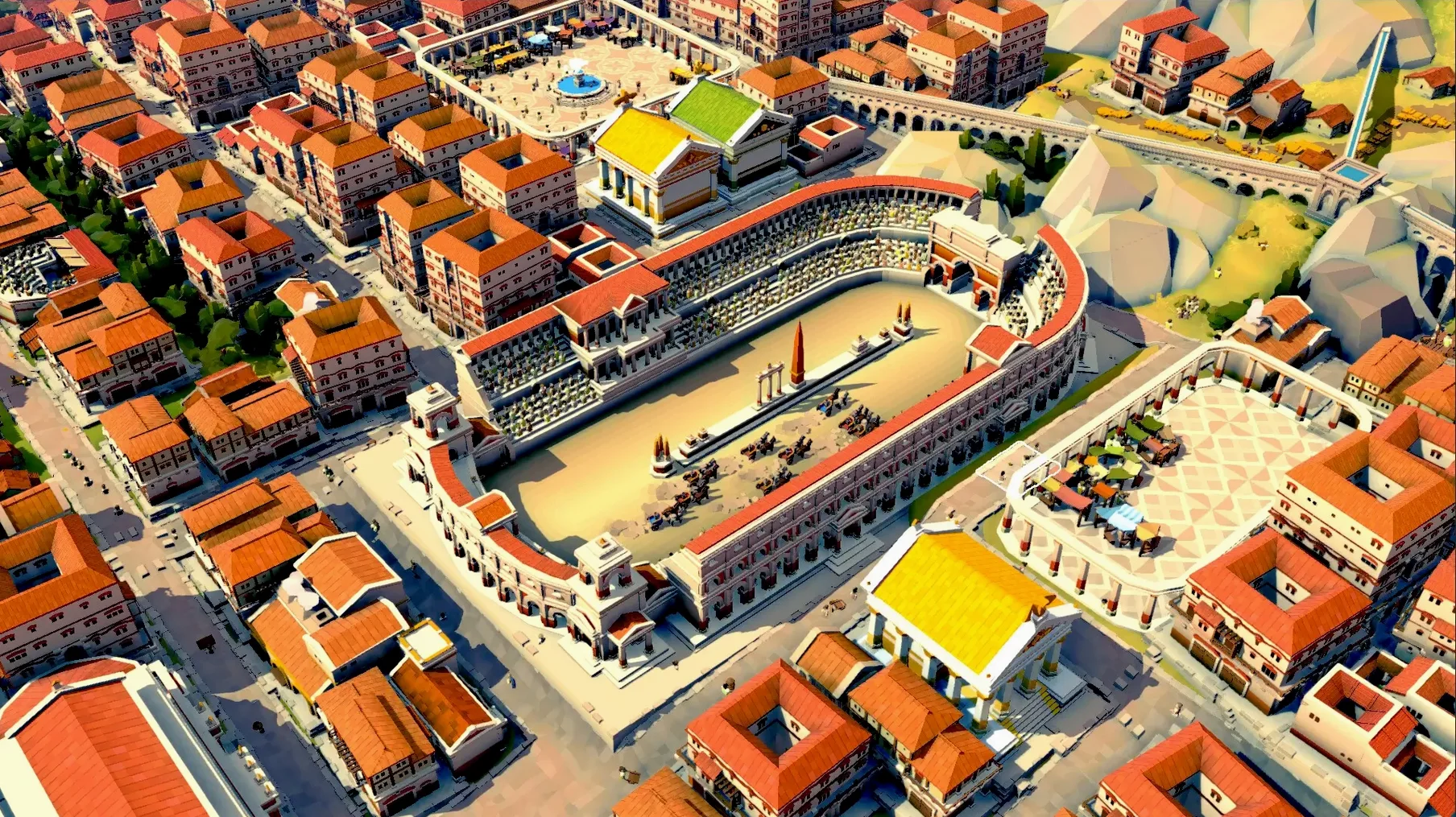
This early build already ties the Roman theme tightly to its mechanics. The fourteen supported interface languages lower the barrier for non-English players, and the M4 Mac handles the water simulation without obvious stutter. As a city-builder, it leans toward logistics and consequence rather than spectacle.
Tracing a bread shortage back to that mill you placed three hours ago
Players drawn to logistics-heavy city-builders — the kind where a bread shortage actually traces back to a mill placement decision made three hours earlier — will find the most here. The water simulation alone rewards careful observation. Moving an aqueduct intake 20 metres upstream can raise pressure enough to supply a new bathhouse without adding a reservoir, but you need to watch the seasonal flow patterns first.
Historical setting fans who prefer systems over spectacle also settle in quickly. The game does not lecture about Roman life; it encodes assumptions about class, labour, and religion into mechanics you interact with. A law that exempts craftsmen from military drills makes sense only if you have been watching your workshop output drop every time a cohort trains. Players who enjoy unpicking cause and effect in a simulated society will read the whole game as a series of small, testable hypotheses.
Those who bounce off pure sandbox titles may appreciate that Nova Roma keeps pressure on. The gods, the food supply, and the treasury each have a timetable. You can ignore the Temple of Ceres for a while, but the moment a drought hits and grain yields halve, the neglect becomes visible in the citizen happiness panel and the migration numbers. The game rewards planning, not reaction speed, which suits a more methodical temperament.
Place the first granary and market in the same walking loop
The initial hours can feel quiet compared to the mid-game sprawl, but they set the shape of everything that follows. A few practices help.
Place your first granary and market within the same walking loop as the initial housing. Distance between food storage and food distribution is the most common early choke point. If a bread carrier spends half the day walking, the insulae at the far end of the street will show shortages even when your wheat supply is fine.
Survey water flow before you build anything permanent near the river. The hydrodynamic model runs regardless of whether you watch it, so a farm placed on what looks like flat ground in spring can sit underwater in autumn. Pause the game, rotate the camera low, and follow the contour lines along the floodplain. Note where the water pools after rain. Those spots are for reeds or temples, not grain.
Keep the first settlement compact. The temptation to spread toward every visible resource deposit is strong, but supply chain length directly affects worker efficiency. A clay pit 300 metres from the kiln means a potter who spends more time walking than shaping. Build the production building next to the raw material first, then run a road to the housing, not the other way around.
Make the water overlay sticky instead of on demand
The default setup is playable, but a few adjustments make the simulation more legible.
Switch the overlay toggle from on demand to sticky in the interface options. The water, fertility, and desirability overlays are useful enough to keep visible while you place buildings, and the default behaviour hides them after every placement. A sticky overlay saves dozens of extra key presses per session.
Reduce the autosave interval to five minutes during the first settlement. The game does not hold your hand when a supply chain collapses, and the cascade from a missed bread delivery to mass emigration can happen inside a single season. Frequent autosaves let you step back and study what broke without replaying an hour of progress.
Turn off camera edge scrolling if you work on a multi-monitor setup. The cursor drifts past the game window more often than you expect, and the default sensitivity makes the view lurch. Keyboard panning with the arrow keys or middle-mouse drag is more precise for fine placement around water features anyway.
Overlooked conveniences
Holding Shift while placing a road locks it to the cardinal axes. The pathfinding for citizens prefers straight, axis-aligned routes, so a grid of roads at right angles produces fewer idle walking animations than a picturesque winding street. The difference is small per citizen, but across 200 households it shortens every supply trip.
The temple interface has a small offering timer tucked into the deity panel. It is easy to miss because the main screen draws attention to the building model, not the status bar. Checking that timer every few seasons prevents the sudden divine displeasure spike that comes from an overlooked shrine. Ceres and Neptune are the usual culprits — their domains touch food and water, and their thresholds are the least forgiving.
Right-clicking a citizen opens a path trace showing their last thirty seconds of movement. The feature is not documented prominently, but it reveals bottlenecks faster than studying the overlay maps. If a potter loops oddly near the forum, the trace usually points to a missing road segment or a blocked bridge.
Players searching for a nova roma free download will find this build runs directly after installation with no online check. Those who look up nova crack or nova torrent paths may notice the DRM-free nature makes external tools unnecessary — the game launches as-is. Enthusiasts sharing a nova roma torrent typically point to the same self-contained installer structure, and the nova 13.4 query sometimes surfaces discussions about whether later macOS versions will remain supported, though Tahoe handles the simulation layer without issues on the M4 mini tested here.