Aspecten
 Download (2.7 GB)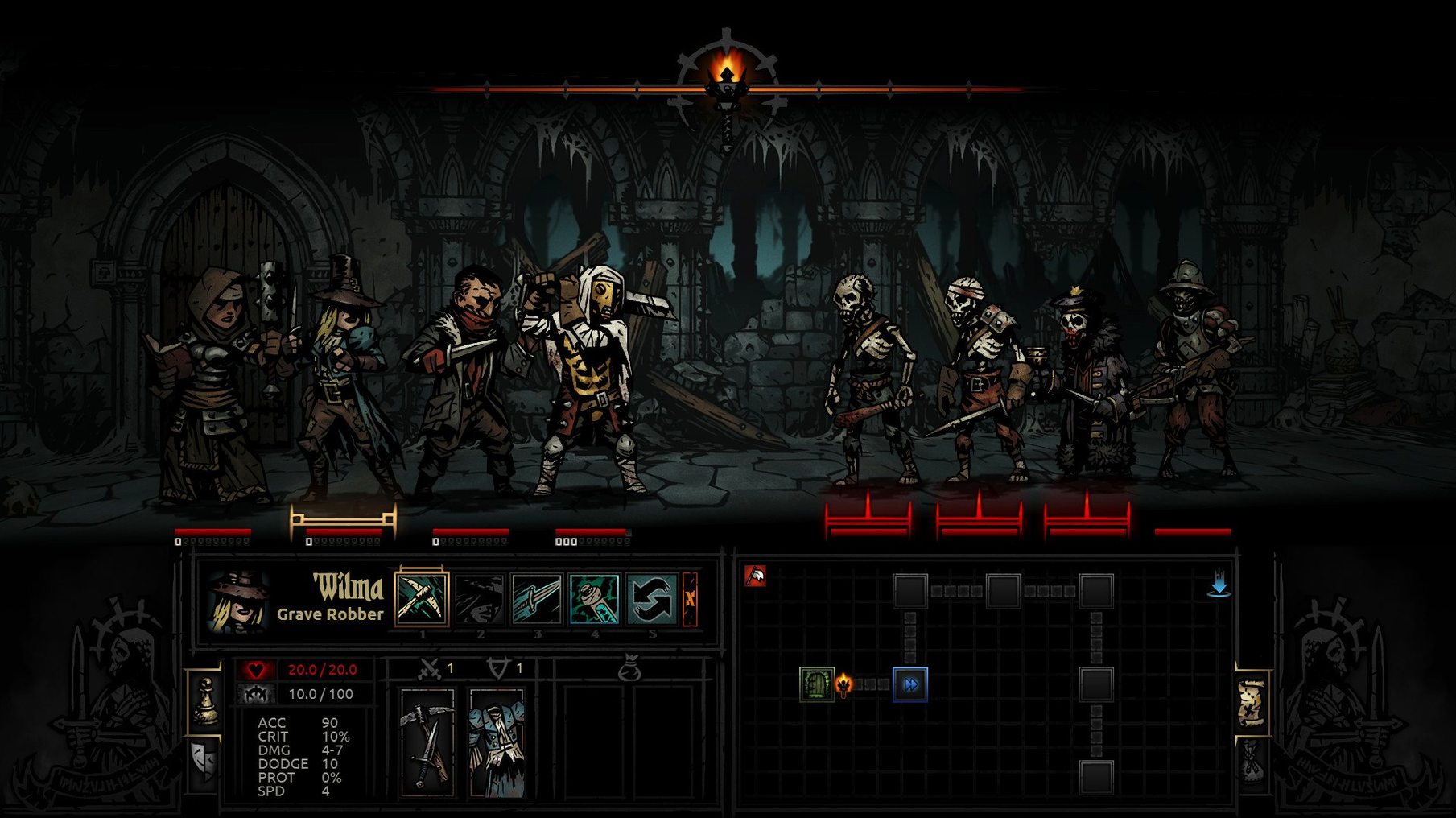
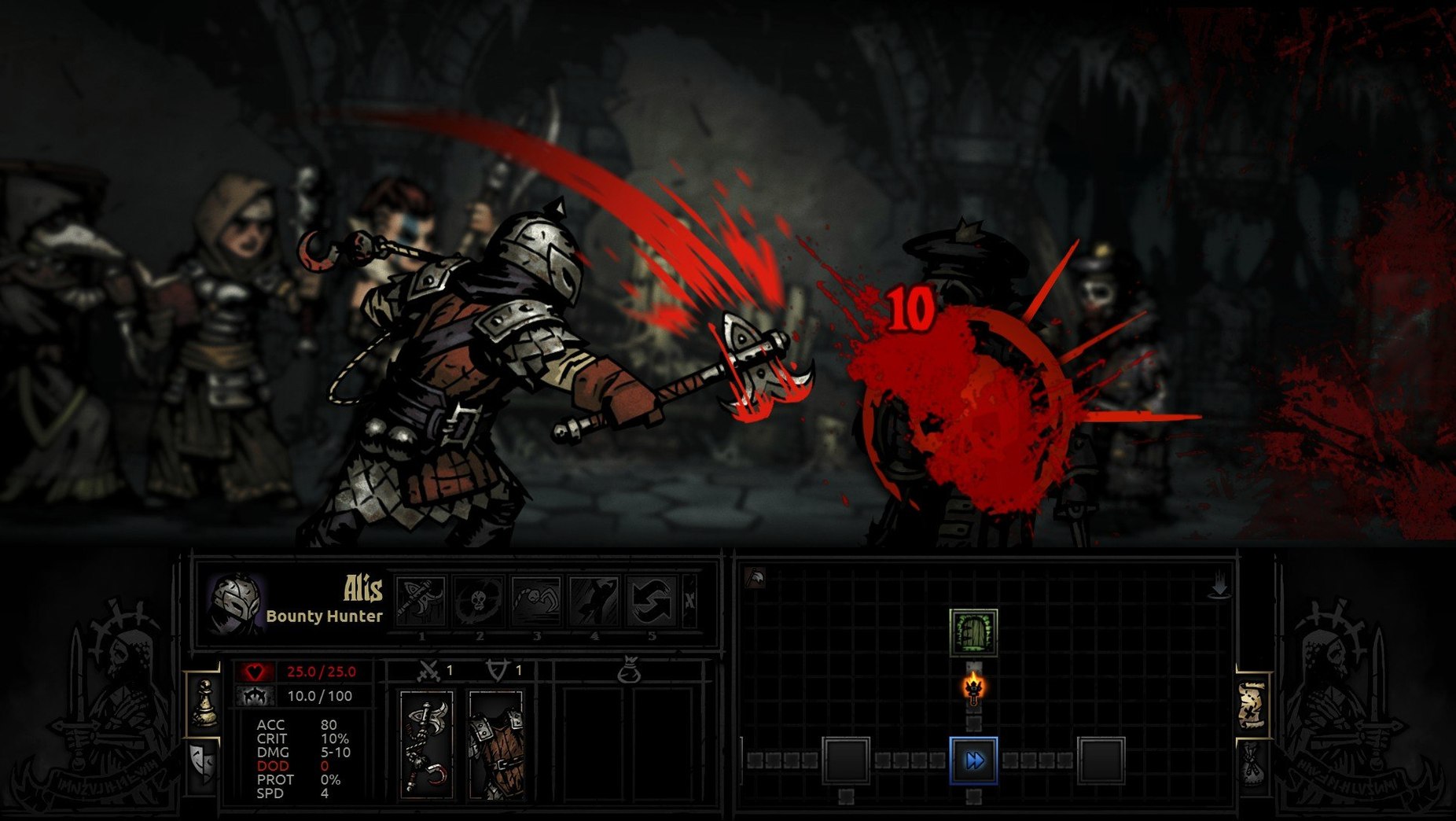
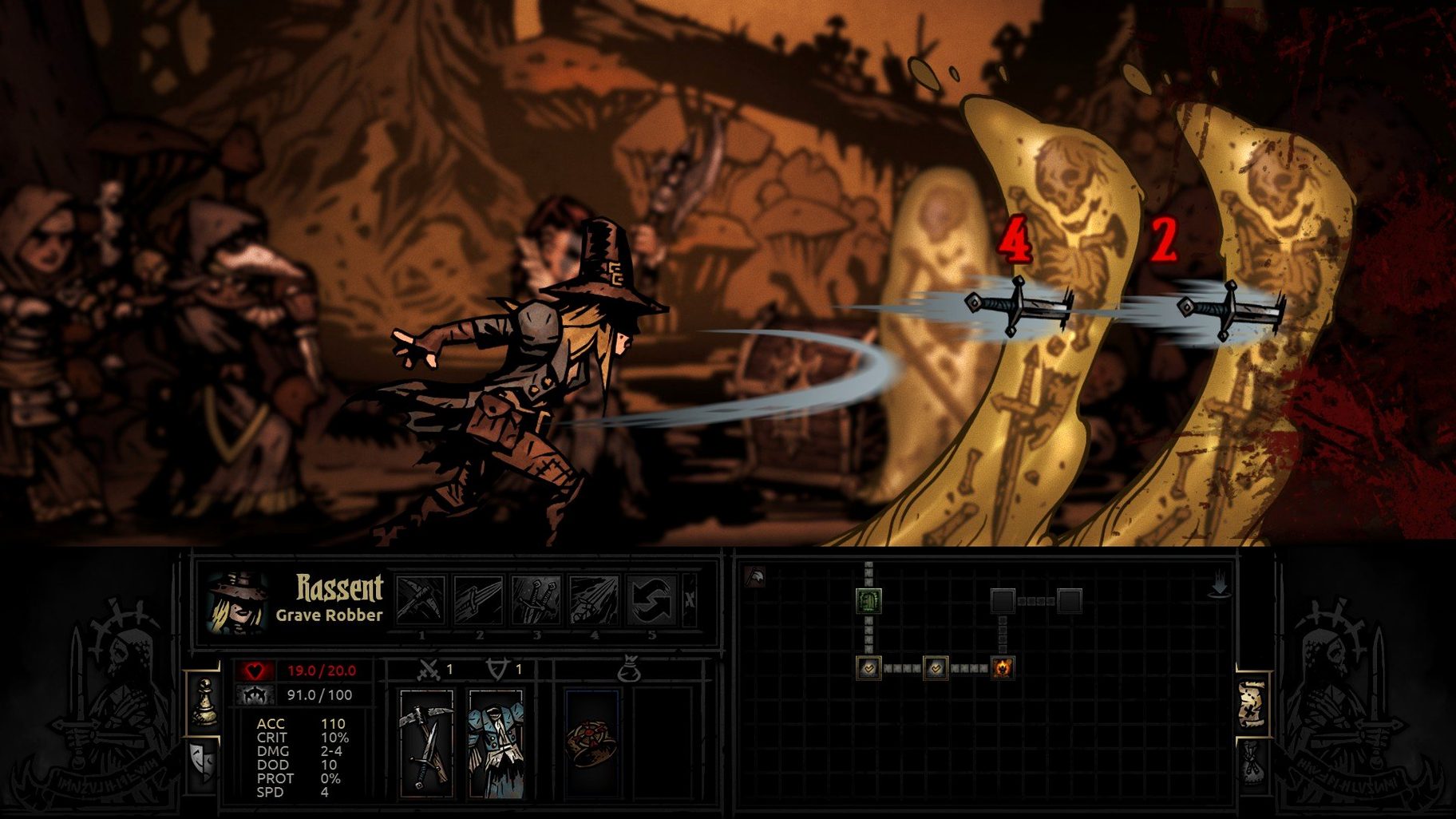
The Affliction system doesn't just track hit points. A hero who witnesses too many horrors may become Paranoid, lashing out at comrades or refusing healing, while another might turn Masochistic, finding bleak comfort in injury. It's a core mechanic that ties the psychological toll of adventuring directly to combat performance.
Content and campaign structure
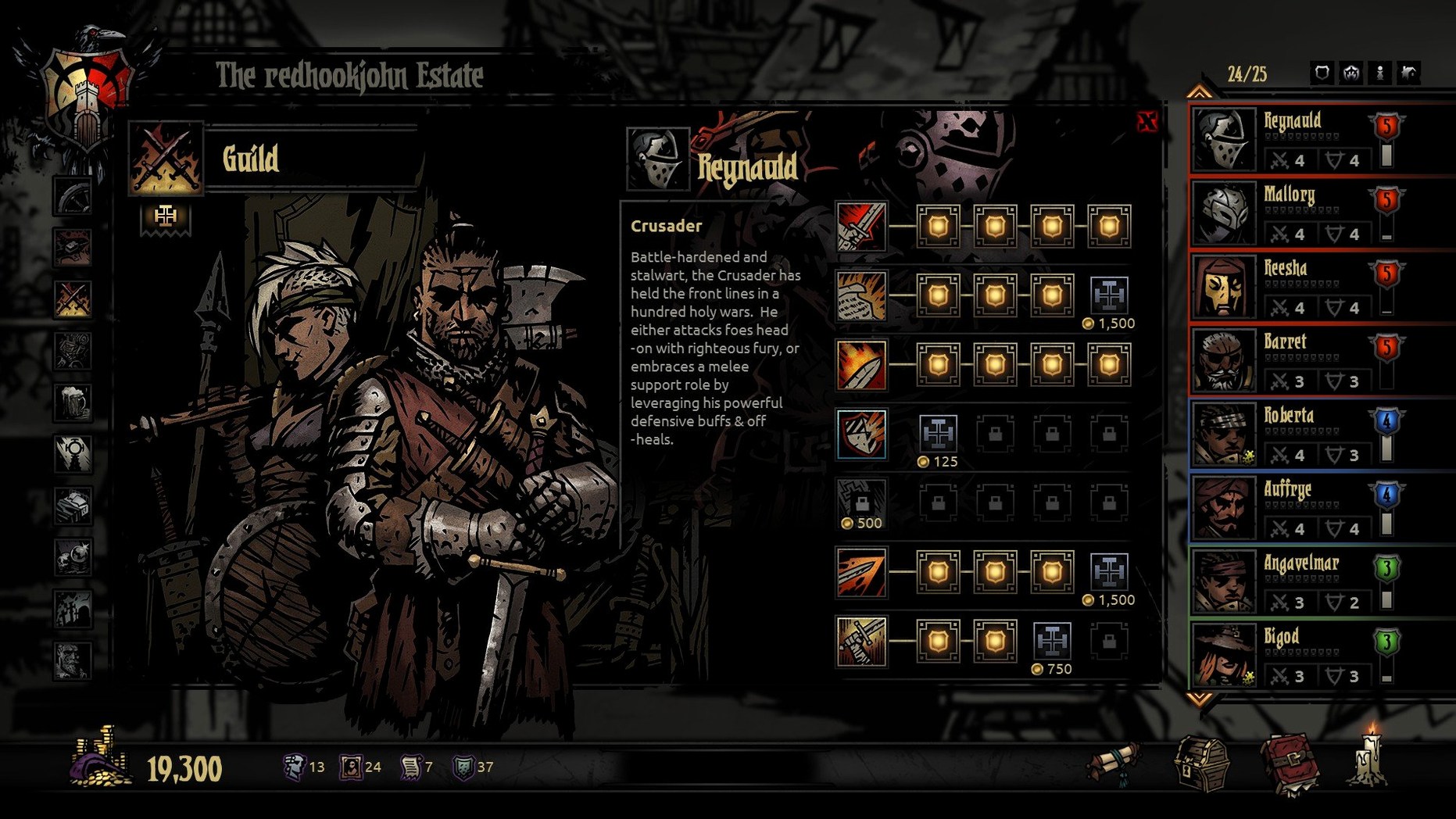
You inherit a decrepit hamlet and must recruit a roster of flawed heroes—Highwaymen, Plague Doctors, Vestals—to cleanse your family's corrupted estate. Each expedition sends a party of four into one of several regions: the tangled Weald, the rank Warrens, or the lightless Ruins. Provisions are limited, the map is procedurally generated, and retreat is a deliberate choice, not a restart button. Between missions, the hamlet's blacksmith, guild, and tavern allow you to upgrade gear, sharpen skills, and treat lingering phobias, ensuring a steady churn of new recruits replacing the broken ones left behind.
Combat and party management
Battles unfold on a two-dimensional plane where character position determines which abilities are usable. A Leper in the front rank can strike with devastating force but cannot hit the enemy backline; a Jester can bleed foes from the middle ranks while buffing ally accuracy. Turn order is governed by a hidden speed roll, making each round unpredictable. Light from your torch influences both scouting and enemy ambush chance, so choosing to press on in the dark is a calculated risk. Success depends less on a single hero's power and more on assembling a party whose quirks and skills interlock under pressure.
View heroes as disposable assets
The first run usually ends badly, and the reason is rarely bad luck. New players treat heroes as permanent, like characters in a story-driven RPG. They aren't. A Vestal who picks up three negative quirks in one run is cheaper to dismiss than to fix. Holding on to every survivor drains gold that could buy provisions for the next expedition.
Another common error is ignoring the torch. Darkness raises loot yields but also raises stress and ambush risk. Beginners see the extra gold and let the light gutter out before they understand how quickly a shuffled party and a surprise attack turn a routine fight into a total loss. It's a system that punishes greed without ever saying so.
Provisioning gets overlooked too. Buying too little food means hunger checks; buying too many torches means less inventory space for loot. The hamlet teaches this through repetition, not tutorials. The best learning approach is to take short runs into the Ruins, buy eight torches and twelve food, and pull back before the party hits half health.
Play alongside podcasts with turn-based pauses
Darkest Dungeon runs well alongside other software on Intel Macs. Because turns pause until you act, it plays naturally with a podcast or music app open in the background. Swiping between full-screen spaces with Mission Control is smooth enough for checking a wiki or notes without quitting the game. The game also respects standard macOS window behaviour: hiding it with Cmd-H or switching apps with Cmd-Tab doesn't disrupt a run.
Players who keep spreadsheets or notes for party rosters can use Split View. The game holds its layout at narrower windows, though the interface gets cramped below about 1280 pixels wide. For recording runs or sharing tactics, the built-in screenshot tools work as expected; Shift-Cmd-4 captures a single region without pausing the session. If you are looking for Darkest Dungeon for Mac cracked, check that the build matches your macOS version so the app runs well when a friend shares a copy.
Right-click for compact resistances panel
The keyboard support is modest but useful. Number keys select abilities during combat, and Tab opens the map in dungeons. Right-clicking any hero or enemy brings up a compact info panel with resistances and current status effects, which saves a trip to the character sheet. Holding Alt while hovering a skill shows its exact range and target positions before you commit.
In the hamlet, the Enter key confirms most prompts, and the Escape key cancels. The roster screen sorts by stress level, class, and level, though the sorting arrows are easy to miss on smaller displays. A double-click on a hero portrait opens their full sheet without switching screens. These little things add up across a long campaign, especially when you're managing ten or twelve characters between missions.