Aspecten
 Download (2.4 GB)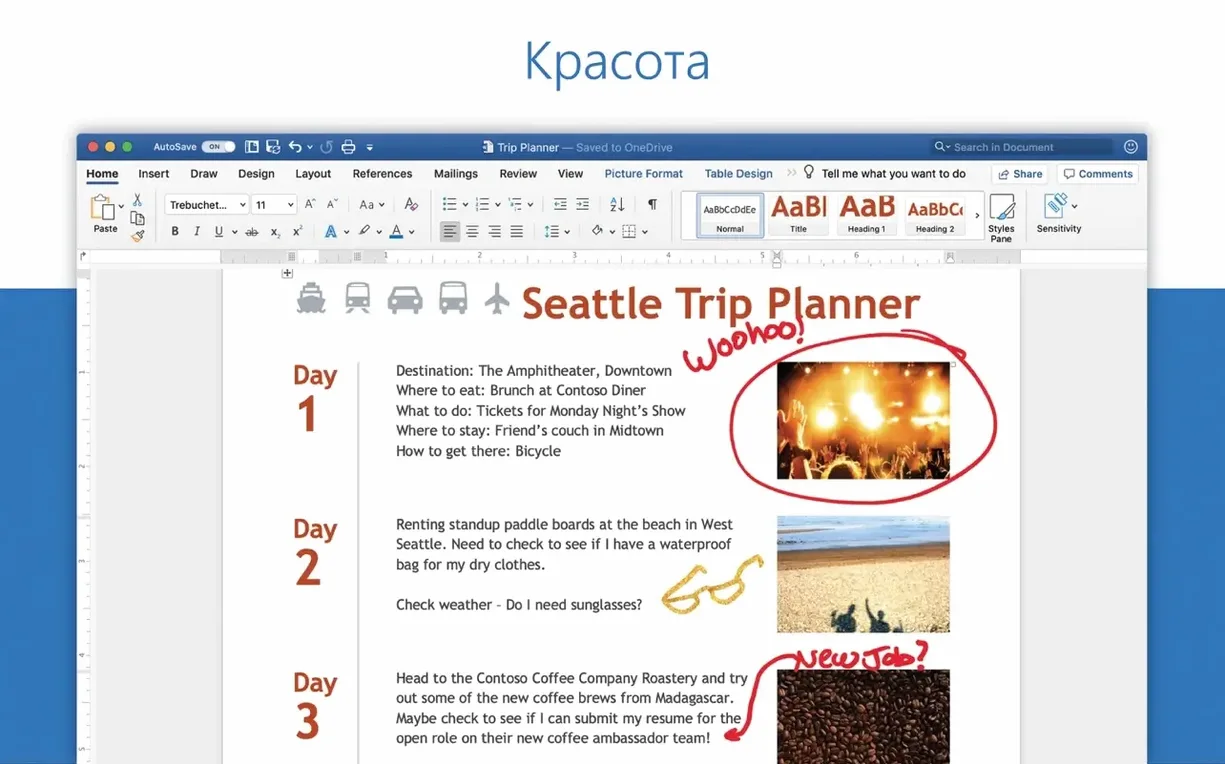
Build 25011212 shipped on 14 January 2025, bringing Word, Excel, PowerPoint, Outlook and OneNote together in a single 16.93 release. OneDrive sits alongside them, linking documents to Microsoft 365 sharing and real-time collaboration in the three core editors.
Which apps are in the package
- Which apps come with the package? The bundle contains Word, Excel, PowerPoint, Outlook, OneNote and OneDrive. Office LTSC Standard for Mac 2024 is the edition referenced in the package information.
- How often does it receive updates? Microsoft updates the suite roughly once a month. The Microsoft AutoUpdate tool handles those downloads after installation.
- What does Outlook do on a Mac? Outlook pulls email accounts and calendars into a single application, so you can manage messages and scheduling without switching between separate apps.
What the 16.93 release means
Version 16.93 is a standard monthly build covering the five main applications. It keeps the suite aligned with Microsoft’s regular update cadence. The installer pulls packages from Microsoft’s official servers, and activation relies on the Office LTSC 2024 Volume Licence Serializer. If activation does not take, a clean removal followed by a fresh installation usually resolves it.
Word and Excel launch in under three seconds on Apple Silicon
On Apple Silicon Macs the suite runs as a native 64-bit ARM build. Word and Excel launch in under three seconds from a cold start on a machine with an M‑series chip; PowerPoint takes a beat longer as it initialises its graphics pipeline. Once open, document scrolling in Word stays smooth at 120 frames per second on a ProMotion display, and Excel handles sheets with 50,000 rows without visible lag during filtering or sorting.
Memory use varies by application. Word with a 30‑page report full of tracked changes sits around 400 MB of RAM. Excel with three workbooks open and several pivot tables climbs toward 700 MB. Outlook is the heavier resident: a mailbox with four accounts and a year of cached messages regularly occupies 1.2 GB. The suite releases memory cleanly when you close documents, though Outlook tends to hold onto its cache for faster search. On an 8 GB Mac you can run Word, Excel and a browser side by side without swap pressure. Add PowerPoint with a 60‑slide deck and the system begins writing to disk more frequently.
Stability across version 16.93 is uneventful in the best sense. During a week of mixed use—drafting, reviewing spreadsheets, presenting slides over a video call—the applications did not crash. Outlook occasionally pauses for four to five seconds when switching between a large shared mailbox and the main inbox, likely while re‑indexing the local cache, but it recovers without intervention. OneNote syncs reliably in the background; conflicts appear as a small notification that lets you choose which version to keep.
Battery drain on a MacBook Air running Word and Outlook with Wi‑Fi active works out to roughly 11% per hour. That figure rises to 15% when PowerPoint is in presentation mode with the display brightness set above 70%. The suite respects macOS Low Power Mode, cutting background sync frequency and trimming animation smoothness in Excel charts.
How the suite fits with other apps and macOS features
Office integrates with Finder at a level that feels deliberate. Quick Look previews Word, Excel and PowerPoint files without opening the applications. Spotlight finds text inside .docx and .xlsx files stored locally. Right‑clicking a file in Finder shows a recent‑documents list per application, and dragging a Word document onto the Mail icon opens a new message with the file attached.
Continuity Camera works inside PowerPoint: you can insert a photo directly from an iPhone camera without leaving the slide editor. Handoff passes an open document between a Mac and an iPad running Office, though the document must be saved to OneDrive or SharePoint first. Universal Clipboard lets you copy a chart from Excel on a Mac and paste it into Word on an iPad a few seconds later, provided both devices share the same Apple ID.
The suite plays well with third‑party tools where it matters most. PDF Expert and Adobe Acrobat can open a Word document exported as PDF and preserve the table of contents. Alfred and Raycast find recently opened Office files through their Spotlight index. Keyboard Maestro triggers macros that target the Edit and Format menus in Word and Excel reliably, because the menu structure has stayed consistent across releases. Hazel can watch a folder for new Excel files and run an AppleScript that opens and prints them; the AppleScript dictionary in Excel 16.93 still exposes the Print Out command.
One area with friction is cloud storage outside OneDrive. You can open and edit a Word document stored in iCloud Drive, but autosave disables itself unless the file lives in OneDrive or SharePoint. The same applies to real‑time collaboration: the coloured cursors showing who edits which paragraph only appear when the document sits in Microsoft’s cloud. Working from a Synology NAS over SMB works fine for single‑user access, but two people opening the same file will see a read‑only lock rather than a merge prompt.
macOS accessibility features behave inconsistently. VoiceOver reads Word documents accurately, including heading levels and table structure. In Excel it announces cell coordinates and values but struggles with merged cells. The Zoom accessibility tool magnifies the ribbon smoothly; however, increasing the system text size in Display settings does not scale the ribbon icons, which remain at their fixed pixel dimensions.
Run Microsoft AutoUpdate before opening any app
Before opening any application, launch Microsoft AutoUpdate from the Help menu of any Office app and let it fetch the latest build. The initial package may be a few weeks behind, and applying the update right away avoids surprises with patched bugs.
Set up Outlook first, even if you plan to use another mail client. The suite uses Outlook’s account sign‑in to authenticate OneDrive and the collaboration services. Adding your Microsoft account there unlocks real‑time co‑authoring in Word, Excel and PowerPoint. If you skip Outlook, the other apps will prompt you to sign in separately each time you try to share a document.
Calibrate the ribbon early. Open Word, right‑click the ribbon and choose “Customize the Ribbon.” Remove tabs you never use—Developer, Draw—and add commands you reach for constantly: Paste Special, Selection Pane, and Update All Fields. The same customisation carries across Excel and PowerPoint if you export the ribbon file from Word’s preferences and import it into the other apps.
Decide on a default file format before you send your first document. Word, Excel and PowerPoint default to the Open XML formats (.docx, .xlsx, .pptx). If colleagues work with Office 2016 or earlier, switch the default save format to the older binary types in Preferences > Save. This prevents a flurry of compatibility complaints in the first week.
Turn off the animated cursor in Excel. By default, a cell selection glides between cells with a brief motion effect. On a large sheet with conditional formatting, that animation consumes GPU time. Go to Excel > Preferences > Edit and uncheck “Use animation when scrolling.” Cell movement becomes instant, and the fans on an Intel Mac stay quieter.
Pin frequently used folders to the Open dialog sidebar. Drag a project folder from Finder onto the sidebar of the Open or Save dialog in any Office app. The shortcut persists across Word, Excel and PowerPoint, saving dozens of clicks over a working week.
If you use Time Machine, add the Office cache folders to the exclusion list. The path ~/Library/Containers/com.microsoft.Excel/Data/Library/Caches and its siblings for Word and PowerPoint accumulate temporary files that change every few minutes, triggering frequent backups with little benefit.
Can it live alongside an older Office version
One recurring concern is whether the suite can coexist with an older Office version already on the Mac. It can, but only if the older version is a 64‑bit build from Office 2016 onward. The Microsoft AutoUpdate tool manages updates for both installations separately, though it occasionally offers to remove the older one. If you rely on an older Excel for a legacy add‑in, keep it; otherwise, uninstalling the old version frees around 8 GB of disk space and eliminates confusion over which app opens when you double‑click a spreadsheet.
People who search for an office torrent or an office for mac cracked download often ask about missing features compared to the Windows edition. The Mac version lacks Access and Publisher entirely; those remain Windows‑only. Power Query in Excel for Mac has fewer connectors than its Windows counterpart—no SAP HANA or Active Directory connector, for instance. VBA support exists but the editor is less polished, and some Windows‑specific ActiveX controls do not render. For most document work, spreadsheet analysis and presentation tasks, the feature gap is small enough to go unnoticed.
Another question concerns document fidelity when exchanging files with Windows users. Fonts render slightly differently because macOS uses its own text layout engine. A document set in Calibri may wrap a line one word earlier on a Mac. The fix is simple: embed fonts when saving, and stick to the cloud fonts that ship with Microsoft 365. PowerPoint transitions that rely on DirectX effects fall back to Core Animation equivalents, which look similar but not identical. For critical presentations, a quick review on a Windows machine before the final hand‑off catches most surprises.
Those looking for an office download torrent or an ms office 2019 torrent sometimes ask about offline use. The suite works fully offline after activation. Word, Excel and PowerPoint need no internet connection for editing, saving locally or printing. Outlook can read cached mail offline. OneDrive sync pauses automatically when the network drops, and documents you opened recently remain available in their local cache. The only features that require a connection are real‑time collaboration, cloud saving, and the Ideas data analysis tool in Excel.
Questions about the office ltsc standard for mac 2024 download often circle around support duration. LTSC stands for Long‑Term Servicing Channel, which means the 2024 edition receives security updates for a fixed period without feature changes. That suits environments where stability matters more than new capabilities—research labs, publishing workflows, or machines that run instrument control software alongside Excel.
Outlook opens in two seconds with your inbox ready
The morning starts with Outlook. You open it at 8:40 and the main window appears within two seconds, already showing the inbox from overnight. Three new messages from colleagues contain attached Excel sheets. You click the attachment preview directly in the reading pane; Excel opens each workbook in a separate window, tiling them automatically if you use the Window > Arrange All command. The spreadsheets hold quarterly figures. You copy a summary table from the first workbook, switch to the second, and paste it with “Keep Source Formatting” so the column widths stay intact.
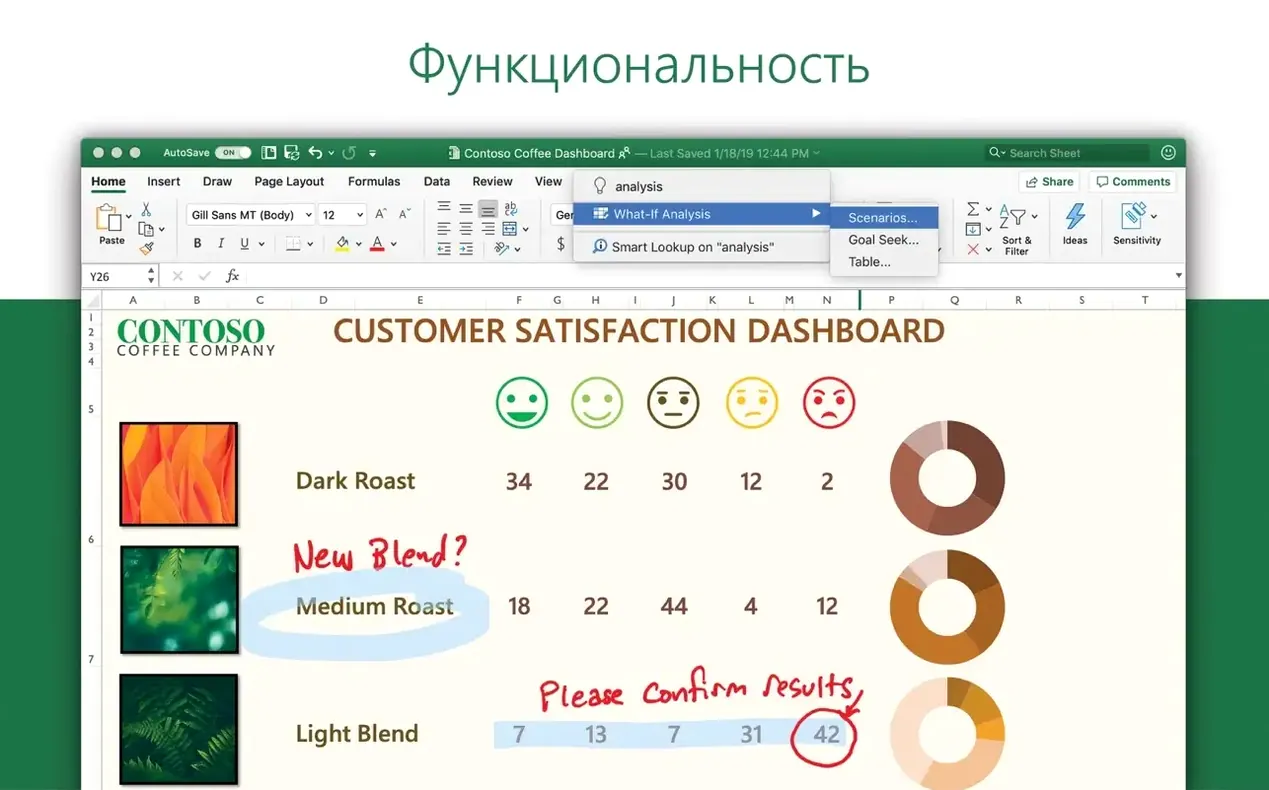
One workbook needs a quick pivot. You select the data range, choose Insert > PivotTable, and drag fields into the Rows and Values areas. The Ideas button in the Home tab suggests a trend line you had not spotted—a gradual increase in returns during the third quarter. You click the suggested chart and it drops into a new sheet. The chart picks up the workbook’s colour theme automatically, so it matches the rest of the report without manual formatting.
Mid‑morning, you switch to Word to draft a summary. You copy the chart from Excel and paste it into the document. Word offers a paste option to link the chart; you accept it, so when the figures update in Excel later, the chart in Word refreshes with a right‑click. You write for forty minutes, using the Navigation Pane to jump between sections. Track Changes is on because two reviewers will see this draft. Every insertion and deletion highlights in the margin, and comments appear as threaded replies along the right side of the page.
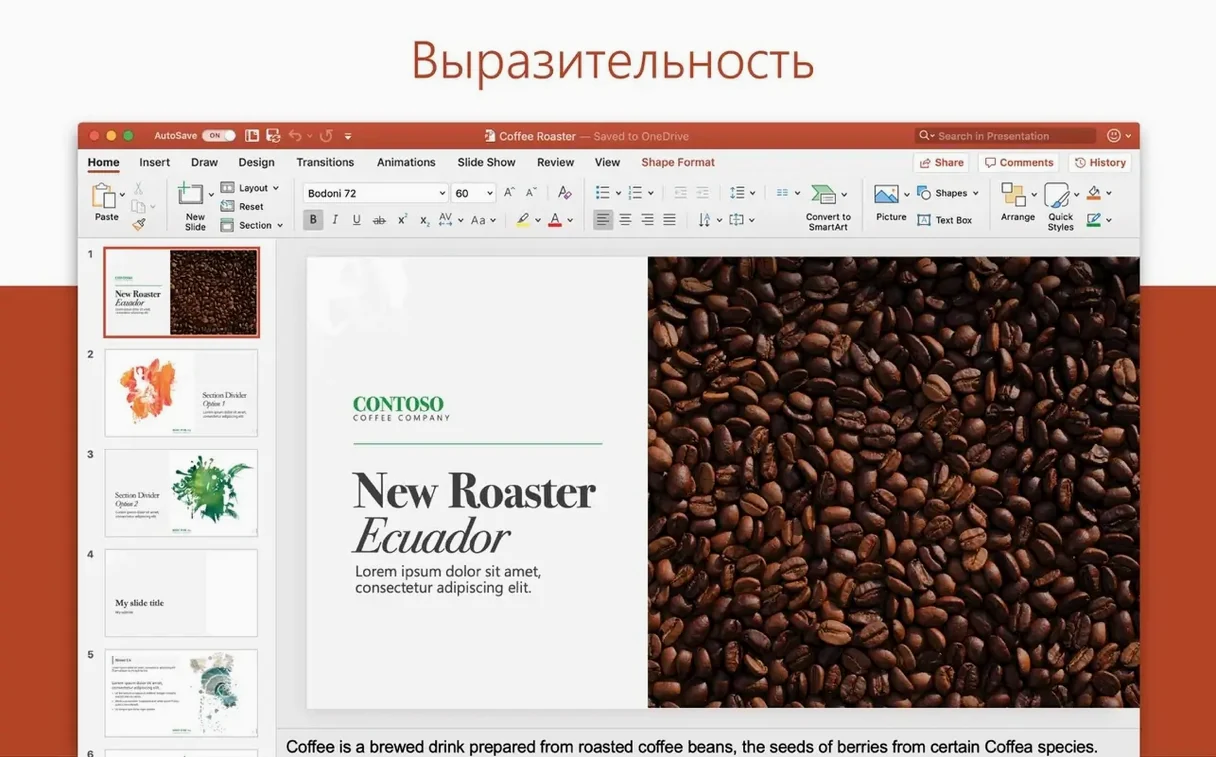
PowerPoint comes next. You open a template that your team uses for monthly reviews, import the summary from Word via Insert > Outline, and PowerPoint builds twelve slides from the heading structure. The Designer panel on the right suggests layout ideas for each slide as you click through them. You accept a two‑column layout for the financial highlights slide and drop the linked Excel chart into the left column. A colleague sends a message over Teams asking for a quick edit to slide seven. You make the change, save the file to OneDrive, and share a link that lets them view the deck in a browser without downloading it.
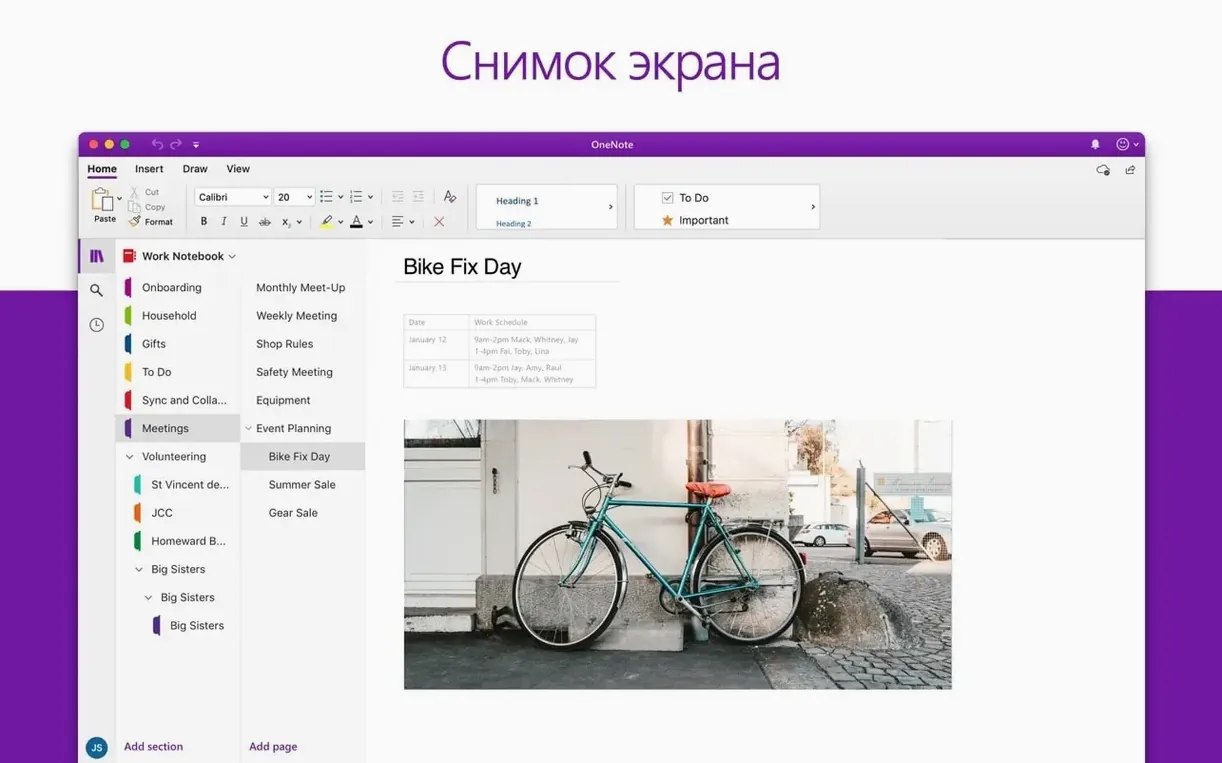
Before lunch, OneNote captures the loose ends. You paste screenshots of a whiteboard sketch from the morning stand‑up, type a few action items underneath, and tag them with checkboxes. The page syncs to your iPad, where you will tick them off during the afternoon meeting. Back in Outlook, you drag the OneNote page link into a calendar invitation so attendees have the notes before the call starts.
By 13:00 the suite has been open for over four hours. Word holds two documents, Excel keeps three workbooks in memory, Outlook idles with push notifications, and OneNote hums along in the background. The Mac’s memory pressure stays green. You close the lid and walk away, trusting that everything will pick up where you left off when you return.