 Aspecten

 Download (819 MB)
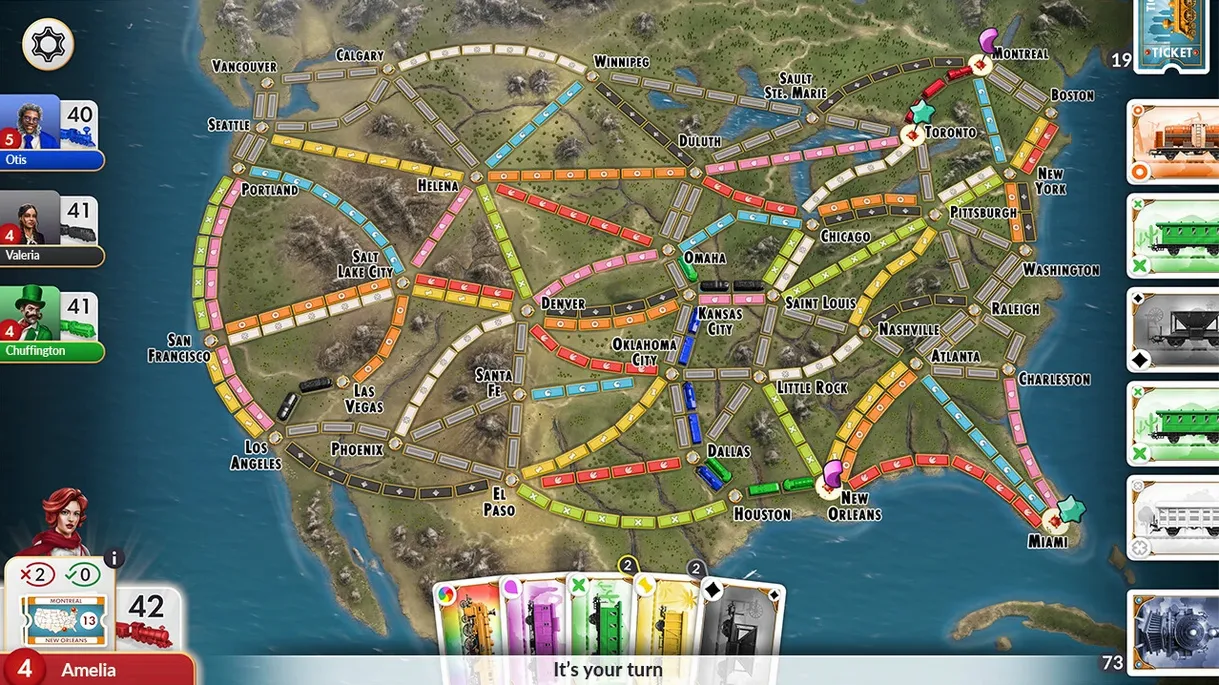
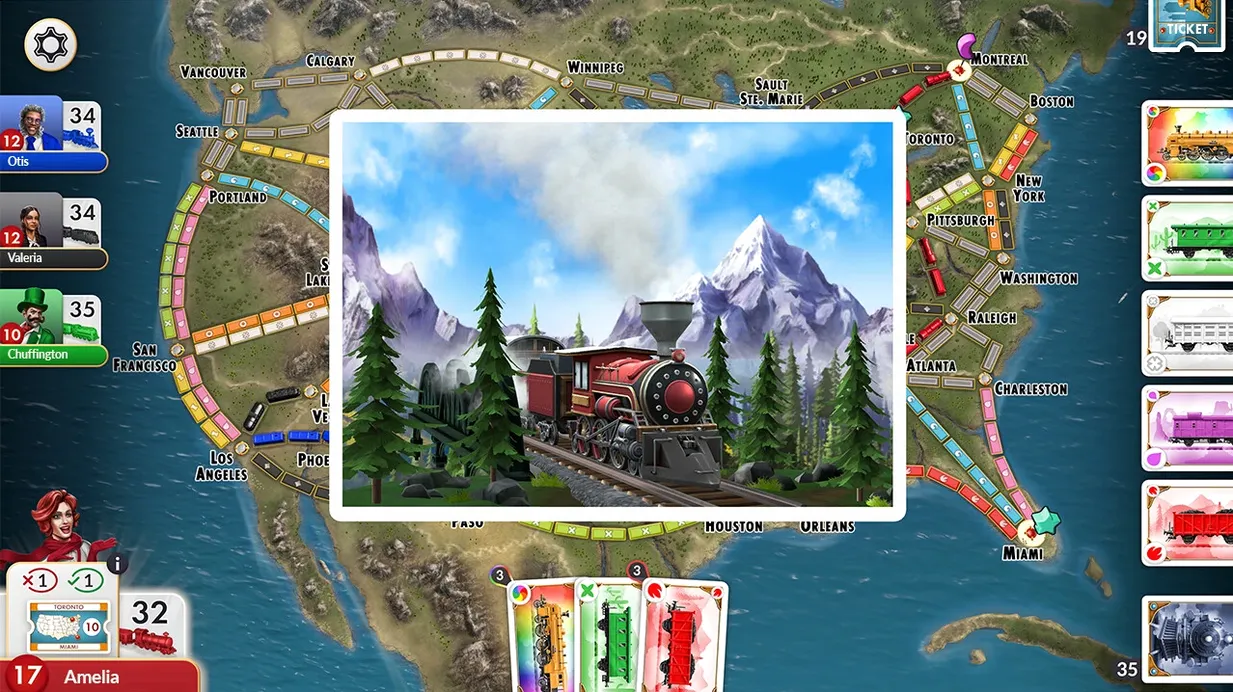
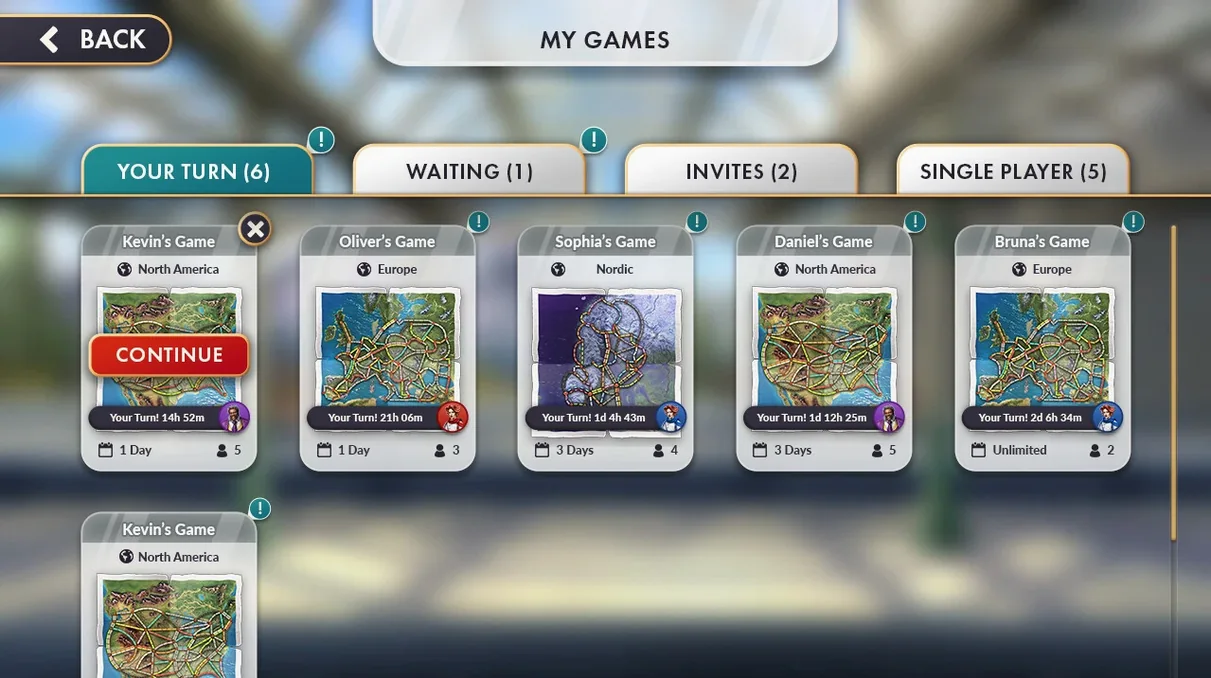
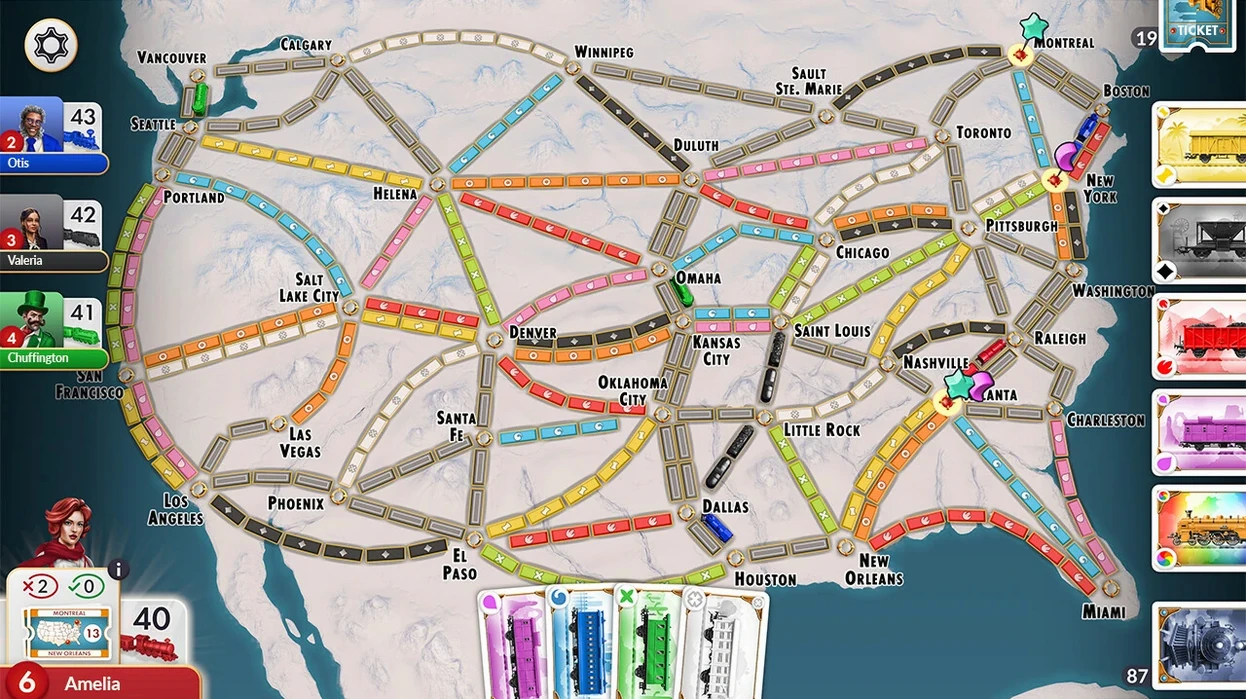
This version runs natively on Apple Silicon and Intel Macs, with support confirmed on macOS Sequoia using an M1 MacBook Air. The board and pieces render cleanly at high resolution, and the interface remains responsive throughout a session. You lay track by clicking city-to-city, and the game handles scoring, card draws and the Express bonus for the longest continuous line without any calculation on your part. European routes are included, which means water obstacles and mountain tunnels appear as part of the map, adding two extra terrain considerations during route planning.
| Detail | Note |
|---|---|
| Architecture | ARM and 64-bit x86 |
| Minimum OS | macOS 12.0 |
| Confirmed on | macOS Sequoia, M1 MacBook Air |
Controls stick to simple point-and-click. The game tracks your train cars, route cards and station pieces on screen, so you focus on decisions rather than upkeep. Unused route cards go back to the box automatically; opponents never see which ones you discard. Points come from completing a route and from connecting the two cities shown on a route card. The interface switches between English, German, Spanish, Italian, Portuguese and French, which covers most players without extra downloads.
Stability polish instead of new rules
Version 1.11.0 arrived in November 2023 and focused on stability rather than new mechanics. The board game rules themselves remain faithful to the tabletop original — no extra variants or house rules were layered on top. What changed is mostly under the surface: the build now runs more smoothly when switching between the menu, an active game and the route-card selection screen. Earlier versions occasionally stuttered when zooming the European map after a completed route; that behaviour disappeared on the M1 test machine running Sequoia.
One small but practical improvement is how the app handles quick resume. You can close the lid on a MacBook mid-turn, reopen it later and the game picks up without a reload prompt. That matters for a turn-based board game where sessions can stretch across a coffee break or a train journey. The music playback also no longer drops out after a system alert sound, a quirk that some players noticed in the previous build.
Full-screen and Mission Control work as expected
The game works as a self-contained app — no companion launcher, no account creation required to start playing. It respects standard macOS conventions: the window can enter full-screen mode via the green traffic-light button, and Mission Control treats it like any other application. You can swipe between the board and a browser window without the game pausing unexpectedly, which is useful when looking up a station name or checking a route map reference.
Notifications are minimal. The app doesn't badge the Dock icon or push alerts; online match invitations appear inside the game's own lobby. This keeps it quiet alongside work apps — a plus if you leave it running while switching to Mail or Notes. The interface language matches the system language automatically for German and French, though you can override it in the settings without restarting the game.
Because it's a native build for both Apple Silicon and Intel, it doesn't rely on Rosetta or any translation layer. That keeps the fan quiet even on fanless MacBook Air models. The disk image installation is straightforward — drag to Applications and launch — and the app leaves no background agents or launch daemons behind.
Switching the interface to French for light practice
Consider a geography teacher who wants a mental reset after a day of lesson planning. She launches the game on her M1 MacBook Air around eight in the evening, sets the interface to French for a bit of light language practice, and starts a solo match on the European map. She draws three route cards and keeps two — Paris to Wien and Brest to Petrograd — while returning the third unseen by any opponent.
The first fifteen minutes involve collecting orange and blue train cars, eyeing the mountain tunnel between Zürich and Venezia. She places a station early in Budapest, knowing her eastern route will need flexibility. Water obstacles near the British Isles slow down a rival AI player, giving her room to complete the Paris–Wien link for points. By the final turns, she's calculating whether an extra three-car route will offset the risk of leaving Brest–Petrograd incomplete. The Express bonus goes to the yellow AI player, but her completed routes and unused station still yield a comfortable personal score. She closes the lid at nine, the session suspended exactly where she left it.