Aspecten
 Download (17 GB)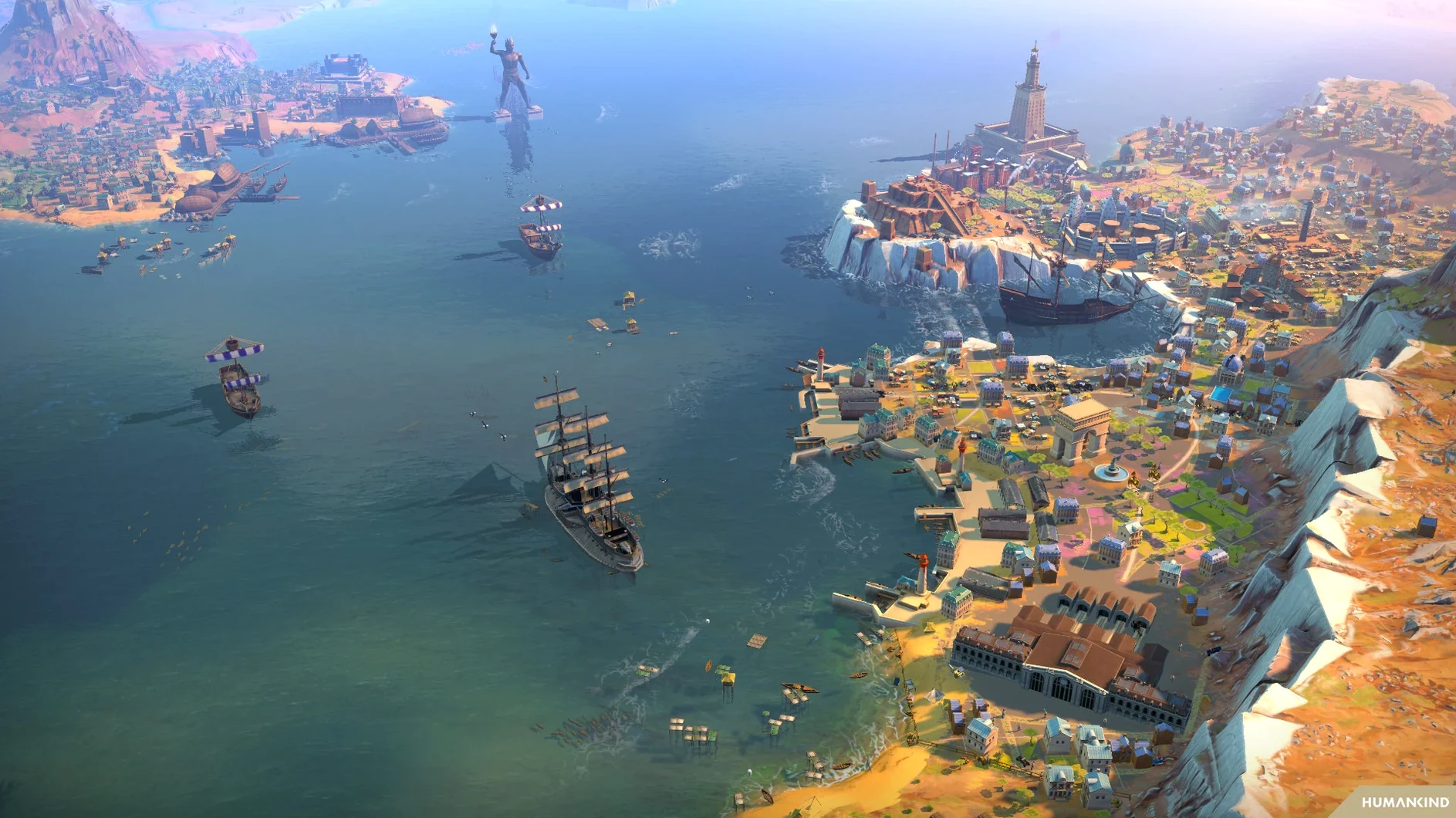
Humankind runs on Intel-based Macs with a 64-bit processor and on Apple Silicon machines. The minimum system is macOS 10.13, with 8 GB of RAM and 25 GB of available storage. It was tested on macOS Tahoe on a Mac mini 2024 M4.
Content
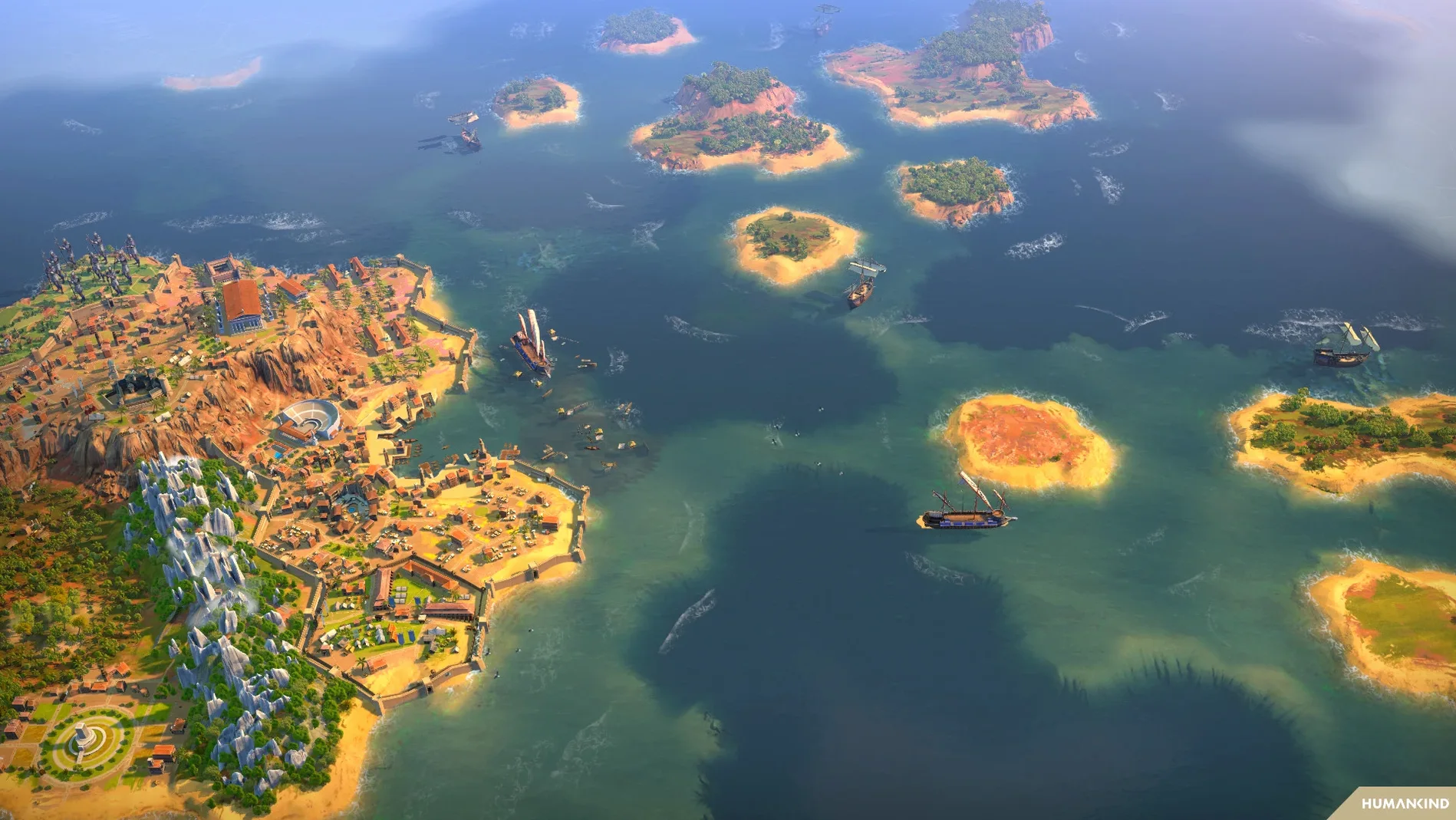
The core of a campaign is the mix-and-match culture system. Through seven eras you select from 60 historical cultures, each bringing its own bonuses to food, industry, money or science. Your civilisation is therefore never a single fixed faction; it is a sequence of choices that shape your strengths from era to era. The avatar representing your leader changes visually as the civilisation develops, reflecting the cultures you have adopted. Fame is the sole victory condition: every action that builds your legacy — wonders, expansion, influence — earns fame, and the civilisation with the most fame at the end wins. The Mac version includes support for English voice and twelve interface languages.
Modes
Battles unfold as turn-based encounters on the world map itself, not on a separate tactical screen. The game is a 4X title — explore, expand, exploit, exterminate — and a single match can last anywhere from a few hours to a dozen, depending on map size and pace. Skirmish and multiplayer modes sit alongside the main campaign, giving you room to experiment with shorter culture combinations without committing to a full history.
Who stands to gain the most
Players who treat a campaign as a long, unhurried evening project tend to connect with Humankind more than those chasing quick resolutions. The culture-switching mechanic rewards thinking across eras, so someone who enjoys pausing to read tooltips and compare legacy traits before committing to a decision will find a lot to chew on. It also appeals to the kind of strategy player who has grown tired of fixed-civilisation archetypes — here you are never locked into one playstyle from the Neolithic to the modern age. Multiplayer groups of four to six players get a good experience too, because the fame system keeps everyone in the running longer than a simple domination victory would. The game is less suited to anyone after a purely military sprint; conquest matters, but it is one source of fame among several.
Mac users with an Apple Silicon machine benefit from the ARM build included in version 1.30.4814. On a recent M4 Mac mini the late-game turns stay responsive, which matters when the map fills with units and districts. The game also runs on older Intel hardware that meets the 64-bit requirement, though turn times stretch a little once empires spread across a large map.
Rushing out of the Neolithic leaves your population and knowledge behind
A common early misstep is treating the Neolithic era as a brief formality. Rushing to found a city with a small scout party leaves you behind on population and knowledge, because every curiosity gathered and animal hunted in that opening phase adds units and science before the first outpost is even placed. Another mistake is picking a culture based on its name rather than on what your empire needs at that moment. If your territory lacks rivers and you choose a builder culture that rewards coastal trade, you spend an era fighting your own geography. The game lets you see the map and your current yields before each culture pick; not scrolling through that information is a reliable way to stall your progress.
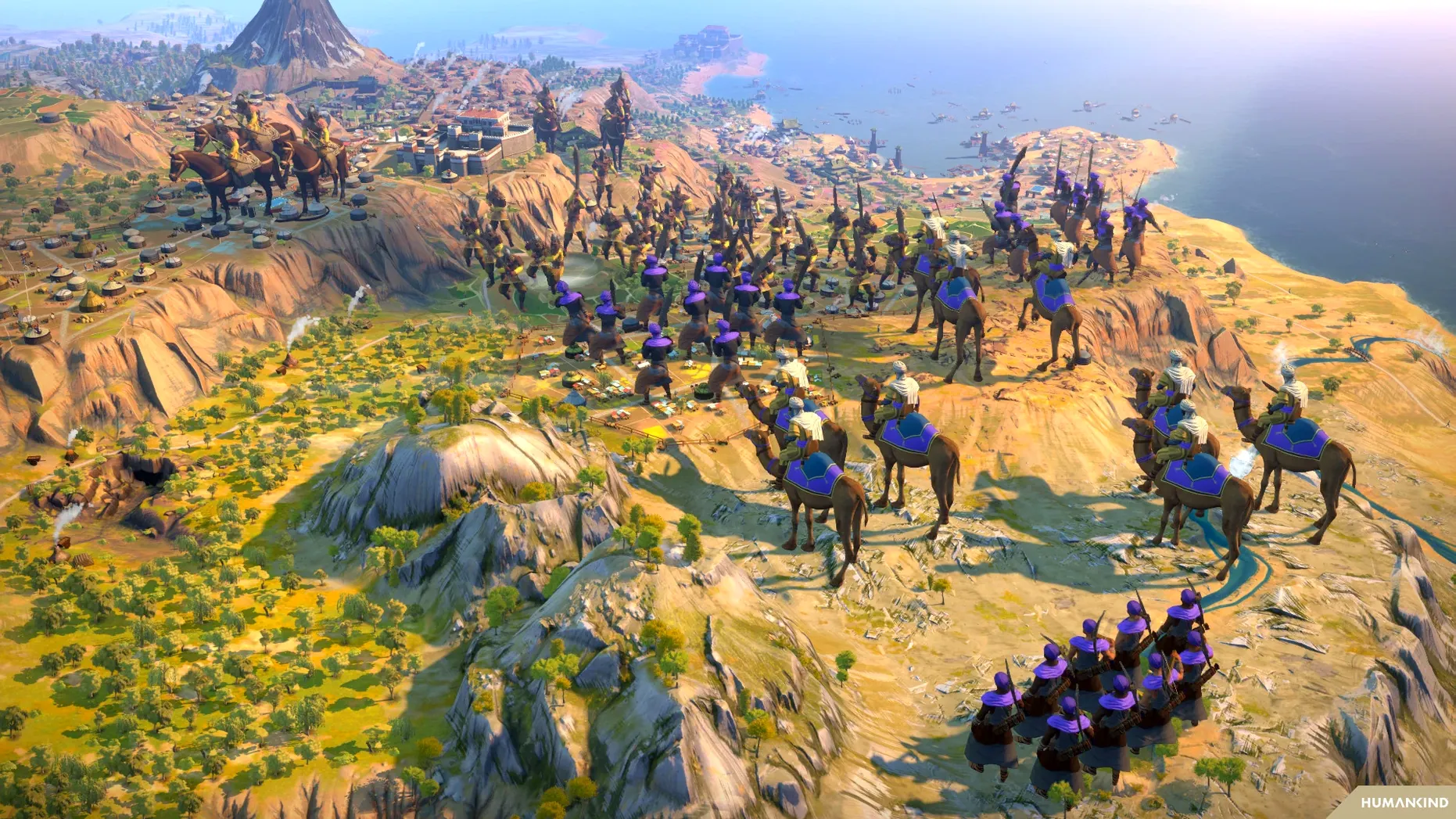
New players also overlook the elevation system in combat. A unit standing on higher ground gains a significant strength bonus, and the battle preview shows the outcome before you commit. Ignoring the terrain modifier and charging downhill into an equal-strength unit often ends with a dead stack and a lost position. Finally, spreading cities too thin early on without enough military units invites neighbours to claim your outposts. A few scouts upgraded to warriors in the Ancient era cost little and deter opportunistic AI attacks.
From nomad band to empire, turn by turn
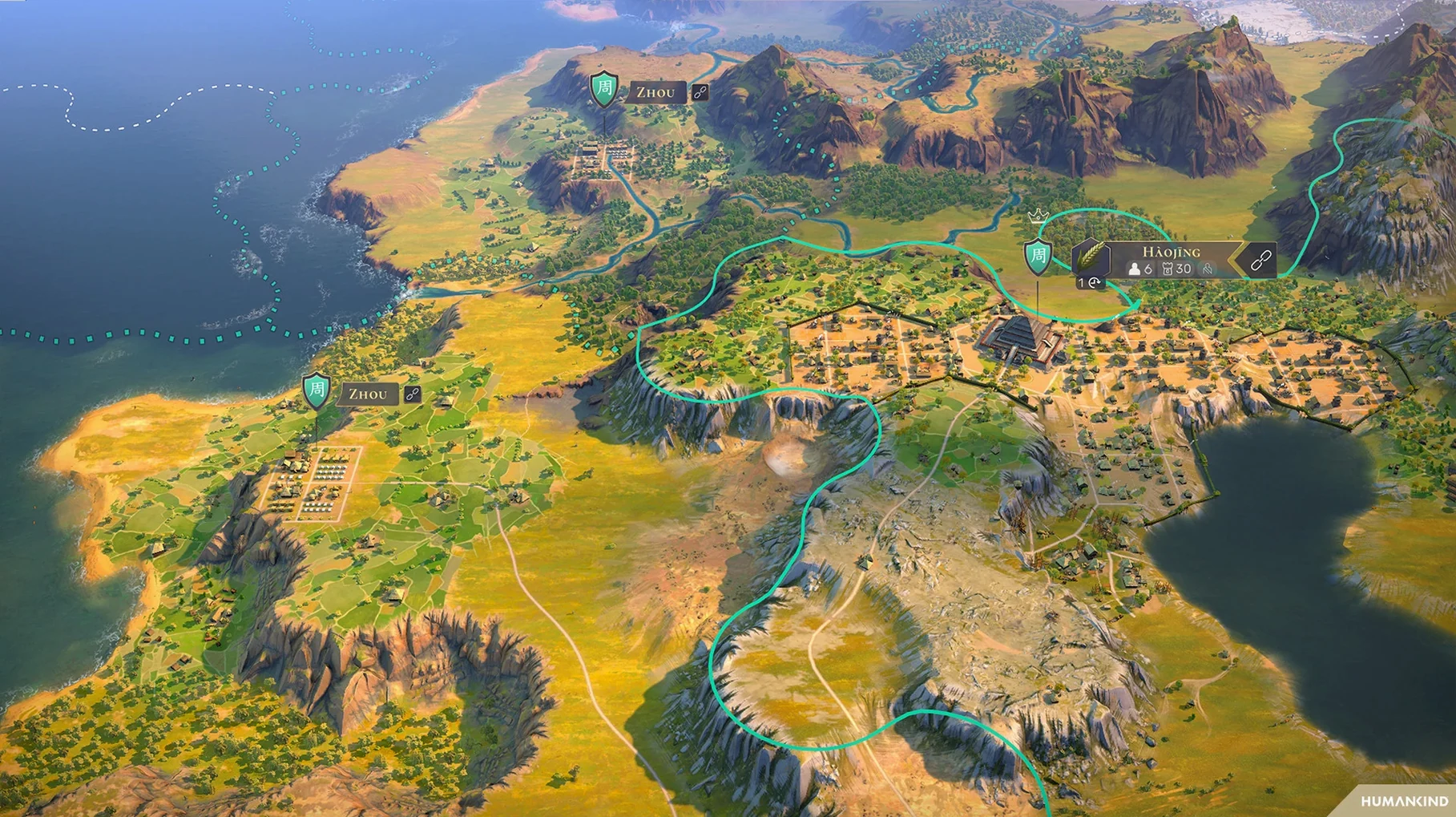
A typical campaign begins on a continent map, standard size, normal pace. The Neolithic screen fades in and the avatar stands beside a small band of nomads. The first forty turns are quiet: the tribe moves tile by tile, collecting mammoth bones from a curiosity, then splitting to cover more ground. A hunting party brings in food and influence, and by turn twenty-two there are three scout units and enough knowledge to trigger the first culture selection. The map shows forested hills to the south and a river basin to the north-east. The Zhou culture is chosen for its science bonus and the stability its emblematic district provides. The first outpost settles on a river bend with a luxury dye resource two tiles away.
The Classical era arrives after the city produces a second settler and claims a coastal territory. Carthage is the pick this time, for the early harbour and the gold from trading routes. A neighbour — the brown faction — has expanded too close, and a border skirmish breaks out over a copper deposit. The battle screen opens on the world map; three archers hold a ridge while two spearmen block a valley pass. The combat plays out over four turns, with the defender's high-ground advantage wearing down the aggressor until a white flag appears. A forced surrender yields a lump sum of gold and a ten-turn truce.
By the Industrial era the empire spans four cities and two attached territories. Factories are placing pollution on the map, nudging global stability downward, so a switch to the Austro-Hungarian culture offsets some of that with an influence boost from emblematic districts. The fame counter sits at just over four thousand, with two rival civilisations within two hundred points. The session ends after the contemporary era begins — a science-focused Japan culture is selected, and the final push involves a space programme and a carefully timed cultural wonder, all while watching the fame graph to see who crosses the line first on the final turn.