Aspecten
 Download (6 GB)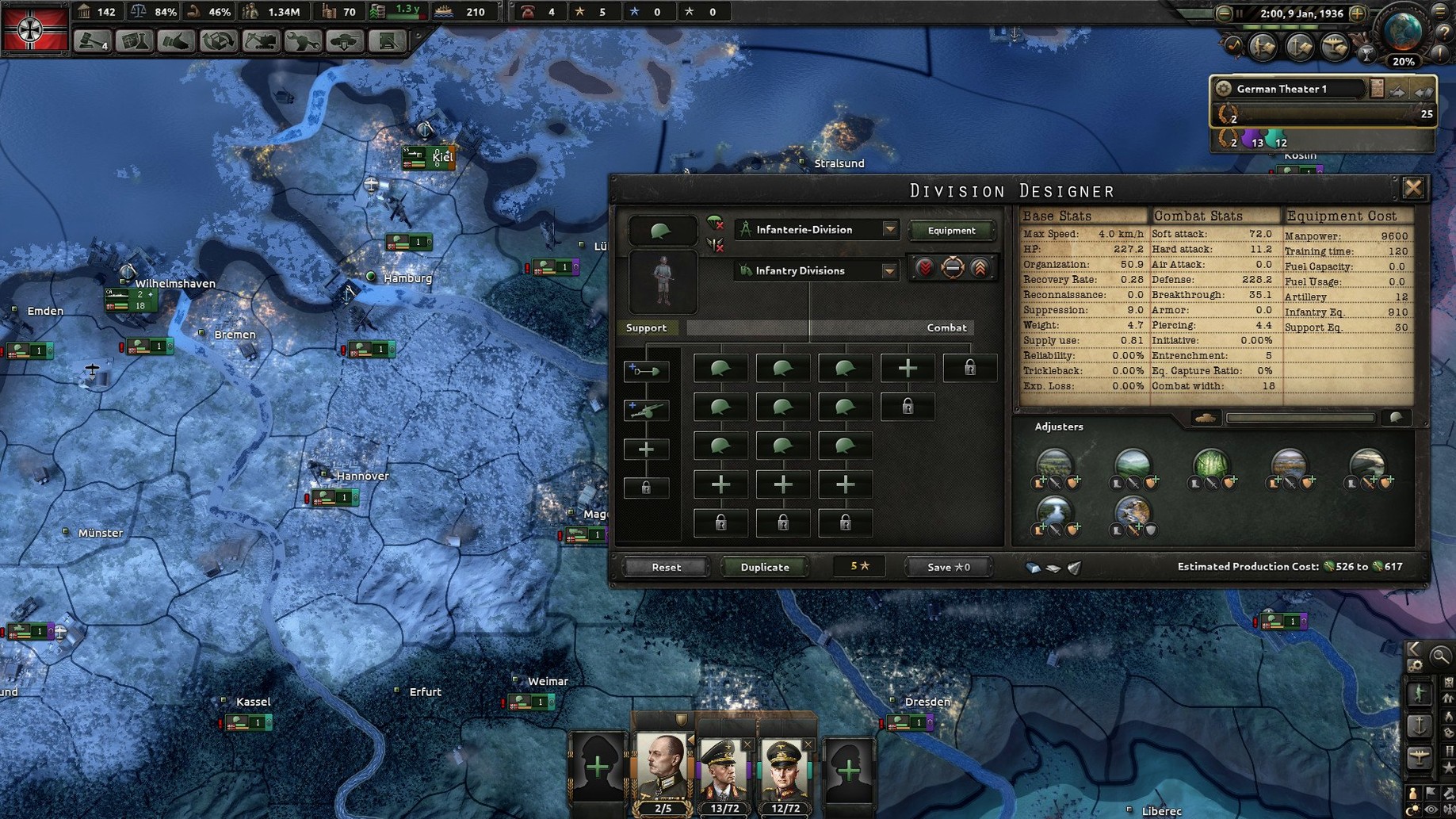
Most war games hand you a rifle and a squad. Hearts of Iron IV hands you a nation and a calendar. The problem it solves is one of oversight: how do you steer a country’s industry, diplomacy, research and military command through the Second World War when every choice pulls at the others? It is a game for the player who wants to plan a production line, not pull a trigger.
The appeal sits squarely with those who enjoy studying maps and charts, adjusting trade laws and waiting for a tank division to reach full strength before committing it. If you find satisfaction in reorganising a command structure, this is your territory. The game models fronts, supply lines and political tensions at a scale where individual battles are beneath your direct control.
It will feel slow and opaque to someone wanting immediate action or a guided narrative. There is no campaign that walks you through events. You set your own goals — perhaps to hold France as a minor power or to push Japan back across the Pacific — and the tools are there, but the game does not tell you what to care about. The music-only voice language reinforces the sense that you are alone with your plans.
A minor power’s dilemma
Consider a player who has already led Germany to Moscow and back. They know the big campaigns. Now they pick Australia in 1936, not for a grand conquest but to hold the Pacific while Britain falters. The southern hemisphere feels remote, and the industrial base is threadbare. Dockyards take months to finish a single destroyer. The real question is not how to win the war but how to be useful enough to the Allies before Japan’s fleet arrives.
That kind of asymmetric challenge is where Hearts of Iron IV reveals its depth. The player must weigh lend-lease requests, prioritise infantry equipment over naval bombers and decide whether a division sent to North Africa will matter more than one kept at home. The secret path added in 1.19.3 opens an alternative historical thread, letting Australia lean harder into regional self-sufficiency — but the trade-offs are sharp, and the timeline is unforgiving.
A session at the desk
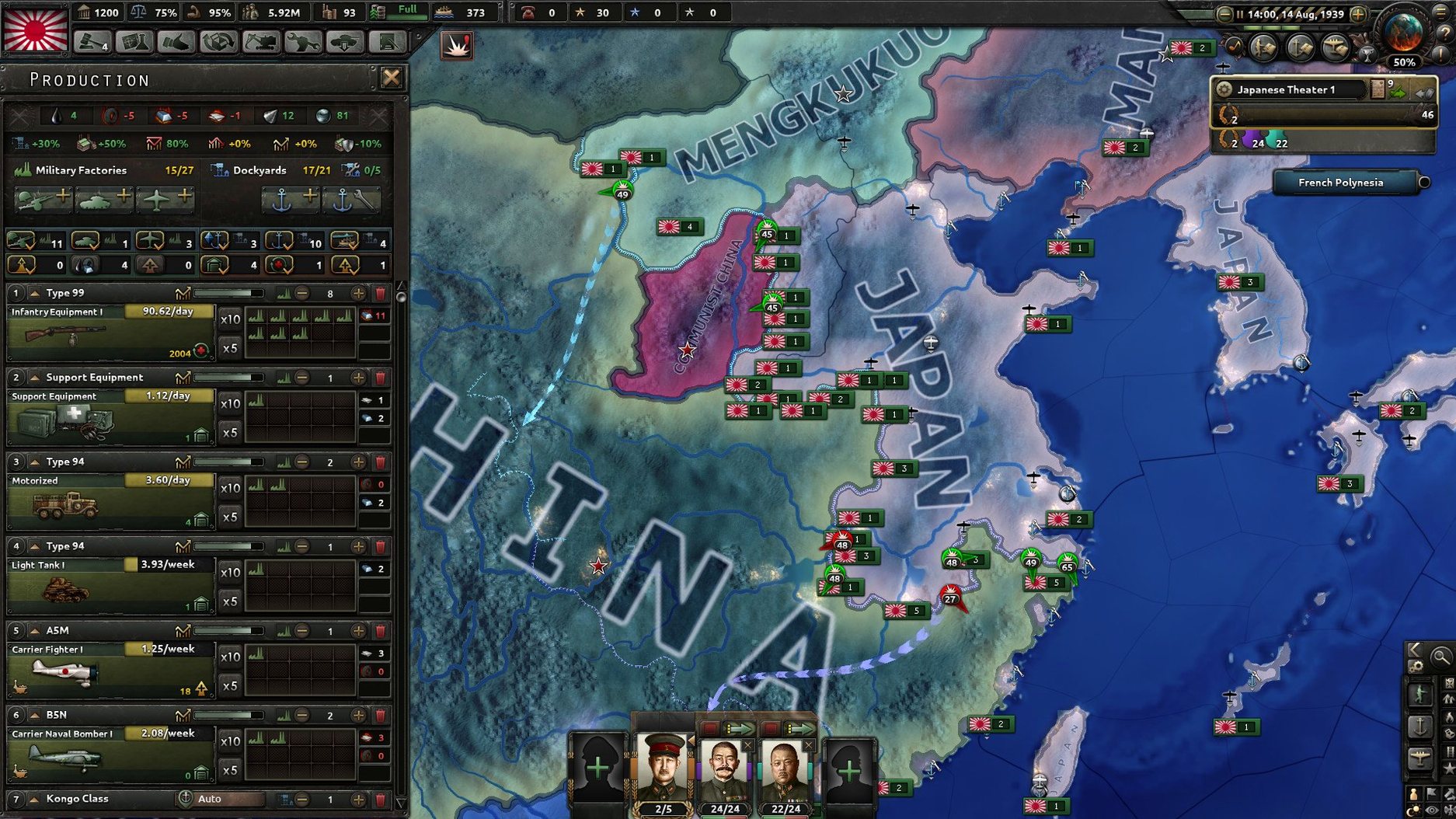
You launch the game through the dowser file and select Australia from the 1936 start. The map fills the screen, centred on Canberra, but your attention drifts immediately to the production tab. Only three military factories are available. You queue infantry equipment, support gear and a trickle of artillery. The navy screen shows two heavy cruisers and a handful of old destroyers. No carriers. No submarines.
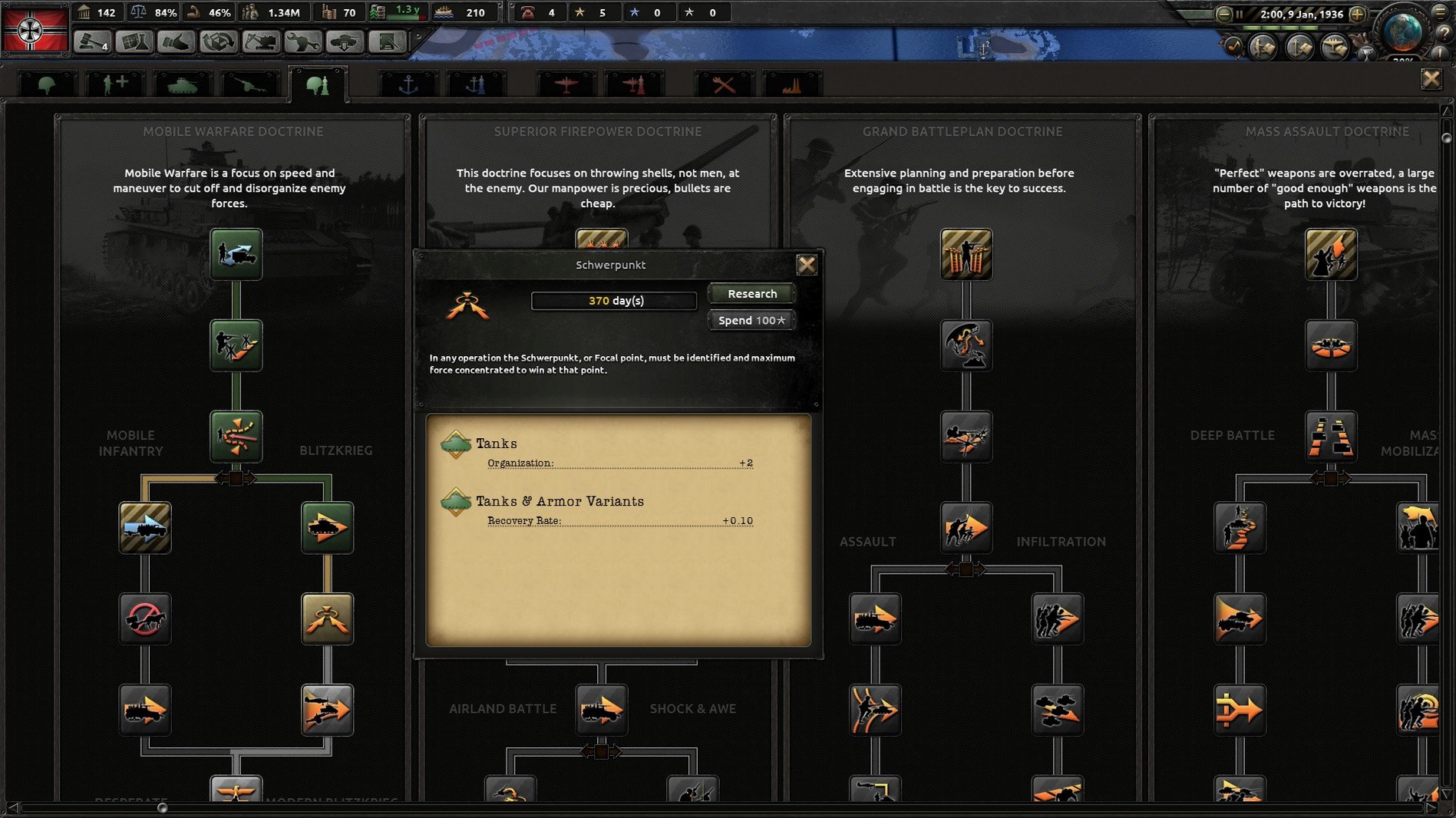
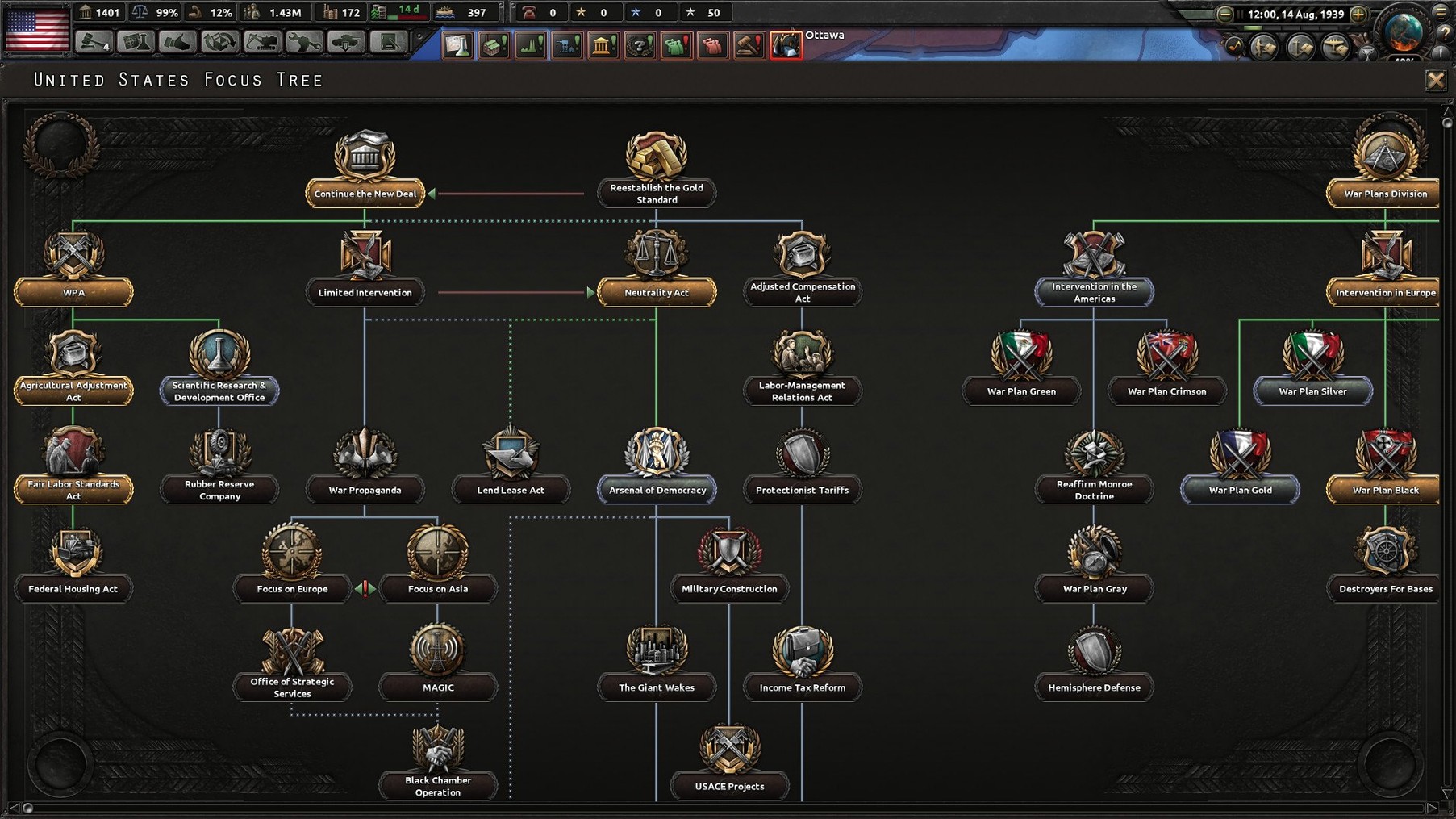
Time runs at speed three while you assign a research slot to basic machine tools and a second to fighter aircraft — you will need interception over Port Moresby. The focus tree sits open. You decide on the path that strengthens domestic industry rather than tying Australia closer to London, a move the new patch supports. The political power counter climbs slowly; you spend it on a partial mobilisation law, knowing the manpower will not arrive for months.
By 1939 you have scraped together twelve infantry divisions, most half-trained. A naval invasion warning appears: Japan is probing the Solomon Islands. You pause. The supply map overlay shows sparse infrastructure in the region. You order two divisions to Guadalcanal, set a defensive line and return to the factory queue, hoping the garrison holds until American reinforcements appear. The session runs two hours. You never fire a shot yourself.
Rosetta 2 performance on an M4 Mac mini
Does the game run on modern Mac hardware? The build uses x86 64-bit architecture and was tested on a Mac mini 2024 M4 running macOS Tahoe. Rosetta 2 handles the translation layer, and performance holds steady during the early and mid-game, though late-war slowdowns are possible when thousands of divisions are active worldwide. The interface remains responsive when zoomed to the division level.
How steep is the learning curve? It is steep enough that most players spend the first few hours bewildered. The tooltips help, but the game assumes you understand concepts like combat width, organisation and breakthrough. A player who has spent time with grand strategy titles will adapt faster; someone coming from real-time tactics games will need patience. The tutorial nation, Italy, provides a structured starting point, but many people learn more by picking a small neutral country and pressing buttons to see what breaks.
Is it playable without expansions? The base game in version 1.19.3 includes years of free updates, and the core loop — production, research, division design and warfare — works fully. Focus trees for major powers are detailed, and the new content for Siam, Indonesia and Australia sits in the base patch. Expansions add alternate history branches, espionage systems and ship design tools, but none are required to run a campaign from 1936 to 1948.
Narrower timeline, deeper logistics than Crusader Kings III
Compared with Crusader Kings III, another Paradox title native to macOS, Hearts of Iron IV is narrower in time and wider in logistical detail. Crusader Kings III models dynasties, personalities and feudal politics across centuries. Hearts of Iron IV compresses its scope to roughly a decade and directs attention toward industrial output, division templates and theatre-level command. A player who prefers character-driven stories will drift toward the Crusader Kings series; one who wants to manage a war economy will stay here.
Set beside Total War: Three Kingdoms, the difference sharpens further. Total War splits its time between turn-based empire management and real-time tactical battles where you manoeuvre individual units. Hearts of Iron IV never zooms to the battlefield. It trusts the numbers. The Total War player commands cavalry charges; the Hearts of Iron player adjusts reinforcement priority and supply throughput. Both reward strategic thinking, but the tempo and texture are entirely distinct.
Against Victoria 3, which covers the nineteenth century and early industrialisation, Hearts of Iron IV feels more focused and more martial. Victoria 3 builds its tension around economic simulation, political movements and diplomatic plays. Warfare there is strategic but abstracted. Hearts of Iron IV puts the front line on the map and asks you to draw the arrows. Someone who found Victoria 3’s warfare too hands-off may find the operational control here more satisfying.
Version 1.19.3 expands late-game possibilities for Siam and Indonesia and adds a secret path for Australia, so even familiar nations gain new strategic wrinkles.