Aspecten
 Download (264 MB)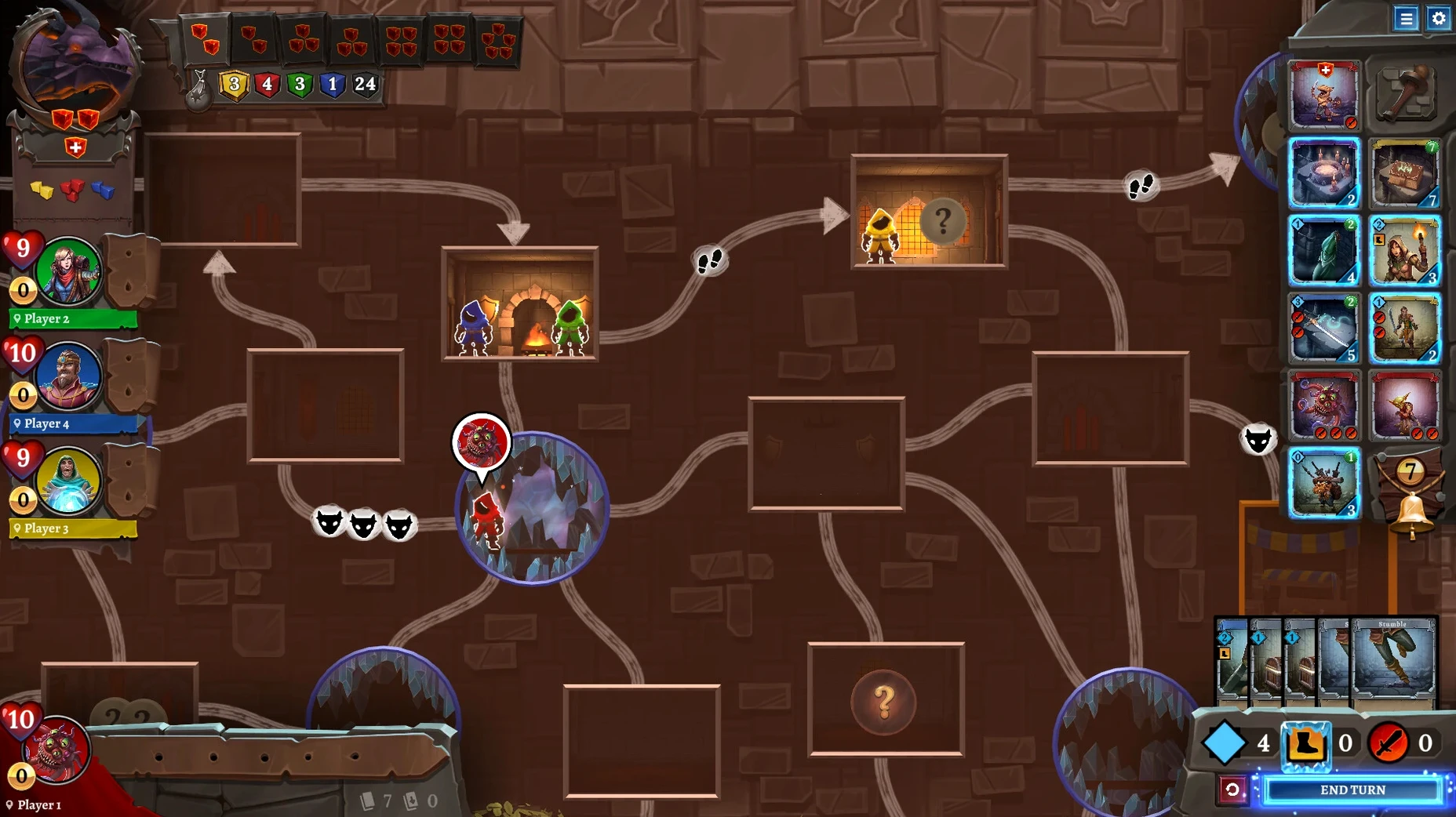
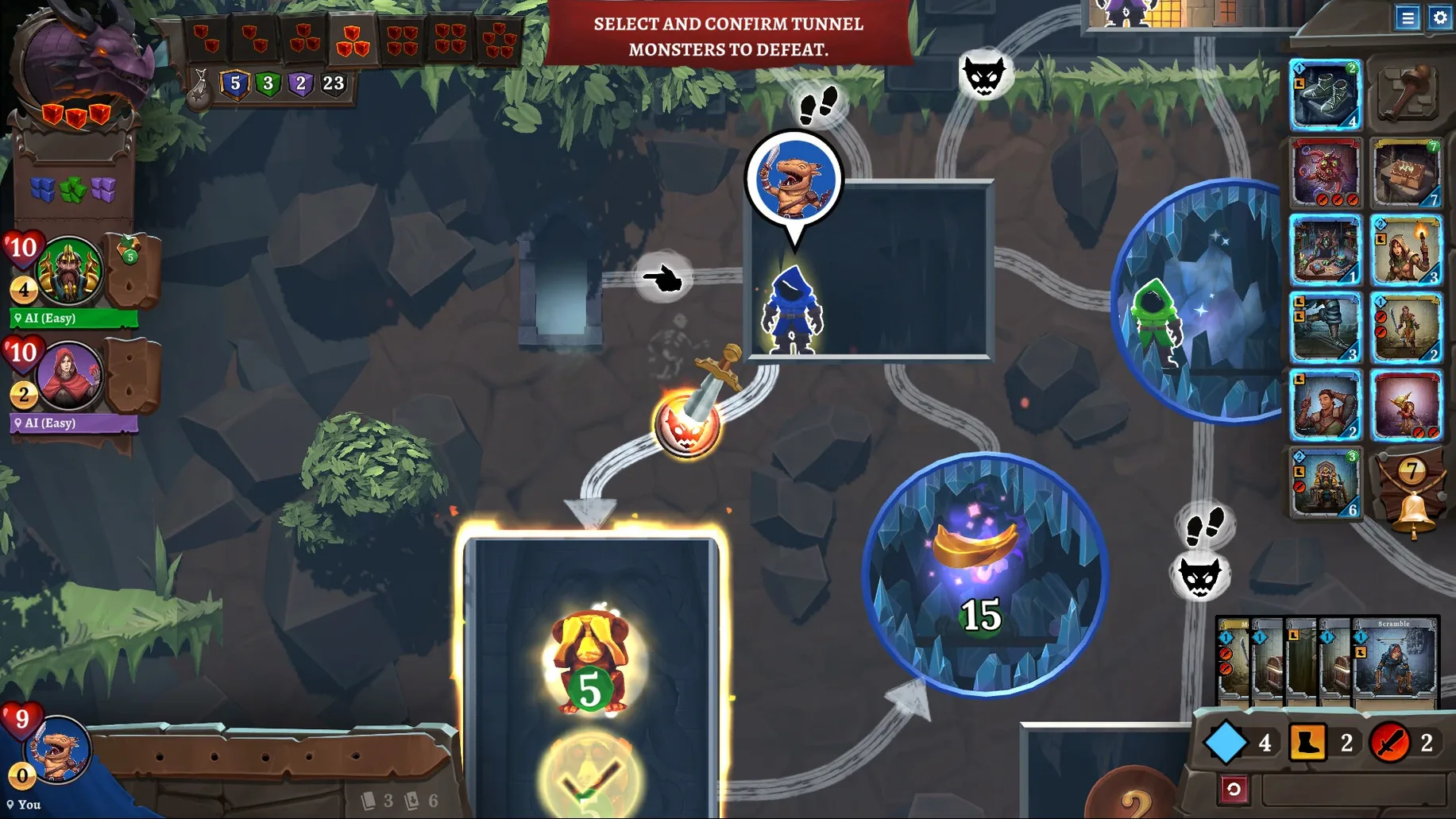
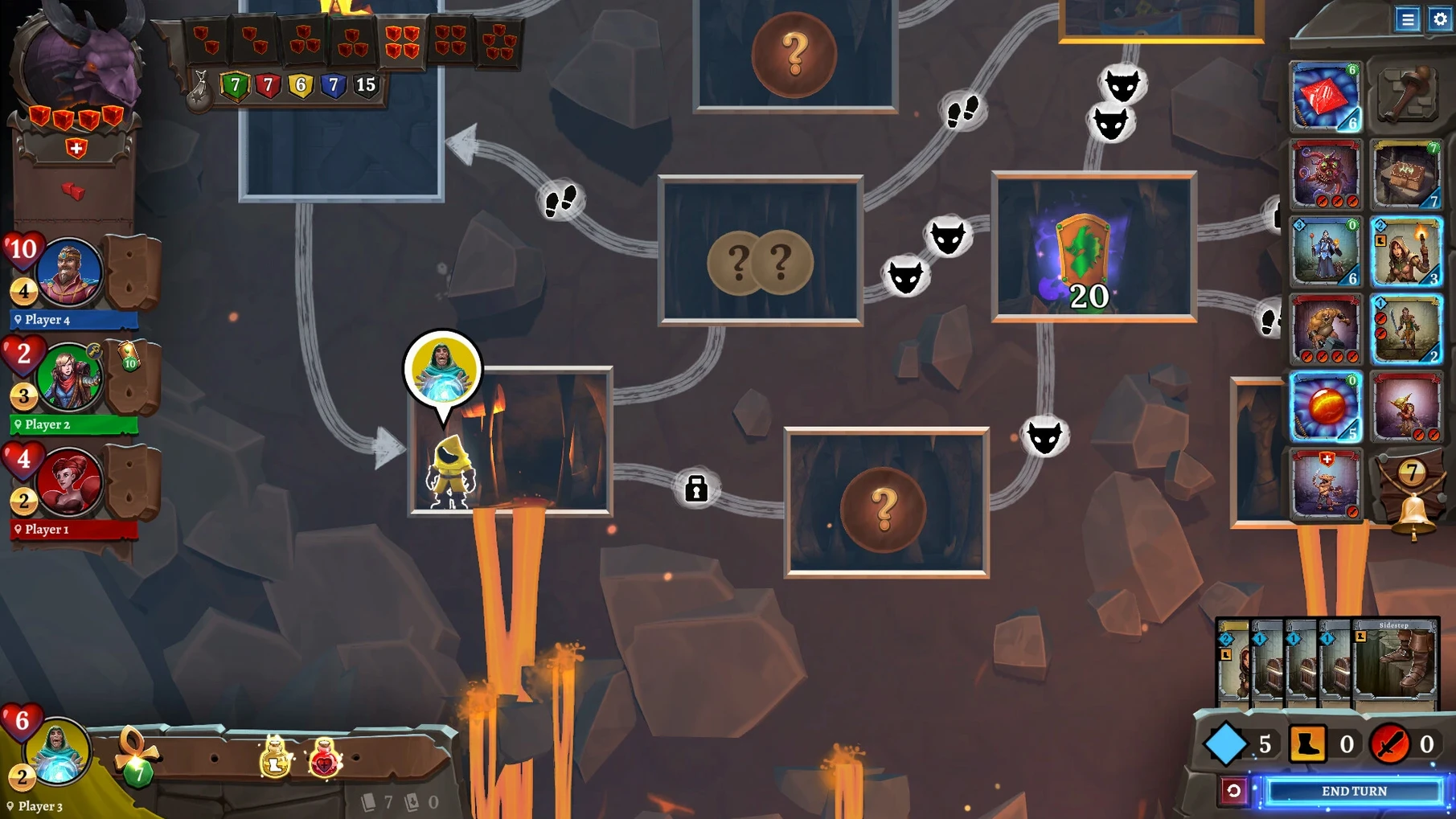
You draw a hand of cards and send your thief deeper into the dungeon. A ruby glints in the dark, but every step risks a rattle of chains — the dragon stirs. The board is alive with paths you could take, and your deck is still thin.
1. Learn the loop
Clank! layers deck building onto a physical board. Cards give you skill points to buy better cards, swords to fight, and boots to move. Every move into the depths generates clank — little cubes that go into a bag. The tutorial walks through this cleanly, pausing to explain each card type and the damage system.
2. Push your luck
Your goal is to grab an artefact and get out. A deeper artefact is worth more, but the climb back is longer. When the dragon attacks, cubes are drawn from the bag: your clank cubes mean damage. A silent, careful deck might sneak past, but bold runs make the game sing.
3. Take it online
Cross-platform play lets you join friends on other devices or match with strangers. The interface handles card selection and movement with simple clicks or drags. Music accompanies each session, though you may turn it down after the tenth game.
Shared bag pressure over timer stress
A player who enjoys a board game rhythm — turns, phases, a clear set of actions — will settle in quickly. The pressure comes from the shared bag of cubes, not from a timer. Someone expecting a fast action game might find the pace too deliberate. The Mummy’s Curse expansion adds a new board and a curse mechanic for those who have mastered the base game.
Offline AI opponents keep solo play intact
One of the first things people ask is whether the game runs offline. It does. You can play against AI opponents with no internet connection at all, and the solo experience holds up well because the turn structure and the bag draws stay exactly the same. Online multiplayer is there when you want it, but nothing in the base game demands a connection.
Another common question is about the difficulty curve. The tutorial teaches the rules in a single session, and the AI offers a range of skill levels. A new player can lose a few rounds while learning which cards thin the deck and when to turn back toward the entrance, but the system never feels unfair. Damage comes from the cubes you chose to put in the bag, not from random events outside your control.
People also wonder about cross-platform matchmaking. The game pairs Mac users with players on other systems without any extra steps. A friend on an iPad or a Windows machine appears in the same lobby. The matchmaking pool is modest in size, so finding a quick game works best during evening hours in European and North American time zones.
Finally, there is the question of expansions. Version 2.2.2 includes the base board and the full card set. The Mummy's Curse expansion sits alongside as a separate board with its own curse track. You can ignore it entirely and still have a complete game. Some players who grabbed the clank mac torrent wondered if expansions were included — they are, and they activate from within the app with no extra steps.
Right-click for full card rules instantly
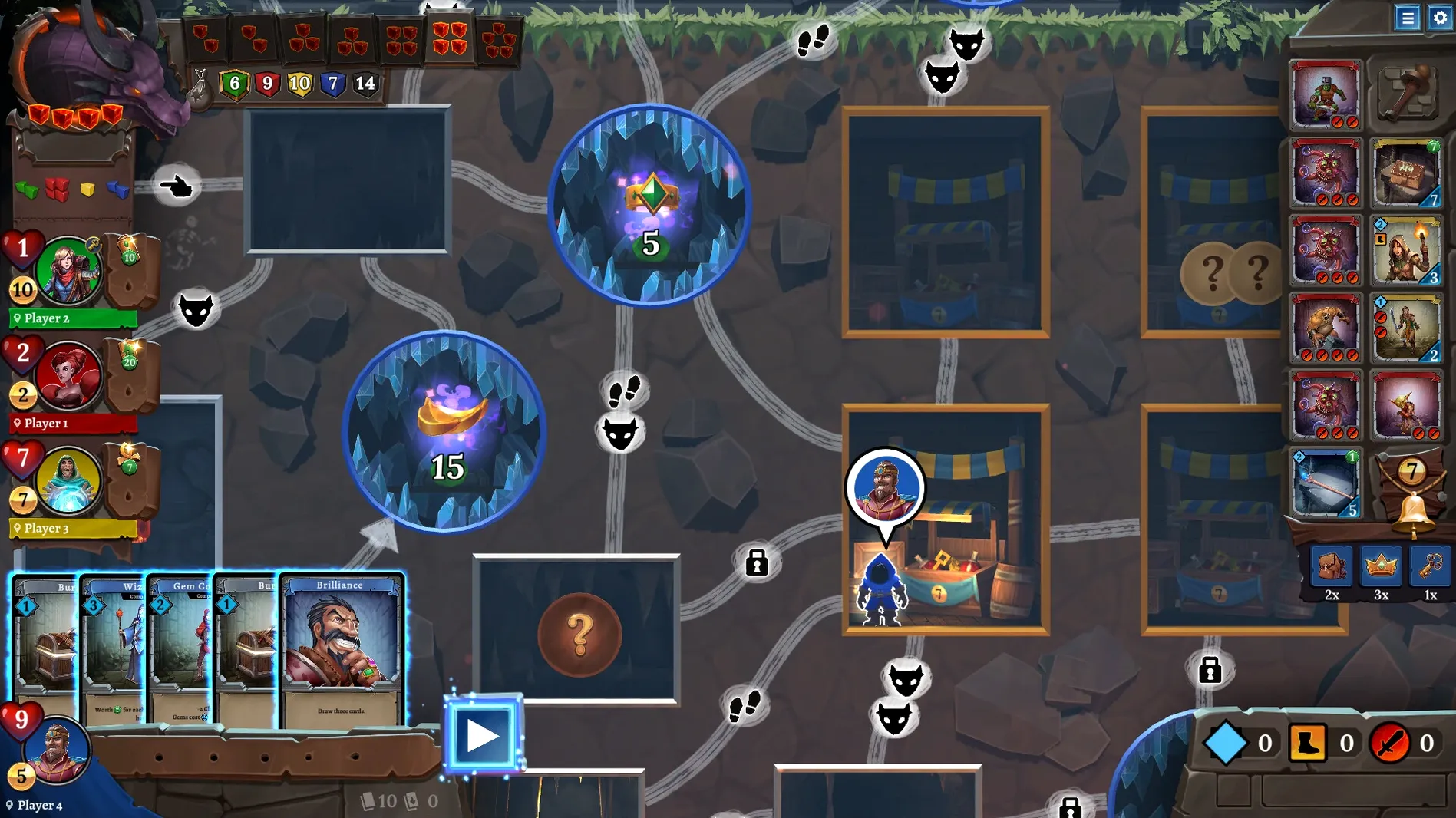
A right-click on any card in your hand pulls up a full-size view with the rules text clarified. This is faster than hovering and waiting for a tooltip, and it helps when a card has two effects that resolve in a specific order. The same right-click works in the market row when you are deciding what to buy with your skill points.
Pressing the spacebar during an opponent's turn speeds up their animations. The dragon's attack phase can drag a little when three other players have loaded the bag with clank cubes, and a quick tap skips the slow reveal without removing the tension — you still see the result, just faster. Holding the spacebar keeps the acceleration on for the whole sequence.
The deck tracker sits in the lower-left corner and shows every card you have played, bought and discarded. Click it once to expand a full list sorted by type. This matters when you are counting how many movement points might come up in the next shuffle. A small number on the tracker shows your current clank total, updating live as you move and play cards.
Drag-and-drop works for movement, but the arrow keys do the same job. Tapping the right arrow steps your thief one room forward along the current path, and the game highlights valid branches. If a fork demands a decision, the arrow stops and waits. This spares you from misclicks when the board gets crowded with three other thieves and the dragon token.
A workflow: snatching the deep artefact and escaping
You start the run with a specific plan: reach the 30-point artefact in the depths and get out before the dragon knocks you out. The first four turns matter more than they look. Spend your early skill points on cards that give boots first, swords second. Cards like Explore and Scout push you deeper without generating much clank, and they cycle fast.
Ignore the early market trinkets that cost two or three skill and offer only victory points. You are building a movement engine, not a point salad. By turn six you want at least two cards that generate three or more boots in a single hand. This lets you cross the underground river in one turn instead of two, saving a full round of dragon draws.
When you reach the depths and grab the artefact, pause. Check your deck size and your health. If the deck is bloated with low-value cards from early buys, the climb will be slow. Use cards that let you trash other cards — Burgle is a favourite here — and thin your deck on the way up. Move along the upper path where possible, because it has fewer crystal caves that tempt you to linger.
The last stretch back to the entrance is a race against the bag. Every turn you stay inside adds another round of dragon attacks. If you have a clank count above six, expect to take damage. Spend swords on goblin encounters to clear the path, but do not detour for minor treasures. The escape bonus for getting out alive often decides the final score, and a dead thief hands the win to whoever limped out first.