Aspecten
 Download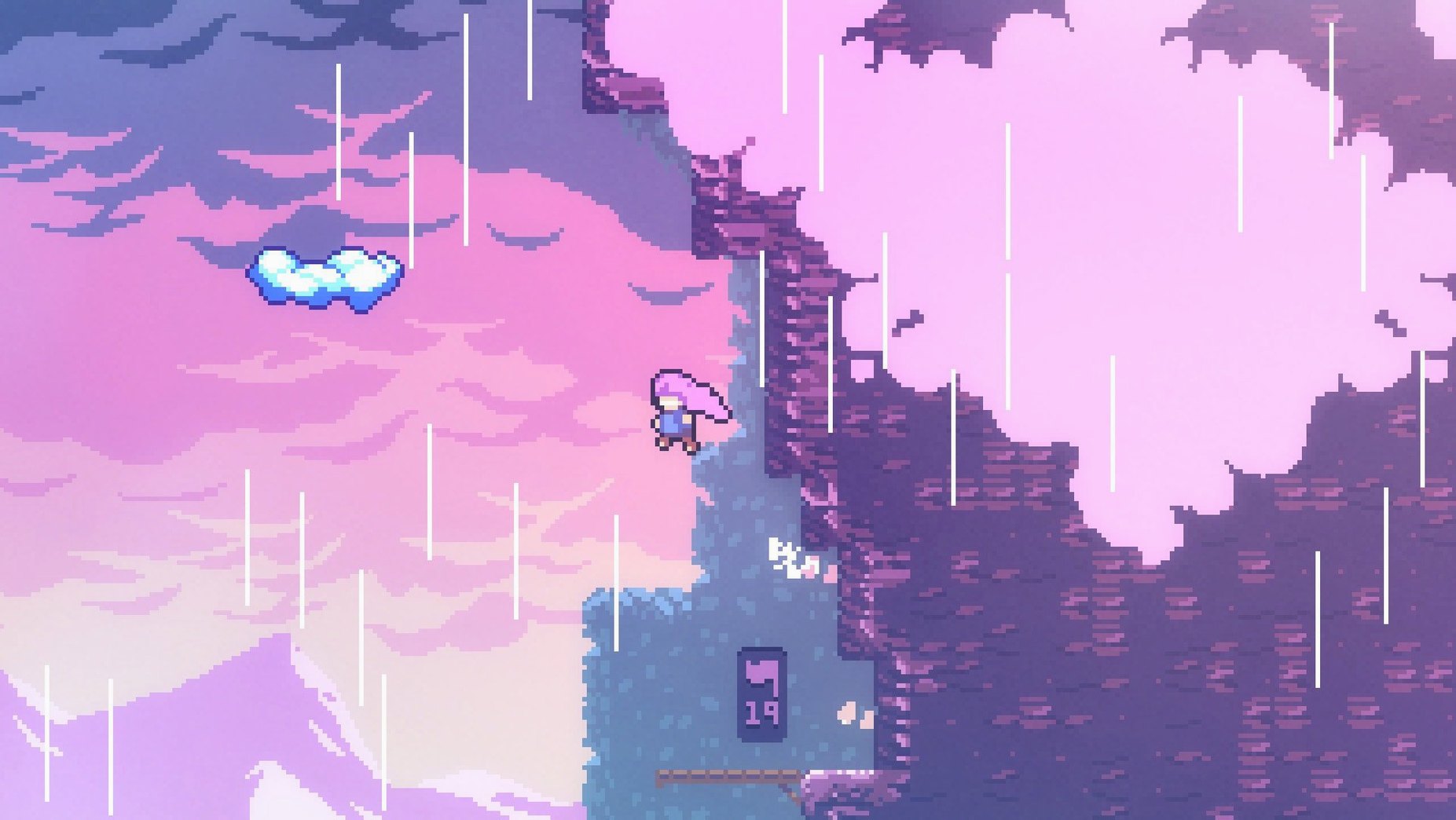
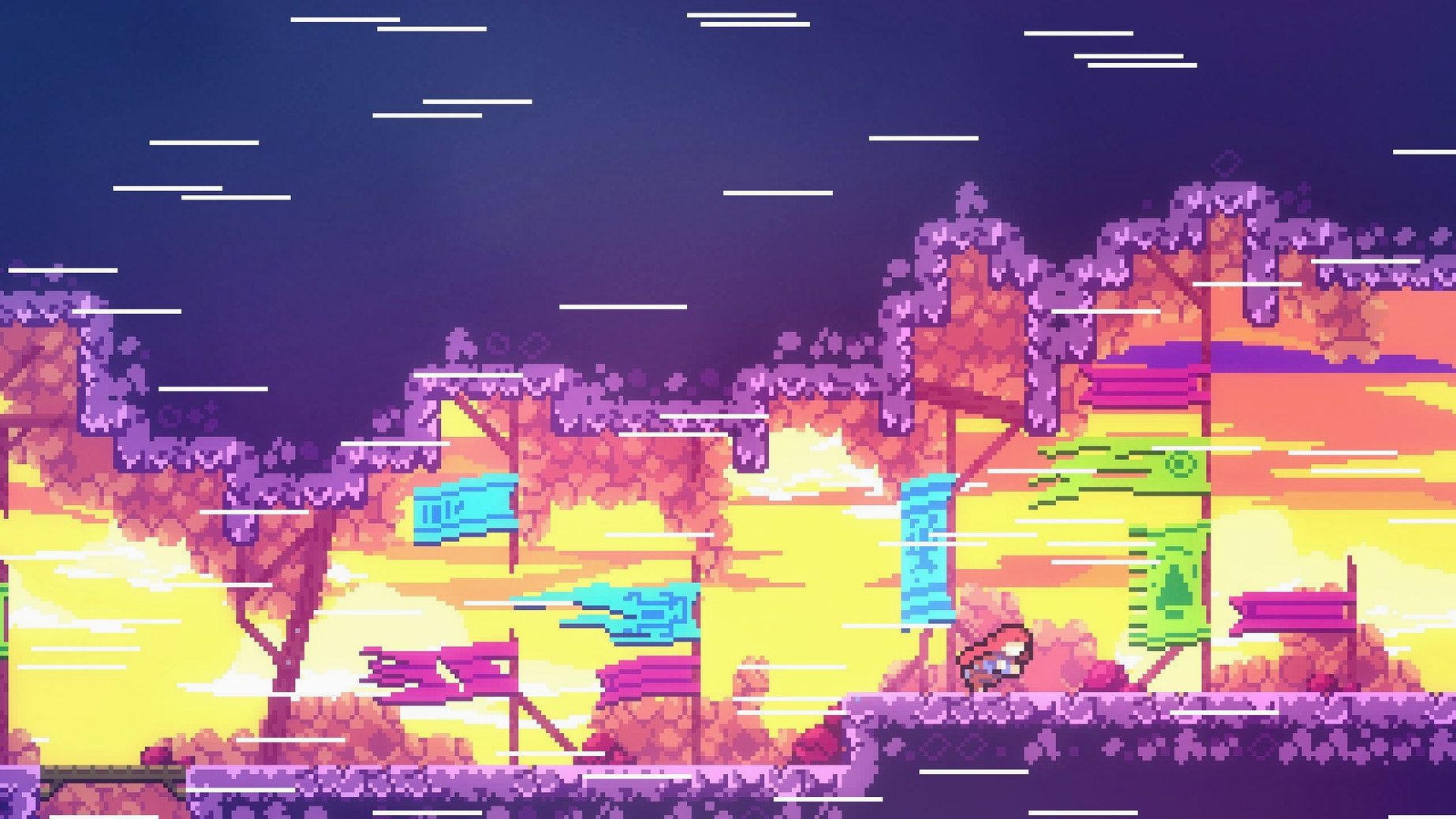
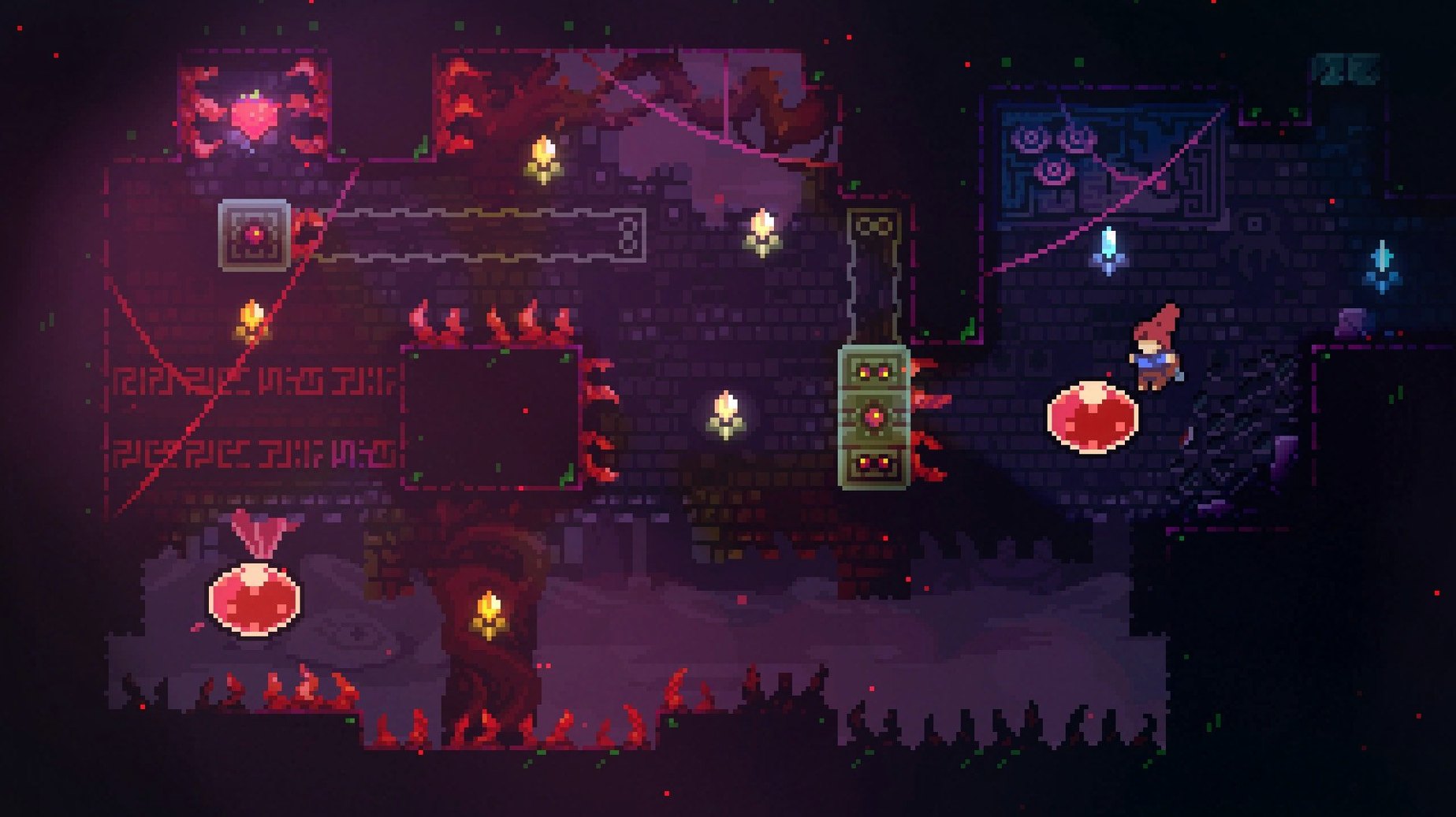
Climb with purpose
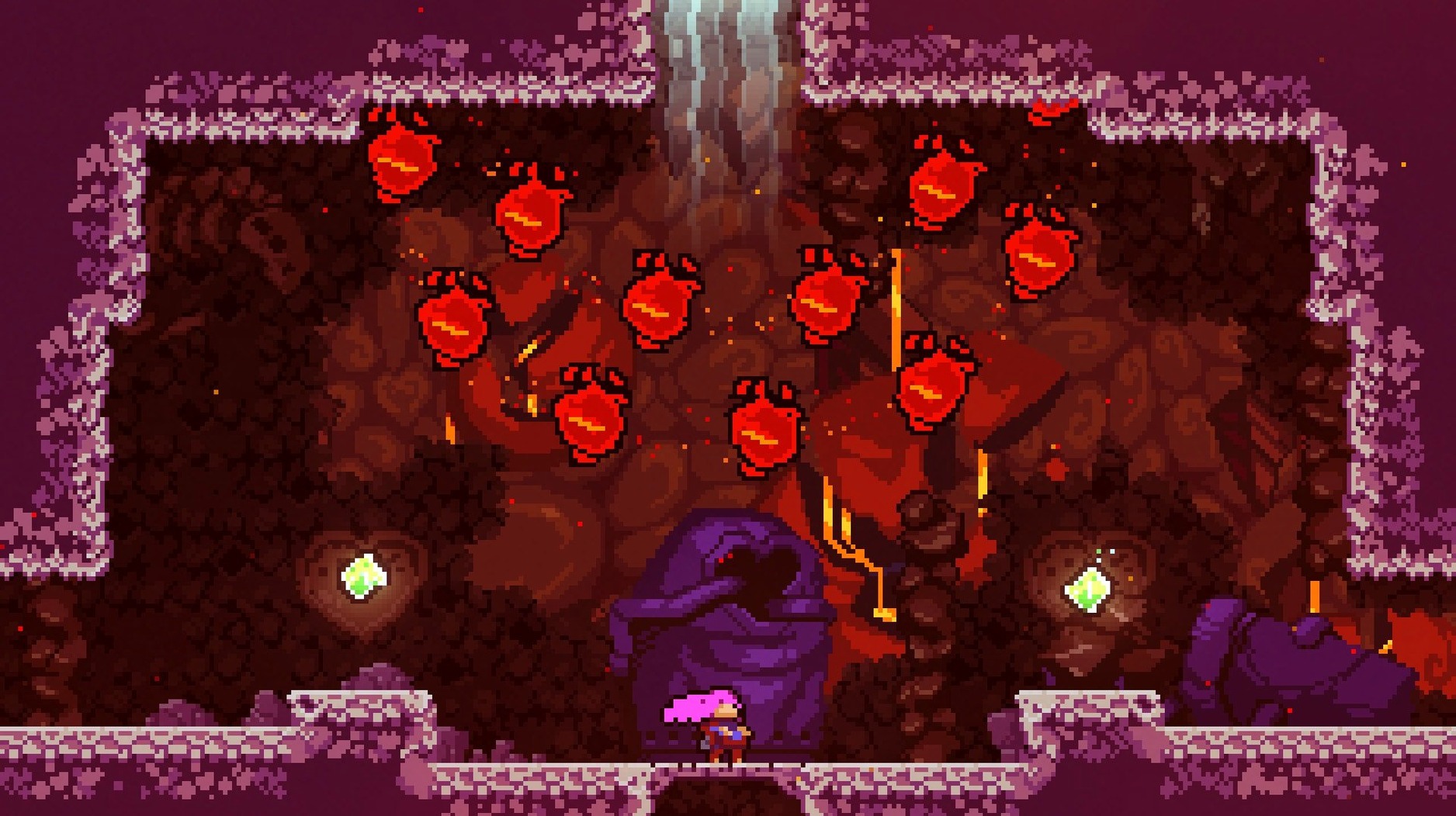
You play as Madeline, setting out to reach the summit of Celeste Mountain. The journey is as much about navigating her inner doubts as it is about clearing the next screen of spikes and crumbling ledges.
Master the simple moves
Madeline can jump, dash and cling to walls. The controls feel direct and responsive, which matters because the game asks you to chain these actions precisely across hundreds of rooms. A mistake sends you back to the start of the screen, not the start of the chapter, so the loop stays tight.
Decide if the friction fits
This is a demanding platform game from the creators of TowerFall. It will appeal if you find satisfaction in repeated attempts and gradual mastery. It may frustrate if you prefer a relaxed pace or dislike retrying a section until your timing is exact.
Intel build runs fine on Apple Silicon through Rosetta 2
One of the first things people ask is whether the game runs on a Mac with Apple Silicon. The build is Intel-only, but it was tested on macOS Sonoma with an M1 MacBook Air and works through Rosetta 2 without extra steps. No one has to dig through settings or install a compatibility layer manually.
A related concern is the keyboard layout. The game expects a US layout when it first launches. If you use a different layout — German, French, Spanish — switching to US before starting avoids stuck inputs in menus and the early tutorial screens. You can change back afterwards, but the initial boot checks the current mapping.
People also ask about difficulty and accessibility. Celeste includes an Assist Mode that lets you adjust game speed, give yourself extra dashes, or become invincible. It sits in the menu from the start, not locked behind progress. The game does not judge you for using it. Steam Deck and controller questions appear often too; any standard Bluetooth controller that macOS recognises tends to work, though the d-pad on some third-party pads feels less precise for diagonal dashes than the official Xbox or PlayStation controllers.
Some searches simply look for a celeste free download mac or a celeste torrent to try before committing space. The download is straightforward: mount the disk image and drag the app to Applications. That is all. There is no activation, no online check, no launcher. A celeste mac torrent gets you the full game with all chapters and the soundtrack included in the package.
Hits 60 fps even on older integrated graphics
On an Intel Mac the game starts in under three seconds and stays locked at 60 frames per second even on integrated graphics from 2015 or later. On Apple Silicon the Rosetta translation adds a barely perceptible warm-up of a second or two on first launch; after that, frame pacing is smooth and consistent. The fan rarely spins up on a MacBook Air, and on a MacBook Pro the system stays quiet throughout a two-hour session.
Memory use sits around 350 MB, which means you can leave it running behind other apps without swapping pressure. The disk footprint is modest — under a gigabyte — so it does not compete with larger creative tools for space. The only resource note worth mentioning is that the game keeps the GPU awake, so a MacBook running on battery will drain faster than during light desktop work. Expect roughly four to five hours of play on a full charge with a recent MacBook Air.
Stability is uneventful. Crashes are rare, and the few reports trace back to custom controller drivers or input remappers that intercept the game’s direct input reading. Disabling those utilities before launching sorts it. The game saves progress at the start of every screen, so even an unexpected quit costs you at most one room of progress.
Each screen is a self-contained puzzle that rewards experimenting
Players who enjoy deconstructing a challenge into smaller pieces connect with Celeste immediately. Each screen is a self-contained puzzle of timing and positioning, and the game never punishes you for experimenting. If you are the kind of Mac user who tweaks keyboard shortcuts, remaps controls or enjoys shaving seconds off a repeated task, the rhythm of retrying a dash sequence feels familiar and satisfying.
It also suits people with limited play sessions. Because progress saves per screen, you can open the game, clear a handful of rooms in ten minutes, and close it without losing momentum. The structure rewards short bursts as much as longer sessions.
Speedrunners find a deep set of mechanics to exploit — wall jumps that preserve momentum, dash techniques that cut corners, hidden routes that skip entire sections. The game was built with that community in mind, and the movement system holds up under scrutiny.
Conversely, someone looking for exploration without pressure may bounce off the core loop. The story touches on anxiety and self-doubt, and the gameplay mirrors that tension. If you prefer a platformer where the world carries you forward rather than one that asks you to earn every metre, the friction here might feel more draining than motivating.
Alongside similar Mac platformers
Compared to Hollow Knight, Celeste keeps its scope tight. Hollow Knight spreads across a sprawling, interconnected map with combat upgrades and lore tucked into every corner. Celeste replaces that breadth with vertical focus — one mountain, one move set, no combat outside a few boss-like sequences. Where Hollow Knight asks you to remember paths and backtrack, Celeste asks you to execute the next screen perfectly. Both reward persistence, but Celeste’s loop is shorter and more immediate on a Mac where you might only have fifteen minutes free.
Next to Super Meat Boy, the difference lies in tone and precision. Super Meat Boy demands twitch reflexes and a tolerance for chaotic, slippery momentum. Celeste feels more deliberate; the dash gives you a moment of control mid-air, and the wall cling lets you pause and assess. Both games reset you quickly after death, but Celeste’s rooms are designed to teach a specific idea, whereas Super Meat Boy often throws multiple hazards at once and asks you to thread through them. Mac players who found Super Meat Boy too frantic often settle into Celeste’s pace more comfortably.
Measured against Shovel Knight, Celeste strips away inventory management and combat stances. Shovel Knight wraps its platforming in a retro action-adventure structure with shops, relics and NPC interactions. Celeste stays purely mechanical — you have the same tools on screen one as you do on screen seven hundred. The music in both is exceptional, but Celeste’s two-hour soundtrack by Lena Raine carries the emotional weight of the ascent, while Shovel Knight’s chiptune score drives a more playful, nostalgic energy. If you want a platformer that never interrupts movement with menus or dialogue trees, Celeste for Mac is the cleaner fit.