Aspecten
 Download (5.6 GB)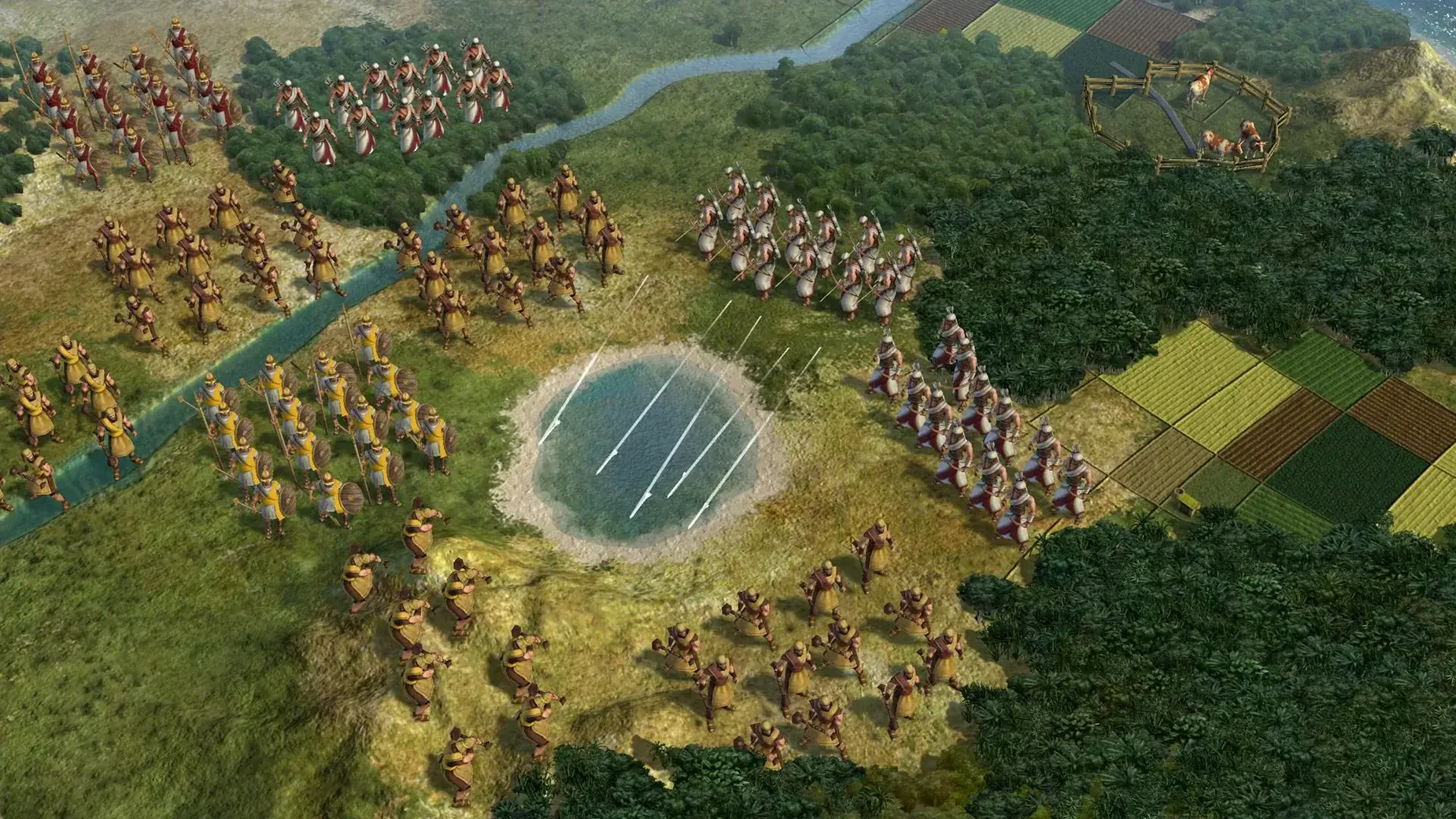
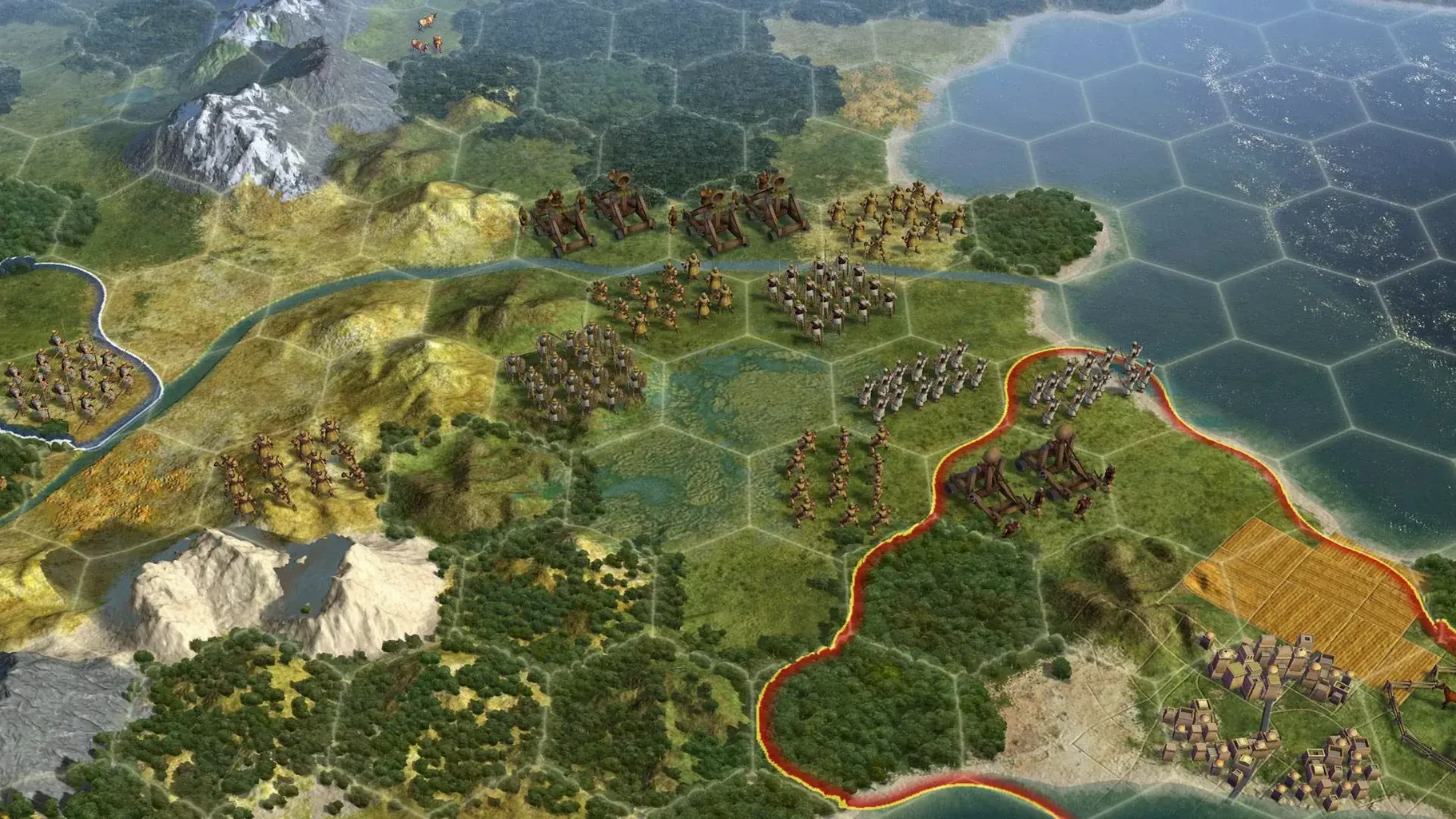

Players who prefer turn-based pacing and long-term planning often settle into Civilization V for entire afternoons. Firaxis designed it as a management sandbox where you guide a society from ancient settlements to the near future, and the Mac version—handled by Aspyr—brings the same unhurried depth to Apple hardware. The 64-bit build runs on modern systems, though knowing a few practical details helps before starting a campaign.
- Performance on Apple Silicon — The game is Intel-only and runs through Rosetta 2. On an M1 MacBook Air it holds a steady frame rate at medium settings, with late-game turns taking slightly longer to process as the map fills with units and city-states.
- Interface and controls — Keyboard shortcuts mirror the Windows version closely, and right-click context menus work with a two-finger tap on a trackpad. The main concession is that scroll-zoom feels less fluid than on a dedicated mouse.
- City management quirks — Each city houses one combat unit, one non-combat unit, one naval unit, and up to ten aircraft simultaneously. Cities can fire on nearby enemies, which shifts the rhythm of siege warfare compared to earlier entries in the series.
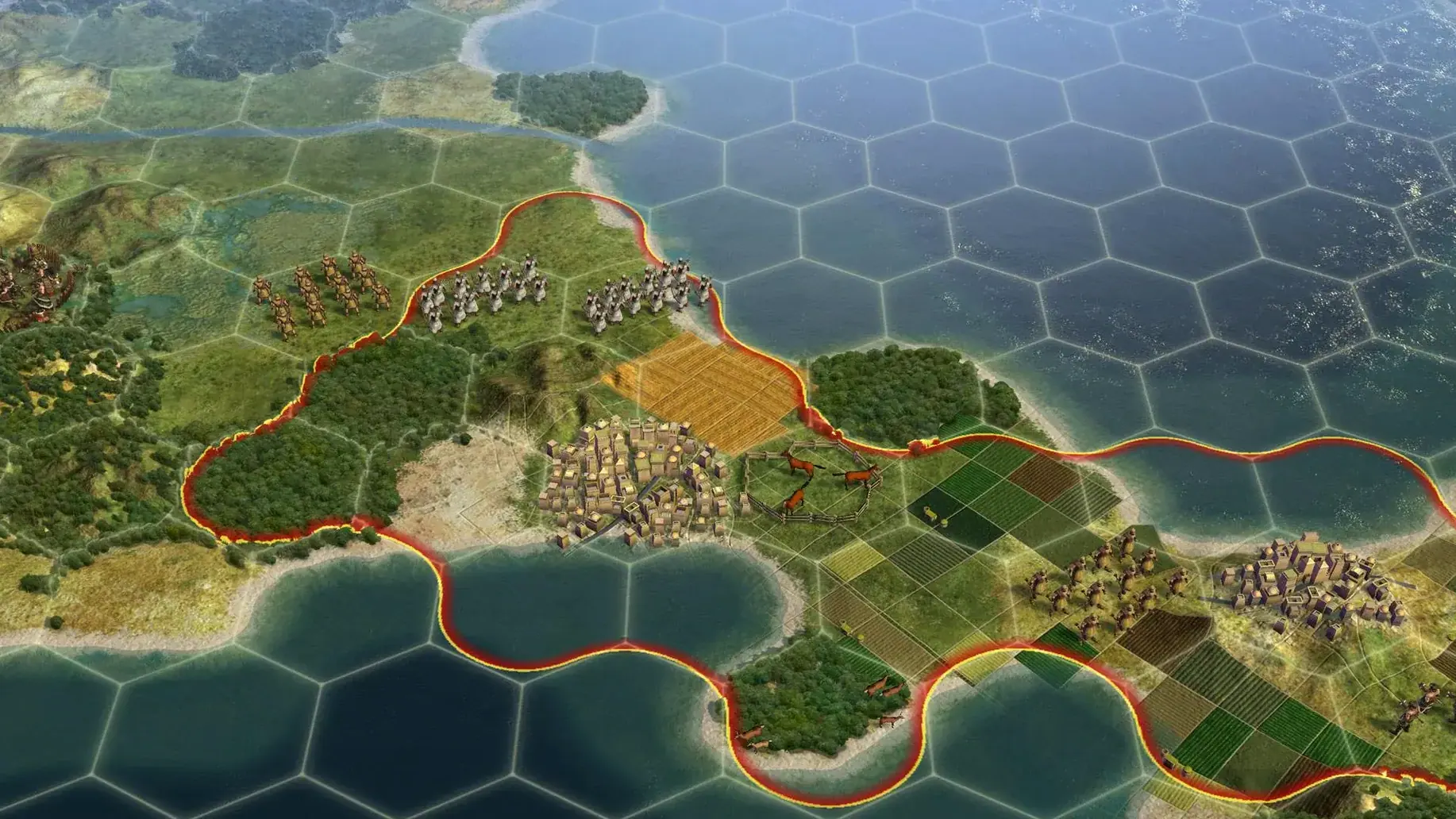
- Territory and razing rules — Borders expand through cultural growth rather than treaty alone. Original capitals and city-state capitals cannot be razed, so capturing them permanently alters the diplomatic map. Razing a regular city takes several turns, during which it remains vulnerable.
- Puppet cities — Conquered cities set as puppets contribute tax income to your capital but follow their own build orders, a useful middle ground when happiness is low and full annexation would strain your empire.
The current build adds Russian language support and includes English, German, and French as well. With Sonoma compatibility confirmed and a modest footprint, the Aspyr port remains a practical way to play on a Mac without leaving the desktop environment.
Favouring tall empires over wide
Civilization V occupies a specific niche among turn-based 4X titles available for macOS. Compared with Civilization VI, the most obvious alternative, the fifth entry favours taller empires — fewer cities developed to a higher degree — while the sequel pushes players toward wide expansion with its district system spreading buildings across the map. City combat in Civ V is more straightforward: one garrison, one ranged attack from the walls, and no district pillaging to worry about. Some players find that cleaner; others miss the spatial puzzle of placing campuses and holy sites.
Against Endless Legend, which also runs on Mac, Civilization V feels more grounded in historical logic than fantasy narrative. Endless Legend offers asymmetric factions with scripted questlines and a winter-summer cycle that reshapes movement each season. Civ V civilisations differ through unique abilities and units but operate within the same tech tree, so the learning curve is flatter. Where Endless Legend rewards replaying each faction like a character class, Civ V rewards adapting a familiar toolkit to new map conditions.
Compared with Stellaris, the timescale and tactical geography diverge entirely. Stellaris unfolds in real time with pause, across star systems rather than hex grids. Civ V's turn-based structure makes continental warfare easier to read at a glance — you see every unit, every turn, with no need to pause and scrub a timeline. For players who prefer a board-game clarity to their strategy, Civ V still holds an edge over Paradox's more fluid model.
A specific workflow: cultural victory with Brazil
A cultural victory run with Pedro II illustrates how the game's systems connect. Start on a continents map with standard speed, aiming to generate tourism before anyone completes the Apollo Program.
- Early turns (Ancient–Classical) — Scout immediately with your warrior and the first built unit. Brazil's jungle start bias slows movement, so prioritise Optics to let embarked units cross coastal waters. Found three cities by turn 80, keeping them close enough to share defensive lines. Build monuments early; culture output compounds.
- Mid-game (Medieval–Industrial) — Rush Acoustics for the Sistine Chapel and Architecture for the Uffizi. Brazil's unique Brazilwood Camp improvement goes on jungle tiles without chopping them, giving gold and culture while preserving the terrain bonus for universities later. Place great works in a single city with a garden and the National Epic to concentrate tourism pressure.
- Late-game (Modern–Atomic) — Adopt Autocracy or Order, then beeline the Internet in the tech tree while sending trade routes to every remaining civilisation. Open borders and shared religion multiply tourism output, so keep a missionary or two on standby for holdouts. If one rival runs away technologically, a targeted war to snipe their capital with battleships can slow them without pulling you into a full-scale slog. Once your accumulated tourism overtakes every other civ's culture total, the victory screen lands — often around turn 320 on prince difficulty.
Scenario: a university student with a twenty-minute gap
Consider a history student with a MacBook Air and a half-hour break between lectures. She runs a small-standard continents game as Elizabeth on a low difficulty setting, keeping the pace relaxed enough to play in short bursts. The game lives in her Applications folder, and she loads directly from the saved campaign each time — no launcher, no online check, just a double-click and a brief Rosetta translation.
One session she faces a barbarian camp spawning on the coast near London. Her warrior is two hexes away, and the city's ranged attack can soften the spearman before the warrior moves in to clear the camp. She queues a worker in the build order, then saves and closes the lid. The whole turn sequence takes under five minutes. Over several weeks, those twenty-minute sessions accumulate into a full campaign — exploration, a brief naval war with Napoleon, and a quiet diplomatic victory facilitated by a string of city-state alliances bought with the gold saved by keeping a lean military.
Expansions included by default
Does the Mac version include the expansions? The Aspyr port bundles Gods and Kings and Brave New World in a complete edition, so the religion, trade route, and ideology mechanics are present by default. No separate DLC downloads are necessary to unlock the full ruleset.
Will it run on an Apple Silicon Mac without problems? Testing on an M1 MacBook Air under Sonoma showed the game launching and running smoothly through Rosetta 2. Late-game turn processing stretches a little — the AI recalculates more paths as the map fills — but the interface remains responsive, and the fan rarely spins up during normal play.
Can I play multiplayer between Mac and Windows? LAN and Hot Seat modes are available, and cross-platform multiplayer works when both players run the same version through Steam. Direct IP connection is also supported, though firewall settings occasionally need a manual exception for Aspyr's network layer.
What languages are included? The current build contains Russian, English, German, and French for both interface text and voice lines. The language switches through the game's own options menu rather than the system locale.