Aspecten
 Download (172 MB)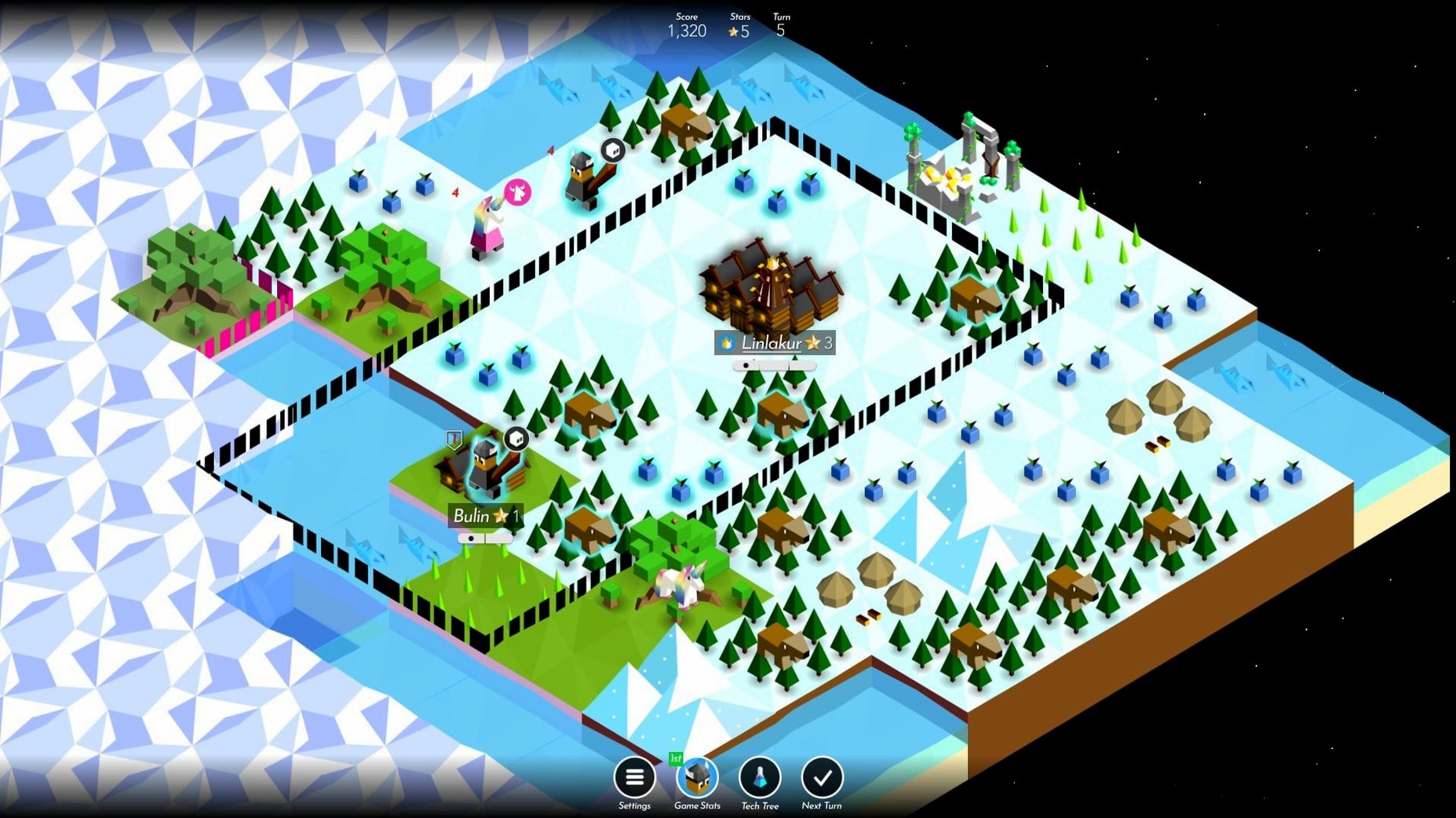
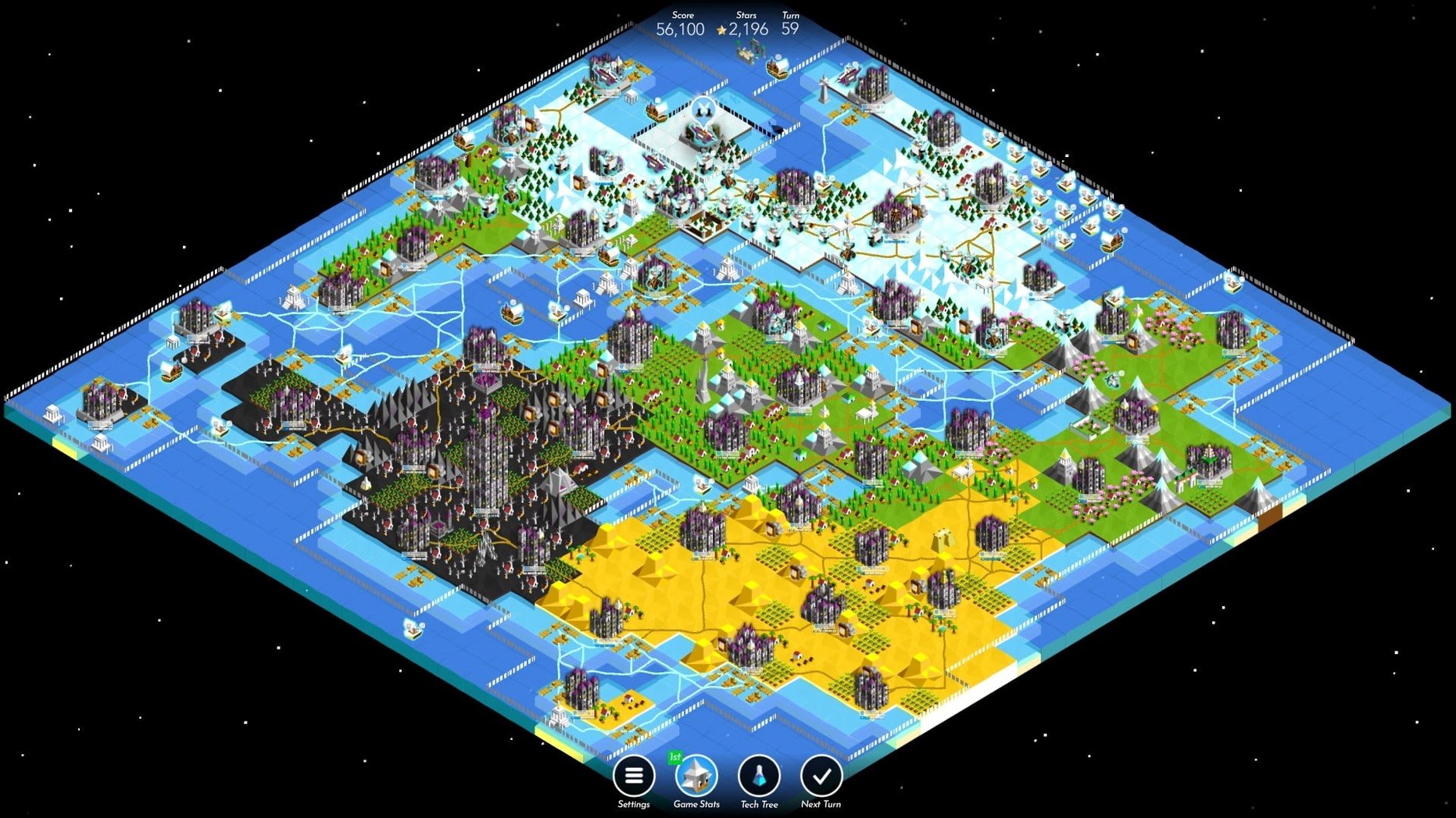
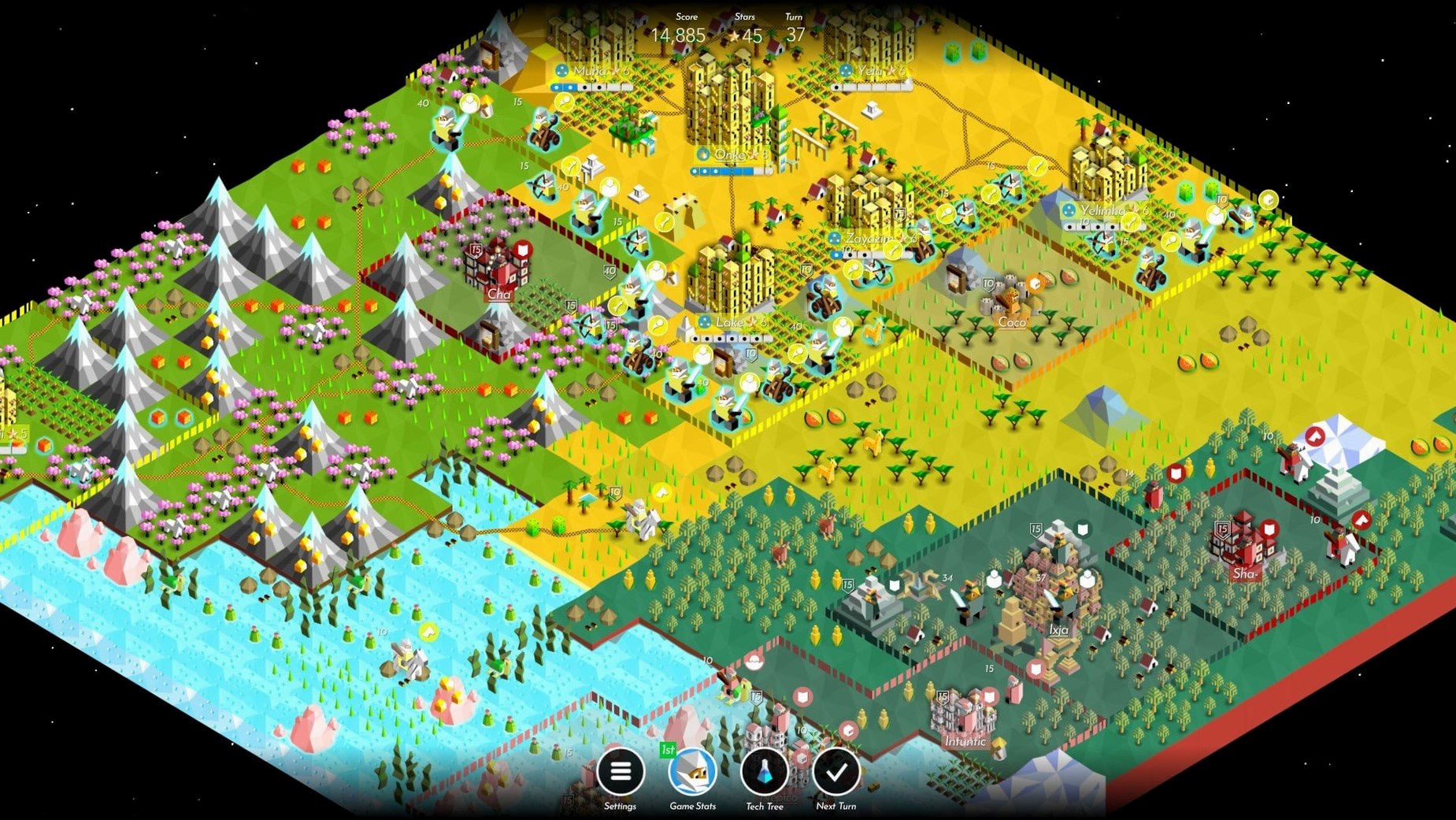
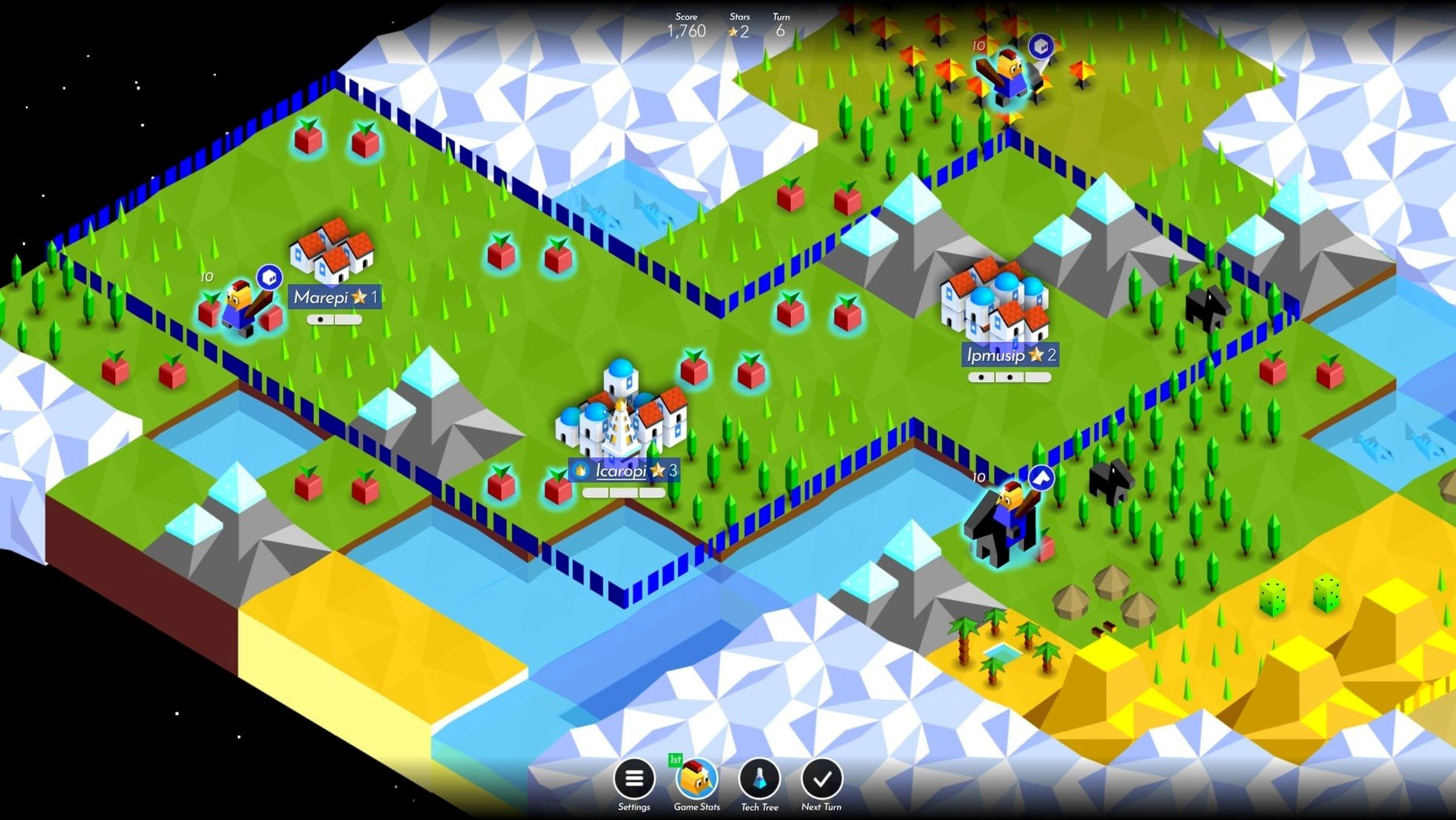
A player who wants a 4X strategy game but has half an hour, not half a day, will find Polytopia's shape appealing. Someone who needs deep diplomacy trees and layered trade negotiations will find it a bit thin. It occupies a precise spot on the spectrum, and knowing that spot determines whether it clicks.
Where the game shines and where it doesn't
- Pace and focus. A match resolves in thirty to sixty minutes. The tech tree is compact, city management is simple, and unit movement is snappy. A player who feels weighed down by a six-hour Civilization session gets a complete arc here. A player who relishes that weight will feel the absence of detail.
- Conflict as the core. The goal is to conquer the Square. Exploring, upgrading cities, and researching technologies all feed military strength. There are no shared scientific or cultural victories. A builder-type player who prefers to win through influence or trade has no path here; the game funnels every tribe toward a final clash.
- Tribal variety within a shared ruleset. Fifteen tribes start with different technologies, which nudges early strategy. One tribe begins with riding and moves fast; another starts with fishing and dominates the seas. The underlying rules don't change, so the asymmetry is a light seasoning rather than a full redesign of how a faction plays.
- Atmosphere. The music and the flat, low-poly art give the Square a calm, toy-like charm. The setting is an alternate-dimension planet, and the presentation makes it feel like a tidy board game rather than a grand simulation.
Compatibility and presentation
The game runs natively on Apple Silicon and 64-bit x86 Macs, requiring macOS 12.0 or later. The interface can be set to Russian, English, German, Spanish, Italian, Portuguese, or French. On a modern Mac the turns tick by without delay, and the music accompaniment is a gentle, looping backdrop that suits the unhurried pace of a turn-based match.
A typical session, turn by turn
You open the game and pick a small map with three opponents. The tribe selection screen presents the familiar roster, and you choose Bardur, whose early forestry technology nudges you toward a production-heavy start. The map materialises—a scatter of green tiles, a coastline to the south, and a mountain range pinching the eastern approach.
Turn one is always the same small ritual. Your first warrior stands inside the capital's borders. You move him onto a nearby hill to peel back the fog of war, revealing a patch of fruit and a village two tiles beyond. The city begins producing a second warrior; the research menu gets a tap on Hunting. A village pops up its little speech bubble on turn three, offers a star bonus, and joins your domain without a fight.
By turn eight the coastline has defined itself. A rival tribe—Imperius—touches your border from the northwest. Their scout appears on a ridge, then retreats. You switch one city to a defender and position a warrior in a forest for the defence bonus. The rhythm settles into a loop: move units, check city production queues, decide between purchasing a technology now or saving stars for a giant later. The turns themselves take twenty seconds; the thinking between them takes a minute.
Around turn fifteen the fighting starts. Imperius sends two warriors against your forest-defended position and loses both. The counter-push crosses three turns: advance, heal, advance again. A catapult researched on turn nineteen sits back from their capital while warriors form a screen. The city falls on turn twenty-four. The third tribe, Xin-Xi, has been quietly building cloaks and mountainside mines, so the final ten turns are a slow, methodical push through narrow passes, each move tested against the undo button before you commit. The session ends under an hour. The Square is yours, and the victory screen lists a score that feels earned.
Alongside other Mac strategy titles
Place Polytopia next to Civilization VI and the difference is mostly about granularity. Civilization layers religion, espionage, great works, housing, amenities, and a dozen victory conditions onto its turn structure. A match can sprawl across multiple evenings. Polytopia strips that stack down to expansion, technology, and combat. A player coming from Civilization may miss the diplomatic texture but will notice how much faster the early and middle game resolve.
Compared with Warlock: Master of the Arcane or the older Heroes of Might and Magic titles, Polytopia lacks a campaign layer and a hero-progression system. Those games offer narrative threads and unit-carryover across scenarios; Polytopia treats each match as a clean slate. The advantage is that no session asks you to remember where you left off last week. The trade-off is that attachment to a particular tribe or piece of the world fades as soon as the square is cleared.
UniWar, another turn-based skirmish game on the Mac, shares the compact-match philosophy but stays closer to a hex-grid wargame with set unit types and no city-building. Polytopia's cities and technology research give it a broader strategic scope; UniWar concentrates tightly on positional combat. A player wanting pure tactical puzzles might prefer UniWar, while someone who enjoys nudging a small empire through its growth stages will lean toward Polytopia.
Recent version shifts
The move through the 2.17 releases brought refinements that a daily player feels more than a newcomer notices. Unit pathing on complex coastlines became more predictable; a naval unit no longer takes an odd detour around a reef when a straight line is available. The diplomacy screen gained a clearer breakdown of tribe relations before a peace treaty, so the decision to accept or reject terms relies less on memory of who attacked whom twelve turns ago.
A smaller but welcome change is the popup that now summarises the production cost versus the stars in reserve when you queue a unit. Earlier versions let you queue blindly and occasionally waste a turn when the treasury fell short. The undo button, already a core quality-of-life feature, now covers a longer chain of moves during a single turn, which encourages bolder exploration—if a scout stumbles into three enemy giants, you can rewind the whole sequence and try a different approach. These adjustments don't alter the fundamental loop, but they sand down the small frictions that once interrupted a session's smooth rhythm.