Aspecten
 Download (827 MB)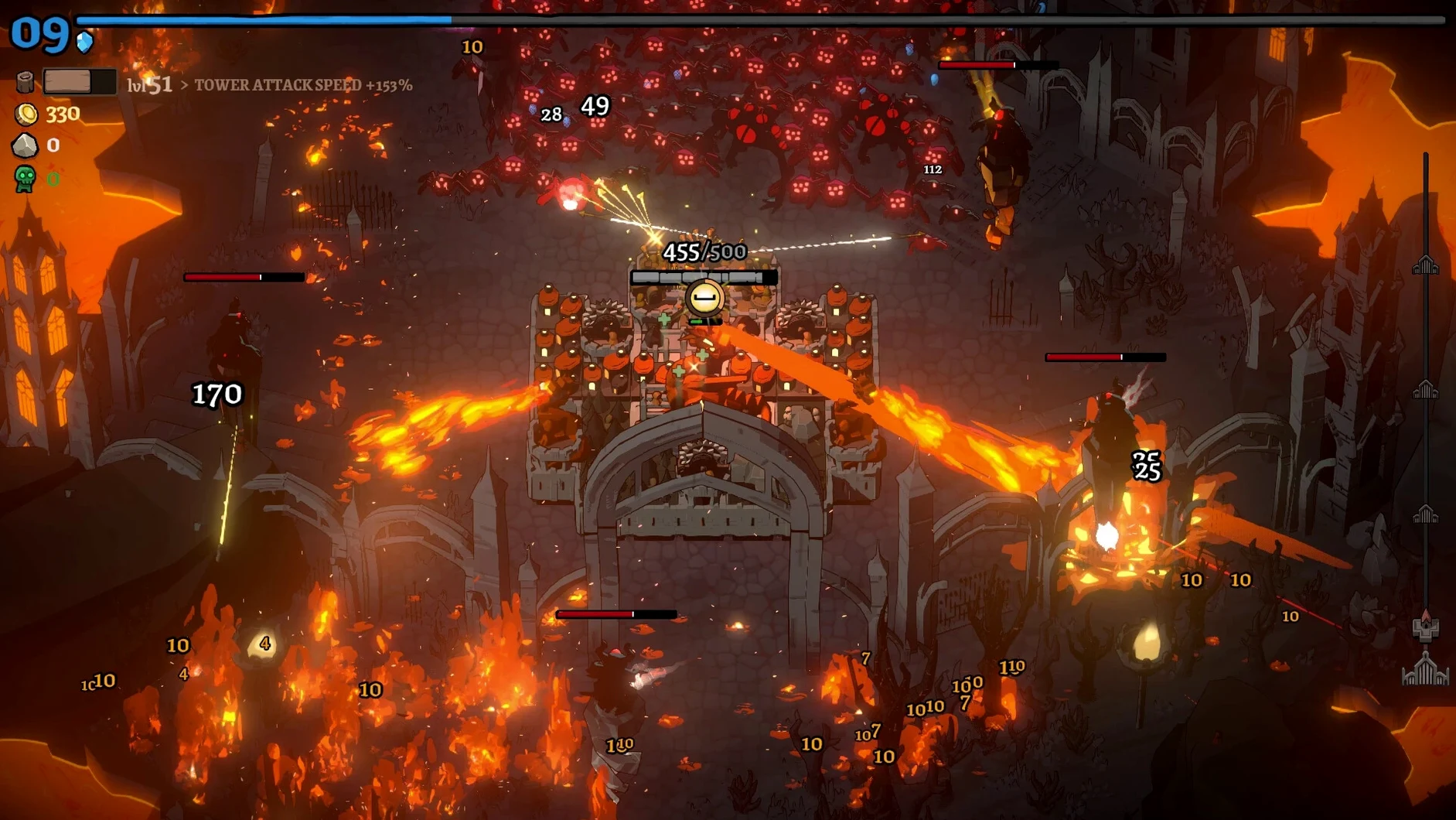
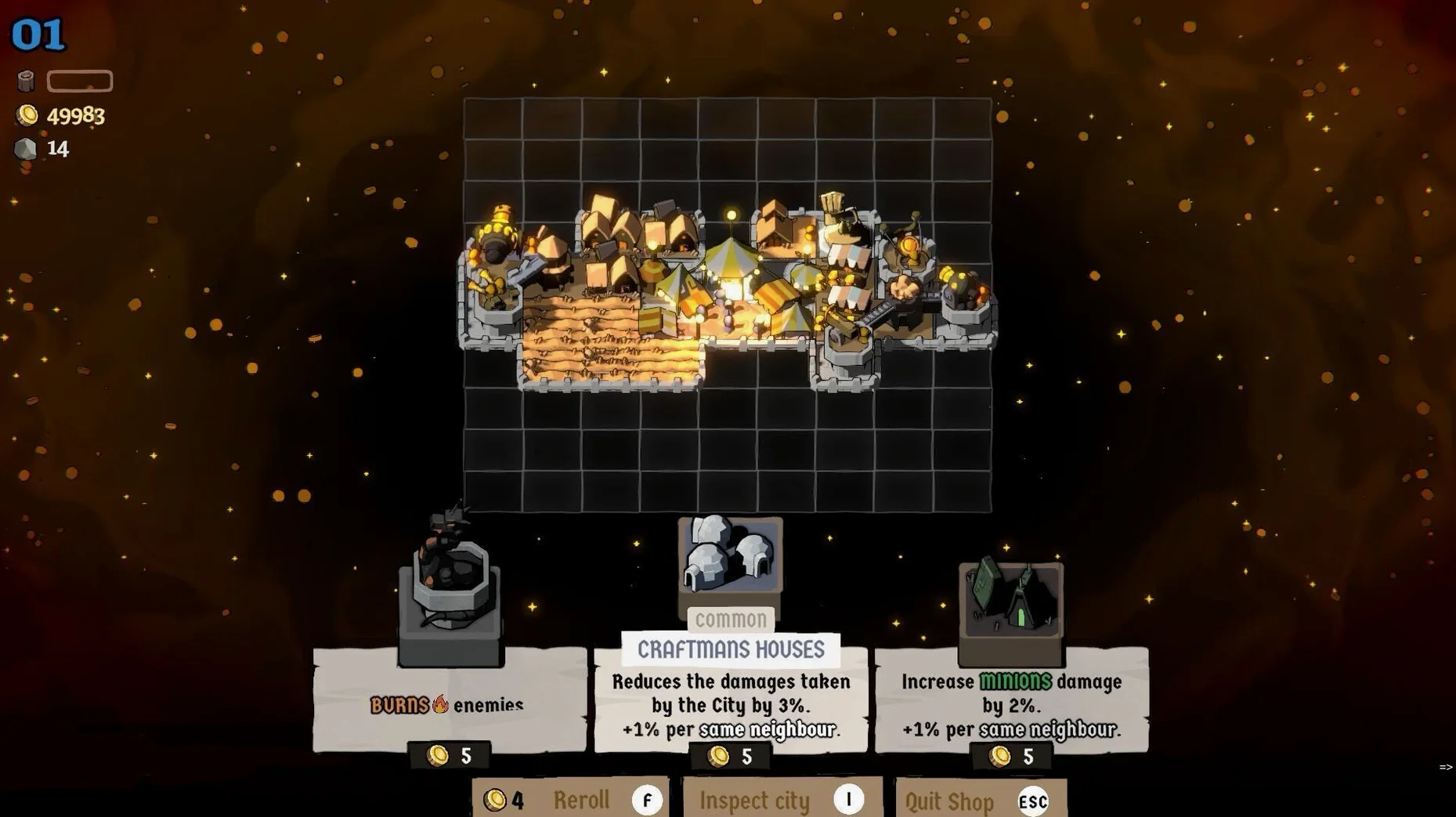
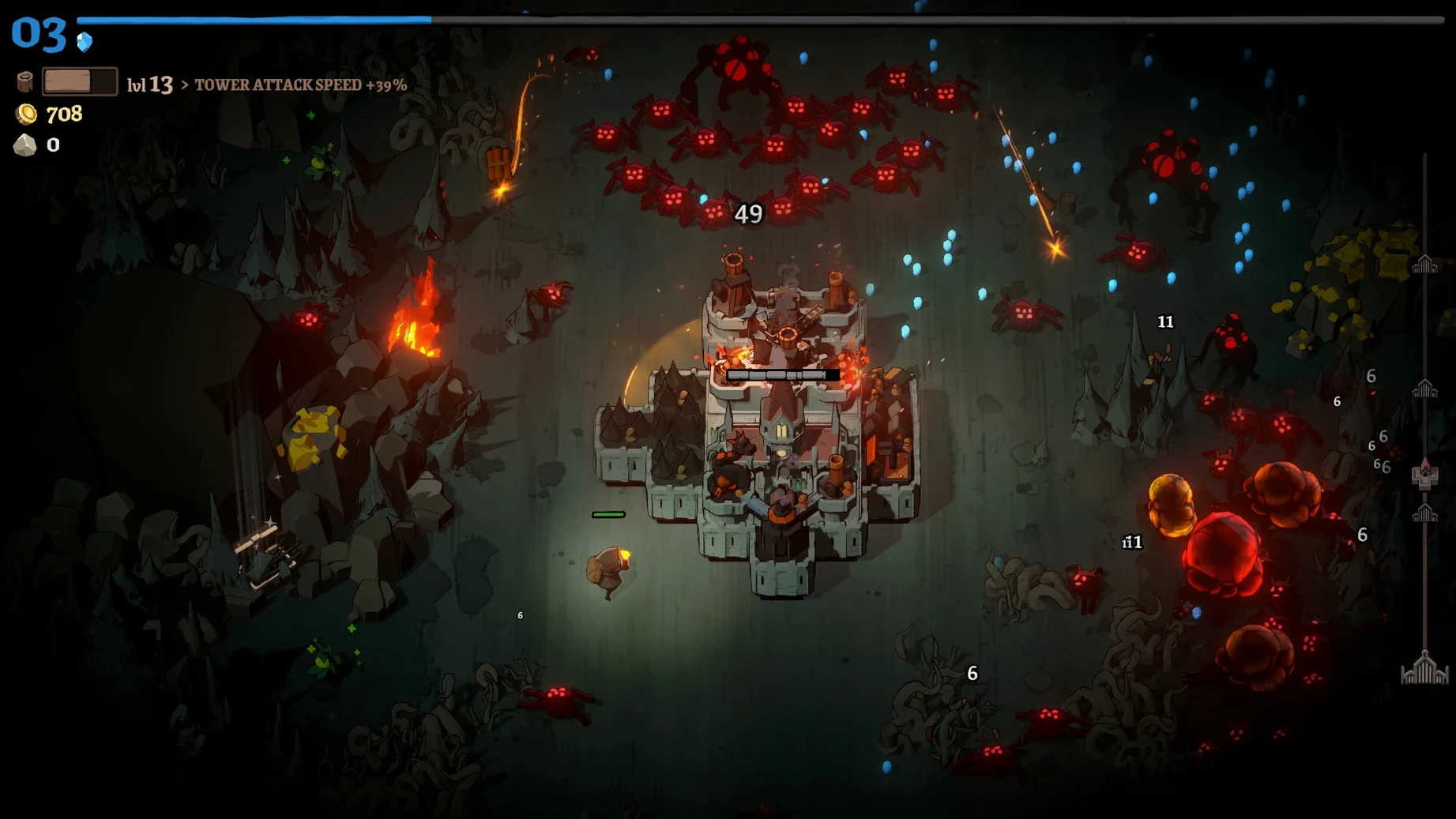
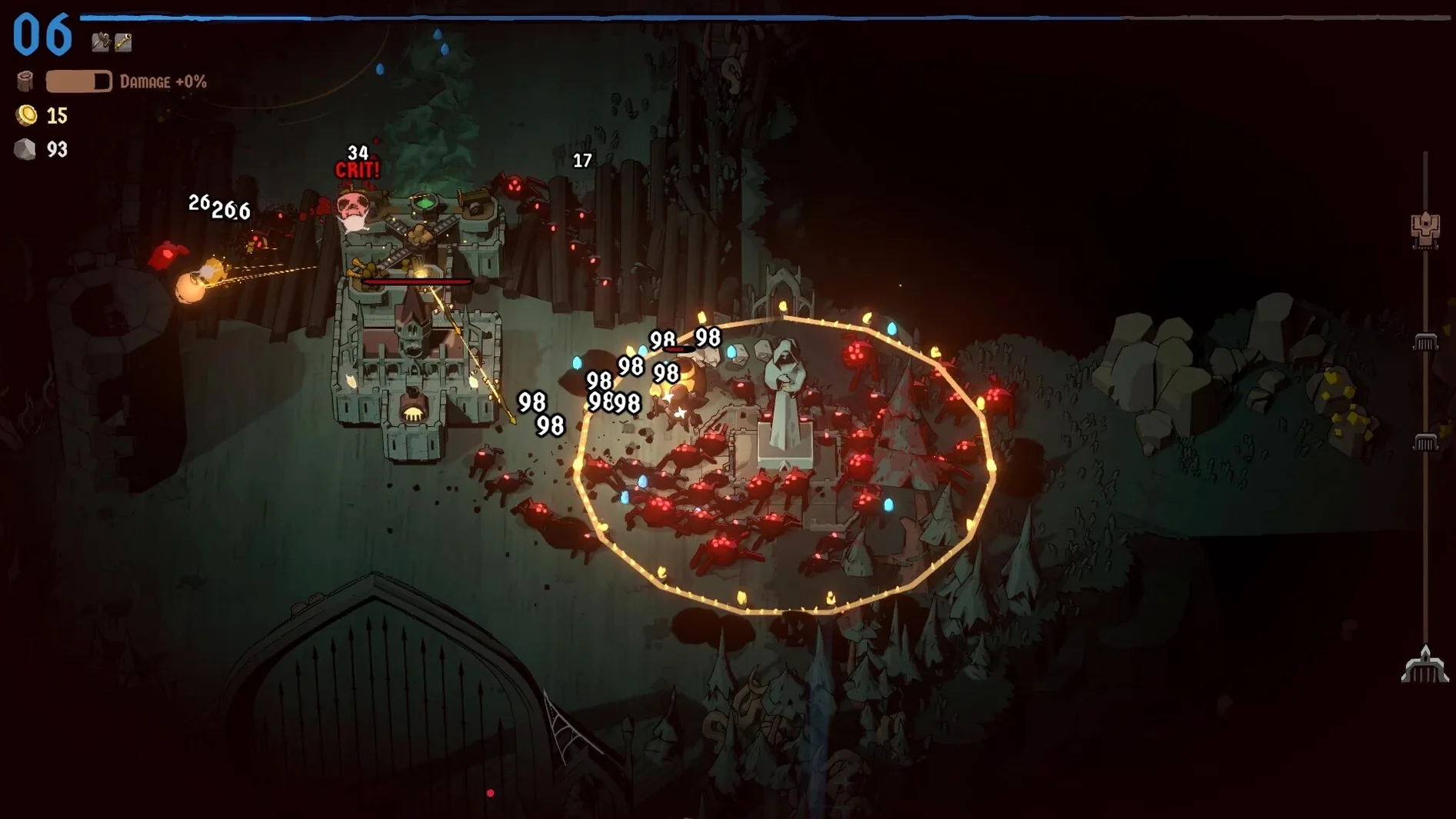
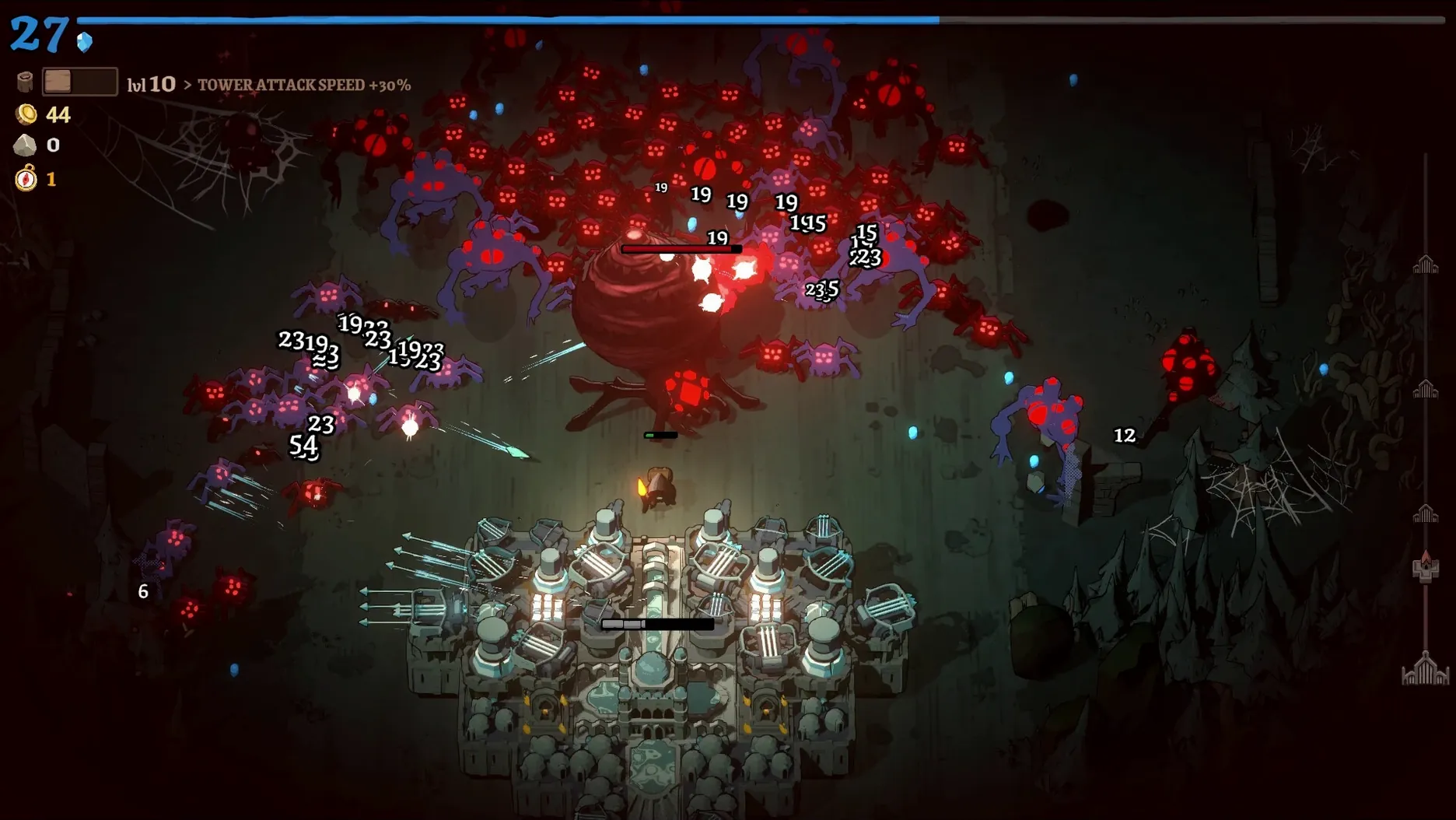
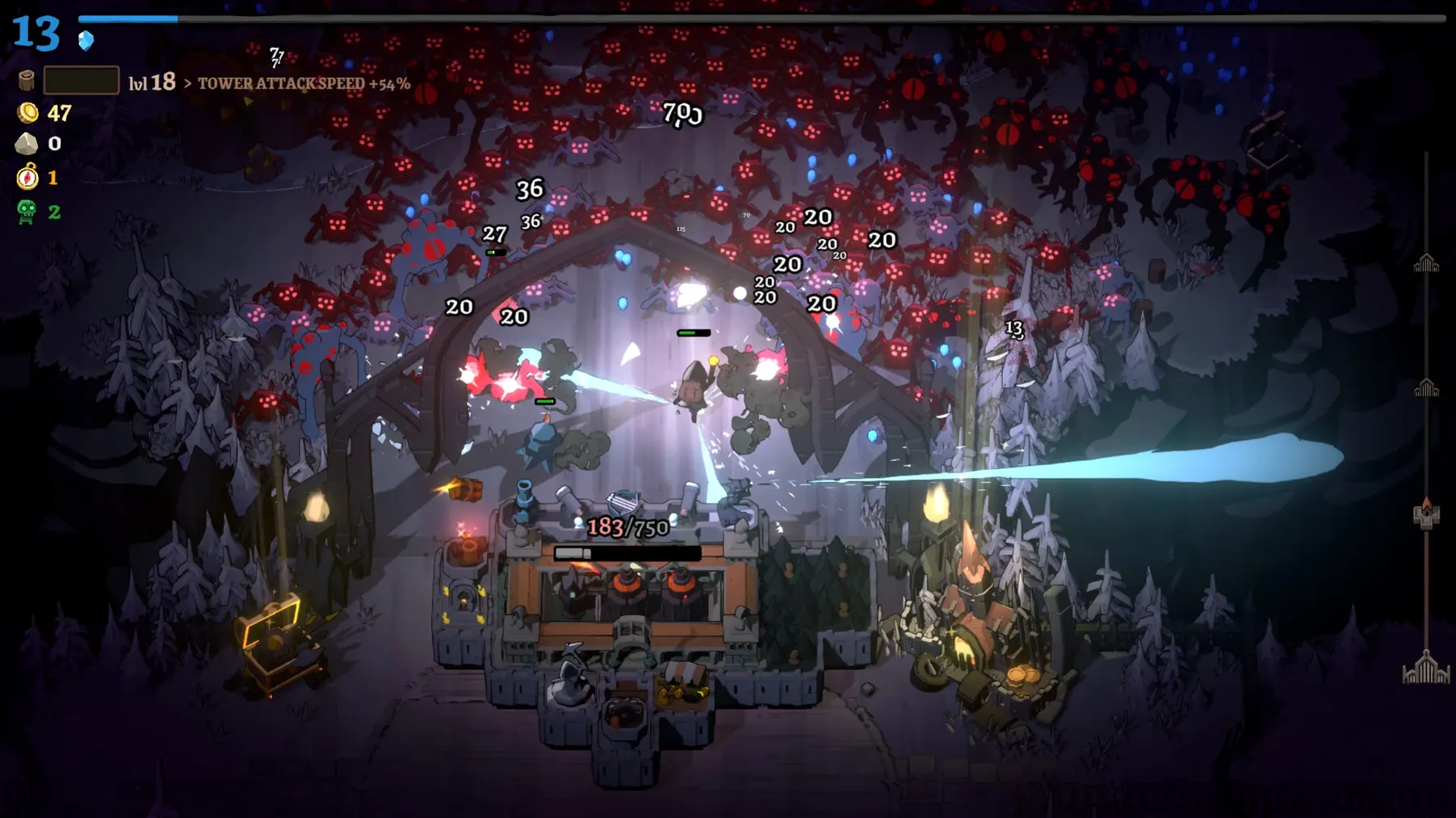
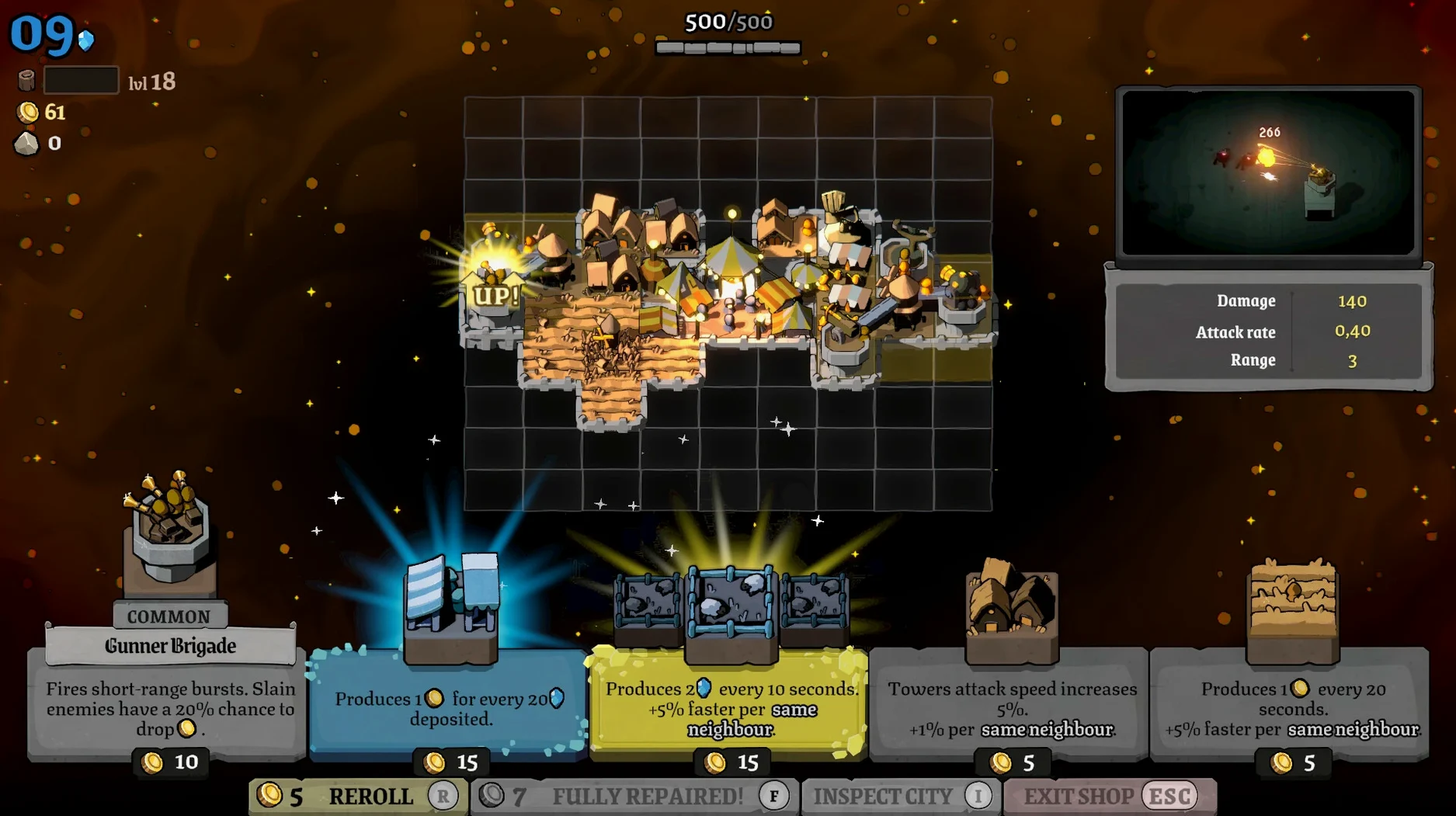
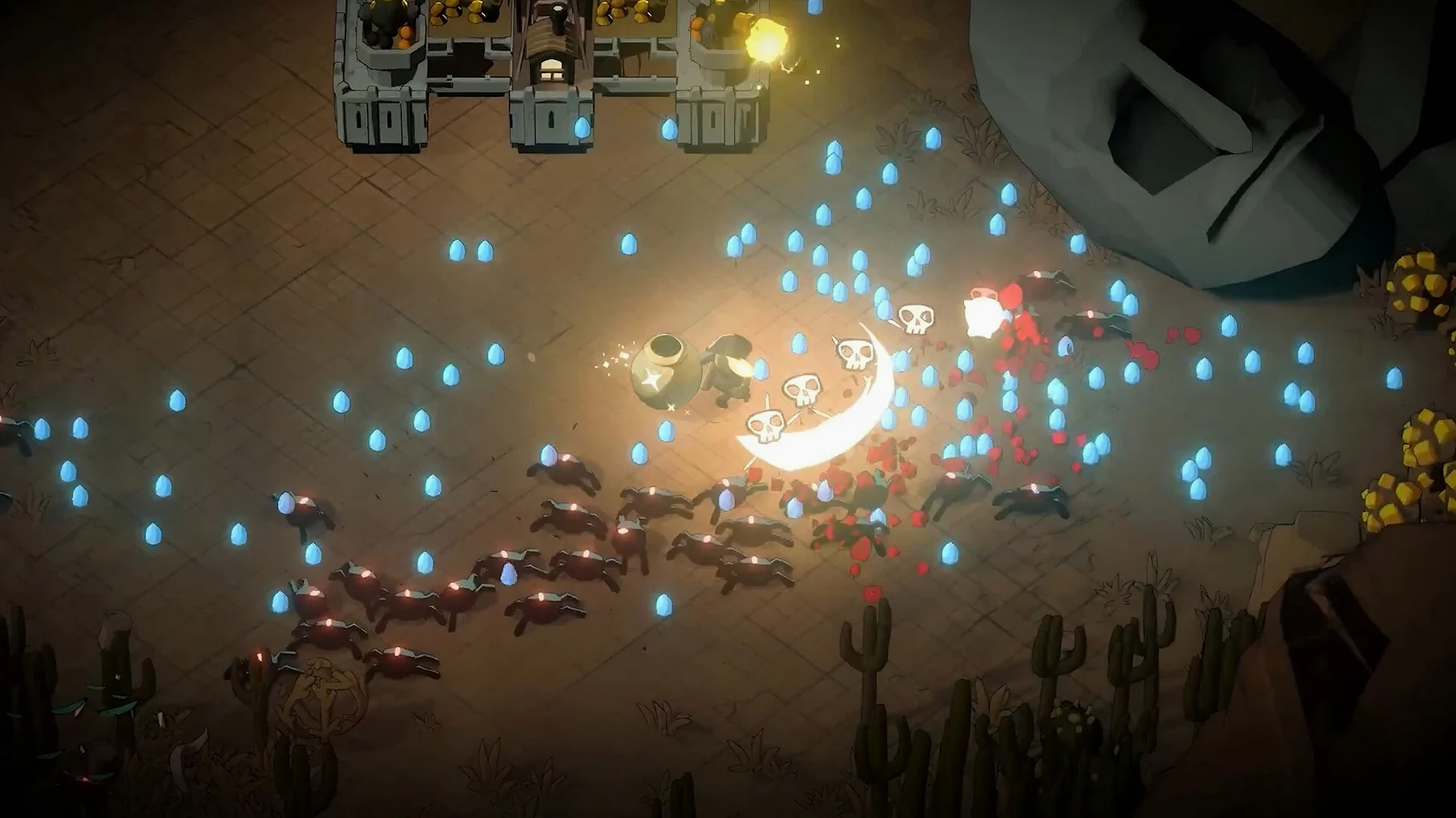
If you have played Vampire Survivors you will recognise the cadence: waves of creatures, auto-attacks and a character who grows stronger with every pickup. Monsters are Coming! Rock & Road transplants that rhythm onto a rumbling fortress that never stops rolling. You are not just levelling a single hero; you are also slotting new rooms into a moving city, repairing damage between fights and deciding whether to stick to the main route or veer off to scavenge extra resources.
A class choice splits the action early. The sword path leans into direct, close-quarters brawling; the spells path keeps you at arm’s length, picking off threats before they chew through the outer walls. The constant motion of the city changes how both styles feel. Bosses arrive with their own timing, and environmental obstacles — rockfalls, narrow passes — force you to shift attention between what is ahead and what is already gnawing at the rear.
The loop will click for players who enjoy short, tense runs where every resource spend is a quiet bet on survival. Runs end only when the city is fully wrecked, so even a battered run can limp along if you make smart repair choices. That leniency masks a steady difficulty curve: the developer’s recent tuning notes suggest the balance is still being sanded down, and some later stretches feel more punishing than the early game prepares you for.
What might push a player away is the narrowness of the toolset between runs. Special weapons add tactical wrinkles, but the core loop relies on the same twin-class decision and the same incremental city upgrades. If you need a roguelite to surprise you with wildly different builds every time, the repetition here may start to feel like a long haul on a straight road. For everyone else, it is a compact, honest hybrid of tower defence and survivor scrum, best played in short bursts when you want a fight that moves with you.
First hours with a rolling city
A couple of habits help the early runs feel less frantic. Wood, stone and gold trickle in steadily on the main route, but the quickest way to build momentum is to peel off the path the moment you spot a side trail. Veering away nearly always triggers a tougher monster cluster, yet the resource bump usually outweighs the repair bill — especially if you have just placed a new district and want to upgrade it before the next boss. Spend stone on gate upgrades early rather than hoarding it; a reinforced gate buys you more time to gather mid-fight, and time is the scarcest resource in the opening minutes.
The district placement order matters more than the game lets on. Slot a production building near the rear of the city first, then follow it with a defensive structure up front. Monsters tend to chew from the back while environmental obstacles hit the front, so splitting your focus keeps the damage from stacking in one zone. When the monsters are coming! alert flashes, pause the build menu and check which section is already smoking — a single repair at the right moment can salvage a run that looks finished.
One unusual quirk worth knowing: the save file sits deep inside the app bundle’s shared support prefix under a LocalLow folder for Ludogram. If you ever need to back up a run or move progress to another Mac, that is where to look.
Watching the barricade crack while lane-bound
Stacked against Vampire Survivors, the obvious comparison, Monsters are Coming! Rock & Road trades the freeform wander-and-collect loop for a lane-bound, structural-defence pressure. Vampire Survivors lets you drift; this game makes you watch a barricade crack in real time. The class split here is simpler — two paths without the sprawling weapon evolution trees of its inspiration — which makes runs more predictable but also less reliant on luck.
Next to Halls of Torment, a Diablo-tinged survivor with gear and stat sheets, this game feels lighter. Halls of Torment asks you to care about equipping rings and amulets between runs; here, inter-run progression is mostly about city upgrades and gate perks, not character loadouts. The moving-city premise also makes the arena feel narrower, though the occasional off-route detour adds a short burst of exploration that Halls of Torment does not offer.
Beside Brotato, which lives in quick, arena-locked rounds, the difference is scale and pacing. Brotato’s waves are snappy and self-contained; a round ends and you shop. Monsters are Coming! Rock & Road stretches the tension across a continuous journey where the city is always one bad decision away from collapse. It rewards patience more than Brotato does, but it also punishes overconfidence harder. If you enjoy the resource-tight scramble of a city-builder grafted onto a survivor, the hybrid lands closer to something like a stripped-down They Are Billions on wheels than to a pure arena brawler.