Aspecten
 Download (137 MB)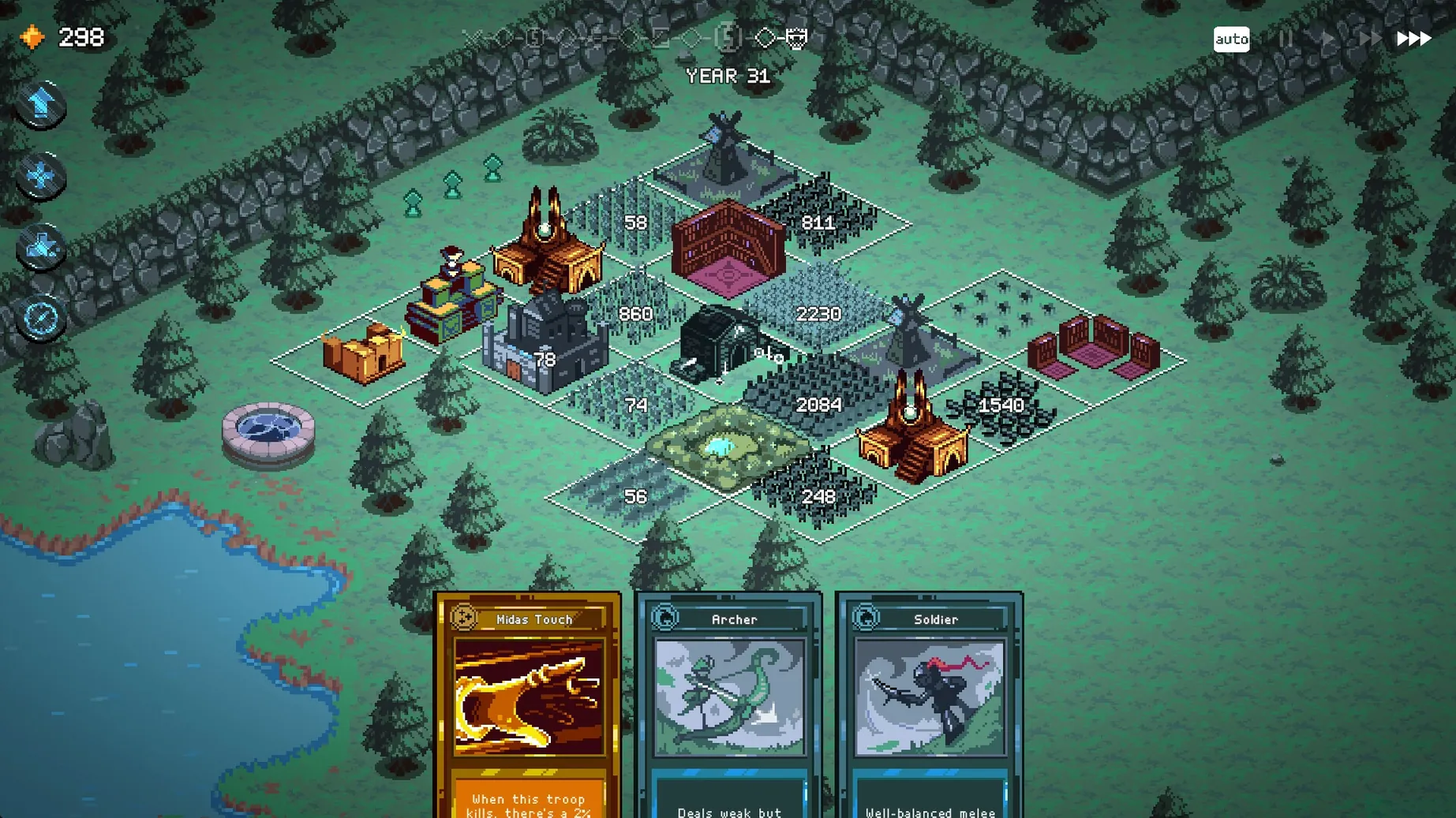
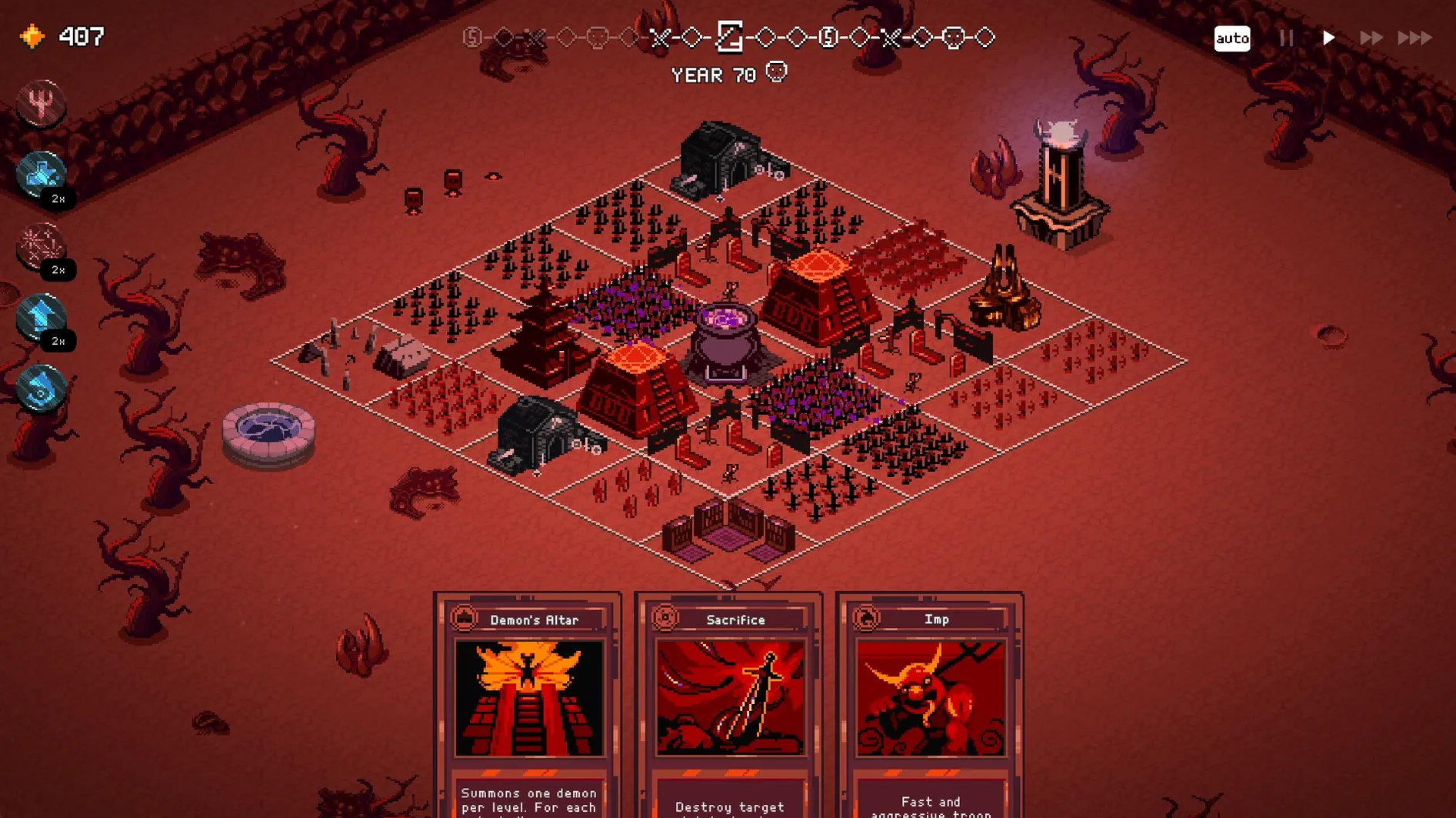
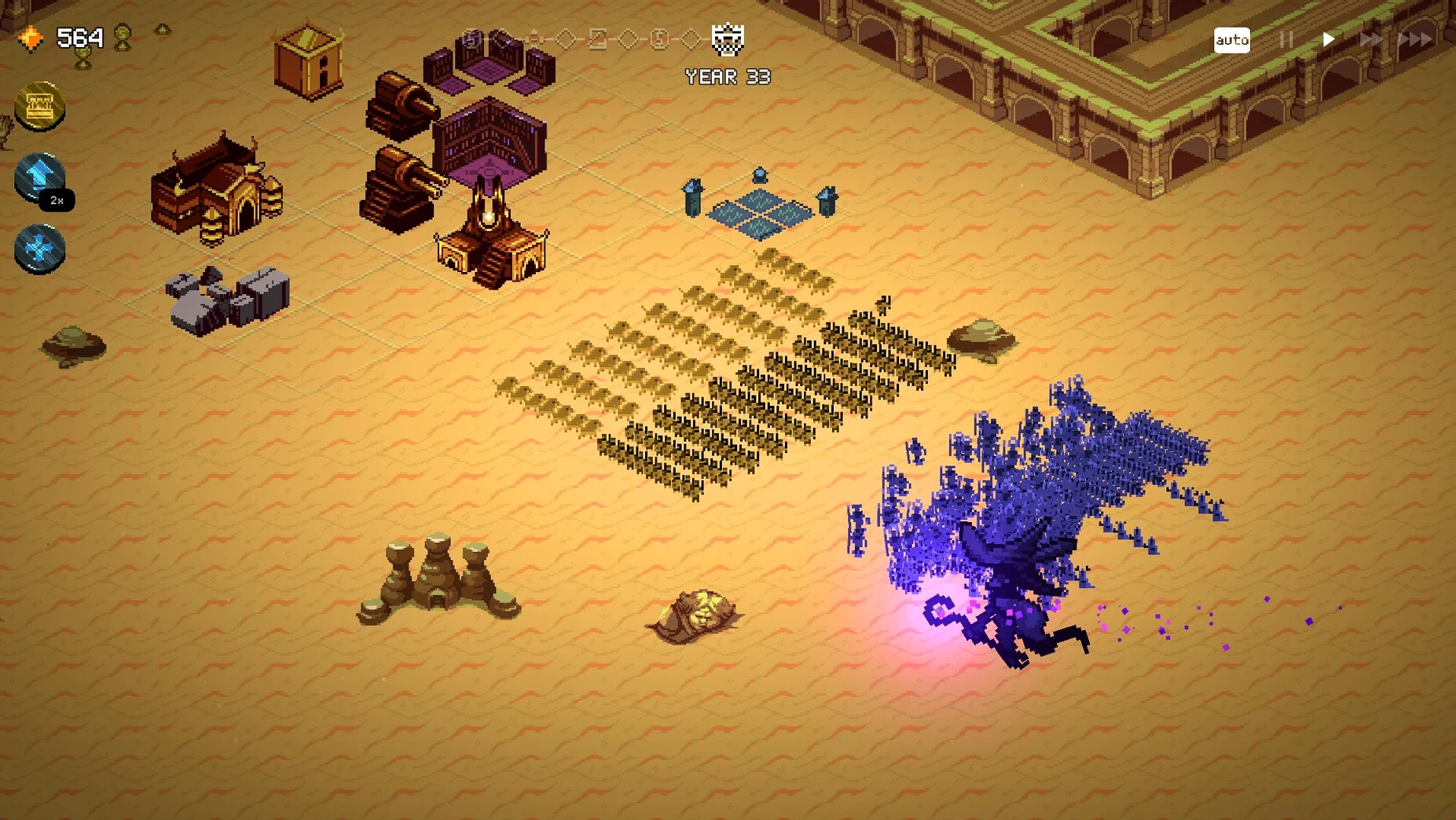
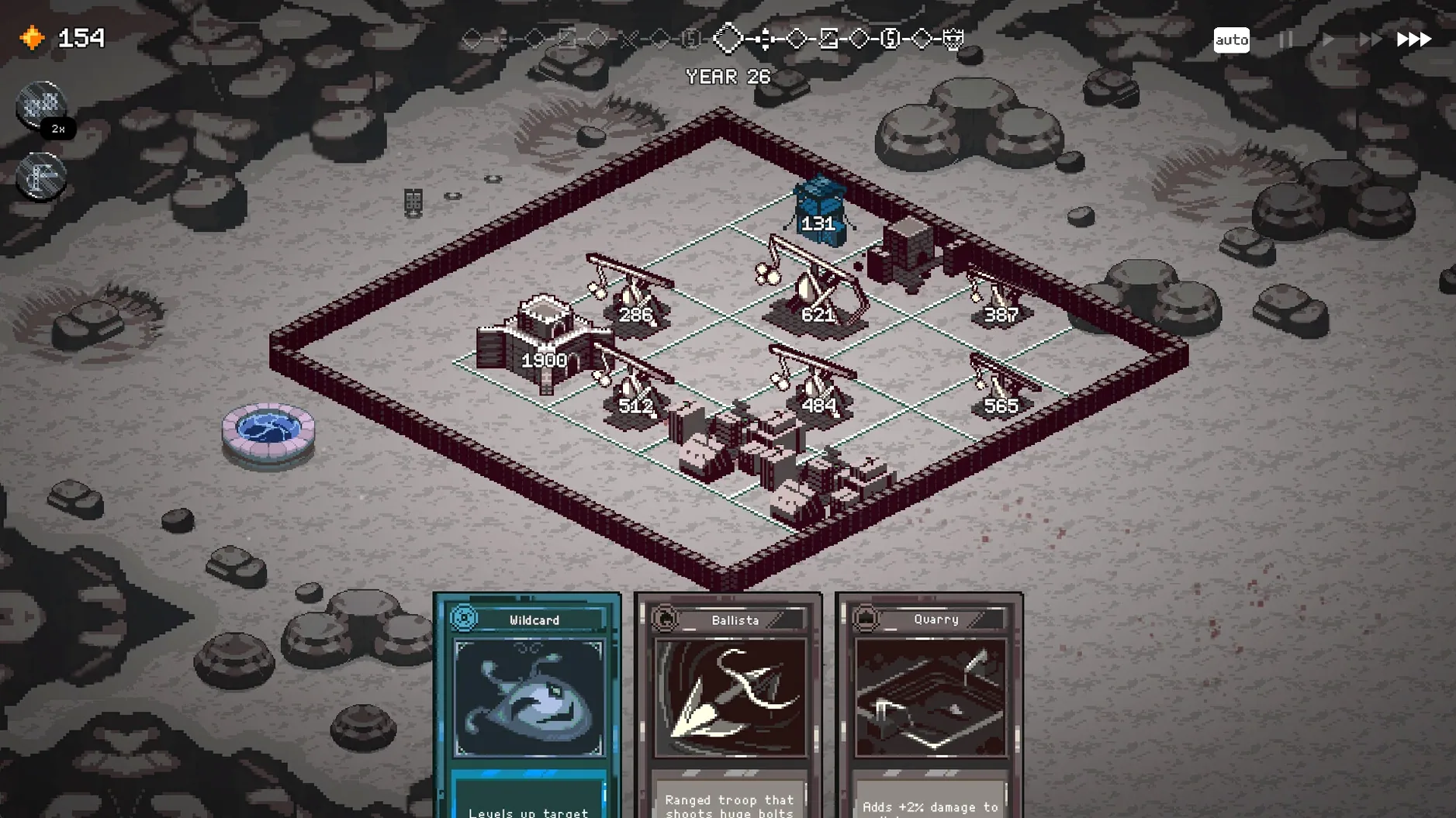
The capital city is the engine of your campaign. It begins as a modest village and, through training and enhancement, can become a heavily fortified citadel. The troops it produces grow more powerful in parallel, feeding directly into the large-scale battles that define each run. Defeating rival kings lets you plunder cards from their decks, while accumulated gold opens the door to mercenary recruitment. The roster includes dozens of squads: knights, sorcerers, mages, bombardiers, demon hordes and even sentient mushrooms.
Unrestricted unit pairing without class restrictions
Card combination sits at the centre of the experience. You are free to pair units without rigid class restrictions, creating unconventional builds and watching them clash in sprawling, often chaotic engagements. Resources taken from enemies feed into a system of boosts and modifiers, letting you shape an army that can outlast increasingly stronger opponents or simply break the game by forcing every contender to fall.
Endurance and adaptation across unique kingdom events
A run is about endurance and adaptation. The kingdom faces unique events that test its staying power, and you can also summon forces of nature to turn a difficult fight. There is no single route to victory — some sessions hinge on methodical empire expansion, others on assembling a combination so potent it trivialises the opposition. Either way, the loop of plunder, recruitment and card experimentation keeps the pressure on without feeling repetitive.
Compared with other kingdom-builders
Three Mac titles offer useful reference points for what 9 Kings is and is not. Slay the Spire shares the deck-foundation loop — you start with a fixed card set, acquire new ones mid-run, and combine them freely. Where 9 Kings departs is scale. Slay the Spire keeps combat intimate, one hero against a handful of enemies, while 9 Kings throws entire armies onto the field. The deck is not a character's move set but a kingdom's infrastructure: buildings, troop types and spells that reshape the battlefield rather than targeting single foes.
Against the Storm overlaps in the city-building layer. Both games ask you to develop a settlement under roguelike constraints, reacting to events and making do with what the run provides. Against the Storm, however, is about production chains and worker placement, with a calm, almost meditative pace. 9 Kings pushes the city into a support role for combat — the capital trains troops and hardens defences, but the real test happens when armies collide. The city is a means, not the end.
Bad North is closer in tone: small islands, tactical unit placement, and the feeling of holding off overwhelming forces. Yet Bad North is real-time and minimalist, with a handful of unit types and no card system. 9 Kings wraps its tactical layer in deck-building and campaign-layer diplomacy. You decide which rival to plunder, which to leave in peace, and when to declare war because a particular king's deck holds a unit you want. That strategic layer — choosing your opponents for their card pools — has no parallel in Bad North.
Opening with a barracks, two infantry, a spell, and a wall
You launch the game and pick one of the 9 kings. The starting deck feels modest: a barracks card, two infantry squads, a low-tier spell and a basic wall segment. The first few turns are quiet. You drop the barracks onto the city grid, queue a knight squadron and send the infantry to scout a neighbouring territory. Gold trickles in.
An event fires — a travelling merchant offers a bombardier squad at a steep discount. You spend most of your reserve, gambling that the firepower will pay for itself. It does. The next rival raid arrives as a wave of dark sorcerers; your bombardiers break their formation before they reach the walls. The victory screen gives you a plunder choice: take a dark magic resurrection spell from the defeated king's deck, or pass and keep the peace. You take the spell. Now fallen knights can rise mid-battle.
By mid-game the city has three barracks, a mage tower and a fortified gate. Your deck is nearly twice its starting size, stuffed with cards taken from four different kings. One combination emerges as the backbone: resurrected knights backed by a nature-summoning spell that calls a treant onto the field. Enemies break against the treant while the knights reform and charge again. The interface shows your modifier stack in a neat column — each plundered card adding a small percentage boost to health, damage or speed. A run that began with cautious expansion now feels like a steamroller. Two kings remain. You declare war on both at once, curious whether the engine you have built can survive a two-front clash.
System mastery over plunder timing and exponential combos
Roguelike players who enjoy system mastery will find the most to dig into. The game rewards knowing when to plunder, when to make peace, and which card combinations produce exponential rather than linear gains. It is less about twitch reflexes and more about reading the modifier stack and anticipating how a new card will interact with what is already on the field.
Deck-building veterans looking for a change of scale also fit well. The core loop — draft, combine, refine — is familiar, but the shift from individual combat to army management changes which decisions matter. A card that seems weak in isolation can become pivotal when paired with a building that reduces its cooldown or a spell that duplicates its effect across multiple squads.
Mac users with limited gaming time appreciate the run structure. A session can last thirty minutes or stretch past an hour, but the auto-save between encounters means you are never locked into a marathon. The game also runs on Apple Silicon and Intel hardware without demanding a dedicated GPU — a practical consideration for those on older MacBooks or Mac minis, including the M4 model the developer tested on macOS Tahoe.
Plundering every king immediately closes off peace
Plundering every king immediately. The temptation is to take cards from every rival you defeat, but each plundered king escalates the difficulty curve slightly and closes off the option of peace. Some starting decks benefit more from a stable diplomatic buffer — keeping a weaker king neutral while you farm gold and build infrastructure — than from an early influx of random cards that may not synergise.
Neglecting the city grid. New players often treat the capital as a passive card slot, dropping buildings wherever there is room. Positioning matters. Walls placed on the outer edges absorb more damage; barracks clustered near the centre train troops faster. A poorly laid-out city can lose a run before the first major battle, simply because reinforcements arrive too slowly.
Overvaluing rare cards. A card taken from a high-tier king is not automatically better than a common infantry squad. Synergy beats rarity. A deck packed with expensive, slow-to-deploy units can collapse against a fast, low-tier rush. The modifier stack rewards consistency — stacking boosts on a single troop type often outperforms a scattered collection of powerful but unrelated cards.
Ignoring events. Kingdom events are not flavour text. They offer some of the strongest modifiers in the game, and passing on them because the description seems risky can leave your run underpowered by the mid-game. The merchant event, for instance, appears early and can define the next twenty minutes if you spend boldly.